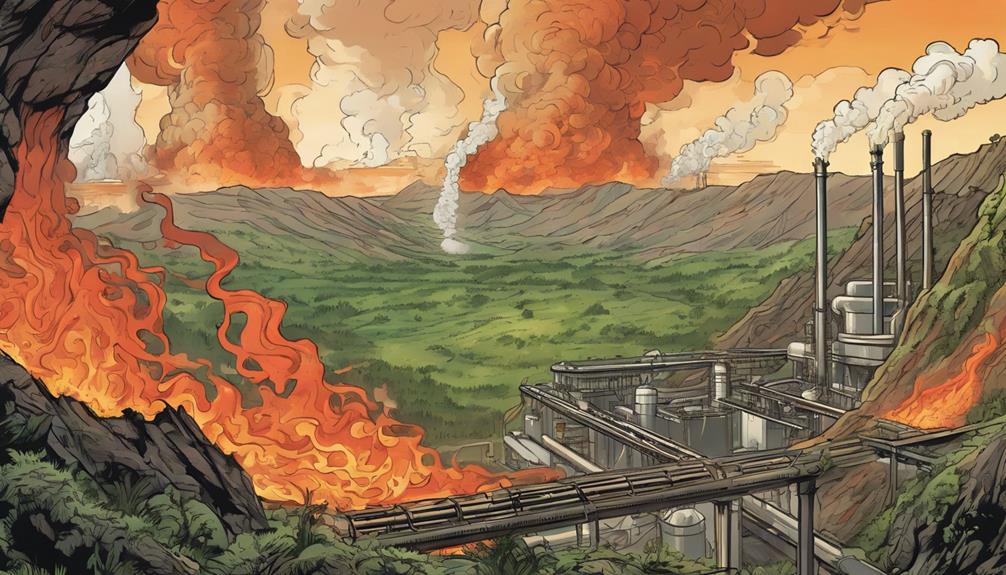
We tap into the Earth's natural heat by drilling into its crust, accessing a reliable and renewable source of electricity that's free from greenhouse gas emissions and air pollutants. We exploit hot underground reservoirs of water and steam, bringing them to the surface through production wells. The heat is then transferred to a working fluid, driving a turbine connected to a generator to produce electricity. With a capacity factor exceeding 90%, geothermal power plants operate at or near full capacity for extended periods. Now, let's take a closer look at how this clean and renewable energy source works its magic.

Get garden gear delivered free with Prime
- Fast, free delivery on millions of items
- Prime Video, Amazon Music and more included
- Member-only deals all year
Key Takeaways
- Geothermal power plants harness Earth's heat by tapping into hot underground reservoirs of water and steam through production wells.
- Heat from the geothermal fluid is transferred to a working fluid in a heat exchanger, driving a turbine connected to a generator.
- The turbine converts the mechanical energy into electrical energy, reducing dependence on fossil fuels and producing reliable and environmentally friendly electricity.
- Geothermal power plants have a high capacity factor, operating at or near full capacity for extended periods with zero greenhouse gas emissions and air pollutants.
- Regular maintenance and performance monitoring ensure long-term reliability and sustainability, minimizing land use and visual impact.
Popular right now

Vitamix Propel Series 510 Blender, 3 Programs, Slate

Bose QuietComfort Ultra Headphones (2nd Gen), Wireless Noise-Cancelling Over-Ear Headphones, Black

Roborock Q7 M5+ Robot Vacuum and Mop with Self-Emptying Dock
As an affiliate, we earn on qualifying purchases.
Geothermal Energy Extraction Process

We tap into the Earth's natural heat by drilling into the crust to access hot underground reservoirs of water and steam, a process that marks the beginning of geothermal energy extraction.
This geothermal fluid, a mix of water and steam, is brought to the surface through production wells. As it rises, we transfer the heat from the fluid to a working fluid with a lower boiling point in a heat exchanger.
This vaporized working fluid then drives a turbine connected to a generator, producing electricity. Finally, we re-inject the cooled geothermal fluid back into the reservoir, creating a sustainable cycle.
Harnessing Earth's Heat for Electricity

Converting Earth's heat into mechanical energy, geothermal power plants rely on transferring heat from the underground reservoirs to a working fluid, which then drives a turbine connected to a generator, producing electricity.
We utilize this heat to generate power, reducing our dependence on fossil fuels and minimizing environmental impact. Geothermal power plants offer a reliable and environmentally friendly electricity generation method.
Power Plant Infrastructure and Equipment

At the heart of every geothermal power plant lies a sophisticated infrastructure, comprising geothermal wells, heat exchangers, turbines, and generators, which work in tandem to convert Earth's heat into electricity.
We extract hot water or steam from deep underground reservoirs through geothermal wells, which is then transferred to a heat exchanger. Here, the heat is transferred to a secondary fluid that drives the turbines.
As the high-pressure steam rotates the turbines, it generates mechanical energy. This mechanical energy is then converted into electrical energy by the generators, which is distributed through the power grid.
We're proud to say that our geothermal power plants are designed to maximize efficiency and minimize environmental impact.
Efficiency and Environmental Benefits

What makes geothermal power plants truly stand out is their impressive efficiency levels, with a capacity factor exceeding 90%, making them a reliable and environmentally friendly electricity generation method. This means they can operate at or near full capacity for extended periods, providing a stable source of clean energy.
| Efficiency | Environmental Impact |
|---|---|
| High capacity factor (>90%) | Zero greenhouse gas emissions |
| 24/7 operation | No air pollutants during operation |
| Reliable source of clean energy | Minimal land use and visual impact |
| Contributes to grid stability | Non-toxic and biodegradable fluids used |
| Reduces dependence on fossil fuels | Closed-loop system for fluid reuse |
We're proud to say that geothermal power plants are a shining example of sustainable energy production, offering a cleaner, greener alternative to traditional fossil fuel-based power generation methods.
Maintenance and Sustainability Practices

We guarantee the long-term reliability and efficiency of our geothermal power plants through regular maintenance and upkeep. This involves monitoring performance, identifying potential issues, and performing repairs to prevent downtime and maximize energy output.
Our maintenance team closely tracks the condition of turbines, generators, and other equipment to ensure peak operation. We conduct routine inspections to detect potential problems before they become major issues. By addressing these problems early, we minimize downtime and reduce the risk of accidents.
This proactive approach enables us to maintain high capacity factors, ensuring a steady supply of clean energy to the grid. Our commitment to maintenance and sustainability practices ensures the long-term viability of our geothermal power plants.
Reliable Electricity Generation Cycle

Our reliable electricity generation cycle hinges on the efficient extraction and conversion of geothermal energy, ensuring a steady supply of clean power to the grid. We drill into the earth's crust to access hot reservoirs of water and steam, which are then brought to the surface through production wells. The heat from this geothermal fluid is transferred to a working fluid, vaporizing it and driving a turbine connected to a generator.
| Step | Process |
|---|---|
| 1 | Drill into earth's crust to access hot reservoirs |
| 2 | Bring geothermal fluid to surface through production wells |
| 3 | Transfer heat to working fluid, vaporizing it |
| 4 | Drive turbine connected to generator, producing electricity |
Clean and Renewable Energy Source

One of the most significant advantages of geothermal energy is that it's a clean and renewable source of power, producing no greenhouse gas emissions or air pollutants during operation. This makes it an attractive alternative to fossil fuels, which have a devastating impact on the environment.
As we aim to diminish our carbon footprint, geothermal energy can play a crucial role in the shift to a more sustainable future.
- Geothermal power plants don't release harmful emissions, contributing to cleaner air and a healthier environment.
- The geothermal energy cycle is sustainable, as the heat from the Earth's core is constantly replenished.
- Geothermal energy is also renewable, as the Earth's heat is a limitless resource.
- By harnessing geothermal energy, we can lessen our reliance on fossil fuels and mitigate climate change.
Frequently Asked Questions
How Deep Do Geothermal Wells Typically Need to Be Drilled?
"We typically drill geothermal wells several thousand feet deep to access hot underground reservoirs. The exact depth depends on the location and temperature requirements, but we usually aim for depths between 5,000 to 10,000 feet."
Can Geothermal Energy Be Used for Heating Buildings and Homes?
"We've all felt the warmth of a natural hot spring, right? Well, that same Earth heat can be harnessed to warm our homes and buildings, providing a cozy, eco-friendly alternative to traditional heating systems."
Are Geothermal Power Plants Suitable for Small-Scale Energy Production?
We find that geothermal power plants can be suitable for small-scale energy production, as they can be designed to generate electricity on a local level, making them a viable option for rural or remote areas.
How Does Geothermal Energy Generation Affect Local Water Resources?
We maintain sustainability by re-injecting cooled geothermal fluid into the reservoir, maintaining groundwater levels and preventing depletion of local water resources, while also minimizing the environmental impact of our energy generation process.
Can Geothermal Power Plants Be Built in Areas With Low Volcanic Activity?
"We can build geothermal power plants in areas with low volcanic activity, but it's more challenging. We need to drill deeper to access hotter rocks, increasing costs and complexity."
How does Earth’s absorption of solar energy contribute to geothermal power generation?
Geothermal power generation relies on the heat stored beneath the earth’s surface, fueled by the earth’s surface solar energy absorption. As the earth absorbs solar energy, it heats up the ground, which in turn heats water or steam that can be used to generate electricity in geothermal power plants.
Conclusion
As we conclude our journey into the world of geothermal power, we're left with a stark contrast: the dirty, finite fossil fuels of the past versus the clean, limitless energy of the Earth's heat. It's a choice between polluting our planet and powering our future.
Geothermal energy isn't just an alternative – it's an imperative. Let's harness the Earth's heat to fuel a cleaner, more sustainable tomorrow.