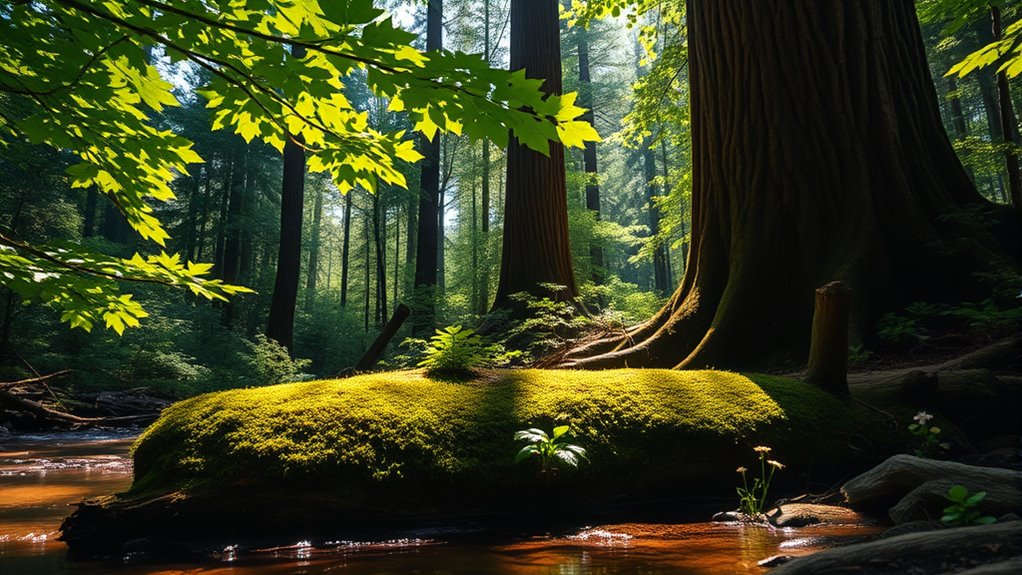

Connecting with nature boosts your well-being by strengthening your sense of belonging and reducing stress. Spending time outdoors engages you physically and emotionally, fostering mindfulness and emotional stability. It also helps develop your environmental identity, making you more aware of your impact and responsibilities. These connections improve mental resilience, boost your mood, and promote healthier habits. As you deepen your relationship with the natural world, you’ll discover powerful ways to enhance your overall health and happiness—learn more to unleash these benefits.
Key Takeaways
- Connecting with nature enhances mental health by reducing stress, anxiety, and depression through active engagement and mindfulness.
- Developing an environmental identity fosters a sense of purpose, responsibility, and belonging, supporting emotional stability.
- Outdoor activities promote physical health, improve sleep, and boost immune function, creating a positive feedback loop for well-being.
- Immersion in natural settings deepens emotional resilience and vitality, contributing to overall mental and physical balance.
- Fostering a relationship with nature encourages healthier lifestyles and a broader understanding of one’s role in the ecosystem.

Have you ever wondered how your mental health is connected to the environment around you? The answer lies in the powerful relationship between nature connection and your overall well-being. When you spend time outdoors, you’re not just enjoying the scenery—you’re actively nurturing your mental health. This connection to nature helps you develop an environmental identity, which is your sense of self intertwined with the natural world. Recognizing this bond can profoundly influence how you feel and how you handle stress, anxiety, and even depression.
By immersing yourself in natural settings, you begin to see yourself as part of a larger ecosystem. This awareness fosters a stronger environmental identity, making you more conscious of your impact on the planet. When you understand that your actions, whether big or small, affect the environment, you develop a sense of responsibility and purpose. This sense of purpose can be incredibly grounding, reducing feelings of helplessness or disconnection that often accompany mental health struggles.
Connecting with nature enhances your environmental awareness and fosters a sense of purpose that grounds your mental health.
Building a consistent relationship with nature can improve your mood and increase feelings of vitality. Activities like walking through a park, gardening, or simply sitting quietly by a river help you reconnect with the world around you. These moments of mindfulness in nature serve as natural stress relievers, lowering cortisol levels and calming your mind. Over time, this repeated exposure deepens your environmental identity—transforming how you see yourself within the broader fabric of life. You start to perceive yourself not as separate from nature but as an integral part of it, which can bring a profound sense of belonging and purpose.
Moreover, the benefits of nature connection extend beyond emotional health. They influence your physical health too—improving sleep, boosting immune function, and increasing your overall energy. When you prioritize time in natural environments, you create a positive feedback loop: feeling better physically encourages more outdoor activity, reinforcing your environmental identity and mental resilience. This cycle helps you cultivate a more optimistic outlook and greater resilience to life’s challenges.
Ultimately, nurturing your relationship with nature isn’t just about enjoying beautiful scenery; it’s about fostering a healthier mind and a deeper understanding of your place in the world. As you strengthen your nature connection, you’re actively shaping your environmental identity, which can lead to lasting improvements in your mental well-being. Recognizing yourself as part of something larger empowers you to live more mindfully, with a sense of purpose and harmony that benefits both you and the planet. Incorporating activities that promote healthy lifestyle choices such as outdoor exercise or mindful walks can further enhance these positive effects.

Mindful Modern Travel Meditation Cushion | Outdoor Floor Cushions for Adults | Stylish Outdoor Decor | Portable Mindfulness Pillow | Accessories for Women | Washable Cover
PERFECT FOR TRAVEL – This small meditation cushion provides essential support to knees, ankles and legs while keeping…
As an affiliate, we earn on qualifying purchases.
As an affiliate, we earn on qualifying purchases.
Frequently Asked Questions
Can Eco-Psychology Help Treat Mental Health Conditions?
You might wonder if eco-psychology can treat mental health conditions. It offers nature-based therapies that help you reconnect with the environment, reducing stress and anxiety. By engaging with biodiversity conservation activities, you foster a sense of purpose and mindfulness. These approaches can complement traditional treatments, improving your overall well-being. Eco-psychology emphasizes the healing power of nature, making it a valuable tool for managing mental health challenges.
How Can Urban Dwellers Connect With Nature Regularly?
You can connect with nature regularly by visiting urban parks during lunch breaks or after work, soaking in the greenery and fresh air. Join community gardens to grow your own plants, fostering a sense of connection and calm. These activities help you escape city noise, reduce stress, and boost your well-being. Making time for nature, even in small ways, can considerably improve your mental health and overall happiness.
Are There Specific Activities to Boost Well-Being Through Nature?
Ever wonder how you can boost your well-being through nature? You might try engaging in activities like nature walks or gardening therapy. These activities help you reconnect with the environment, reduce stress, and improve mood. By spending time outdoors and nurturing plants, you strengthen your bond with nature and enhance your mental health. So, why not incorporate these simple yet effective activities into your routine? Your well-being will thank you.
What Are the Scientific Mechanisms Behind Nature’s Healing Effects?
You might wonder how nature heals you. Scientific research shows that exposure to natural environments boosts neuroplasticity, helping your brain adapt and recover from stress. It also reduces cortisol levels, which lowers stress, anxiety, and depression. When you spend time outdoors, your body and mind experience calming effects that promote overall well-being. So, connecting with nature actively rewires your brain and diminishes stress, supporting your mental health and resilience.
How Does Eco-Psychology Compare to Traditional Psychotherapy Approaches?
You’ll find eco-psychology differs from traditional psychotherapy by integrating indigenous healing and spiritual ecology. While traditional approaches often focus on talk therapy and cognitive techniques, eco-psychology emphasizes reconnecting with nature to promote well-being. It recognizes the spiritual and cultural significance of the environment, encouraging a holistic healing process. This approach fosters a deeper bond with nature, enhancing mental health through a more profound understanding of our interconnectedness with the Earth.

CZZXI Garden Kneeler and Seat, Wider and Thicker Kneeling Pad Heavy Duty Gardening Stool with Gardening Tool Pouch and Bag, Garden Bench/Chair Gifts for Women, Seniors
WIDER AND THICKER PAD – 10.2 inches wide and 1.6 inches thick. Increased comfort for extended use. EVA…
As an affiliate, we earn on qualifying purchases.
As an affiliate, we earn on qualifying purchases.
Conclusion
By reconnecting with nature, you nurture the roots of your well-being, allowing your spirit to blossom like a resilient tree. Each moment spent in the natural world is a gentle rainfall that revitalizes your soul, reminding you of your place within the greater ecosystem. When you embrace this bond, you become a essential thread in the intricate tapestry of life, fostering harmony within yourself and the world around you. In nature’s embrace, your well-being finds its true foundation.

Bersiler Aromatherapy Candles, Scented Candles, 7OZ Lavender Eucalyptus Candles Stress Relief and Relax for Home & Bedroom Gift for Women Birthday Christmas, Soy Wax Candle
Lavender Eucalyptus Scented Candles: It's well-known that lavender is very effective for relaxing stress, so it can improve…
As an affiliate, we earn on qualifying purchases.
As an affiliate, we earn on qualifying purchases.

Eco-Art Therapy in Practice
As an affiliate, we earn on qualifying purchases.
As an affiliate, we earn on qualifying purchases.