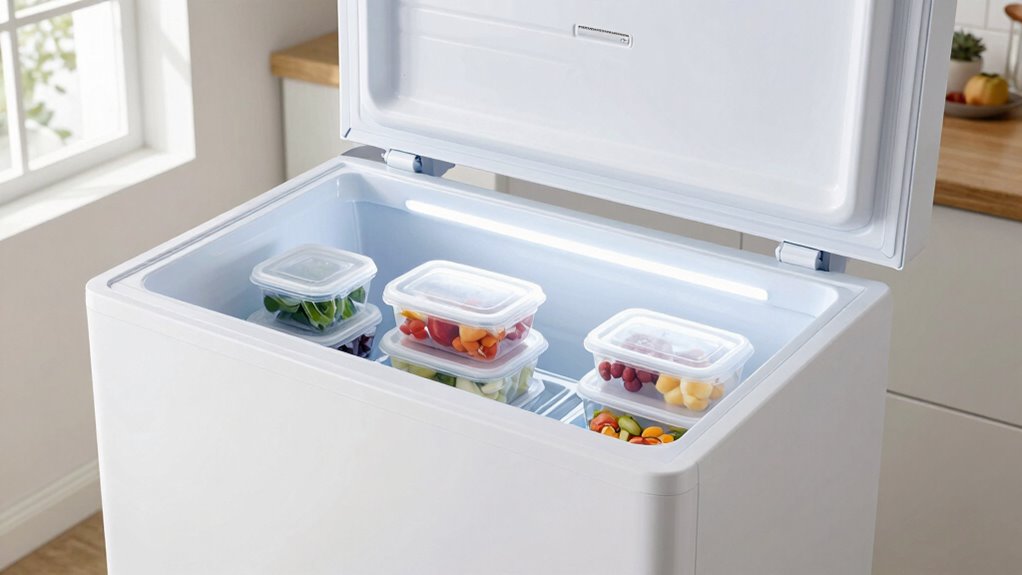

To keep your chest freezer safe and energy-efficient, place it in a cool, dry spot away from heat and sunlight, ensuring good airflow around it. Organize food using clear containers and keep the door closed as much as possible. Maintain the recommended temperature around 0°F (-18°C) and regularly clean coils to improve efficiency. Proper placement and routine upkeep help save energy and keep your food perfectly preserved — tips that make a big difference.
Key Takeaways
- Place the freezer in a cool, dry area away from heat sources and direct sunlight to reduce energy use.
- Keep the freezer well-organized with clear containers and avoid overfilling to ensure proper airflow and quick access.
- Set the temperature to around 0°F (-18°C) and regularly check with a thermometer to maintain food safety and efficiency.
- Regularly defrost (if not frost-free), clean condenser coils, and minimize door openings to improve cooling performance.
- Ensure good ventilation around the freezer and avoid placing it near heat sources to optimize energy savings and preserve food safety.

A chest freezer can be be a valuable addition to your home, providing ample storage for bulk foods and leftovers. To maximize its benefits, you need to focus on energy efficiency and organization tips. Proper use not only keeps your food safe but also helps lower energy bills and extends the lifespan of your appliance.
A chest freezer boosts storage while saving energy with proper organization and maintenance.
First, consider where you place your chest freezer. Keep it in a cool, dry spot away from direct sunlight, heaters, or vents. Excess heat forces the compressor to work harder, wasting energy and increasing your electricity costs. Maintaining a steady, cool environment helps the freezer operate efficiently, saving you money over time. Additionally, guarantee the surrounding area has good ventilation, as poor airflow can cause the compressor to overheat and reduce energy efficiency.
When loading your freezer, follow smart organization tips. Keep frequently accessed items near the top or front for easy retrieval. Use clear, stackable containers or labeled bins to prevent clutter and make it simple to find what you need without leaving items uncovered for long periods. Avoid overfilling the freezer, as air needs space to circulate to maintain consistent temperatures. Conversely, don’t leave it mostly empty, as this can cause the compressor to cycle on and off more frequently, wasting energy. Aim for about 70-80% full, as this balances efficiency and storage capacity.
Temperature regulation is crucial. Set your chest freezer to the manufacturer’s recommended temperature, typically around 0°F (-18°C). Regularly check the temperature with a thermometer to guarantee it stays consistent. A stable temperature prevents spoilage and reduces energy consumption—if the freezer is too cold, it uses more power than necessary; if too warm, food safety is compromised. Proper temperature control is essential for maintaining food quality and energy efficiency.
Routine maintenance also plays a vital role in keeping your freezer efficient. Defrost it regularly if it’s not frost-free, removing ice buildup that can hinder cooling and increase energy use. Keep the condenser coils clean by gently vacuuming or brushing dust and debris away. This allows heat to dissipate effectively, improving energy efficiency. Also, avoid leaving the door open longer than needed, as this causes temperature fluctuations, forcing the compressor to work harder to restore the cold.

2 Pack Refrigerator Thermometer, 30-30°C/20-80°F, Classic Fridge Thermometer Large Dial with Red Indicator Thermometer for Freezer Refrigerator Cooler
Convenient and practical: Our refrigerator thermometer is suitable for traditional refrigerators, freezers, insulated boxes, etc. It has a…
As an affiliate, we earn on qualifying purchases.
As an affiliate, we earn on qualifying purchases.
Frequently Asked Questions
How Often Should I Defrost My Chest Freezer?
You should defrost your chest freezer when you notice about a quarter inch of ice buildup, roughly every 6 to 12 months. Following a regular defrost schedule helps with ice buildup management and keeps your freezer running efficiently. Don’t wait until it’s overly icy, as this can reduce storage space and increase energy use. Regular defrosting guarantees your food stays safe and your freezer remains energy-efficient.
Can I Store Non-Food Items in My Chest Freezer?
Yes, you can store non-food items or miscellaneous items in your chest freezer, but treat it like a storage closet for cold items. Keep non-food storage separate from food to prevent contamination and freezer burn. Use it wisely, ensuring that items are well-sealed and organized, so your freezer remains efficient. Remember, your freezer is a tool for preservation, not a catch-all for miscellaneous clutter.
What Is the Ideal Temperature Setting for Energy Efficiency?
You should set your chest freezer to around 0°F (-18°C) for ideal temperature regulation and energy conservation. Maintaining this temperature ensures your food stays safe while minimizing energy use. Avoid setting it too cold, as that wastes energy, or too warm, which risks spoilage. Regularly check the thermometer to keep the temperature steady, and avoid opening the lid unnecessarily to maximize efficiency and keep your freezer running smoothly.
How Do I Organize Food to Prevent Freezer Burn?
To prevent freezer burn, organize your food with proper stacking techniques and clear food labeling. Place older items at the front for easy use, and stack items flat to save space and reduce air exposure. Wrap items tightly in airtight packaging or use freezer-safe containers to minimize moisture loss. Label everything with dates so you use the oldest first, keeping your freezer fresh and your food safe longer.
Are There Eco-Friendly Methods to Maintain My Freezer?
Imagine your freezer as a green oasis—yes, it’s possible! You can maintain it eco-friendly by using eco-friendly cleaning products that avoid harsh chemicals. Also, invest in sustainable insulation to keep it energy-efficient, reducing your carbon footprint. These simple steps help conserve resources, cut energy use, and keep your food fresh. Embrace sustainable practices, and your freezer will serve both your needs and the planet’s health.

YIHONG 6 Pack Clear Pantry Organizer Bins, Plastic Containers with Handle for Kitchen,Freezer,Cabinet,Closet,Bathroom Under Sink Storage
Make Storage More Simple — These clear storage bins are versatile enough to fit easily in your fridge,…
As an affiliate, we earn on qualifying purchases.
As an affiliate, we earn on qualifying purchases.
Conclusion
By following these chest freezer best practices, you’ll keep your food safe and save energy, all while avoiding a modern-day Pandora’s box of spoiled supplies. Remember, a well-maintained freezer is your trusty sidekick, like a trusty steed in a knight’s quest. Don’t let neglect turn your frosty fortress into a cave of chaos. Keep it organized, clean, and properly stocked—so your frozen treasures stay fresh, and you can enjoy peace of mind in this digital age.

Midea MERC04C4BAWW Chest Freezer, 3.5 Cubic Feet Freezer With Removable Basket, Interior LED Light, Adjustable Temperature, For Kitchen Apartment Office, White
Large Capacity – Offers ample storage space for frozen or fresh foods—and works perfectly as a second freezer…
As an affiliate, we earn on qualifying purchases.
As an affiliate, we earn on qualifying purchases.
Midea MERC04C4BAWW Chest Freezer, 3.5 Cubic Feet Freezer With Removable Basket, Interior LED Light, Adjustable Temperature, For Kitchen Apartment Office, White
Large Capacity – Offers ample storage space for frozen or fresh foods—and works perfectly as a second freezer…
As an affiliate, we earn on qualifying purchases.
As an affiliate, we earn on qualifying purchases.