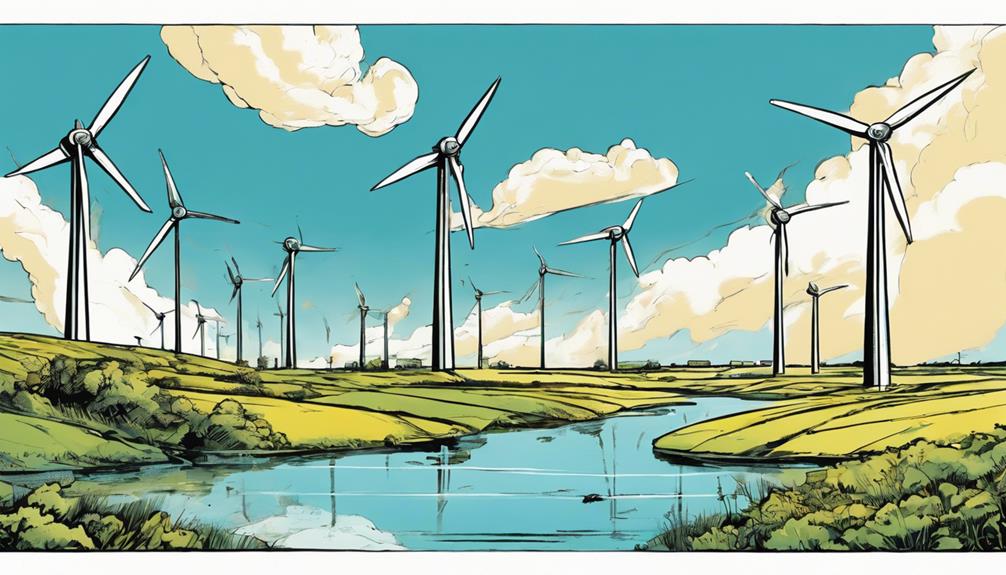
You're likely to generate more electricity and reap higher efficiency benefits by opting for larger wind turbines, as their increased rotor diameters and hub heights allow them to capture more wind energy and reduce the need for backup power. With larger rotors, you can boost capacity factors and lower energy production costs. Plus, taller turbines can access faster wind speeds, leading to more electricity over time. As you explore the world of wind energy, you'll discover how these advancements can reveal even more impressive efficiency gains and propel the industry forward.

Get garden gear delivered free — and shop member deals
- Fast, free delivery on millions of items
- Access to Prime Big Deal Days deals on October 6–7
- Prime Video, Amazon Music and more included
Key Takeaways
- Larger wind turbines with increased rotor dimensions and hub height enhance performance, leading to higher capacity factors and efficiency.
- Taller turbines with larger blades capture more wind energy, increasing power output and reducing the need for backup power.
- Efficiency improvements in larger turbines make wind energy more valuable, contributing to a significant decrease in carbon emissions.
- The use of larger rotors generates more electricity over time, lowering the cost of energy production and making wind energy more competitive.
- Advances in design and materials have enabled the development of more efficient turbines, with some models achieving capacity factors of over 60%.
As an affiliate, we earn on qualifying purchases.
Benefits of Larger Turbines
As you scale up wind turbines, you'll find that larger machines can capture more wind and access faster wind speeds, leading to a significant increase in energy production. This is because bigger turbine blades with larger rotor diameters sweep larger areas, improving wind resource utilization and efficiency. With larger rotors, you can generate more electricity over time, which can ultimately lower the cost of energy production. This makes wind power more economically competitive.
In fact, larger rotors may boost capacity factors, allowing turbines to generate more electricity over time.
The benefits of larger turbines are clear: they can capture more wind energy, produce more electricity, and do it more efficiently. As you consider the benefits of larger turbines, you'll see that they offer a promising way to increase energy production while reducing costs. By harnessing more wind energy with larger blades, you can take advantage of the wind's full potential.
Raising Efficiency Barriers
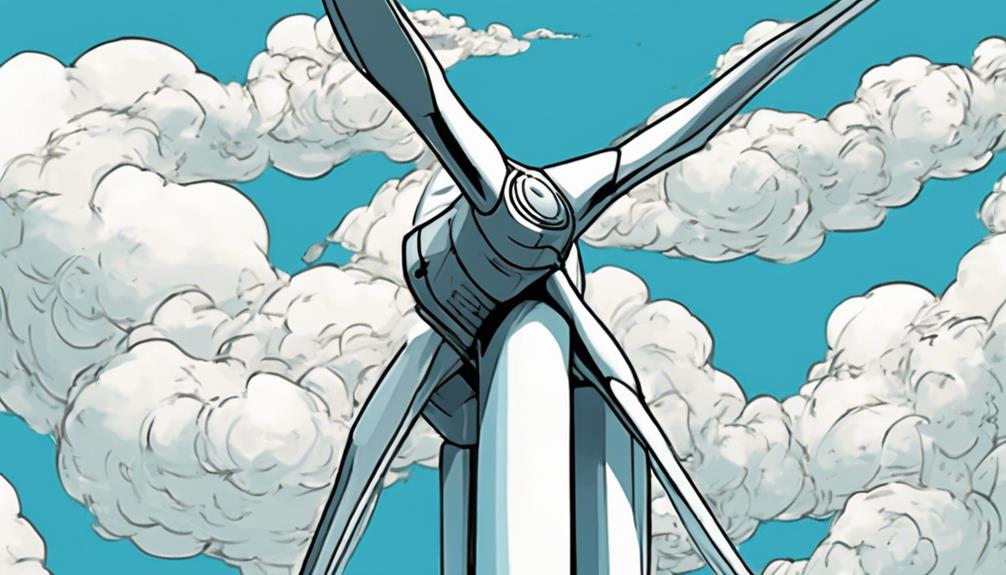
You'll encounter significant efficiency gains when larger wind turbines with increased rotor dimensions and hub height are integrated into the grid, capturing more wind energy and boosting overall efficiency.
As you scale up turbine size, you'll see enhanced performance, resulting in higher capacity factors. The GE Haliade-X, the tallest wind turbine globally, boasts a capacity factor of 63%, indicating higher efficiency.
With taller turbines, you'll reduce the need for backup power, making wind energy more competitive and efficient. The rotating blades of these massive turbines can capture more wind energy, leading to increased power output.
As turbine size continues to grow, you'll see efficiency improvements that make wind energy more valuable. The benefits are clear: larger turbines require less backup power, making them a more reliable and efficient source of energy.
Overcoming Design Challenges
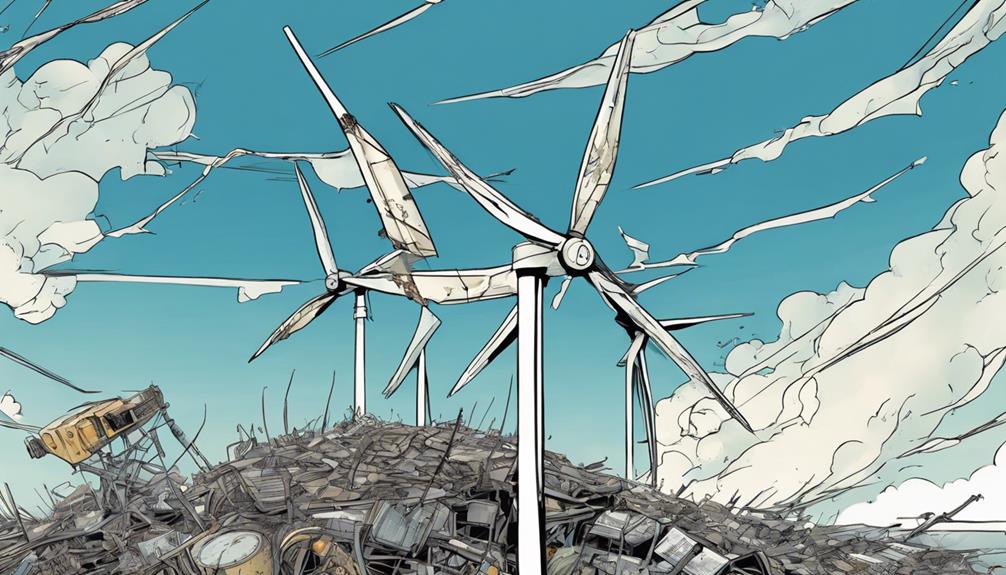
Designing and constructing massive wind turbines requires engineers to address significant materials engineering challenges, ensuring that these towering structures can withstand the added stresses of increased height and wind forces.
As you delve into designing larger turbines, you'll need to overcome challenges in materials engineering to guarantee the blades and towers can handle the extra load. This means subjecting blades to rigorous durability testing to confirm they can withstand the forces of nature.
You'll need to push the boundaries of turbine design, experimenting with new materials and constructions to achieve the desired strength and flexibility.
To accomplish this, you'll rely on engineering advancements that focus on higher capacity factors, reducing backup costs, and improving overall efficiency.
By designing taller turbines with larger blades, you'll increase wind power production, making it more competitive, easier to integrate into the grid, and more reliable.
It's a complex puzzle, but solving it will unleash the full potential of wind energy. With each innovation, you'll move closer to harnessing the full power of the wind, making a significant impact on the environment and our energy future.
Logistics and Supply Chain
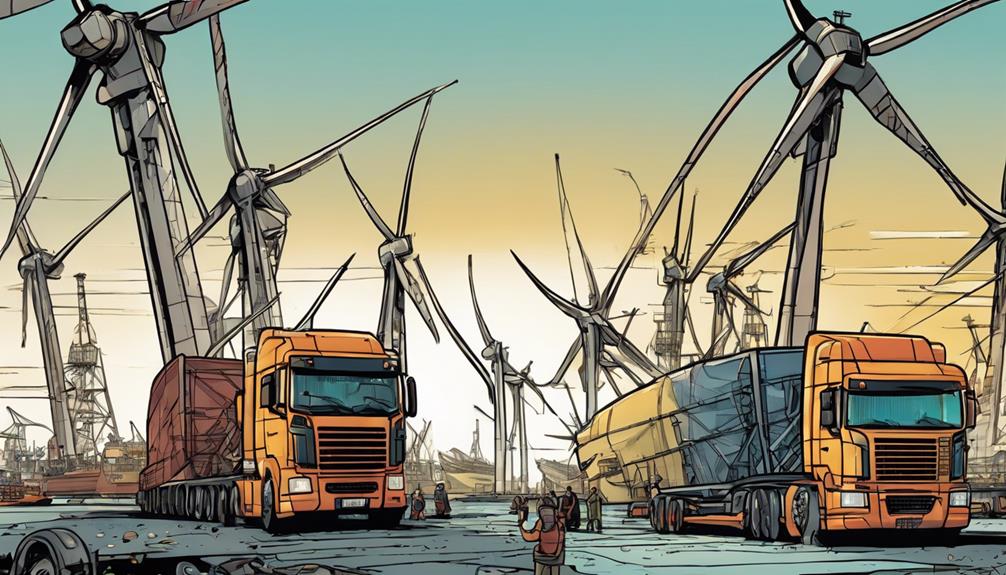
Transporting massive turbine components to installation sites poses significant logistical challenges due to their enormous size and weight. You'll face constraints on transportation routes, bridges, and ports, making it difficult to get these components to their final destination.
The UK's ambitious offshore wind capacity targets may be missed if manufacturing capacity and skilled workforce limitations aren't addressed. To overcome these logistical hurdles, you need to focus on developing a robust offshore wind supply chain and enhancing worker skills.
Challenges in turbine transportation hinder the scaling up of turbine size and capacity, impacting the industry's growth potential. To deploy larger wind turbines, you require specialized infrastructure and innovative solutions to address supply chain constraints.
This means investing in upgraded transportation vessels, terminals, and storage facilities. By streamlining logistics and supply chain operations, you can reduce costs, increase efficiency, and ultimately make larger wind turbines a reality. By doing so, you'll access the full potential of wind energy and pave the way for a more sustainable future.
Future of Wind Energy

As wind technology progresses, experts predict that by 2025, turbines will achieve unprecedented heights of 460 feet and boast capacity factors exceeding 60%. You'll soon witness wind turbines reaching for the sky, literally! These higher elevations will allow turbines to capture more consistent and stronger winds, resulting in increased efficiency.
Developments in turbine designs will also play a significant role in reducing prices by 2030, making wind energy more competitive and valuable. This means you'll benefit from a cleaner and more sustainable energy landscape.
The future of wind energy looks promising, with innovations set to make wind power more reliable and able to produce during peak demand times. As the industry continues to evolve, you can expect substantial cost reductions, contributing to a significant decrease in carbon emissions and a smoother shift to a sustainable energy future.
Get ready to harness the power of wind like never before!
Frequently Asked Questions
What Is an Advantage of a Bigger Wind Turbine?
You'll find that a bigger wind turbine's advantage is its ability to capture more wind and access faster wind speeds, resulting in increased energy production and lower costs, making it a more efficient option for you.
Does the Size of a Wind Turbine Matter?
"You think size doesn't matter? Think again! As you're wondering if bigger wind turbines make a difference, let's face it, they do – and in a big way, capturing more energy and boosting efficiency with each towering rotation."
What Type of Wind Turbine Is the Most Efficient?
You're looking for the most efficient wind turbine type. Currently, high-capacity factor turbines like the GE Haliade-X lead the pack, with innovative designs, larger rotor diameters, and advanced aerodynamics contributing to their impressive efficiency rates.
Are Taller Wind Turbines Better?
You're wondering if those gigantic wind turbines are really worth it – the answer is a resounding yes! Taller turbines harness faster wind speeds, generating more energy while reducing backup power needs, making them a game-changer for renewable energy.
Can Rooftop Wind Turbines Be as Efficient as Larger Ones?
Rooftop wind turbines are a key factor in the wind power rooftop energy revolution. While larger turbines have higher output, newer technology and designs are making smaller turbines more efficient. Advancements in rooftop turbine efficiency are making them increasingly competitive with larger ones, contributing to the rooftop energy revolution.
Does the Size of Wind Turbines Impact Their Efficiency?
The size of wind turbines can impact their efficiency, particularly in relation to the optimal wind speed for turbines. Larger turbines are more efficient at capturing energy from the wind, and they can operate at a wider range of wind speeds, making them more effective in various environmental conditions.
How Does Wind Turbine Size Impact Efficiency Compared to Optimal Wind Speed?
The size of a wind turbine has a direct impact on its efficiency compared to the optimal wind speed turbine performance. Larger turbines have the potential to capture more energy from the wind, but they require higher wind speeds to operate at their full potential. Finding the balance is crucial for maximizing efficiency.
Does the Size of Wind Turbines Impact Their Performance Efficiency?
The size of wind turbines does impact their performance efficiency. Larger turbines can capture more energy from the wind, however, they require a higher optimal wind speed for turbines to operate efficiently. Smaller turbines may have a lower optimal wind speed for turbines, but they may not generate as much power.
Conclusion
As you consider the future of wind energy, it's striking that the largest turbines are being installed just as the world needs them most. Coincidence? Maybe. But what's undeniable is that bigger turbines are more efficient, and that's a game-changer.
With larger rotors capturing more energy, costs are dropping, and carbon emissions are too. The challenges are real, but the payoff is worth it.
Get ready for a wind-powered revolution that's about to change the face of renewable energy forever.
Fall yard work Picks
leaf blowers
As an affiliate, we earn on qualifying purchases.