When the lattice constant increases, band energy lowers in materials like semiconductors. This happens because wider interatomic spacing weakens atomic interactions and reduces electron delocalization. This pivotal relationship impacts semiconductor properties and device performance substantially. Understanding these changes helps predict conductivity, optical properties, and electronic behavior.

Get garden gear delivered free — and shop member deals
- Fast, free delivery on millions of items
- Access to Prime Big Deal Days deals on October 6–7
- Prime Video, Amazon Music and more included
Key Takeaways
- Increased lattice constant widens interatomic spacing, reducing electron delocalization.
- Weakened atomic interactions from larger lattice decrease band energy.
- Larger lattice constant weakens bonding forces, lowering band energy levels.
- Expansion in lattice weakens electron-atom interactions, decreasing band energies.
- Reduced band energy in expanded lattices results from weakened electron-atom interactions.
semiconductor band gap measurement tools
As an affiliate, we earn on qualifying purchases.
As an affiliate, we earn on qualifying purchases.
Effect of Lattice Constant on Band Energy
How does the lattice constant influence band energy in materials?
The lattice constant plays an essential role in determining the band energy of a material, particularly in semiconductors. As the lattice constant increases, the interatomic spacing widens, leading to a decrease in band energy. This decrease is a result of weakened atomic interactions and bonding forces, which in turn reduce electron delocalization and confinement within the material.
The relationship between lattice constant and band energy is crucial for understanding semiconductor properties and electronic device performance. Changes in band energy due to varying lattice constants have significant implications on material conductivity, optical properties, and overall electronic behavior.
Influence of Effective Mass on Bands
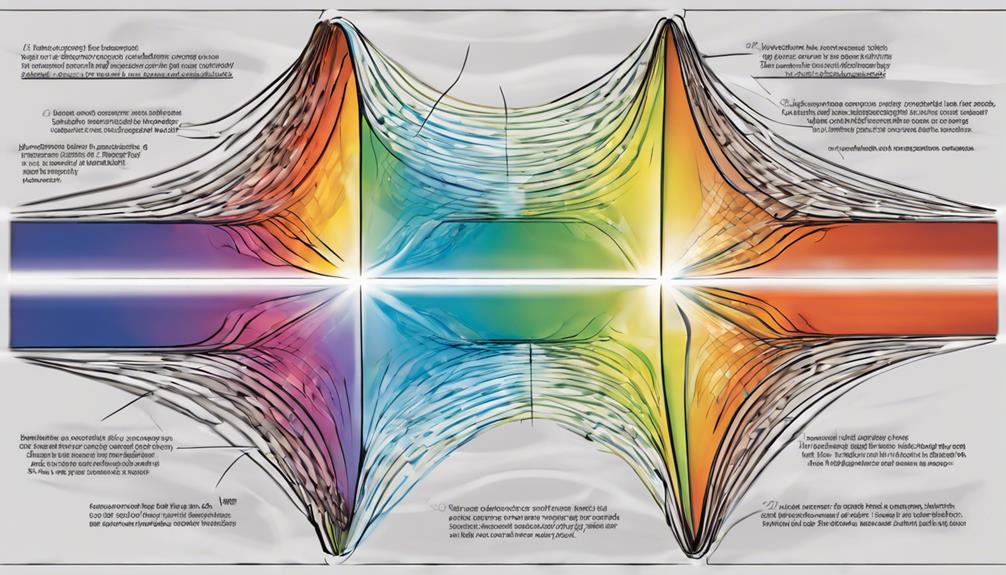
The significant mass of carriers in semiconductors greatly influences band energy levels, particularly in relation to the lattice constant.
In semiconductors, the significant mass of carriers impacts how energy bands are structured. A lighter significant mass results in lower energy bands, enhancing carrier mobility within the material.
When the lattice constant increases, the significant mass decreases, leading to a reduction in band energy levels. This phenomenon is essential in understanding why band energy lowers as the lattice constant increases in semiconductors.
The lower significant mass allows carriers to move more freely, contributing to the overall decrease in band energy levels. As a result, the significant mass plays a significant role in determining the band energy levels within semiconductors, with changes in lattice constant directly influencing these levels through alterations in carrier mobility and significant mass.
Structural Impact on Band Gap Energy
Increasing the lattice constant in semiconductors results in a significant impact on band gap energy due to weakened electron-electron interactions and reduced electron confinement. The larger interatomic spacing resulting from an increased lattice constant weakens the electron-electron interactions, leading to a lower band gap energy. Additionally, the reduced electron confinement in the enlarged unit cell affects the band energy by allowing for more freedom in electron movement.
To emphasize the impact of lattice constant variations on band energy, consider the following table:
| Effect of Lattice Constant on Band Energy | ||
|---|---|---|
| Increased Lattice Constant | Weakened Electron-Electron Interactions | Lower Band Gap Energy |
| Enlarged Unit Cell | Reduced Electron Confinement | Impact on Band Structure |
The relationship between the lattice constant and band energy is essential in understanding the electronic properties of materials like silicon and germanium, guiding their design and optimization.
Electronic Delocalization and Band Energy

Expanding the lattice constant in semiconductors results in electronic delocalization, leading to weaker bonding forces and subsequently lower band energies.
When the lattice constant increases, the interatomic spacing expands, causing electrons to become delocalized. In this delocalized state, electrons experience weaker bonding forces with the surrounding atoms.
As a result, the band energies decrease due to the reduced electron-atom interactions. Lower band energies signify higher electron mobility within the material since electrons are less confined to specific atomic locations.
This electronic delocalization phenomenon plays an essential role in determining the semiconductor properties and conductivity. Understanding the relationship between lattice constant and band energy is vital for tailoring materials with specific electronic properties.
Band Energy Variation in Expanded Lattices

As lattice constants expand in semiconductors, you'll observe a notable decrease in band energy levels. This phenomenon occurs due to the increased interatomic spacing, which weakens the bonding interactions between atoms, leading to a reduction in band energy.
In expanded lattices, the larger interatomic distances result in less overlap between atomic orbitals, altering the band structure and electron wavefunctions. The variation in band energy levels in expanded lattices plays a critical role in determining the conductivity and electronic properties of materials, particularly in understanding semiconductor behavior.
By studying the relationship between lattice constant and band energy, researchers can gain insights into how changes in the crystal structure impact the electronic structure of materials, ultimately influencing their overall performance in various applications.
This understanding of band energy variation in expanded lattices is essential for designing and optimizing semiconductor devices for enhanced functionality.
Frequently Asked Questions
How Does the Lattice Constant Affect the Band Gap?
When the lattice constant increases, the band gap decreases. This change affects semiconductor properties by altering electron wavefunction overlap. Modifying the lattice constant impacts the band structure, resulting in shifts in energy levels and influencing band energy.
What Is the Relationship Between Lattice Constant and Energy Gap?
Wondering about the relationship between lattice constant and energy gap? Well, as the lattice constant increases, band energy decreases due to reduced electron-electron interactions. This change impacts material properties, influencing conductivity and electronic behavior.
Why Does the Band Gap Decrease With an Increase in Temperature?
When the temperature rises, the atoms in the lattice move more, causing the band gap to shrink. This happens because higher temperature disrupts the crystal lattice, making it easier for electrons to shift, lowering the band energy.
How Does Crystal Structure Affect Band Gap?
When crystal structure shifts, band gap dances. Interatomic distances and electron delocalization twirl, altering band energies. Weaker bonding forces waltz in with larger lattice constants, leading band energy to gracefully lower its stance.
How Does Lattice Constant Affect Band Energy in Crystals?
The crystal lattice energy information table provides valuable data on the relationship between lattice constant and band energy in crystals. Understanding this relationship is crucial in predicting the electronic and optical properties of materials, as changes in the lattice constant directly impact the band structure and, consequently, the overall behavior of the crystal.
Conclusion
So, when the lattice constant increases, it's like stretching a rubber band – the energy decreases as the band gets longer.
Just like how a stretched rubber band has less tension, an expanded lattice has lower band energy.
This simple analogy helps us understand the relationship between lattice constant and band energy in a tangible way.
Remember, sometimes stretching things out can bring about unexpected changes in energy levels!
Fall yard work Picks
leaf blowers
As an affiliate, we earn on qualifying purchases.