The best rainwater harvesting systems make it easier to collect roof runoff and use it where your garden needs it. I name the FCMP Outdoor Raincatcher 4000 best overall for its 50-gallon capacity, flat-back shape, and dual spigots; the Step2 Lakewood stands out for buyers who want a larger barrel with a stand, while the diverter-and-hose kits suit people assembling a collection setup around an existing container. The main tradeoffs are storage capacity, included components, footprint, and access to the water. A barrel may be easier to use as a ready-made reservoir, while a kit can offer more flexibility but may need a compatible container. Read on for the full breakdown and guidance on matching a system to your home.

Get garden gear delivered free with Prime
- Fast, free delivery on millions of items
- Prime Video, Amazon Music and more included
- Member-only deals all year
Complete the kit


Key Takeaways
The Raincatcher 4000 earns the overall pick by combining a 50-gallon reservoir, a flat-back profile, and two spigots, giving it a useful balance of capacity and access.
The Step2 Lakewood is the standout when a larger 60-gallon capacity and an included stand matter more than choosing a compact barrel.
Diverter-and-hose kits vary by what they include: some list a downspout diverter, while others emphasize a hose or a multi-piece configuration, so buyers should check the package contents before ordering.
The two 45-gallon barrels are a more moderate storage choice than the 50- and 60-gallon options, but a stand can make water access easier without increasing barrel capacity.
The lineup splits between ready-made barrels and component kits; buyers who want a straightforward reservoir should favor a barrel, while those who already have a container may prefer a kit.
| FCMP Outdoor Raincatcher 4000 Rain Barrel, Flat-Back Rainwater Catcher with Spigots, 50 Gallon, Brown |  | Best Overall | Capacity: 50 gallons (189 L) | Dimensions: 24 in diameter x 32 in height | Material: UV-inhibited BPA-free polyethylene | VIEW LATEST PRICE | See Our Full Breakdown |
| FCMP Outdoor Catalina 45-Gallon Rain Barrel, Black |  | Best for Beginners | Capacity: 45 gallons (170 L) | Material: Recycled, UV-resistant, BPA-free polyethylene | Color: Black | VIEW LATEST PRICE | See Our Full Breakdown |
| Rainwater Collection System with Hose and Downspout Diverter |  | Best for Flexible Container Setups | Brand: Generic | Model: Rainwater Collection System | Color: Blue | VIEW LATEST PRICE | See Our Full Breakdown |
| Rainwater Collection Diverter System with Hose |  | Best Tool-Free Diverter | Material: Polyvinyl chloride (PVC) | Color: 1 piece | Shape: Rectangular | VIEW LATEST PRICE | See Our Full Breakdown |
| Rainwater Collection System with Hose, 2-Piece |  | Best for Temporary Setups | Material: PVC | Catch surface width: 93.5 cm | Hose length: 105.5 cm | VIEW LATEST PRICE | See Our Full Breakdown |
| Step2 Lakewood Rain Barrel with Stand, 60-Gallon Capacity |  | Best for High-Capacity, Elevated Storage | Capacity: 60 gallons | Dimensions: 46 in H x 24 in W x 20 in D | Weight: 34 pounds | VIEW LATEST PRICE | See Our Full Breakdown |
| 45-Gallon Rain Barrel with Stand |  | Best for Straightforward Garden Storage | Capacity: 45 gallons | Material: BPA-free polypropylene (PP) | Color: Black | VIEW LATEST PRICE | See Our Full Breakdown |
| FILWY 3-Piece Rainwater Collection System with Hose |  | Best for Portable, Multi-Location Collection | Brand: FILWY | Material: PVC | Package contents: 3 rainwater collection covers | VIEW LATEST PRICE | See Our Full Breakdown |
| rainwater harvesting system | Material | Color | Capacity | Brand |
|---|---|---|---|---|
| FCMP Outdoor Raincatcher 4000 | UV-inhibited BPA-free polyethylene | Brown | 50 gallons (189 L) | — |
| FCMP Outdoor Catalina 45-Gallo | Recycled, UV-resistant, BPA-free polyethylene | Black | 45 gallons (170 L) | FCMP Outdoor |
| Rainwater Collection System wi | — | Blue | — | Generic |
| Rainwater Collection Diverter | Polyvinyl chloride (PVC) | 1 piece | — | — |
| Rainwater Collection System wi | PVC | — | — | Generic |
| Step2 Lakewood Rain Barrel wit | Double-walled plastic | — | 60 gallons | — |
| 45-Gallon Rain Barrel with Sta | BPA-free polypropylene (PP) | Black | 45 gallons | — |
| FILWY 3-Piece Rainwater Collec | PVC | — | — | FILWY |
More Details on Our Top Picks
FCMP Outdoor Raincatcher 4000 Rain Barrel, Flat-Back Rainwater Catcher with Spigots, 50 Gallon, Brown
The Raincatcher 4000 is the strongest all-around pick here because it combines a useful 50-gallon reservoir with fittings for both drawing water and expanding storage. Its flat-back profile sits against a house, while the included debris screen, overflow tube, and hose kit give buyers more of the setup than the simpler Catalina provides. Side spigots and a linking tube also make it easier to add another barrel as garden demand grows. The tradeoff is physical: a full barrel is heavy, and its 24-inch diameter still takes meaningful yard space. Compared with the 45-gallon Catalina, this model offers more capacity and expansion hardware, but buyers with a tight footprint may prefer a compact diverter system that uses a separate container.
Pros:- 50-gallon capacity supports regular garden watering between rain events.
- Flat-back shape fits close to a house wall.
- Side spigots and included linking tube allow expansion to another barrel.
- Includes debris screen, overflow tube, and hose kit for a more complete setup.
Cons:- A filled barrel is heavy and needs a sturdy, level support surface.
- Its 24-inch diameter may be too large for narrow yards or balconies.
- The one-year limited replacement warranty is relatively short.
Best for: Home gardeners who want a ready-to-install, wall-hugging barrel with room to link additional storage.
Not ideal for: People with small patios or no sturdy, level base; the full barrel is heavy and the 24-inch footprint takes space.
- Capacity:50 gallons (189 L)
- Dimensions:24 in diameter x 32 in height
- Material:UV-inhibited BPA-free polyethylene
- Color:Brown
- Included accessories:40 in garden hose with shut-off valve, hanging clip, 66 in overflow tube, debris screen, 16 in linking tube, and ties
- Design:Flat back with side spigots
- Warranty:1-year limited replacement
Our verdict“Choose the Raincatcher 4000 if you want a substantial, expandable barrel with more included setup hardware than the Catalina.”
FCMP Outdoor Catalina 45-Gallon Rain Barrel, Black
The Catalina 45-Gallon suits buyers who want a straightforward barrel rather than a system built around expansion. Its flat back helps it sit against a wall, and the included fixed lid and shut-off hose keep the basic collection-and-dispensing setup simple. Recycled, UV-resistant, BPA-free polyethylene is a practical material choice for outdoor use. Compared with the Raincatcher 4000, the Catalina gives up five gallons of capacity and the listed linking hardware, so it is less adaptable if storage needs grow. In return, its simpler package can be easier to understand for a first-time rain-barrel owner. The 3.5-foot hose may not reach a distant bed, and the product details do not list an overflow tube or debris screen, so check the setup needs at your downspout before choosing it.
Pros:- 45-gallon capacity provides a useful supply for routine garden watering.
- Flat-back design can sit close to a wall.
- Made from recycled, UV-resistant, BPA-free polyethylene.
- Includes a fixed lid and hose with shut-off valve.
Cons:- The 3.5-foot hose may need an extension to reach planting beds.
- No linking tube or expansion fittings are listed, unlike the Raincatcher 4000.
- A debris screen and overflow tube are not specified in the included accessories.
Best for: First-time rain-barrel buyers who want a simple wall-side reservoir for nearby garden watering.
Not ideal for: Gardeners planning to connect multiple barrels or needing a longer hose and specified overflow or debris-screen accessories.
- Capacity:45 gallons (170 L)
- Material:Recycled, UV-resistant, BPA-free polyethylene
- Color:Black
- Design:Flat back with fixed lid
- Included accessories:3.5-foot garden hose and shut-off valve
- Brand:FCMP Outdoor
- Warranty:1-year limited replacement
Our verdict“Pick the Catalina for a simpler first barrel near your garden, but choose the Raincatcher 4000 if you need expansion hardware or more capacity.”
Rainwater Collection System with Hose and Downspout Diverter
This downspout diverter kit is a better fit for buyers who already have a barrel or want to direct rain into a container they choose. Quick-connect fittings and an adjustable connector make it more adaptable than a fixed-capacity barrel such as the FCMP Catalina, while the mesh filter catches some leaves and silt before water reaches the hose. That flexibility also means this is not a complete storage system: no barrel capacity or container is specified, so the amount you can collect depends on what you supply. The listing says it works with most standard downspouts but gives no dimensions, leaving fit uncertain until you check your own outlet. Compared with the PVC diverter from Rainwater Collection Diverter System with Hose, this option explicitly lists blue coloring and quick-connect fittings, but its compatibility details remain broad.
Pros:- Adjustable connector is intended to fit a range of standard downspouts.
- Quick-connect hose fittings simplify routing water to a chosen container.
- Mesh filter helps catch leaves and silt at the connection.
- Can serve gardens, greenhouses, balconies, or campsites where a suitable container is available.
Cons:- No storage barrel or capacity is specified, so collection volume depends on a separate container.
- Downspout compatibility is described broadly without exact dimensions.
- The product details do not state hose length or system material.
Best for: Gardeners who already own a suitable storage container and want a hose-connected way to route downspout water.
Not ideal for: Buyers seeking a complete, capacity-defined barrel system or those who cannot verify their downspout size before ordering.
- Brand:Generic
- Model:Rainwater Collection System
- Color:Blue
- Pack quantity:1
- Compatibility:Most standard downspout sizes
- Connection:Quick-connect hose fittings
- Filter:Mesh filter at diverter-to-hose connection
Our verdict“Choose this diverter if you have your own container and value flexible hose routing more than an all-in-one barrel.”
Rainwater Collection Diverter System with Hose
The Rainwater Collection Diverter System is aimed at buyers who want to route downspout water without committing to a fixed barrel. Its adjustable connector is described as tool-free to install, and a built-in mesh filter catches leaves and silt before water flows through the hose to a bucket or barrel. That makes it a more direct choice for temporary or flexible setups than the FCMP Raincatcher 4000, which provides a defined 50-gallon reservoir but takes more floor space. This diverter is also described as PVC and UV-resistant, though no dimensions or capacity are supplied. Like the other generic diverter in this lineup, its claim of broad downspout fit does not replace checking your own outlet size. Skip it if you need a complete storage vessel or a specified collection volume.
Pros:- Tool-free adjustable connector is designed for easier installation.
- Built-in mesh filter helps catch leaves and silt.
- PVC construction is described as UV-resistant.
- Routes water to a separate barrel or bucket rather than requiring one specific container.
Cons:- No barrel, storage capacity, or dimensions are provided.
- Broad downspout compatibility wording leaves fit uncertain.
- The listing does not specify hose length.
Best for: Renters and gardeners who want a removable, tool-free way to feed rainwater into a bucket or existing barrel.
Not ideal for: Buyers who need a complete system with known capacity, or anyone whose downspout fit must be confirmed from precise dimensions.
- Material:Polyvinyl chloride (PVC)
- Color:1 piece
- Shape:Rectangular
- Pack quantity:1
- Filter:Built-in debris mesh
- Installation:Tool-free adjustable connector
- Model number:Rain Barrels74417
Our verdict“Choose this kit for a flexible, tool-free diverter, not if you want the known capacity and included accessories of the Raincatcher 4000.”
Rainwater Collection System with Hose, 2-Piece
This two-piece PVC collection system stands apart from the single diverters because the supplied catch surface and hose are sized for a simple, portable setup rather than a permanent barrel installation. Its 93.5 cm catch surface directs rain toward a container, while the anti-splash design is intended to reduce water spilling around the collection point. Tool-free installation may suit a greenhouse, balcony, or campsite where a fixed downspout system is impractical. Compared with the Rainwater Collection System with Hose and Downspout Diverter, it lists concrete catch-surface and hose measurements, but it does not specify a mesh filter or precise downspout compatibility. It also includes no storage vessel or capacity, so buyers still need a container and should expect collection to depend on placement and rainfall.
Pros:- Two-piece arrangement provides a catch surface and hose for directing water.
- 93.5 cm catch-surface width is specified.
- 105.5 cm hose length is specified.
- Tool-free installation and anti-splash design suit temporary collection setups.
Cons:- No barrel or storage capacity is included or specified.
- No filter is listed to catch leaves or silt.
- Compatibility with particular eaves or downspouts is not detailed.
Best for: Campers and small-space gardeners who need a reusable, tool-free collector to direct rain into a container they already own.
Not ideal for: Homeowners seeking a permanent, capacity-defined barrel setup or buyers who need a documented filter and precise downspout fit.
- Material:PVC
- Catch surface width:93.5 cm
- Hose length:105.5 cm
- Installation:Tool-free
- Quantity:2 pieces
- Brand:Generic
- Model number:Rainwater Collection System with Hose
Our verdict“Choose this portable collector for a temporary container-based setup; choose a barrel such as the Raincatcher 4000 for defined storage capacity.”
Step2 Lakewood Rain Barrel with Stand, 60-Gallon Capacity
The Step2 Lakewood stands out for combining the lineup’s largest stated barrel capacity with an elevated design. Its 60-gallon reservoir can hold more garden water between rainfall events than the 45-gallon Rain Barrel with Stand, while the raised position makes filling a watering can less awkward and supports water flow from the spigot. A stainless steel mesh screen helps keep fine debris out, and the 3/4-inch brass spigot offers a durable dispensing point. Double-walled plastic is designed to resist chipping, fading, cracking, and peeling, giving it an advantage over a basic collection cover such as the FILWY system when built-in storage is the priority. The tradeoff is its 34-pound weight and larger footprint: it takes more room and still needs some assembly.
Pros:- 60-gallon capacity holds more water than the 45-gallon Rain Barrel with Stand.
- Elevated design makes watering-can filling easier and supports water dispensing.
- Stainless steel mesh screen helps filter fine debris.
- Double-walled plastic is designed to resist chipping, fading, cracking, and peeling.
Cons:- At 34 pounds, it is relatively heavy to move.
- Its 46-inch height and 24-inch width require a dedicated spot.
- Some assembly is required.
Best for: Gardeners with space for a permanent barrel who want more stored water and an elevated spigot for filling watering cans.
Not ideal for: Balcony gardeners or anyone who needs a lightweight, easily packed collection setup; its 60-gallon form and 34-pound weight take up space and are harder to move.
- Capacity:60 gallons
- Dimensions:46 in H x 24 in W x 20 in D
- Weight:34 pounds
- Material:Double-walled plastic
- Shape:Rectangular
- Filter:Stainless steel mesh screen
- Spigot:3/4-inch brass
- Assembly:Minimal assembly required
Our verdict“Choose the Step2 Lakewood if you want the largest stated barrel capacity in this batch and can make room for a sturdy, elevated unit.”
45-Gallon Rain Barrel with Stand
This barrel is a practical middle ground for gardeners who want an elevated, ready-to-use storage format without stepping up to the Step2 Lakewood’s 60-gallon capacity. It holds 45 gallons and includes a stand, mesh screen, spigot, hose connection, and overflow outlet, so the core collection and dispensing parts are part of the package. The overflow outlet is useful when rainfall exceeds the barrel’s remaining capacity, while the screen helps keep leaves and debris out. Compared with the FILWY three-cover system, this is the clearer choice for buyers who want water stored in a barrel rather than gathered through a flexible collection setup. Its BPA-free polypropylene construction suits outdoor use, though the product data gives no dimensions or weight, making space planning harder; its capacity is also lower than the Step2.
Pros:- 45-gallon capacity provides a dedicated supply for garden and outdoor watering.
- Included stand raises the barrel to make filling watering cans easier.
- Mesh screen helps keep leaves and debris out.
- Spigot, hose connection, and overflow outlet are included.
Cons:- Stores 15 fewer gallons than the Step2 Lakewood.
- No dimensions or weight are provided, making placement and handling harder to plan.
- The listed product details do not specify the spigot material or connection size.
Best for: Home gardeners who want an elevated 45-gallon barrel with a spigot, hose connection, and overflow outlet included.
Not ideal for: Buyers who need the most storage per barrel or precise fit planning before purchase; it holds less than the Step2 Lakewood and no dimensions are provided.
- Capacity:45 gallons
- Material:BPA-free polypropylene (PP)
- Color:Black
- Shape:Cylindrical
- Included components:Stand, mesh screen, spigot, overflow outlet
- Hose connection:Included
Our verdict“Pick this barrel for an included stand and useful outlet hardware in a 45-gallon setup, but choose the Step2 if storage capacity matters more.”
FILWY 3-Piece Rainwater Collection System with Hose
Unlike the Step2 Lakewood and 45-Gallon Rain Barrel with Stand, the FILWY is not a rigid storage barrel; it is a three-cover collection system with a PVC hose. That difference makes it the flexible pick for people who want to collect rainwater around a garden, greenhouse, balcony, or campsite, rather than keep a fixed reservoir beside a downspout. Built-in supports, reinforced edges, and water channels help the covers hold their shape and guide runoff toward the outlet, while no-tool installation lowers the setup barrier. The package includes three covers, which can suit buyers looking to collect in more than one spot. The tradeoff is limited planning information: no dimensions or storage capacity are listed, and no storage bag is included. It also does not offer the rigid, measured reservoir capacity of the Step2.
Pros:- Three reusable collection covers are included.
- Built-in supports and reinforced edges help the covers maintain shape.
- Water channels guide collected rain toward the drainage outlet.
- Tool-free installation and included PVC hose suit flexible outdoor setups.
Cons:- No dimensions or collection capacity are provided, limiting fit and output planning.
- No storage bag is listed among the package contents.
- Unlike the two barrel options, it does not provide a stated rigid storage reservoir.
Best for: Gardeners, greenhouse owners, balcony users, or campers who want a tool-free collection setup that can serve multiple outdoor locations.
Not ideal for: Households seeking a fixed-capacity reservoir for storing water between rain events; this system lists no capacity and is not a rigid barrel like the Step2 Lakewood.
- Brand:FILWY
- Material:PVC
- Package contents:3 rainwater collection covers
- Installation:No-tool installation
- Included accessory:PVC hose
- Supports:Built-in supports
- Edge construction:Reinforced edges
- Water direction:Water channels
Our verdict“Choose the FILWY for flexible, tool-free collection across outdoor locations, not for a fixed-capacity rainwater barrel.”
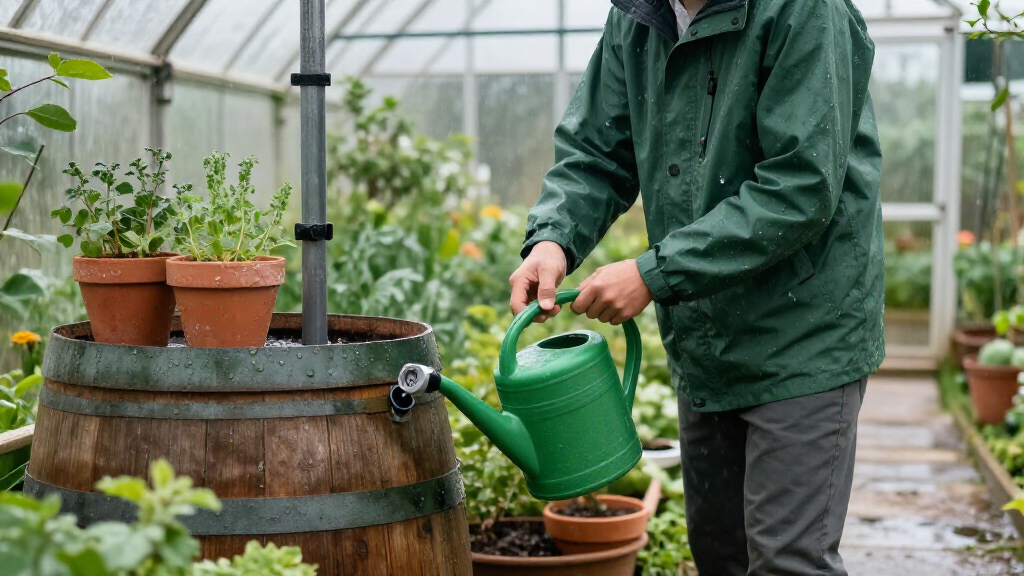
How We Picked
I ranked these options around the job a rainwater harvesting system needs to do: collect runoff, store enough water for the intended use, and make that water practical to access. I compared stated capacity, form factor, whether a stand or diverter is included, the listed hose and spigot arrangements, and how much of the setup appears to be supplied. Those details affect day-to-day usefulness: a larger tank holds more between watering sessions, while a stand or an additional outlet can make filling a watering can less awkward.
The Raincatcher 4000 ranks first for its balance of capacity, shape, and dual-spigot access. The Step2 Lakewood follows for buyers who prioritize more storage and an included stand, while the other barrels and kits rank according to their narrower strengths, such as a simpler capacity choice or a component-based setup. Product names alone do not confirm compatibility, installation requirements, or materials, so I treat those as details buyers should verify rather than assumed advantages.
| rainwater harvesting system | Material | Brand |
|---|---|---|
| FCMP Outdoor Raincatcher 4000 | UV-inhibited BPA-free polyethylene | — |
| FCMP Outdoor Catalina 45-Gallo | Recycled, UV-resistant, BPA-free polyethylene | FCMP Outdoor |
| Rainwater Collection System wi | — | Generic |
| Rainwater Collection Diverter | Polyvinyl chloride (PVC) | — |
| Rainwater Collection System wi | PVC | Generic |
| Step2 Lakewood Rain Barrel wit | Double-walled plastic | — |
| 45-Gallon Rain Barrel with Sta | BPA-free polypropylene (PP) | — |
| FILWY 3-Piece Rainwater Collec | PVC | FILWY |
Factors to Consider When Choosing Best Rainwater Harvesting Systems
Choosing a rainwater system is less about finding the largest container and more about matching storage, roof drainage, and water access to your property. I would settle the site and setup questions before comparing capacity alone; they can determine whether a barrel or a collection kit is the better fit.
Match Storage Capacity to Your Watering Routine
A larger capacity can reduce how often you run through stored water, but it will not guarantee a steady supply through a dry spell. Estimate how much water you use per session and how frequently you expect to water, then compare that with the rainfall and roof runoff available at your home. A 60-gallon barrel such as the Step2 Lakewood offers more storage than the 45-gallon options, but the extra volume only helps if the site can collect and support it. Buyers should also account for the filled system’s weight when choosing its location. Avoid selecting by gallons alone: a tank that is difficult to position or access may be less useful than a smaller, better-placed one.
Check Your Downspout and Kit Contents Before Buying
Collection kits and barrels solve different parts of the problem, and their names do not always tell you exactly what arrives in the box. Confirm whether a kit includes a diverter, hose, fittings, and a storage container, or whether you need to source some parts separately. Measure the downspout and check its shape and location before purchase; a diverter that does not match the existing drain can add adapters, extra work, or a return. Also check what the product instructions say about installation height and overflow routing. A kit can be a flexible choice for someone who already owns a suitable container, but a complete barrel may be simpler for a first-time buyer.
Plan Where Overflow Will Go
Every barrel has a limit, so the excess water needs a safe route once the storage is full. Choose a location where overflow will not pool against the house, wash out soil, or run toward a neighbor’s property. The intended outlet or overflow path should work with the slope of the ground and nearby drainage. Do not assume a hose included for collection also handles overflow; check the product details and instructions for that function. This planning step can matter more than a small difference in capacity, since poor placement can create drainage problems even when the barrel itself works as intended.
Think About How You Will Draw Water
Water access affects how often a stored supply gets used. A lower spigot may be convenient for a hose, while a higher outlet or stand can make it easier to fill a watering can; the right arrangement depends on your garden tools and pressure needs. Check the listed number and placement of outlets rather than assuming every barrel supports the same setup. A stand raises the outlet, but it also adds height and may need a stable, level base. If you plan to use a hose, verify that the product’s outlet and instructions match that use, since a gravity-fed barrel will not behave like a pressurized tap.
Compare Footprint, Access, and Maintenance
Measure the space beside the downspout, including room to reach a lid, spigot, or filter for routine cleaning. A flat-back design, like the Raincatcher 4000, may sit closer to a wall than a rounded barrel, but the actual fit still depends on its dimensions and the site. Look for clear instructions on screening, sediment, cleaning, and seasonal storage, especially if leaves or debris are common around the roof. A screen can help keep larger debris out, but it does not remove contaminants or make collected water safe to drink. The easier a system is to inspect and clean, the more practical it is for regular garden use.
Set Expectations for Water Use and Local Rules
Most home rain barrels are best treated as garden-water storage, not as drinking-water systems. Roof runoff can carry debris and other contaminants, so do not use it for drinking or food preparation unless a properly designed treatment process and applicable guidance support that use. Local rules may also cover installation, mosquito prevention, overflow, or permitted uses, so check local guidance before setting up a system. If freezing weather is common, look for the manufacturer’s directions for draining or storing the unit during winter. These practical limits help you choose a setup that fits your use without treating a basic barrel as a full household water system.
Frequently Asked Questions
Should I choose a rain barrel or a diverter kit?
Choose a barrel if you want a dedicated storage container and prefer to compare capacity, shape, and water access in one product. A diverter kit can suit you better if you already have a compatible container or want to assemble a setup from separate parts. Check whether the kit includes the fittings and hose you need; product names may not spell out every component. Before buying, confirm that the diverter matches your downspout and that you have a safe plan for overflow. If you are unsure about compatibility, a barrel with clearly listed components is usually the more straightforward route.
Is a 45-, 50-, or 60-gallon system the right size?
The right size depends on how quickly you use water, how much roof runoff reaches the collection point, and how much space you can dedicate to storage. The 45-gallon barrels are the smaller listed choices, the Raincatcher 4000 holds 50 gallons, and the Step2 Lakewood holds 60 gallons. More capacity can provide a larger reserve after rain, but it cannot compensate for a roof or climate that supplies little runoff. Consider the filled weight and access around the barrel as well as its stated volume. A modest tank placed at a useful downspout may serve a garden better than a larger one that is awkward to reach.
Can I connect a rain barrel to a garden hose?
Some products list a hose or multiple spigots, but that does not automatically mean they will deliver the flow or pressure you expect. Check the outlet type, hose compatibility, and manufacturer instructions before planning to water with a hose. Gravity-fed barrels depend on the water level and the height of the outlet, so flow can decrease as the barrel empties. A stand may raise the outlet and help with access, but it does not turn the system into a pressurized supply. If a steady hose flow matters, verify the product’s specifications and consider whether a separate pump is appropriate for your setup.
Do I need to prepare my downspout before installing a system?
Usually, yes: you should check the downspout’s size, shape, and position before ordering, especially for a kit that uses a diverter. Make sure the collection point is reachable and that a full barrel can sit on firm, level ground nearby. Plan how to route overflow away from the foundation and paths where water could collect. Follow the product instructions for cutting or fitting the downspout, and avoid modifying it until you have confirmed the kit’s compatibility. If the system requires an adapter not included in the package, identifying that early can prevent an incomplete installation.
Can I use collected rainwater for drinking or cooking?
Do not treat water from a standard rain barrel as safe for drinking or cooking. Roof runoff may carry animal waste, leaves, roofing residues, and other contaminants, and a basic diverter or screen does not make it potable. These products are best matched to non-potable uses such as watering ornamental plants, subject to local guidance and the product instructions. Drinking-water collection calls for a system designed for that purpose, appropriate treatment, and suitable testing. If you plan to use runoff on edible crops, check local health guidance and avoid applying it to parts of the plant that will be eaten raw.
Conclusion
For the best balance of capacity, placement, and access, I recommend the FCMP Outdoor Raincatcher 4000 as the best overall pick. Choose the Step2 Lakewood as the best premium-style option in this lineup if a 60-gallon capacity and included stand match your needs; the product details provided do not establish a broader materials or durability advantage. For value, I would start with the 45-gallon barrel options if their capacity and listed components fit your garden, then compare the stand and exact package contents rather than assuming one is a better deal. Beginners who want a defined storage container can start with a barrel, while buyers who already own a compatible container may prefer one of the diverter-and-hose kits. For a tighter wall-side location, the Raincatcher’s flat-back design is the clearest fit-specific choice. Before deciding, verify dimensions, downspout compatibility, included fittings, and overflow routing so the system suits your site as well as your watering routine.