TL;DR

Get garden gear delivered free with Prime
- Fast, free delivery on millions of items
- Prime Video, Amazon Music and more included
- Member-only deals all year
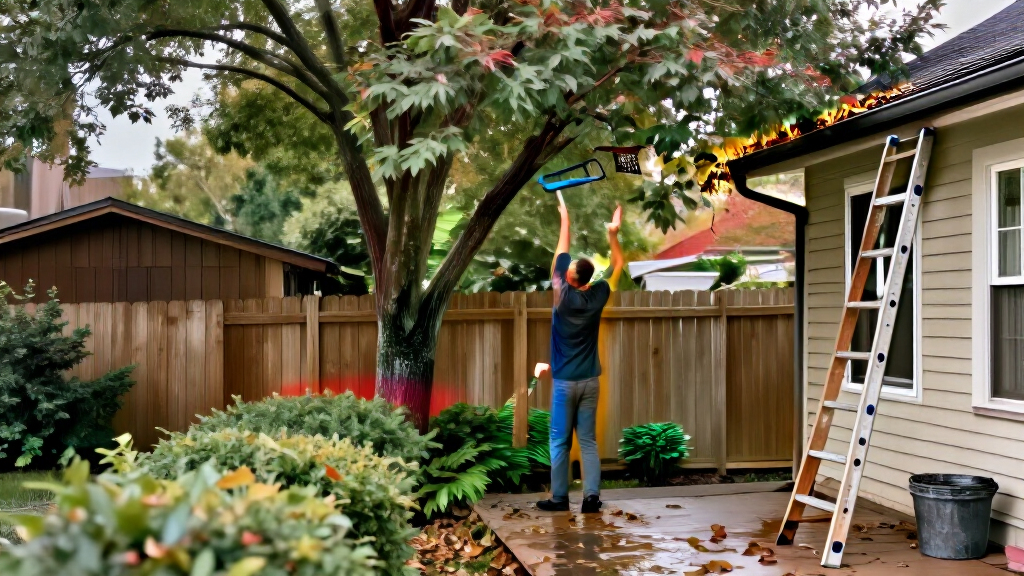
Leaves from a neighbour’s tree blocking your gutters do not automatically give you grounds for a legal claim, according to property experts cited by Ideal Home. They recommend discussing the problem, checking restrictions before pruning branches that overhang your property, and recording any damage or costs. More serious, persistent harm may call for council or specialist legal advice.
Homeowners whose gutters are blocked by leaves from a neighbour’s tree should first raise the problem with the neighbour, then check local tree protections before pruning branches that cross the boundary, property experts told Ideal Home. The report says routine leaf clearing is unlikely on its own to support a legal claim, though persistent leaf fall that causes actual property damage may warrant further advice.
Start with a conversation. Victoria Quinn, a partner in Disputes & Regulatory at law firm Wilkin Chapman Rollits, told Ideal Home that a neighbour may not know their tree is causing a problem and could be willing to carry out maintenance. She said an amicable discussion may resolve the issue more effectively than legal action. Keeping a record of that approach may also help if the matter later escalates.
Overhanging branches can generally be cut back to the boundary, according to Sarah Dodd, founder of Tree Law, as described in the report. That does not mean a homeowner can enter the neighbour’s land or cut branches beyond the boundary. Before pruning, Dodd advises checking whether the tree is protected by a Tree Preservation Order (TPO) or is in a conservation area. Restrictions or notification requirements may apply; the report recommends checking with the local council.
Keep evidence if the problem continues. Quinn recommends photographs of blocked gutters, records of cleaning costs, and receipts for remedial work. If leaves are causing consequential damage, such as mould in the home, the report says a formal council complaint may be appropriate. For unusually severe or persistent leaf fall that damages property, Dodd says specialist advice may be suitable, particularly if the neighbour has already been told about the issue.
When Leaf Fall Causes Damage
The distinction between routine maintenance and property damage matters because the source says ordinary inconvenience—such as sweeping leaves or cleaning gutters from time to time—is unlikely to be enough for legal intervention. A record of repeated blockages and repair costs can help show whether the issue goes beyond an occasional nuisance.
Blocked gutters may be part of a wider problem if they contribute to mould or other damage, but the report does not say that every blockage causes such harm or guarantees council action. Taking measured steps first can help neighbours address the issue without a dispute, while preserving information needed to seek help if damage develops.
As an affiliate, we earn on qualifying purchases.
The Boundary and Tree Rules
The guidance in Ideal Home’s report concerns leaves and branches crossing property boundaries. It distinguishes between cutting back encroaching branches from one’s own side and entering a neighbour’s land or cutting beyond the boundary, which the cited expert says a homeowner should not do.
That general right to prune is subject to tree protections and local planning rules. The report advises checking for a TPO and whether the property is in a conservation area before work begins. It does not provide a location-specific legal assessment, so applicable permissions can depend on the tree and local authority.
“Open communication often resolves these types of issues more effectively and amicably than legal action.”
— Victoria Quinn, Partner of Disputes & Regulatory at Wilkin Chapman Rollits, quoted by Ideal Home
Damage and Local Rules Matter
The report does not establish whether any particular reader’s situation amounts to a legal nuisance. That may depend on how severe and persistent the leaf fall is, whether it has caused actual damage, and what steps have already been taken. It also does not say that a council will accept every complaint involving mould or blocked gutters.
Tree protections vary by location and tree. The source advises checking with the local council, but does not identify a specific council process or determine whether consent is required in any individual case. Homeowners should not assume that the general right to prune applies without restrictions.
Document the Problem and Respond
The practical next steps are to tell the neighbour, check local protections, and record the effects. If considering pruning, confirm the boundary and ask the local authority about any TPO or conservation-area requirements before work starts. Keep photographs, bills and receipts as the problem develops.
If the issue remains an inconvenience, the report’s experts suggest continuing to seek an amicable solution. If there is persistent leaf fall or evidence of property damage, the homeowner can contact the council or seek specialist advice. The source gives no set timetable for a response or legal process; the appropriate route depends on the facts and local rules.
Key Questions
Can I cut branches from my neighbour’s tree that overhang my property?
Sarah Dodd of Tree Law says there is generally a common-law right to cut overhanging branches back to the boundary. Do not enter the neighbour’s land or cut beyond the boundary, and check for a Tree Preservation Order or conservation-area rules before pruning.
Can I take legal action because leaves keep blocking my gutters?
Not necessarily. The experts quoted by Ideal Home say ordinary inconvenience, such as periodic gutter cleaning, is unlikely by itself to justify legal intervention. Persistent, unusually severe leaf fall that causes actual property damage may call for specialist advice.
What evidence should I keep?
Keep photographs of blocked gutters, records of cleaning costs and receipts for repairs or other remedial work. A record of conversations with your neighbour can also help show that you tried to resolve the issue directly.
Should I contact the council?
The report says a formal council complaint may be appropriate if the leaves are causing damage such as mould, but it does not guarantee that the council will act. Contact your local authority to ask about the complaint process and any tree protections that apply.
Source: rss
Fall Picks
fall essentials
As an affiliate, we earn on qualifying purchases.