
TL;DR

Get garden gear delivered free with Prime
- Fast, free delivery on millions of items
- Prime Video, Amazon Music and more included
- Member-only deals all year
A Gardener’s Path guide recommends preparing perennial delphiniums for winter by waiting until their leaves yellow and die before cutting stalks back, removing garden debris, watering during dry fall weather and applying organic mulch. The steps are intended to protect roots and reduce pest and disease carryover; exact timing depends on local weather, and annual larkspur will not survive winter as a perennial.
Gardener’s Path has published a seasonal guide to preparing delphiniums for winter, recommending that gardeners wait for foliage to die back before cutting stalks, clear debris, keep roots watered during dry fall spells and apply mulch. The advice matters because delphiniums are perennials that can regrow in spring, but the guide says their roots benefit from protection during cold weather.
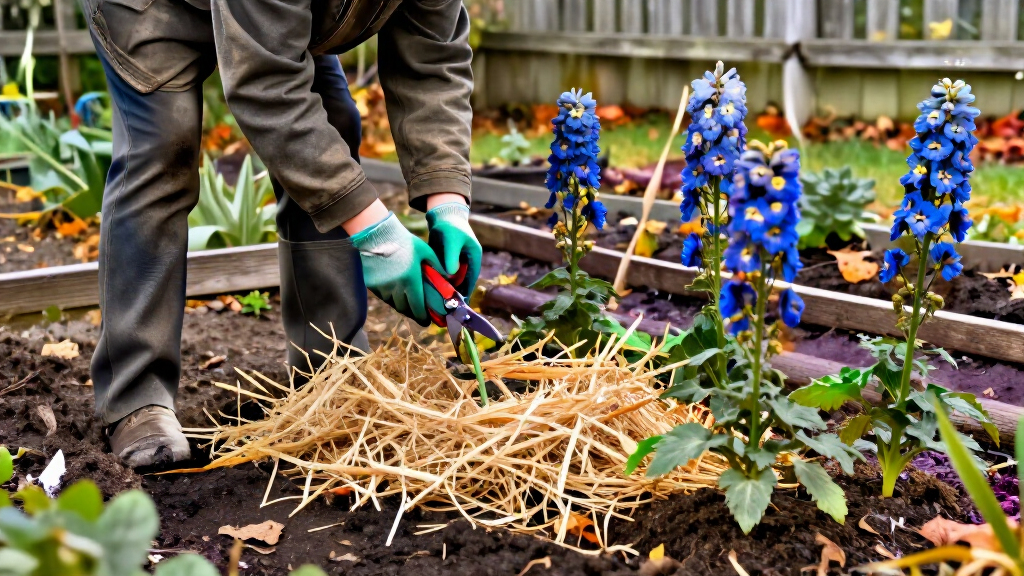
The guide advises against cutting delphinium stalks as soon as flowering ends. Gardeners can remove spent flower stalks during the growing season, cutting down to where the leaves begin to encourage side shoots. But the leaves should remain until they have turned yellow and begun to brown. Once the foliage is dead, cut the stalks to about 1 to 2 inches above soil level. Small shoots that appear before the first frost can be left; the report says they will die back with the cold.
Before winter, clear weeds and plant debris around the delphiniums. The report says garden cleanup can help limit pests and disease returning in spring. Its author describes removing aphid-infested stalks during the previous summer and taking them to a fire pit, while warning that cold weather alone may not eliminate aphid eggs. The guide does not prescribe burning as a general requirement; gardeners should follow local rules for disposal of diseased or pest-infested material.
Watering should continue while the plant is dying back because its roots remain alive. The report recommends about an inch of water per week during dry weather, with rain counted toward that amount. It says to stop watering when air temperatures begin dropping into the low 40s Fahrenheit and below, while allowing watering during warmer periods between freezes if there has been no rain or snowmelt. In mid- to late fall, add organic mulch around the stalk and root area. Suggested materials include straw, chopped leaves, wood chips and evergreen boughs; remove the mulch in spring, the guide advises.
Protecting Roots Through Winter
These preparations address the period when the visible plant dies back but its roots remain alive. Mulch helps insulate the root area and retain moisture, while watering during dry spells can prevent the soil around the plant from becoming too dry before it freezes. Cutting back only after the foliage has died also follows the guide’s seasonal timing rather than removing leaves while they are still present.
Cleanup has a separate purpose: removing weeds and debris reduces material that could shelter pests or disease. The advice offers gardeners a practical set of fall tasks, but it does not guarantee survival. Local winter conditions and plant health still matter, and the report does not provide comparative trial data on how much each step improves survival.
delphinium winter protection mulch
As an affiliate, we earn on qualifying purchases.
As an affiliate, we earn on qualifying purchases.
Delphiniums and Annual Larkspur
The guide stresses that gardeners should identify their plants before planning for winter. Perennial delphiniums, including species such as Delphinium elatum and D. grandiflorum, can return after winter. Annual larkspur, in the genus Consolida, does not survive as a perennial, though it can reseed. The plants can be confused because their flowers look similar; the report describes larkspur flowers as more delicate and spaced apart, while delphinium blooms are often more densely clustered.
The article’s author recounts growing delphiniums in Alaska and says the plants returned after a first winter when their dead stalks were left standing. In later years, the author cut the stalks back and added other preparations. That is a personal account, not a controlled comparison of winter-care methods. The guide says delphiniums can be cold hardy in USDA Zone 3, where temperatures can reach minus 30°F, while still recommending mulch to help them through cold conditions.
Timing Depends on Local Weather
The report gives seasonal and temperature guidance but does not specify a calendar date for every region. When to stop watering and apply mulch will vary with local temperatures, rainfall and the timing of the ground freeze. Its recommendation of about an inch of weekly water applies to dry conditions; the guide says rain should count toward that amount.
The source does not establish how much the recommended steps change survival rates, nor does it identify a single mulch depth for all gardens. It also does not provide a complete pest-disposal protocol. Gardeners facing disease or infestations may need to follow local extension-service guidance for handling affected material.
Fall Care Before the Ground Freezes
Gardeners can use the sequence in the guide as a fall checklist: let leaves die naturally, cut stalks close to the ground, remove weeds and debris, water only as needed during dry weather, and add organic mulch in mid- to late fall before the ground freezes. Remove the mulch in spring, as the report advises, and watch for new shoots growing past the old stalks.
For plants whose identity is uncertain, check whether they are perennial delphiniums or annual larkspur before expecting them to return. The source offers no new research findings or further scheduled update; its advice is presented as seasonal gardening guidance.
Key Questions
When should I cut back delphiniums for winter?
Wait until all leaves have turned yellow and begun to brown. Then cut the stalks to about 1 to 2 inches above soil level, according to the Gardener’s Path guide.
Should I keep watering delphiniums in fall?
Yes, during dry spells while the ground has not frozen. The guide recommends about an inch of water per week, including rainfall, and says to stop when air temperatures begin dropping into the low 40s Fahrenheit and below.
What mulch can I use around delphiniums?
The report lists straw, chopped leaves, wood chips and evergreen boughs as options. It advises removing mulch in spring. The article does not specify one required depth for every garden.
Will larkspur come back after winter?
Annual larkspur does not overwinter as a perennial, unlike delphiniums. The guide says larkspur can reseed itself, so new plants may appear the following season.
Source: rss
Halloween Picks
halloween
As an affiliate, we earn on qualifying purchases.