
TL;DR

Get garden gear delivered free with Prime
- Fast, free delivery on millions of items
- Prime Video, Amazon Music and more included
- Member-only deals all year
Crocuses are cold-hardy flowers that need a winter chilling period to bloom, and snow can help insulate their corms rather than harm them. The source says many varieties grow in USDA Zones 3 to 8, but corms should be planted in fall, not in winter, to allow time to root and chill.
Crocus corms can survive deep winter cold, and a covering of snow may help insulate them, according to a gardening report from Gardener’s Path. The flowers need several months of cold soil to prepare for blooming, but gardeners should plant corms in fall rather than wait until winter.
The report says snow itself is not a threat to crocus corms. It can act as insulation that helps keep the corms moist through winter, while the soil protects them from exposure. Snow crocus (Crocus chrysanthus) and Dutch crocus (C. vernus) are described as suitable for USDA Hardiness Zones 3 to 8.
Most crocus corms should be planted six to eight weeks before the first frost, giving them time to establish roots before the ground freezes. The report recommends planting corms about three inches deep in typical conditions; in Zones 3 and 4, it suggests four inches to provide extra insulation. It says crocuses can tolerate temperatures well below freezing, including the extreme cold associated with Zone 3.
Cold is also part of the plant’s flowering cycle. The report says crocuses need about four months of cold conditions, with soil at or below 35°F, for proper blooming. Without that chilling period, growth and flowers may be weak or stunted. Gardeners in Zone 9 may be able to meet the requirement by refrigerating corms for at least four months before planting them in spring, according to the report.
How Winter Cold Supports Crocus Blooms
The distinction between cold tolerance and planting timing matters for gardeners deciding whether to put corms in the ground during winter. Crocuses can withstand frozen conditions once established, but that does not mean planting them after winter has begun will give them enough time to root and complete their seasonal cycle.
For gardeners in colder regions, the report’s guidance offers a way to plan for early flowers without treating snow as a reason to protect or move established corms. A snow cover can help buffer the soil, while the cold period itself helps prepare the plant to bloom. In warmer climates, gardeners may need to provide artificial chilling rather than rely on local winter temperatures.
The report also describes crocuses as low-effort plants that can spread and return in lawns or garden beds. That makes their winter requirements relevant not only to a single season’s display, but to decisions about where and when to plant corms for repeat flowering.
Popular right now

TCL T7 Series 85-Inch 4K 144Hz QLED Smart Google TV

Bose QuietComfort Ultra Wireless Noise-Cancelling Headphones with Spatial Audio, Black

Ninja NC501 CREAMi XL Deluxe 11-in-1 Ice Cream and Frozen Treat Maker with Two XL Containers
As an affiliate, we earn on qualifying purchases.
The Crocus Seasonal Cycle
In a 2015 paper published in the Austrian botanical journal Stapfia, researchers Helmut Kerndorff, Erich Pasche and Dörte Harpke discussed crocus biology, as cited by Gardener’s Path. The report describes the corm as the plant’s energy-storage structure: after summer dormancy, falling soil temperatures prompt it to begin growing roots and shoots.
As temperatures fall further, the corm enters a winter rest period. The report says freezing conditions trigger biochemical changes that prepare the plant for spring flowering, while the surrounding earth helps protect the corm and its developing growth. When conditions warm, crocuses can send up leaves and flowers quickly, sometimes appearing after a sharp change in temperature.
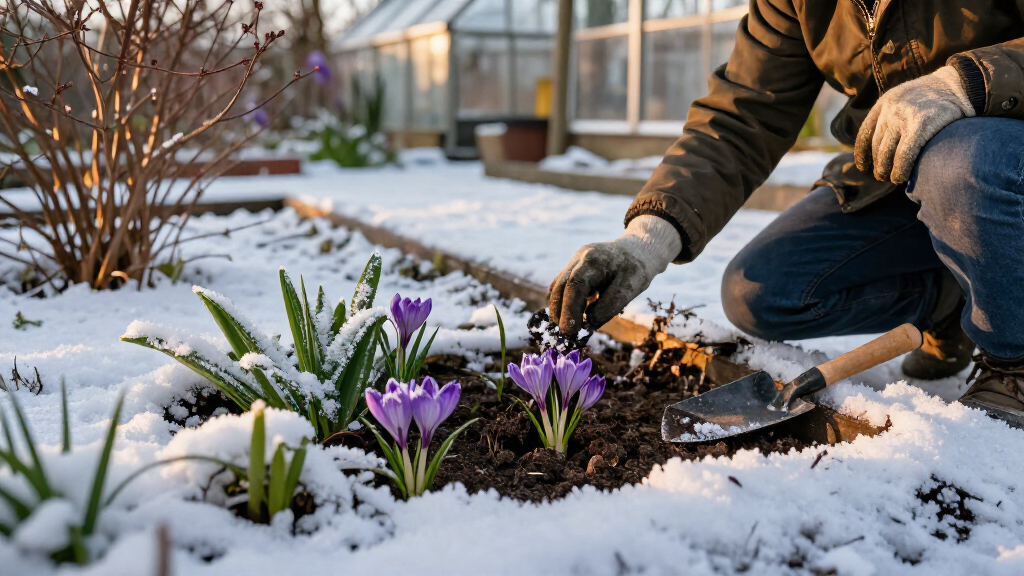
This cycle helps explain why a crocus may bloom through late-winter snow. The visible flower is responding to changing conditions above ground, while the corm has spent the colder months protected below the surface.
“The insulation from the earth helps keep the corm cozy and moist.”
— Gardener’s Path, citing the Netherlands Bulb Council in Texas A&M University’s Horticulture Update
Local Conditions Affect Planting
The guidance gives broad hardiness zones and general planting windows, but local soil conditions and frost dates vary. The report does not provide a location-by-location planting calendar, nor does it specify how different soil types or snow depth may affect performance in individual gardens.
It also does not establish that every crocus variety will behave identically in every zone. Gardeners should check the requirements for the specific corms they buy and adapt planting depth and timing to local conditions. The source offers general gardening guidance, not a guarantee of blooms in a particular yard or season.
Plan Planting Before First Frost
Gardeners planning a crocus display should identify the variety and check its hardiness range, then schedule planting for six to eight weeks before the expected first frost. In colder Zones 3 and 4, the report advises planting deeper than usual to help insulate the corms. Corms already in the ground can generally remain there under snow, according to the source.
In warmer areas that do not provide a long cold period, gardeners can look into the report’s suggested refrigeration method and confirm the instructions for their particular corms. The next practical milestone is the local planting window: corms need time to establish before winter, and their eventual bloom will depend on chilling and spring conditions.
Key Questions
Can crocuses grow through snow?
Yes. The Gardener’s Path report says crocus flowers can emerge through late-winter snow. It also describes snow as insulation for the corms, helping protect them from drying out.
How cold can crocus corms tolerate?
The report says crocuses can tolerate temperatures well below 35°F and gives USDA Zone 3 as an example, where extreme lows can reach -40°F. Local conditions and the specific variety still matter.
When should I plant crocus corms?
Plant most corms six to eight weeks before the first frost so they have time to establish. The report advises against waiting until winter to plant them.
Do crocuses need a cold winter to bloom?
According to the report, crocuses need about four months of cold conditions, including soil temperatures at or below 35°F, to bloom well. Without sufficient chilling, growth and flowers may be weak or stunted.
Can crocuses grow in warm climates?
The report says gardeners in USDA Zone 9 may be able to grow crocuses by refrigerating corms for at least four months before planting in spring. Check the variety’s specific guidance before planting.
Source: gardenerspath.com