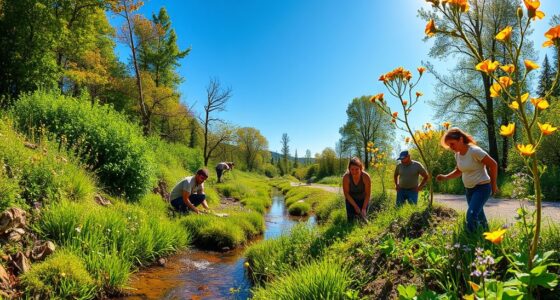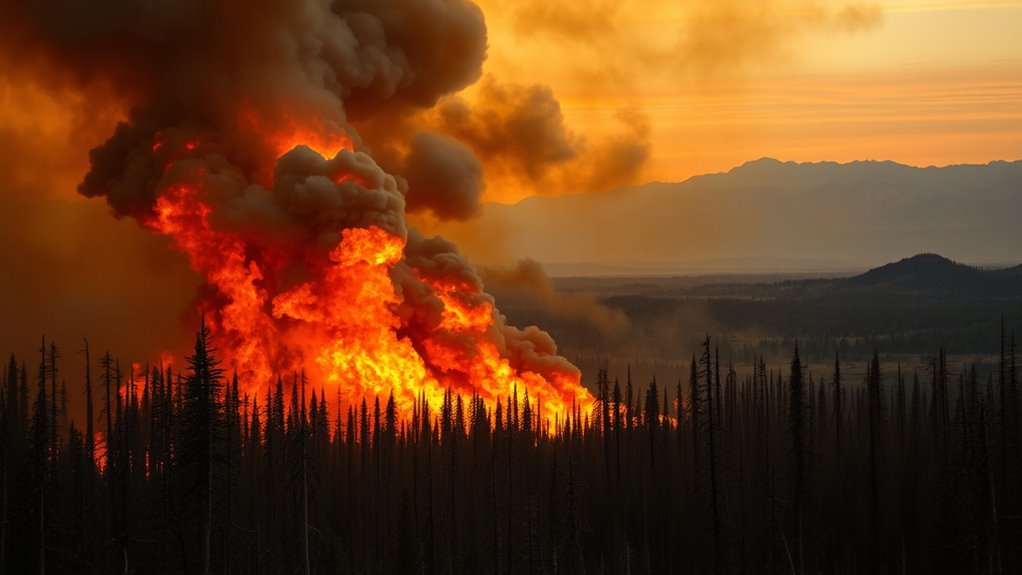

Wildfires play a crucial role in shaping ecosystems, helping plants and animals thrive by clearing overgrown areas and promoting renewal. As climate change causes more intense and frequent megafires, ecosystems struggle to recover if suppressed or overgrown. Many plants have adapted with thick bark, fire-triggered seed release, and rapid resprouting to survive fires. Understanding these natural fire processes helps us protect ecosystems amidst a warming world—there’s much more to explore on this important topic.

Get garden gear delivered free with Prime
- Fast, free delivery on millions of items
- Prime Video, Amazon Music and more included
- Member-only deals all year
Key Takeaways
- Wildfires are natural ecosystem renewal agents, shaping plant and animal community health through fire-adapted strategies.
- Climate change increases wildfire frequency and intensity, challenging vegetation resilience and altering natural fire regimes.
- Overgrown, fire-suppressed landscapes are prone to severe megafires that can surpass vegetation recovery capacity.
- Fire-adapted species, like serotinous conifers and resilient shrubs, are vital for ecosystem recovery post-wildfire.
- Sustainable management involves working with natural fire processes to maintain biodiversity amid a warming climate.
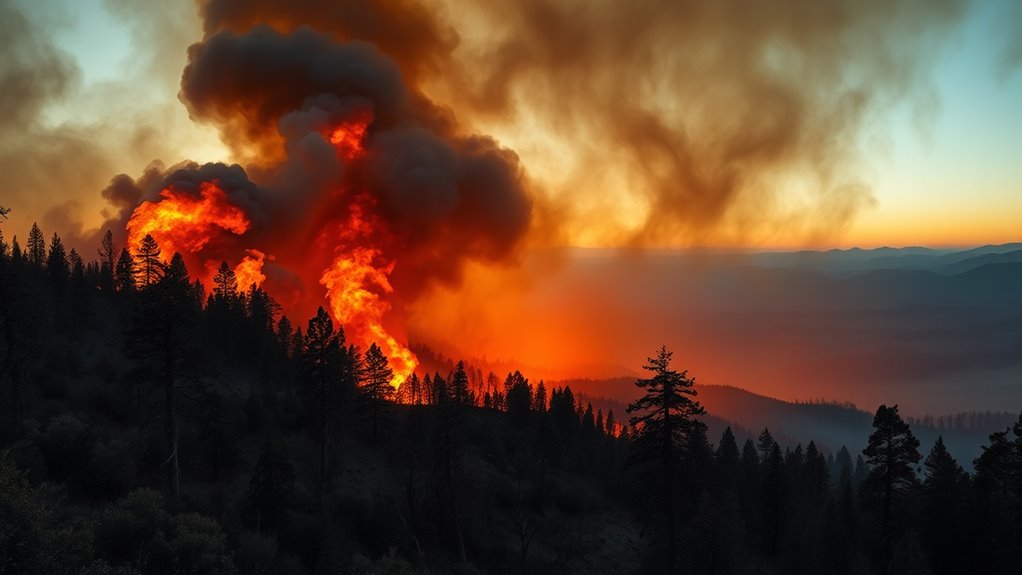
Wildfires often evoke fear because of their destructive power, but they also play a essential role in shaping ecosystems. They act as natural agents of renewal, influencing the health and diversity of plant and animal communities. When a wildfire sweeps through an area, it might seem like devastation, but many plants have evolved fire adaptation strategies that allow them to survive and even thrive after such events. These adaptations include thick bark that insulates critical tissues from heat, seed dormancy triggered by fire signals, and the ability to resprout quickly from roots or underground structures. As a result, vegetation resilience becomes a key element in an ecosystem’s ability to recover from fire.
Wildfire resilience is vital for ecosystem recovery and biodiversity preservation.
You’ll notice that in fire-prone landscapes, some plant species are particularly well-equipped to withstand or capitalize on the disturbance. For instance, certain pines produce serotinous cones that only open after being exposed to high temperatures, releasing seeds into the nutrient-rich ash bed. Other shrubs and grasses have rapid growth rates, allowing them to quickly reestablish dominance and prevent invasive species from taking hold. This resilience isn’t accidental—it’s a product of millions of years of evolution where fire has been a recurring force shaping the landscape. Additionally, advances in data analytics are helping ecologists better understand and predict fire behavior and ecosystem responses.
Understanding fire adaptation helps explain why some ecosystems bounce back faster than others. In regions where fires are frequent, vegetation has become specialized to withstand or even depend on these events. This is in stark contrast to areas where fire suppression has limited natural burns, resulting in dense, overgrown plant communities that are more susceptible to severe megafires. When such intense fires occur, they can overwhelm the existing resilience of vegetation, leading to long-term changes in the landscape. This highlights the importance of recognizing natural fire regimes and respecting the role fire plays in maintaining ecological balance.
In a warming world, the frequency and intensity of wildfires are expected to increase, challenging the fire adaptation mechanisms of many ecosystems. As climate change alters precipitation patterns and raises temperatures, vegetation resilience will be put to the test. Some plant communities may adapt, but others could face irreversible damage, leading to loss of biodiversity and habitat. Recognizing the importance of fire adaptation and vegetation resilience enables us to better manage fire-prone landscapes. It’s about working with nature’s natural processes, not against them, to preserve the health and diversity of ecosystems now and in the future.
As an affiliate, we earn on qualifying purchases.
Frequently Asked Questions
How Do Wildfires Affect Soil Nutrient Levels Long-Term?
Wildfires can considerably impact soil nutrient levels long-term. You might see a boost in soil fertility initially, as nutrients like nitrogen and phosphorus are released during combustion. However, frequent or intense fires can disrupt nutrient cycling, depleting essential minerals and organic matter over time. This imbalance hampers plant growth, making it harder for ecosystems to recover and maintain healthy nutrient cycling processes in the long run.
Can Wildfires Lead to the Emergence of New Plant Species?
Wildfires can indeed lead to the emergence of new plant species through fire-induced speciation. When a fire clears an area, it creates opportunities for pioneer species to emerge rapidly. Over time, these conditions may promote the evolution of unique plants adapted to post-fire environments. This process contributes to fire-induced speciation, increasing biodiversity as new species develop to thrive in the dynamic, fire-affected landscape.
What Role Do Insects Play in Post-Wildfire Ecosystem Recovery?
Imagine you’re in a world where insects are the unsung heroes of recovery. After a wildfire, insect diversity skyrockets, playing a pivotal role in soil regeneration. They break down charred plant material, enrich the soil with nutrients, and help plants reestablish. Without these tiny allies, ecosystems would struggle to bounce back. Insects accelerate recovery, ensuring the environment heals faster and more resiliently, proving their essential importance.
Are Some Ecosystems More Resilient to Megafires Than Others?
Some ecosystems are more resilient to megafires because they feature fire-resistant vegetation and adaptations that promote recovery. You’ll find that certain landscapes, like pine forests with thick bark or grasslands with quick regrowth, bounce back faster after fires. These traits enhance ecosystem resilience, enabling them to withstand and recover from large-scale fires better than vulnerable environments. Understanding these differences helps you appreciate why some ecosystems endure while others struggle to recover.
How Do Wildfire Patterns Correlate With Climate Change Predictions?
Imagine your neighborhood shrinking as urban encroachment pushes into wildfire-prone areas. Climate change predictions show that rising temperatures and droughts will intensify wildfire patterns, making fires more frequent and severe. Fire suppression efforts, once effective, now struggle against these changing conditions. As climate change worsens, expect more megafires that threaten ecosystems and communities, highlighting the urgent need to adapt our strategies and reduce greenhouse gas emissions.
Conclusion
As you see, megafires drastically alter ecosystems and challenge our understanding of nature’s resilience. With climate change fueling these massive blazes, can we afford to ignore the urgent need for better fire management and conservation strategies? It’s up to us to act now—protecting our lands means safeguarding the future of countless species and our own well-being. Will you be part of the solution before these fires become an unstoppable force?
Halloween Picks
halloween
As an affiliate, we earn on qualifying purchases.