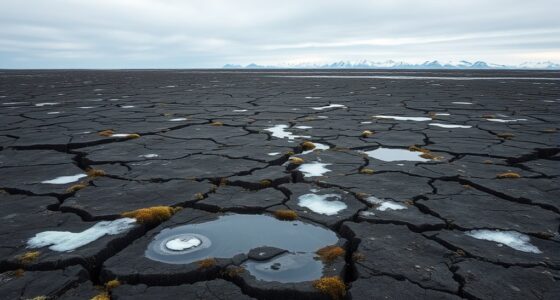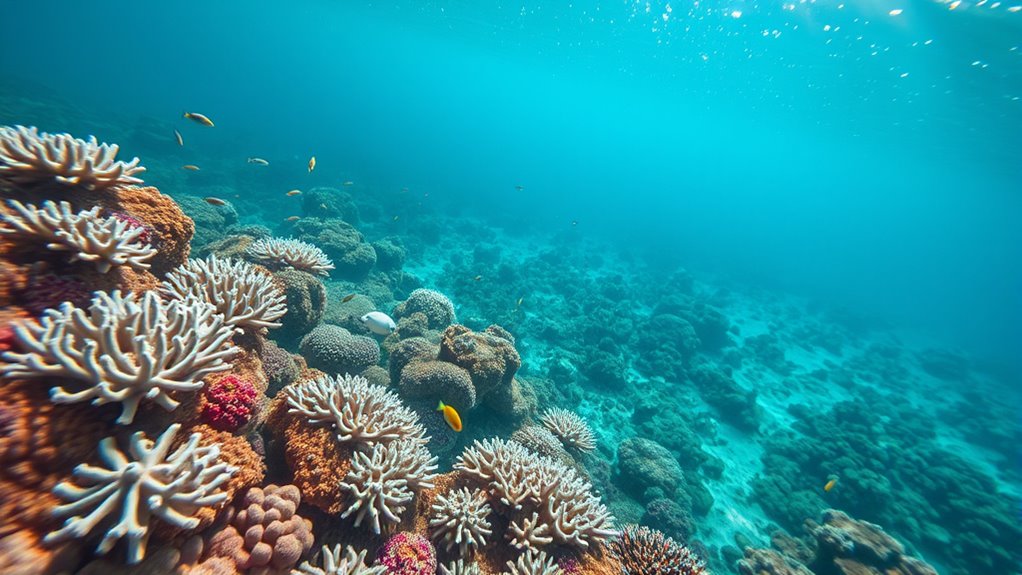
Ocean acidification happens when rising CO2 levels from human activities are absorbed by seawater, changing its chemistry. This process makes it harder for marine creatures like corals, shellfish, and phytoplankton to build shells and skeletons, threatening entire ecosystems. As reefs decline, biodiversity suffers, impacting food sources and the ocean’s balance. If you want to understand how these changes affect marine life and what can be done, keep exploring the details.
Key Takeaways
- Increased atmospheric CO2 from human activities is absorbed by oceans, leading to chemical changes known as ocean acidification.
- Acidification reduces calcium carbonate availability, making it harder for corals and shellfish to build their skeletons and shells.
- The decline of coral reefs due to acidification damages marine habitats and decreases biodiversity.
- Changes in ocean chemistry can disrupt food chains, affecting fish populations and overall marine ecosystems.
- Addressing ocean acidification requires reducing CO2 emissions and adopting sustainable practices to protect ocean health.
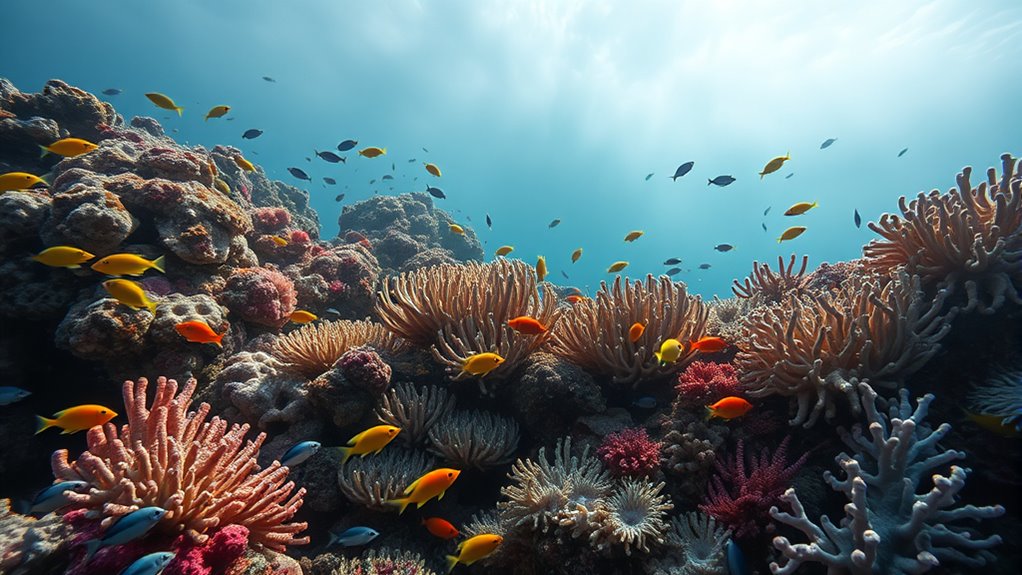
Have you ever wondered how rising carbon dioxide levels are impacting our oceans? The truth is, as CO2 gets trapped in the atmosphere, a significant portion is absorbed by seawater, leading to a process called ocean acidification. This shift in the ocean’s chemistry has profound effects on marine life, especially on delicate ecosystems like coral reefs. When water becomes more acidic, it reduces the availability of calcium carbonate, a crucial component for corals and shell-forming creatures to build their skeletons. Without this essential material, corals struggle to grow and maintain their structures, making them more vulnerable to stress. This vulnerability often results in coral bleaching, where corals lose the vibrant algae living within their tissues, turning white and becoming less resilient to disease and environmental changes.
Rising CO2 levels threaten coral health through ocean acidification and bleaching.
As coral reefs weaken or die off, the impacts ripple through the entire marine ecosystem. These reefs are known as the rainforests of the sea because of their extraordinary marine biodiversity. They support thousands of species, from tiny invertebrates to large fish and marine mammals. When corals bleach or decline, the habitats that countless species rely on are destroyed or degraded, leading to a decline in marine biodiversity. You might not see these changes immediately, but over time, the loss of reef ecosystems leads to fewer fish populations and diminished food sources for coastal communities and marine predators alike. This decline isn’t just about losing colorful corals; it’s about disrupting entire food chains and the balance of life in our oceans.
The effects of ocean acidification extend beyond coral reefs. Many shellfish, like oysters and mussels, find it harder to form their shells, which can threaten their survival and, consequently, the industries that depend on them. Phytoplankton, the tiny plants at the base of the oceanic food web, can also be affected by changes in pH levels, potentially altering global carbon cycles and oxygen production. These changes highlight how interconnected our oceans are and how sensitive they are to chemical shifts caused by human activities. Additionally, understanding the chemistry behind ocean acidification helps scientists develop strategies to mitigate its impacts and protect marine ecosystems.
Understanding these processes helps you see why addressing CO2 emissions is crucial. The more we continue to release greenhouse gases, the more we accelerate ocean acidification, putting marine biodiversity at risk and threatening the health of our planet’s largest ecosystem. Protecting our oceans means reducing emissions, supporting sustainable practices, and raising awareness about the importance of maintaining balanced ocean chemistry for future generations.
Frequently Asked Questions
How Does Ocean Acidification Affect Deep-Sea Ecosystems?
You might not realize it, but ocean acidification impacts deep-sea ecosystems by threatening crucial species like deep-sea corals and hydrothermal vent communities. As acidity rises, these organisms struggle to build calcium carbonate shells and skeletons, which hampers their survival. This disruption affects the entire ecosystem, reducing biodiversity and altering food webs. Your actions can help reduce carbon emissions, protecting these fragile environments from further damage.
Are There Any Natural Factors That Influence Ocean Ph Levels?
Think of the ocean as a giant, breathing creature, influenced by natural factors. Volcanic activity releases CO2 and minerals, which can temporarily shift pH levels. Mineral leaching from rocks also affects acidity by adding substances that buffer or alter seawater chemistry. These natural processes act like the ocean’s own heartbeat, subtly shaping pH fluctuations over time, independent of human influence, and highlighting the delicate balance of our marine environments.
Can Ocean Acidification Be Reversed or Mitigated?
You can help mitigate ocean acidification by supporting efforts like marine buffering and carbon sequestration. Marine buffering involves natural processes that neutralize acidity, while carbon sequestration captures and stores CO2 before it reaches the oceans. Though reversing acidification is challenging, reducing greenhouse gas emissions and protecting marine ecosystems can slow its progression, giving the seas a better chance to recover over time. Your actions can make a difference.
How Does Acidification Impact Fish Populations and Fisheries?
You may notice that acidification causes fisheries decline by affecting fish populations’ health and reproductive success. As acidity increases, fish adaptability decreases, making it harder for them to survive and thrive. This stress can lead to fewer fish available for fishing, impacting your local fisheries and economy. To protect these resources, it’s essential to reduce carbon emissions and support conservation efforts that help fish adapt to changing ocean conditions.
What Are the Long-Term Consequences of Ocean Acidification on Global Climate?
You should know that ocean acidification can markedly alter climate feedbacks and carbon cycle dynamics. As oceans absorb more CO2, they become more acidic, reducing their ability to store carbon. This change accelerates greenhouse gas buildup in the atmosphere, intensifying global warming. Over time, these shifts may disrupt climate stability, leading to more extreme weather events and rising sea levels, which threaten ecosystems and human communities worldwide.
Conclusion
Now that you understand how ocean acidification threatens marine life and ecosystems, it’s clear that your actions can make a difference. Will you continue to overlook the impact of carbon emissions, or will you take steps to protect our seas? Every choice counts in safeguarding the delicate balance beneath the waves. By staying informed and making environmentally conscious decisions, you can help ensure a healthier future for our oceans—and for yourself. The question is, are you ready to act?