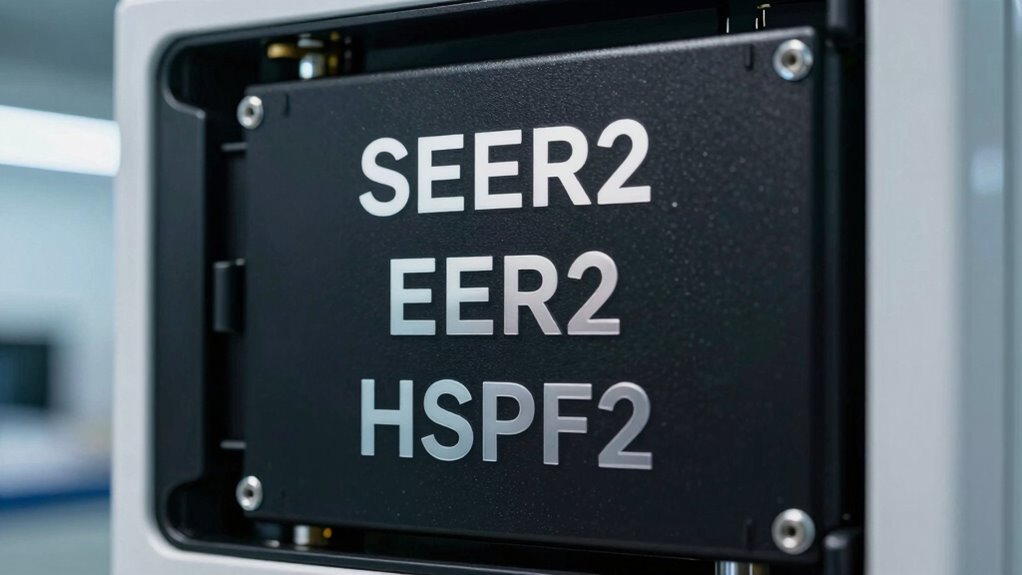

SEER2, EER2, and HSPF2 are key ratings that tell you how efficient your cooling and heating systems are. SEER2 measures seasonal cooling efficiency, EER2 focuses on peak conditions, and HSPF2 evaluates seasonal heating performance for heat pumps. Higher numbers mean your system uses less energy and saves you money. Understanding these acronyms helps you choose more eco-friendly and cost-effective options. Keep exploring to learn how each rating impacts your energy bills and environmental footprint.
Key Takeaways
- SEER2 measures seasonal cooling efficiency, with higher ratings indicating lower energy consumption over a season.
- EER2 evaluates peak performance during extreme conditions, with higher values meaning better efficiency during hot or cold days.
- HSPF2 assesses seasonal heating efficiency of heat pumps; higher values mean more heat output per unit of energy used.
- These ratings help compare HVAC systems for energy savings, cost reduction, and environmental impact.
- Prioritizing higher SEER2, EER2, and HSPF2 ratings supports sustainable, cost-effective heating and cooling choices.
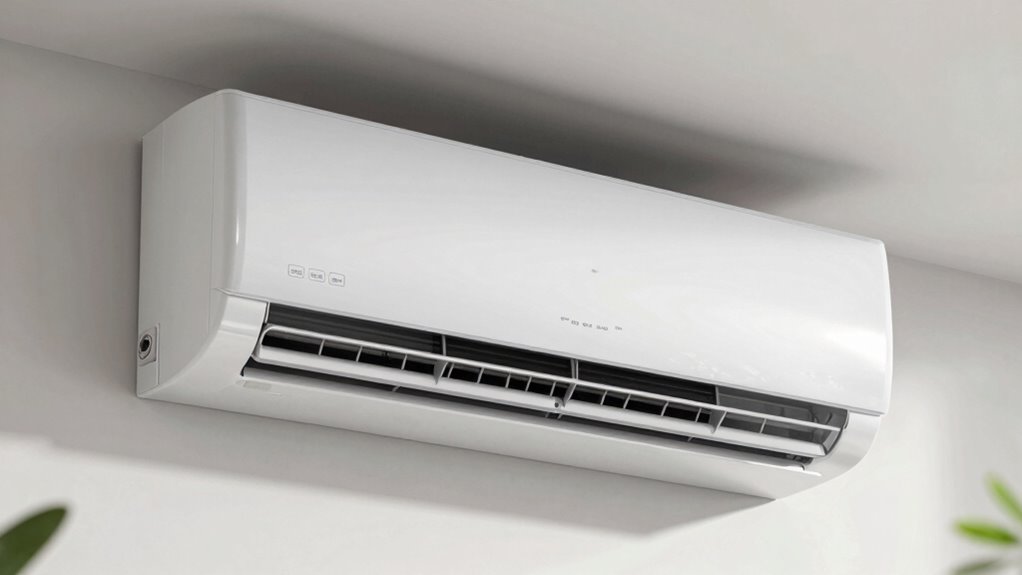
Understanding efficiency acronyms can help you quickly grasp complex concepts in various fields, from business to technology. When it comes to heating, ventilation, and air conditioning (HVAC) systems, these abbreviations like SEER2, EER2, and HSPF2 are essential for understanding how effectively your equipment uses energy. They directly impact your energy savings and the environment, making it easier for you to make informed decisions about your cooling and heating options. By knowing what these ratings mean, you can choose systems that save you money on utility bills while reducing your carbon footprint.
SEER2, or Seasonal Energy Efficiency Ratio 2, measures the cooling efficiency of air conditioners and heat pumps over an entire season. A higher SEER2 rating indicates that the unit uses less energy to provide the same cooling output, leading to significant energy savings over time. This not only lowers your monthly energy bills but also reduces the environmental impact by decreasing greenhouse gas emissions associated with energy production. When you select a system with a higher SEER2 rating, you’re making a conscious choice to be more energy-efficient and environmentally responsible.
EER2, or Energy Efficiency Ratio 2, focuses on the unit’s efficiency at a specific operating point, typically at peak load conditions. It’s a vital metric if you want to understand how your HVAC system performs during the hottest days of summer or coldest winter days. A higher EER2 means your system consumes less energy when operating at peak, which translates to quicker cooling or heating and lower energy costs. From an environmental perspective, choosing equipment with a superior EER2 reduces the demand on power plants, which often rely on fossil fuels, therefore lowering your overall environmental impact.
HSPF2, or Heating Seasonal Performance Factor 2, applies to heat pumps and indicates their heating efficiency over a season. Higher HSPF2 values mean your heat pump provides more heat output per unit of energy consumed. This efficiency boost results in greater energy savings during the colder months and less strain on energy resources. By opting for a heat pump with a higher HSPF2, you’re not only saving money but also contributing to a cleaner environment by decreasing reliance on less sustainable heating methods.
In essence, understanding these acronyms helps you identify systems that prioritize energy savings and minimize environmental impact. When you choose equipment with higher SEER2, EER2, and HSPF2 ratings, you’re investing in technology that’s more efficient, cost-effective, and eco-friendly. This knowledge empowers you to make smarter choices that benefit your wallet and the planet, ensuring your home stays comfortable while supporting sustainability initiatives. Additionally, incorporating energy-efficient technologies can further optimize your system’s performance and sustainability.
high SEER2 rated air conditioner
As an affiliate, we earn on qualifying purchases.
As an affiliate, we earn on qualifying purchases.
Frequently Asked Questions
How Do SEER2 and EER2 Impact Monthly Energy Bills?
Higher SEER2 and EER2 ratings mean your HVAC system uses energy more efficiently, leading to lower monthly energy bills. You’ll see better energy cost savings, especially during seasonal fluctuations when heating or cooling needs change. By choosing equipment with higher ratings, you reduce energy consumption, helping you save money year-round. These ratings directly impact how much you spend on energy, making your system more cost-effective over time.
Are Higher HSPF2 Ratings Always More Cost-Effective?
Higher HSPF2 ratings aren’t always more cost-effective. You should do a cost-benefit analysis, considering upfront costs versus long-term savings. While higher ratings often mean better efficiency, they can also come from less reliable manufacturers. You need to evaluate both the efficiency and the manufacturer’s reliability to determine if the increased HSPF2 rating will truly save you money over time.
Do Efficiency Ratings Vary by Climate Zones?
Have you ever wondered if efficiency ratings change with your climate? Yes, they do—climate zone variations impact how systems perform. Regional efficiency standards consider local temperatures, humidity, and heating or cooling demands. For example, a system rated highly in a mild climate might not be as effective in a colder or hotter zone. So, when choosing equipment, always consider your area’s specific climate zone to guarantee ideal performance and savings.
Can I Upgrade My HVAC System to Improve These Ratings?
Yes, you can upgrade your HVAC system to improve efficiency ratings, leading to potential cost savings. When doing so, consider installation factors such as compatibility with your home, ductwork, and local climate. Properly selecting high-efficiency equipment can reduce energy bills, but ensuring professional installation is key for peak performance. Weigh these installation considerations to maximize your investment and enjoy the benefits of a more efficient, cost-effective system.
How Do These Ratings Compare Internationally?
Like a trusty 8-track tape, international standards for HVAC ratings vary, making direct comparisons tricky. You’ll find that countries like Europe and Australia use different metrics, so rating consistency isn’t guaranteed worldwide. While some countries adopt similar efficiency benchmarks, others prioritize different factors. To understand how your system stacks up globally, check the specific standards in each region and compare ratings within those contexts.
energy efficient heat pump with HSPF2
As an affiliate, we earn on qualifying purchases.
As an affiliate, we earn on qualifying purchases.
Conclusion
Understanding seer2, eer2, and hspf2 is like revealing a secret code to your home’s energy savings. Imagine each acronym as a different gear in a well-oiled machine—when you know how they work together, your HVAC system runs more efficiently. Just like tuning a guitar makes the music sound better, understanding these ratings helps you make smarter choices, saving you money and energy. Now, you’re equipped to optimize your home’s comfort with confidence.
EER2 high performance HVAC system
As an affiliate, we earn on qualifying purchases.
As an affiliate, we earn on qualifying purchases.
seasonal energy efficiency ratio air conditioner
As an affiliate, we earn on qualifying purchases.
As an affiliate, we earn on qualifying purchases.