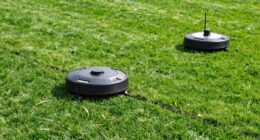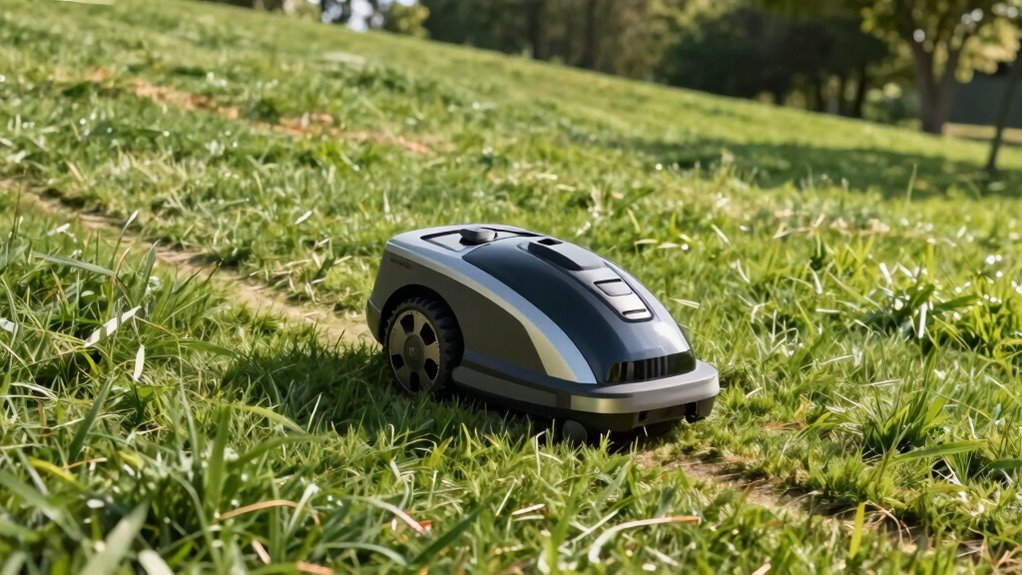

Your robotic mower quits on hills because its slope rating limits how steep a terrain it can handle safely. If the incline exceeds this limit, safety features automatically shut the mower down to prevent tipping or getting stuck. To keep it working smoothly, you need to match your yard’s slopes with your mower’s capabilities. Want to find out what impacts these limits and how to manage your terrain? Keep exploring to learn more.
Key Takeaways
- Robot mowers have maximum slope ratings; exceeding them causes shutdowns to prevent tipping or stalling.
- Steeper hills increase terrain difficulty, often triggering safety features that stop mower operation.
- Proper terrain assessment and modifications ensure slopes stay within the mower’s safe operational limits.
- Advanced models use sensors to detect steep areas and may reduce speed or avoid these zones altogether.
- Ignoring slope ratings risks mower damage, safety hazards, and repeated stops on inclines.
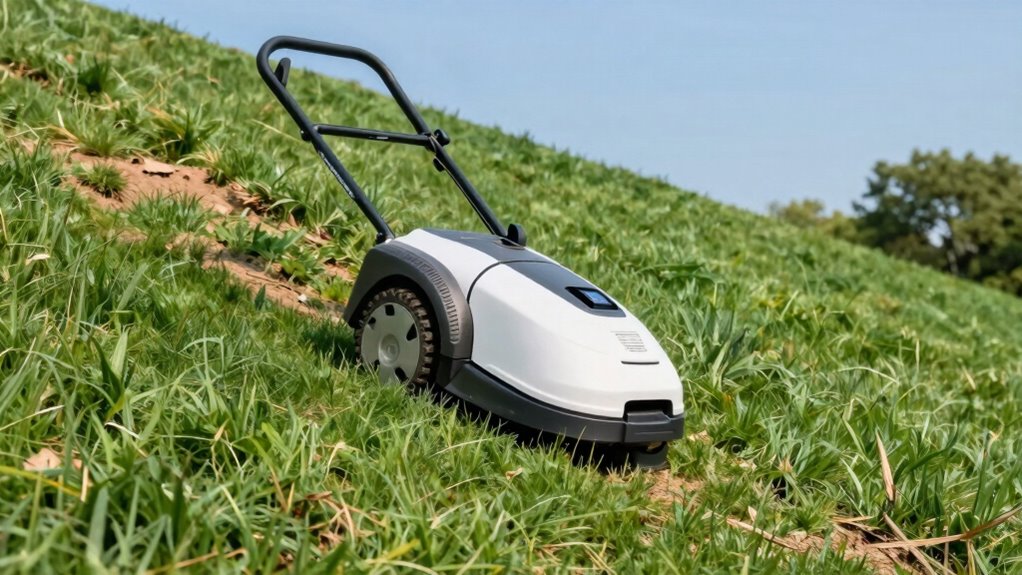
Have you ever wondered what the slope rating on a golf course truly means? It’s a measure of how challenging the terrain is, especially when it comes to hillside terrain management. In the world of robotic lawn mowers, understanding slope ratings is vital because it directly impacts how safely and effectively your mower can operate on inclines. If you’ve noticed your robot mower quitting unexpectedly when tackling hills, it’s often because it’s hitting its safety limits, which are influenced by the slope rating of your yard.
Robot mower safety is a top concern for manufacturers, especially when it comes to uneven, sloped terrain. These devices are designed to navigate flat or gently rolling lawns with ease, but steep inclines can pose risks. When a mower encounters a slope that exceeds its safety threshold, it might automatically shut down or refuse to climb further. That’s a built-in safety feature to prevent the mower from tipping over or getting stuck. Each model has its own maximum slope capability, usually listed in the product specifications. Ignoring these limits can lead to frustration, as your mower repeatedly stalls or stops without completing its job.
Understanding hillside terrain management is essential if you want a robotic mower to work effectively on your property. You need to consider the slope ratings and assess whether your yard’s inclines are within safe operating limits. If your yard has hills steeper than what your mower can handle, you might need to modify the terrain—perhaps by creating level zones or installing retaining walls. Alternatively, choosing a mower with higher hill-climbing capabilities can make the difference, but always check the manufacturer’s recommended slope rating to guarantee safety. Proper terrain assessment is crucial to ensure your equipment operates reliably and safely.
It’s also worth noting that many advanced robotic mowers now feature sensors and algorithms to better manage hillside terrain. These innovations help the mower detect steeper areas and adjust its behavior accordingly, either by reducing speed or avoiding certain zones altogether. Proper hillside terrain management doesn’t just keep your mower safe; it also prolongs its lifespan and ensures you get consistent cutting performance.

YARDCARE 2026 M800Plus GPS+3D Vision Cordless Robot Lawn Mower with Bow-Shaped Path Mowing, APP Control, Robotic Lawnmower with Obstacle Avoidance, Auto-Charging for Lawns up to 8611 sq.ft
Cordlss & Vision Navigation: YARDCARE M800Plus is equipped with a high-definition camera, which automatically distinguish grass from non-grass…
As an affiliate, we earn on qualifying purchases.
As an affiliate, we earn on qualifying purchases.
Frequently Asked Questions
How Do Robot Mowers Determine Slope Ratings?
You can see how robot mowers determine slope ratings through calibration and slope measurement techniques. During calibration, you place the mower on a known incline to set its sensors, allowing it to recognize slopes accurately. Slope measurement techniques involve sensors like accelerometers or gyroscopes that detect angles. These methods help the mower assess terrain steepness, so it knows when to stop or adjust to prevent slipping or tipping on hills.
Can Slope Ratings Change Over Time?
Yes, slope ratings can change over time due to terrain variability and mower calibration. As your yard shifts with weather or erosion, the original ratings may no longer be accurate. Regular calibration helps your mower adapt to these changes, ensuring peak performance. Keep an eye on your terrain, and recalibrate as needed—this way, your robot mower stays effective on varying slopes, avoiding surprises and ensuring a well-manicured lawn.
Are There Specific Brands Better at Handling Steep Hills?
You’ll find that some brands excel at hill handling, making them better choices for steep terrains. In brand comparisons, brands like Husqvarna and Robomow often outperform others due to their powerful motors and specialized wheel designs. These brands are known for better traction and stability on hills. When choosing a robot mower, consider these brands if hill handling is a priority, ensuring your mower can tackle steep slopes confidently and efficiently.
What Maintenance Can Improve Mower Hill Performance?
To improve your mower’s hill performance, regularly check and maintain its battery health and blade sharpness. Keep the battery charged and replace it if it’s losing capacity, ensuring consistent power uphill. Sharpen blades frequently to reduce strain and improve cutting efficiency. Clean the mower’s underside and inspect for debris, which can hinder performance. By maintaining battery health and blade sharpness, you help your mower tackle slopes more effectively and prevent it from quitting mid-hill.
How Do Weather Conditions Affect Slope Capabilities?
Weather impact profoundly influences your robot mower’s slope adaptation. Wet or rainy conditions make slopes slippery, reducing traction and increasing the risk of slipping or quitting. Cold weather can stiffen parts, affecting movement, while extreme heat may cause overheating. You should monitor weather forecasts and avoid mowing on steep, wet, or icy slopes. Properly adjusting your mower for changing conditions helps guarantee safe, efficient operation across different weather scenarios.

ACFARM Robotic Lawn Mower 1/2 Acre/21,000 Sq.Ft, Automatic Lawnmower for Lawn 47% Slope, Cut Height 0.8"-2.4", APP Control
RANDOMLY CUTTING PATTERN: The automatic robotic lawn mower uses the three-blade rotating disc-cutting mechanism. It has a 7-inch…
As an affiliate, we earn on qualifying purchases.
As an affiliate, we earn on qualifying purchases.
Conclusion
So, now you know the secrets behind slope ratings and why robot mowers might misstep on hills. By understanding the limits and learning the language of lawns, you can better manage your mower’s moves. Remember, mastering the metrics means more mowing mastery. Keep the terrain in check, and trust your tools to tackle tricky slopes with confidence. With care and knowledge, your hills will stay healthy, and your mower will keep moving without misfire!
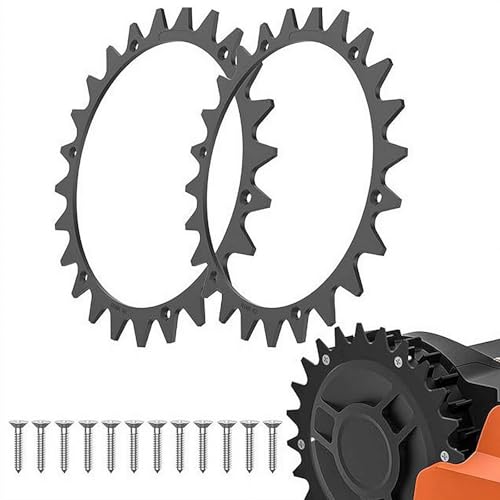
2 Pcs Robotic Lawnmower Spikes with Screws, for Traction Enhancer for Worx Landroid S/M Model Robotic Lawnmowers Robotic Lawnmowers Wheel Spikes, 205 mm Extended Anti-Slip Spikes with 14 Screws
【Perfect Fit for Worx Landroid S/M Series】:Engineered specifically for models S300 to M1000i—no modifications needed for seamless installation…
As an affiliate, we earn on qualifying purchases.
As an affiliate, we earn on qualifying purchases.

Lymow One Robotic Lawn Mower for Large Yards up to 1.73 Acres, Handles 45° (100%) Slopes, RTK-VSLAM Navigation, AI Obstacle Avoidance, No Perimeter Wire, Multi-Zone Mapping, Cut Height 1.2 to 4"
Professional Rotary Blade System: Dual rotary blades spin at up to 6000 RPM to support clean cutting performance…
As an affiliate, we earn on qualifying purchases.
As an affiliate, we earn on qualifying purchases.