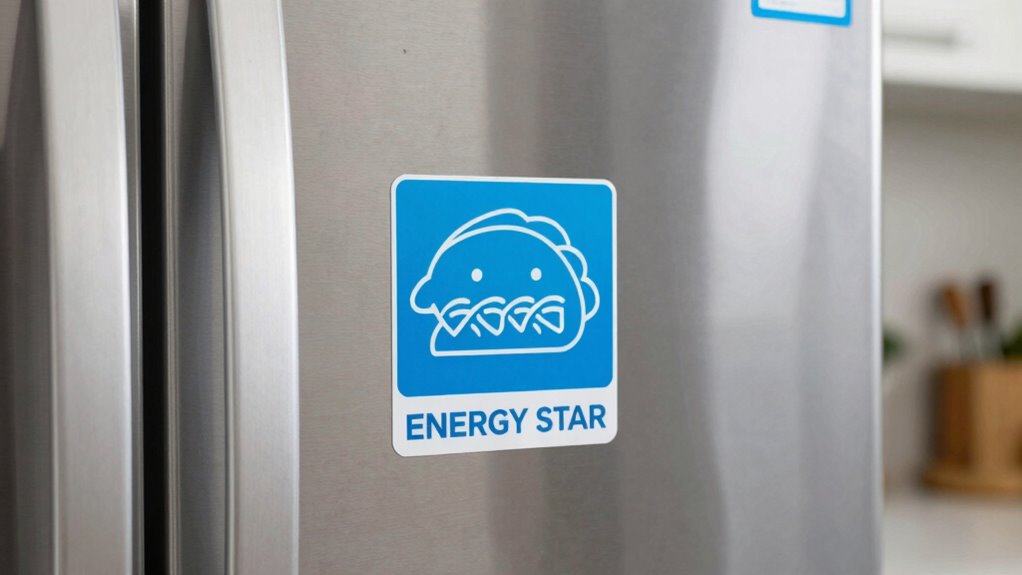

An ENERGY STAR label shows that a product meets strict energy efficiency standards set by the EPA and DOE, meaning it consumes less energy and helps reduce environmental impact. However, it doesn’t guarantee the best performance, lowest cost, or superior quality overall. While it’s a helpful indicator, additional details like features and prices are essential to make the right choice. To discover what’s truly behind the label, keep exploring the details.
Key Takeaways
- ENERGY STAR indicates products meet specific energy efficiency standards set by EPA and DOE.
- Certification ensures reduced energy consumption but does not guarantee the best features or lowest cost.
- It does not verify durability, overall quality, or performance beyond energy use.
- The label should be used alongside other comparisons like features, ratings, and price.
- Standards are periodically updated, so newer models often perform better but the label alone isn’t a complete measure.
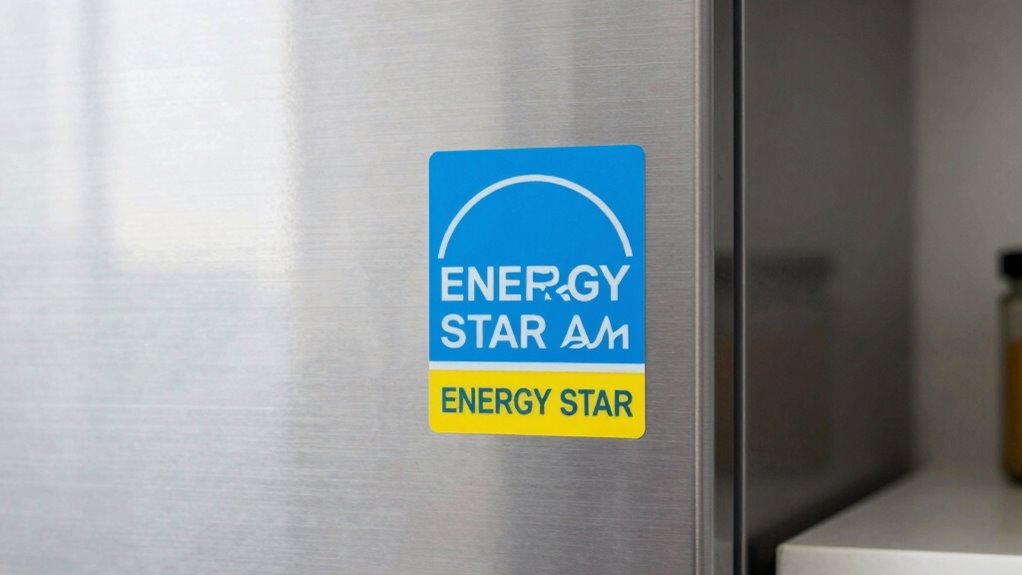
Have you ever wondered what those ENERGY STAR labels really mean on appliances and electronics? They’re more than just a sticker; they’re a symbol of energy efficiency backed by rigorous standards. When you see an ENERGY STAR label, it indicates that the product meets specific certification standards designed to reduce energy consumption and minimize environmental impact. These standards are created by the U.S. Environmental Protection Agency (EPA) and the Department of Energy (DOE), ensuring that each product bearing the label adheres to strict criteria for performance and efficiency.
Understanding what the ENERGY STAR label guarantees helps you make smarter choices. Products with this label typically use 10-50% less energy than standard models, which can lead to considerable savings on your utility bills over time. These savings are possible because the certification standards require manufacturers to meet or surpass benchmarks for energy efficiency without compromising functionality. For example, an ENERGY STAR-rated refrigerator not only consumes less power but also maintains consistent cooling performance, ensuring it’s both economical and reliable.
ENERGY STAR products save 10-50% energy, reducing bills without sacrificing performance or reliability.
However, it’s important to recognize what the ENERGY STAR label doesn’t guarantee. It doesn’t mean the product is the most energy-efficient option available, nor does it imply the lowest cost. It simply indicates that the product performs efficiently according to the set certification standards at the time of testing. It also doesn’t ensure durability or superior quality beyond the scope of energy use. Some products may meet efficiency standards but might not have the best features or longevity compared to non-certified models. Additionally, the label doesn’t account for how you use or maintain the product, which can considerably impact overall energy savings.
While the ENERGY STAR label is a helpful guide, it’s best to view it as part of a broader approach to energy conservation. Look beyond the label by comparing products’ energy consumption ratings, features, and prices. Keep in mind that the standards are periodically updated to reflect technological advancements, so newer models often perform better in terms of energy efficiency. Choosing ENERGY STAR-certified appliances and electronics can be a smart step toward reducing your environmental footprint and lowering energy costs, but always do your homework to ensure the product fits your specific needs.
In the end, the ENERGY STAR label is a useful indicator of energy efficiency and compliance with certification standards. It simplifies your decision-making process, giving you confidence that your purchase aligns with energy-saving goals. Just remember, it’s a valuable tool, not a guarantee of perfection. Combining this label with your own research and proper usage will help you make the most of your eco-friendly investments. Additionally, understanding energy consumption ratings can further enhance your ability to select truly efficient products.

Midea WHS-65LB1 Mini Fridge, 1.6 Cu.ft Energy Star Certified Mini Refrigerator, Adjustable Thermostat, Reversible Door, Low Noise for Dorm, Office, Bedroom, Black
Compact & Space-Saving-Midea WHS-65LB1 mini fridge with 18.6*17.7*19.4 inches(W*D*H) measurement and 1.6 cu.ft refrigerator capacity is a perfect…
As an affiliate, we earn on qualifying purchases.
As an affiliate, we earn on qualifying purchases.
Frequently Asked Questions
Can ENERGY STAR Labels Apply to All Appliance Brands?
Energy Star labels don’t apply to all appliance brands. You’ll find variations in brand certification scope, meaning some brands might have more products certified than others. Not every appliance brand participates in the program, so check if the specific brand you’re interested in has the Energy Star label. Keep in mind that certification scope can differ, so always verify the label’s authenticity and whether it covers the exact appliance you’re considering.
How Often Are ENERGY STAR Standards Updated?
Energy Star updates occur annually, and certification frequency varies depending on the appliance type. You can expect product standards to be reviewed and revised roughly once a year, ensuring they reflect the latest energy efficiency advancements. When manufacturers apply for certification, they need to meet current standards, which are regularly updated. Staying informed about these updates helps you choose energy-efficient appliances that meet the latest criteria for savings and environmental impact.
Do ENERGY STAR Labels Guarantee ENERGY Savings?
Energy star labels don’t guarantee energy savings, but they do indicate products meet certification validity standards for energy efficiency. When you see this label, you can trust that the product has been tested and certified to use less energy compared to standard models. However, actual energy savings depend on your usage habits and other factors, so the label serves as a helpful guide rather than a promise of specific savings.
Are There Regional Differences in ENERGY STAR Certification?
Think of ENERGY STAR certification as a map guiding you through a vast landscape. Regional variations in certification standards mean the landscape differs depending on where you are. While the core principles remain, some standards adapt to local climate and energy policies. So, your ENERGY STAR label may reflect regional differences, ensuring the product meets specific local efficiency goals. Always check regional standards to understand what the label guarantees in your area.
Can Products Lose Their ENERGY STAR Status Over Time?
Yes, products can lose their ENERGY STAR status over time if they no longer meet the label’s standards. The label’s longevity depends on ongoing compliance, which requires certification renewal. Manufacturers must periodically verify that their products still meet energy efficiency criteria. If they fail to do so, the product’s certification is revoked, and it loses its ENERGY STAR label, so you should always check for current certification when making a purchase.

evelor 6-Pack A19 LED Light Bulbs,60 Watt Equivalent Daylight 5000K with E26 Base,Efficient 9W,800 Lumens Non-Dimmable LED Bulbs,15000 Hours, Ideal for Bedroom Living Room
【Energy Efficiency】: EVELOR A19 LED light bulb is an energy-saving 9W (60W equivalent) bulb, saving up to 90%…
As an affiliate, we earn on qualifying purchases.
As an affiliate, we earn on qualifying purchases.
Conclusion
Remember, an ENERGY STAR label is like a badge of honor for efficiency, but it’s not a magic wand. It guarantees your product meets certain standards, helping you save energy and money. However, it doesn’t promise perfect performance or long-term savings without proper use. Think of it as a helpful signpost on your journey to a greener home—guiding you, but not doing the work for you. Use it wisely, and watch your energy bills shrink like snow under the sun.

BLACK+DECKER 4.5 Cu. Ft. Front Load Washer, Full Size Washing Machine with 12 Cycles, ENERGY STAR certified Washer Machine, Hot & Cold Inlet Hoses, LED Display, 120V, BFLW45M, White
Spacious Capacity: The 4.5 cu. ft. capacity of this washer machine provides ample space for large laundry loads,…
As an affiliate, we earn on qualifying purchases.
As an affiliate, we earn on qualifying purchases.

52 Inch Ceiling Fans with Lights, Remote Control, 3CCT, Dimmable&Adjustable Wind Speed, Timer Function, Reversible, Quiet, Energy-Saving Ceiling Fan with Light for Bedroom, Living Room Indoor/Outdoor
Handheld Remote Control: Take full control of your ceiling fan with light using the included handheld remote. Easily…
As an affiliate, we earn on qualifying purchases.
As an affiliate, we earn on qualifying purchases.