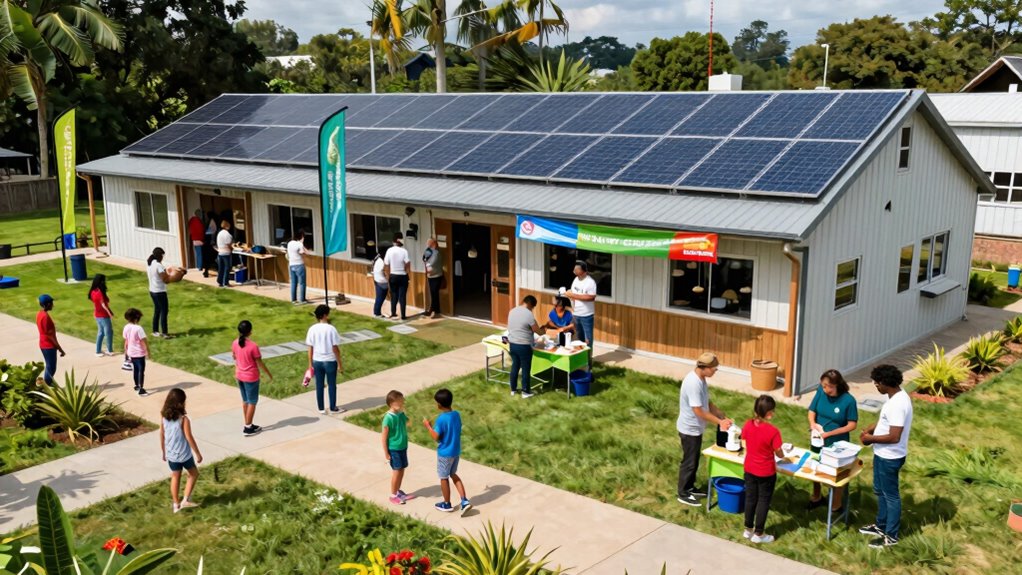

A resilience hub is truly useful when you’re actively involved in its planning, ensuring it addresses your community’s specific needs. It should be built with durable, disaster-resistant materials and equipped with reliable backup power and communication systems. Incorporating essential services like medical supplies and food makes it a complete resource during emergencies. Ongoing community training and engagement keep it adaptable and trustworthy. Keep exploring to discover how these elements come together to make a resilient, dependable refuge when it’s needed most.

Get garden gear delivered free — and shop member deals
- Fast, free delivery on millions of items
- Access to Prime Big Deal Days deals on October 6–7
- Prime Video, Amazon Music and more included
Key Takeaways
- Active community engagement ensures the hub meets local needs and fosters ownership for sustained use.
- Incorporating resilient infrastructure and reliable backup systems guarantees continuous operation during disasters.
- Integrating essential services like medical supplies, water, and communication tools makes the hub a comprehensive response center.
- Regular community training and education maintain preparedness and adaptability to evolving vulnerabilities.
- Strategic location and sustainable energy solutions enhance accessibility and reduce dependency on external resources.
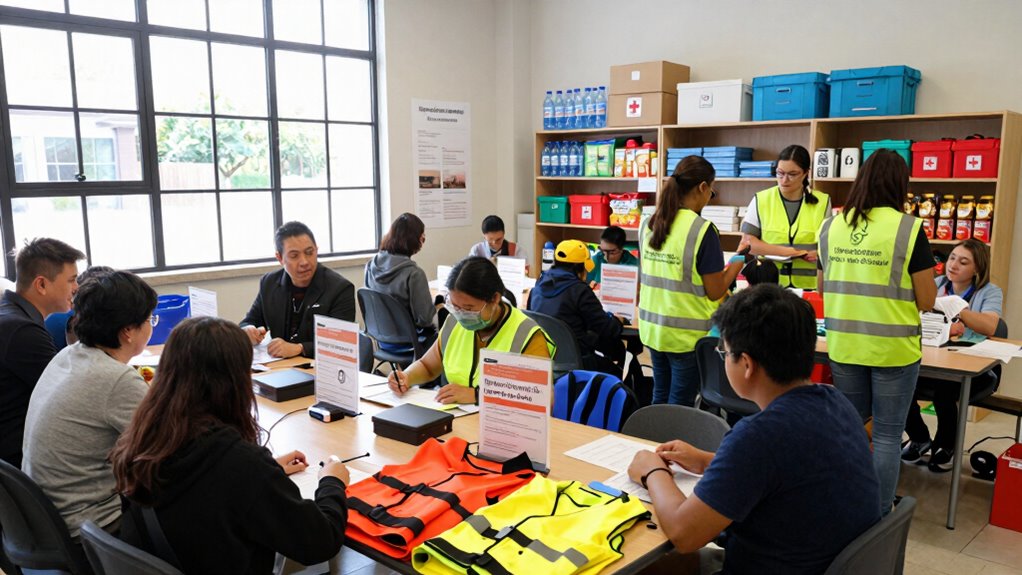
Have you ever wondered how communities can better prepare for and recover from natural disasters and climate-related events? The key lies in creating resilience hubs that are genuinely useful in times of crisis. A essential aspect of this is community engagement. When residents are actively involved in planning and decision-making, the hub becomes more than just a building—it becomes a reflection of the community’s needs and strengths. You want residents to feel a sense of ownership, which encourages them to utilize the hub during emergencies and contribute to its ongoing maintenance and improvement. Community engagement also helps identify specific vulnerabilities and resource gaps, making sure that the hub addresses real local concerns rather than generic assumptions. This participatory approach fosters trust and makes certain that the hub’s services are accessible and relevant to everyone, especially vulnerable populations. Incorporating biodiversity into planning can enhance the resilience and sustainability of the hub, benefiting both the environment and the community.
Infrastructure planning is equally important for a resilience hub to be truly effective. It’s not enough to just designate a building as a shelter; the infrastructure must be resilient against the very disasters it’s meant to withstand. This means designing the hub with sturdy, disaster-resistant materials, reliable backup power sources, and communication systems that remain operational during outages. You should also think about the geographic location—placing the hub where it’s easily accessible, even during floods or storms, is essential. Incorporating sustainable energy solutions, such as solar panels or wind turbines, not only enhances resilience but also reduces dependence on external power sources during extended outages. Equally important is the integration of essential services—medical supplies, water, food storage, and communication tools—so that the hub can serve as a complete emergency response center.
A useful resilience hub doesn’t just function during a disaster; it becomes a community anchor before disaster strikes. That means it should be integrated into everyday life, offering training sessions, resource distribution, and educational programs that increase overall preparedness. This ongoing engagement keeps the community connected to the hub and aware of how it can serve them in various situations. When infrastructure planning is thoughtful and inclusive, it ensures the hub can withstand and adapt to different disaster scenarios. Ultimately, a truly useful resilience hub combines community involvement with resilient, well-designed infrastructure—making it a reliable refuge and resource in the face of climate challenges.
As an affiliate, we earn on qualifying purchases.
Frequently Asked Questions
How Do Resilience Hubs Coordinate With Emergency Services?
You coordinate with emergency services by establishing clear communication channels and sharing real-time information. Your resilience hub engages the community to understand their needs and guarantees resources are distributed efficiently during crises. By working closely with emergency responders, you help streamline efforts, avoid duplication, and provide essential support. This collaboration builds trust, improves response times, and ensures the community’s safety and resilience are prioritized effectively during emergencies.
What Funding Sources Support Resilience Hub Development?
You might wonder where the funds come from to build resilience hubs. Funding opportunities are varied, including local government budgets, federal grant programs, and private foundations dedicated to community resilience. These sources can provide essential support, but competition is fierce, and securing grants requires strategic planning. Staying informed about new funding opportunities and building strong partnerships can increase your chances of accessing the resources needed to establish and sustain your resilience hub effectively.
How Are Community Needs Assessed for Resilience Hub Design?
You conduct community engagement and needs assessments to understand what residents require from a resilience hub. You gather input through surveys, public meetings, and focus groups, listening carefully to diverse voices. This process helps you identify specific vulnerabilities, resources, and priorities. By actively involving the community, you guarantee the resilience hub design addresses real needs, making it more effective and accepted during emergencies.
What Technologies Are Used to Ensure Resilience Hub Reliability?
You use advanced technologies like renewable energy systems, such as solar panels and batteries, to guarantee the resilience hub stays operational during outages. Cybersecurity measures, like firewalls and encryption, protect critical systems from cyber threats. These technologies work together to maintain reliable power, safeguard data, and ensure continuous access to essential services, making the resilience hub a dependable resource during emergencies.
How Is the Effectiveness of a Resilience Hub Measured?
You measure a resilience hub’s effectiveness through community engagement, infrastructure resilience, and response times. You assess how well it mobilizes community support during crises, how sturdy its infrastructure remains under stress, and how swiftly it provides aid. You evaluate participation levels, the durability of essential systems, and recovery speed. By focusing on these factors, you guarantee the hub genuinely enhances resilience, supports communities, and withstands future challenges effectively.
Conclusion
So, if you want your resilience hub to be the superhero of your community, it better be more than just a fancy building. It needs to be a fortress of hope, a beacon of strength, and the ultimate disaster-defying machine. When it’s truly useful, it’ll feel like having a secret weapon in your back pocket—ready to save the day at a moment’s notice. Trust me, a resilient hub isn’t just helpful; it’s your community’s lifeline and superhero cape rolled into one!
Fall yard work Picks
leaf blowers
As an affiliate, we earn on qualifying purchases.