
To make your urban food system more resilient, focus on diversifying your supply sources, including local farms, regional, and international suppliers, so you’re less dependent on a single source. Reinforce logistics with flexible routes and real-time data to adapt quickly during disruptions. Support urban agriculture and community involvement to boost local food production and resilience. Emphasizing risk anticipation and recovery strategies ensures continued stability. Keep exploring to understand how these elements work together for lasting food security.

Get garden gear delivered free — and shop member deals
- Fast, free delivery on millions of items
- Access to Prime Big Deal Days deals on October 6–7
- Prime Video, Amazon Music and more included
Key Takeaways
- Diversify supply sources to reduce dependency on a single region or supplier.
- Develop robust, flexible supply chain infrastructure with multiple routes and real-time data.
- Support local food systems and urban agriculture to enhance local resilience.
- Foster community engagement and knowledge sharing to strengthen collective response.
- Prioritize anticipation, adaptation, and rapid recovery strategies for ongoing resilience.

Have you ever wondered how cities can guarantee a steady food supply during disruptions? Ensuring food security in urban areas isn’t just about having enough food on hand; it’s about creating a resilient system that can withstand shocks like natural disasters, supply chain interruptions, or economic upheavals. A resilient urban food system adapts quickly, maintains access to nutritious food, and minimizes the impact of disruptions on residents. You can think of it as a network that’s flexible, diversified, and well-planned—ready to respond when unexpected events occur.
Urban food resilience ensures steady access during disruptions through flexibility, diversification, and proactive planning.
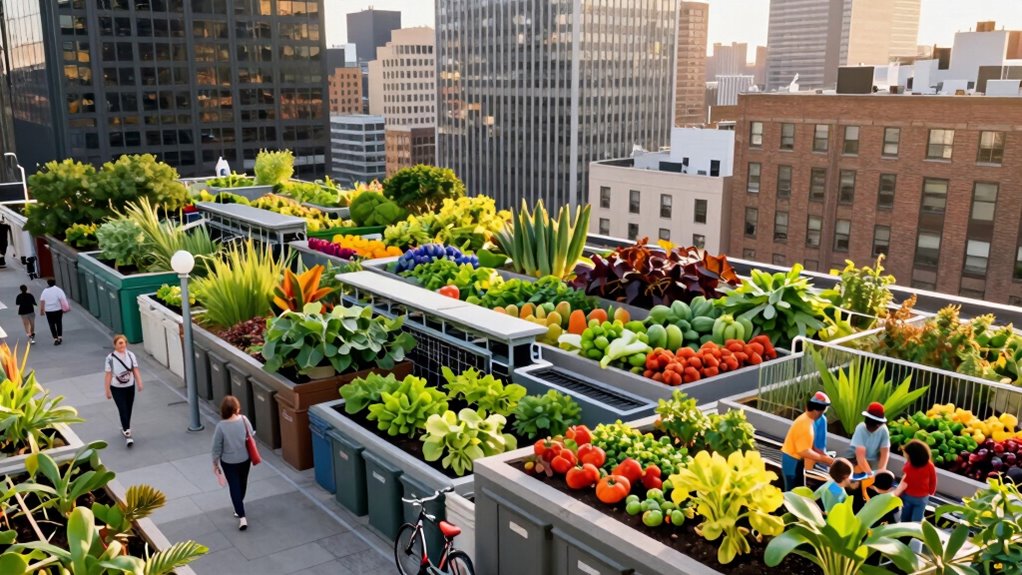
At the heart of a resilient urban food system is a robust supply chain. When supply chains are tightly interconnected and overly dependent on a few sources, a disruption anywhere along the chain can cause shortages and price spikes. To improve resilience, cities need to diversify supply sources—local farms, regional suppliers, and international trade—so that if one link weakens, others can fill the gap. This diversification helps maintain food security by reducing the risk of complete supply failure. Additionally, building local food production capacity, such as urban farms and community gardens, adds another layer of security. Local sources can deliver fresh produce quickly and reduce reliance on distant suppliers, especially during global crises or transportation blockages.
Another key aspect is maintaining a flexible logistics infrastructure. This means creating multiple transportation routes, warehousing options, and distribution channels. When a major highway closes or a port faces delays, a resilient system can reroute supplies seamlessly. Technology also plays a role here—real-time data and digital platforms enable faster decision-making, allowing city officials and suppliers to respond promptly to emerging issues. This agility ensures that food remains available and accessible, even in turbulent times. Moreover, integrating innovative technology solutions can further enhance the responsiveness of supply networks and improve overall resilience. Incorporating diversified supply sources further reduces the risk of dependency on a single supplier or region, strengthening the system’s adaptability. Recognizing the importance of local food systems, some cities are actively investing in infrastructure that supports local producers and urban agriculture initiatives. These efforts are complemented by a growing awareness of how community resilience can be strengthened through collective action and local knowledge.
Resilience also depends on the community’s involvement and knowledge. Educating residents about local food sources, encouraging urban agriculture, and supporting small-scale producers can strengthen the system from within. When more people grow their own food or participate in local markets, the city’s overall food security improves. It’s about creating a network of interconnected actors—farmers, retailers, policymakers, and residents—who work together to sustain the food system under stress.
Ultimately, what makes an urban food system more resilient is its ability to anticipate risks, adapt quickly, and recover swiftly. By diversifying supply chains, enhancing local production, optimizing logistics, and fostering community engagement, you can help build a city that’s better prepared for disruptions. A resilient system not only safeguards food security but also cultivates confidence among residents that their city can weather any storm.
As an affiliate, we earn on qualifying purchases.
Frequently Asked Questions
How Do Urban Food Systems Impact Local Economies?
Urban food systems boost local economies by improving food distribution and expanding market access. When you support local markets, you help small farmers and vendors thrive, creating jobs and increasing income. Efficient food distribution reduces waste and keeps prices stable, making food more affordable. By strengthening these systems, you foster economic resilience, encouraging community growth and ensuring residents have reliable access to fresh, healthy food.
What Role Does Technology Play in Urban Food Resilience?
Imagine technology as a guiding lighthouse in a storm, steering urban food systems safely through challenges. You harness smart agriculture and data analytics to predict shortages, optimize resources, and reduce waste. These digital tools act as your navigational compass, making food production more efficient and adaptable. By embracing innovation, you strengthen the resilience of your urban food system, ensuring fresh, abundant food even when disruptions threaten to cast shadows.
How Can Community Involvement Strengthen Urban Food Systems?
You can strengthen urban food systems through community engagement by encouraging residents to participate in local food initiatives and decision-making. Building local partnerships connects stakeholders such as farmers, businesses, and nonprofits, fostering collaboration and resource sharing. When communities actively get involved, they help identify vulnerabilities and develop innovative solutions, making the system more adaptable and resilient. Your involvement creates a stronger, more sustainable urban food network that benefits everyone.
What Policies Support Resilient Urban Food Networks?
You can support resilient urban food networks through proactive food policies that promote local food production and diversify supply chains. Implement regulations encouraging urban agriculture, support farmers’ markets, and establish storage and distribution systems that reduce dependency on long supply chains. These policies help buffer disruptions, ensuring consistent access to fresh food. By strengthening local supply chains and fostering community involvement, you make the urban food system more adaptable and resilient to shocks.
How Do Climate Change Effects Influence Urban Food Security?
Climate change impacts your urban food security by increasing weather unpredictability, which disrupts food production and supply chains. You need to focus on climate adaptation strategies, like diversifying crops and strengthening local food systems, to reduce vulnerabilities. Embracing these measures helps you better withstand extreme weather events, ensuring a more resilient urban food system. This way, you can safeguard food availability and support sustainable urban living amidst changing climate conditions.
Conclusion
To build a resilient urban food system, you must nurture diversity, foster community connections, and embrace adaptability. These elements weave together like a sturdy fabric, shielding your city from shocks and stresses. By cultivating local sources, supporting innovative solutions, and strengthening partnerships, you create a system that withstands disruptions, sustains livelihoods, and feeds your community. Ultimately, resilience stems from your active effort to imagine, innovate, and invest in a food future that endures through change.
Fall yard work Picks
leaf blowers
As an affiliate, we earn on qualifying purchases.