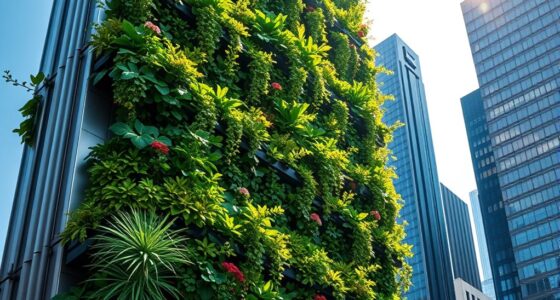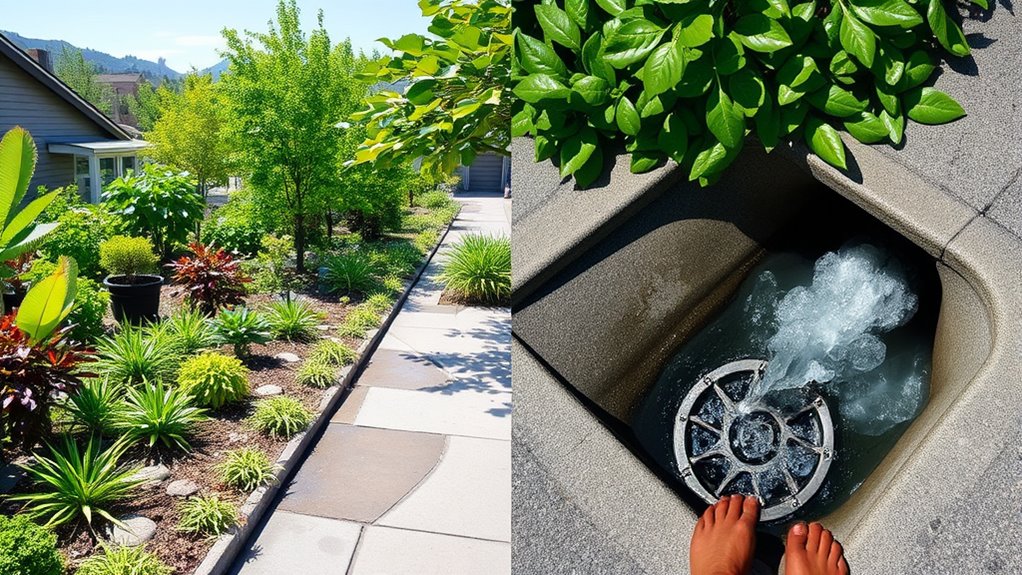

In cities, managing stormwater involves choosing between grey infrastructure, like pipes and drains, and green solutions such as rain gardens, green roofs, and permeable pavement. Grey systems quickly channel water away but can cause pollution and water waste. Green approaches absorb and filter runoff naturally, reducing flood risk and improving water quality. Combining both strategies offers a sustainable way to protect waterways and cities from flooding. Keep exploring to understand how these methods work together for better urban water management.
Key Takeaways
- Grey infrastructure quickly channels stormwater away but often causes pollution and water waste.
- Green infrastructure uses natural processes like rain gardens and permeable pavements to filter and absorb runoff.
- Hybrid systems combine grey and green solutions to enhance stormwater management and reduce urban flooding.
- Green infrastructure promotes water recycling and groundwater recharge, supporting sustainable urban environments.
- Cities are adopting regional and integrated strategies to optimize stormwater management and protect waterways.
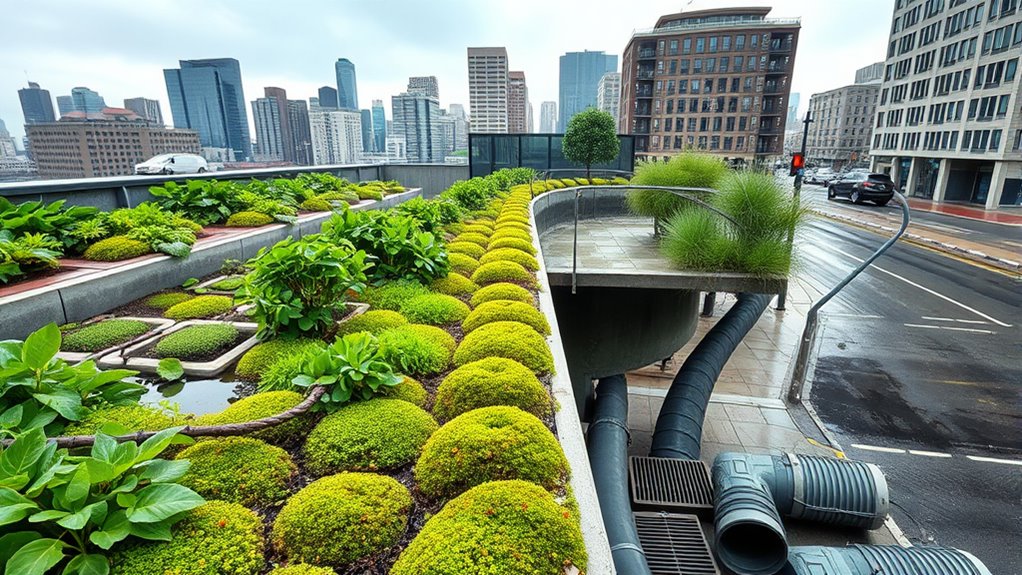
Have you ever wondered what happens to rainwater when it falls on city streets? In urban areas, rain doesn’t just vanish; it creates what’s called urban runoff. This runoff collects pollutants from roads, vehicles, and industrial sites, flowing into storm drains and eventually into local waterways. Without proper management, this process can cause pollution, flooding, and damage to aquatic ecosystems. That’s where the idea of water recycling and stormwater management comes into play, offering ways to handle this water more sustainably.
Rain on city streets creates urban runoff, carrying pollutants to waterways and risking pollution and flooding.
When rain hits a city’s hard surfaces, it quickly becomes urban runoff, rushing toward storm drains. Traditional grey infrastructure, like concrete pipes and drainage systems, channels this water away as fast as possible. While effective at preventing street flooding, this approach often leads to water waste, because the runoff isn’t captured or reused. Instead, it flows directly into rivers, lakes, or oceans, taking pollutants along with it, which can harm aquatic life and degrade water quality. Over time, cities are realizing that this approach isn’t sustainable, and they’re exploring solutions that involve water recycling. By capturing stormwater for reuse, cities can reduce the strain on water supplies, especially during droughts or periods of high demand.
Green infrastructure offers a different approach. It emphasizes natural processes to manage stormwater, like rain gardens, green roofs, and permeable pavements. These systems allow water to soak into the ground, filtering out pollutants and reducing urban runoff. Not only does this help prevent flooding, but it also promotes water recycling at a local level. Instead of sending all stormwater straight into sewers, green infrastructure encourages the infiltration and reuse of water for irrigation, groundwater recharge, or other non-potable uses. This approach mimics natural hydrological cycles, making the city more resilient to heavy rains and climate change.
Both grey and green infrastructure have their strengths and challenges. Grey systems are tried-and-true but often waste water and contribute to pollution. Green solutions are more sustainable but can be costly and require space and maintenance. Many cities are now blending these methods, creating hybrid systems that maximize stormwater capture, reduce urban runoff, and promote water recycling. By doing so, they aim to protect waterways, conserve resources, and build more sustainable urban environments. As a city resident, understanding these strategies can make you more aware of how your community manages stormwater and the importance of supporting sustainable infrastructure efforts.
In addition, some cities are investing in regional stormwater management programs that coordinate efforts across neighborhoods to improve efficiency and effectiveness.
Frequently Asked Questions
How Do Green and Grey Infrastructure Costs Compare Long-Term?
Green infrastructure typically offers a more favorable cost comparison over the long-term, as it reduces maintenance and energy expenses while enhancing environmental benefits. You’ll find it more financially sustainable because initial investments often lead to lower operational costs. Grey infrastructure, though sometimes cheaper upfront, tends to incur higher ongoing expenses. Overall, green infrastructure supports better financial sustainability and resilience, making it a smarter choice for long-term stormwater management.
Can Green Infrastructure Effectively Handle Heavy Storm Events?
Yes, green infrastructure can effectively handle heavy storm events by enhancing urban resilience and reducing flooding risks. It absorbs and slowly releases stormwater, preventing overwhelm of drainage systems. Plus, it offers ecological benefits like improved air quality and biodiversity. When integrated properly, green solutions boost a city’s capacity to manage extreme weather, making your urban environment more resilient and environmentally friendly during heavy rainfall.
What Maintenance Is Required for Green Infrastructure Systems?
Imagine you’re steering a ship through stormy seas; green infrastructure needs regular upkeep to stay effective. You should inspect stormwater filtration systems for clogging, make sure vegetation management keeps plants healthy and prevents overgrowth, and clear debris from bioswales and rain gardens. Routine maintenance also involves checking soil moisture levels, pruning plants as needed, and replacing mulch or filters when they wear out. Consistent care helps green systems function effectively during heavy rainfalls.
How Does Urban Density Impact Green Infrastructure Viability?
Urban density markedly affects green infrastructure viability. When areas experience urban sprawl, land use patterns often favor grey infrastructure, reducing space for green solutions. High-density zones can make installing green infrastructure challenging due to limited space and competing land demands. To succeed, you need to carefully plan land use, prioritize multifunctional green spaces, and adapt designs to fit dense environments, ensuring stormwater management remains effective amid changing urban landscapes.
Are There Successful Case Studies Integrating Both Approaches?
Sure, because what’s better than a city that’s basically a lush jungle with a concrete backbone? You’ll find successful case studies where green and grey infrastructure blend seamlessly, enhancing ecosystem services and showing smart policy integration. These projects prove that combining nature-based solutions with traditional engineering isn’t just a pipe dream, but a practical way to improve urban resilience, reduce flooding, and create healthier, more sustainable communities.
Conclusion
Ultimately, managing stormwater is like tending a delicate garden—you must choose the right tools to nurture growth and prevent chaos. Green infrastructure acts as a living sponge, absorbing and filtering runoff naturally, while grey infrastructure serves as a sturdy, man-made dam to control flow. By blending these approaches, you create a resilient cityscape that flows smoothly, like a well-tended stream. Embracing both allows you to turn stormwater challenges into opportunities for sustainable urban harmony.