If you’re looking for a small, accessible space to grow food and build community, a community garden might be perfect. It promotes social bonds, education, and sustainable practices suitable for beginners or those with limited time. If you want to produce larger quantities of food and engage in sustainable farming on a bigger scale, an urban farm could be the right fit. Stay with us to explore more and find which option best matches your goals and space.
Key Takeaways
- Choose a community garden if you want a small, accessible space for personal or neighborhood gardening with less commitment.
- Opt for an urban farm if you’re interested in large-scale food production and broader environmental or community impact.
- Community gardens focus on social bonds, education, and sustainability at a local level, ideal for beginners or casual gardeners.
- Urban farms emphasize maximizing yield, sustainability practices, and community education on sustainable agriculture.
- Consider your space, time, and goals to decide whether a small community garden or a larger urban farm better fits your interests.
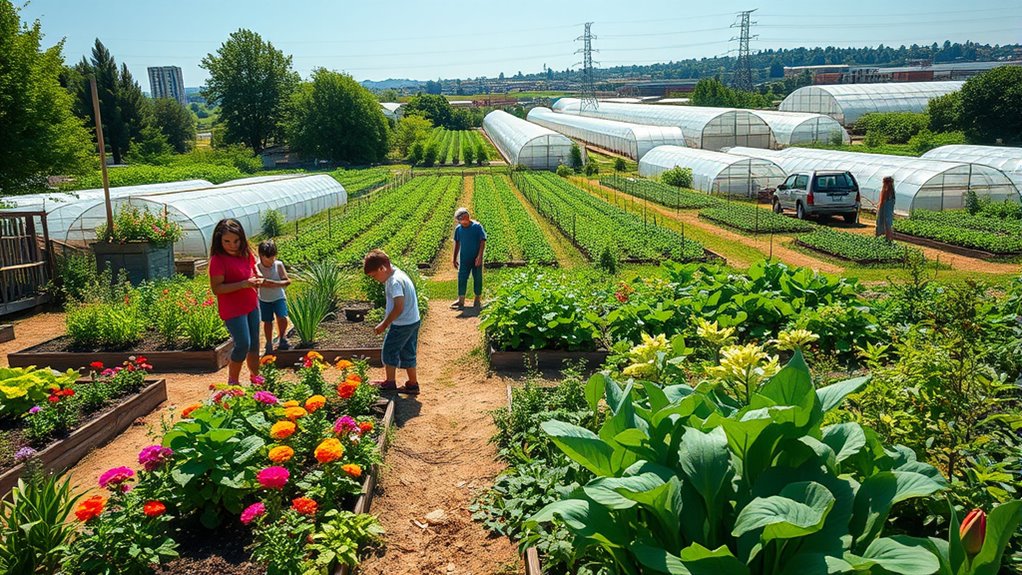
Have you ever wondered how community gardens and urban farms differ in transforming city spaces? Both play essential roles in making urban environments greener and more sustainable, but they serve slightly different purposes. When you’re choosing between them, consider how each aligns with your goals around sustainable practices and community engagement. Community gardens are often smaller plots where local residents come together to grow vegetables, herbs, and flowers. They’re usually maintained by volunteers and serve as accessible spaces for neighbors to connect, learn, and share. These gardens emphasize sustainable practices like composting, organic growing methods, and water conservation, making them excellent for promoting eco-friendly habits in urban settings. They foster community engagement by bringing people from diverse backgrounds together, encouraging social bonds, education, and collective responsibility for the space. Additionally, community gardens support renewable energy sources such as solar-powered lighting or water pumps, which can enhance their sustainability and reduce environmental impact.
Community gardens are small, volunteer-maintained spaces fostering local connection and sustainable urban practices.
Urban farms, on the other hand, tend to be larger-scale operations. They might be run by organizations, businesses, or city programs aiming to produce significant quantities of food for local markets or food banks. While they also incorporate sustainable practices—such as crop rotation, integrated pest management, and rainwater harvesting—they often focus more on maximizing yield and efficiency. Urban farms can serve as educational hubs for the community, offering workshops on sustainable agriculture and food security. They have the potential to influence city-wide food systems, making fresh produce more accessible to underserved neighborhoods. Your involvement in an urban farm might be more project-oriented, perhaps centered on contributing to local food sovereignty or supporting environmental initiatives, but both types of spaces emphasize the importance of community engagement.
Deciding which is right for you depends on your interests and lifestyle. If you want a small, accessible space to grow your own food, connect with neighbors, and practice sustainable methods, a community garden might be the perfect fit. They’re generally easier to access and require less commitment, making them ideal for beginners or those with limited time. If you’re motivated by larger-scale food production, environmental impact, or educational outreach, then an urban farm might better suit your goals. Urban farms often provide opportunities to learn about sustainable agriculture on a broader level and to participate in initiatives that benefit the entire community.
Ultimately, both community gardens and urban farms offer meaningful ways to contribute to a greener, more sustainable city. They help foster stronger community ties and promote sustainable practices that can inspire positive change. Your choice depends on how involved you want to be, your available space, and your desire to impact the local food system. Whichever you pick, both serve as powerful tools for transforming urban areas into healthier, more connected communities.

Indoor Herb Garden Starter Kit – Heirloom, Non-GMO Herb Seeds – Basil Thyme Parsley Cilantro Seed, Potting Soil, Pots, Scissors – DIY Grow Kits for Growing Herbs Indoors, Kitchen, Balcony, Window Sill
- Grow Your Own Herbs: Includes Cilantro, Parsley, Thyme, Basil seeds
- Complete Indoor Herb Kit: Includes seeds, soil, pots, scissors, and instructions
- All-in-One Starter Pack: Burlap grow bags, plant markers, and wood planter included
As an affiliate, we earn on qualifying purchases.
As an affiliate, we earn on qualifying purchases.
Frequently Asked Questions
Can I Start a Community Garden on Private Property?
Yes, you can start a community garden on private property, but you’ll need to contemplate your garden size and soil preparation. First, check local regulations and get any necessary permits. Then, decide on the garden size that fits your space and goals. Prepare the soil by testing its quality, removing weeds, and adding compost or fertilizers. With proper planning, you can create a thriving community garden right on your property.
What Are the Legal Permissions Needed for Urban Farming?
Think of urban farming as steering through a maze—you’ll need the right map. You must check local zoning regulations to see if farming is allowed on your property. The permitting process may include applying for special permits or licenses, especially if you plan to sell produce. Contact city planning or local authorities to clarify requirements, ensuring your urban farm stays within legal boundaries and thrives without any roadblocks.
How Much Initial Investment Is Required for Each Option?
When comparing costs, urban farms usually require a higher initial investment due to land, equipment, and infrastructure needs, while community gardens are more affordable, often relying on donations or volunteer work. Funding sources like grants, local government programs, or crowdfunding can help offset expenses. Your choice depends on your budget and goals, but understanding these cost differences helps you plan effectively for either option.
Which Option Offers More Opportunities for Community Engagement?
Did you know that community gardens typically host more neighborhood events and volunteer opportunities than urban farms? You’ll find that community gardens actively engage residents through workshops, festivals, and shared planting days. This makes them ideal if you want a space that fosters social connections. Urban farms tend to focus more on production, so if community involvement is your priority, community gardens offer more chances to participate and build relationships.
Are There Specific Zoning Laws Affecting Community Gardens or Urban Farms?
You should look into zoning restrictions and land use regulations in your area because they can substantially impact your plans. Local zoning laws determine where community gardens or urban farms can be established, and some areas may have restrictions or require permits. Check with your city or county office to understand any specific rules, so you can choose a location that complies with land use policies and avoid potential issues.
Conclusion
Whether you choose a community garden or an urban farm, both offer unique benefits. Did you know that urban farms can produce up to 10 times more food per square foot than traditional gardens? This shows their potential for high yields in limited spaces. Think about your goals—if community connection matters most, a community garden’s perfect. If maximizing production is key, then an urban farm might be right for you. Either way, you’re making a positive impact on your city’s green space.