TL;DR
Beijing’s Garden and Greening Bureau has successfully applied micro-pore precision trunk injection to control American White Moth infestations in tall trees. This innovative method addresses previous challenges in managing high trees and pest spread, representing a significant advance in urban forestry pest control.
Beijing’s Garden and Greening Bureau has successfully employed a novel micro-pore precision trunk injection technique to control American White Moth infestations in high-standing trees, a development that addresses longstanding challenges in urban pest management. This approach allows targeted treatment of tall trees without the need for climbing or heavy equipment, marking a significant step forward in city forestry pest control efforts.
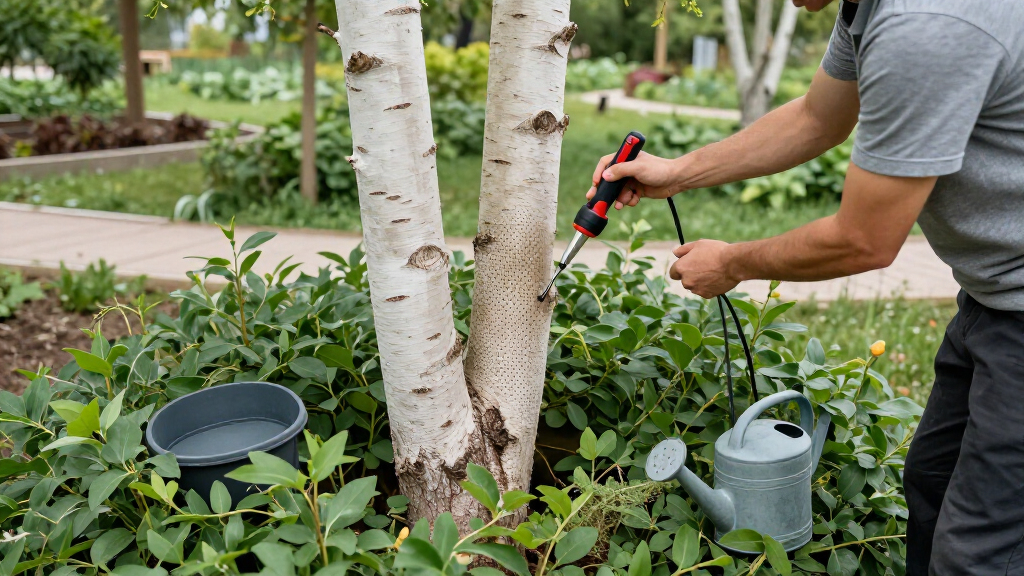
The Beijing municipal authorities confirmed that the micro-pore injection technology was tested and applied on high trees infested with American White Moth, a pest known for damaging foliage and weakening tree health. This method involves using specialized equipment to deliver precise doses of insecticide directly into the tree trunk through tiny pores, minimizing environmental impact and reducing labor costs.
According to officials from the Beijing Garden and Greening Bureau, the technique has shown promising results in initial applications, with a marked decrease in moth populations and signs of improved tree vitality. The method is particularly suitable for urban environments where traditional spraying methods are limited by height and safety concerns.
Local experts and pest control specialists have noted that this approach could revolutionize pest management in urban forestry, especially for tall and hard-to-reach trees, which have historically been difficult to treat effectively.
Innovative Pest Control for Urban Trees
This development is significant because it offers a more effective and environmentally friendly solution for managing pests like the American White Moth in urban areas. Traditional methods, such as spraying insecticides, often face limitations due to safety concerns and the difficulty of reaching high trees. The micro-pore trunk injection technique addresses these issues directly, potentially reducing pesticide use and minimizing disruption to urban ecosystems.
Furthermore, this approach could set a precedent for other cities facing similar pest control challenges, especially as urban forestry becomes more critical amid increasing environmental pressures and climate change impacts. The success of this method may lead to wider adoption and further innovations in urban pest management strategies.
micro-pore trunk injection pest control kit
As an affiliate, we earn on qualifying purchases.
As an affiliate, we earn on qualifying purchases.
Background on American White Moth and Urban Pest Challenges
The American White Moth is an invasive pest species that has been increasingly detected in urban environments, including Beijing, where it damages the foliage and weakens the structural integrity of tall trees. Managing such pests in high trees has historically been difficult due to safety concerns, limited access, and the limitations of conventional spraying methods.
Previous efforts relied heavily on manual climbing or aerial spraying, both of which posed safety risks and environmental concerns. As urban forestry expands and the importance of maintaining healthy green spaces grows, innovative solutions have become a priority for city authorities. The application of micro-pore injection technology represents a response to these ongoing challenges, with pilot projects indicating promising results.
This trend aligns with broader efforts across China and globally to adopt precision forestry techniques, reduce chemical usage, and improve urban environmental quality.
Unconfirmed Aspects of Long-Term Effectiveness
It is not yet clear how long the effects of the micro-pore injection will last or whether repeated treatments will be necessary. The scalability of this method for widespread use across different urban environments remains to be evaluated. Additionally, the full environmental impact of the insecticide used in this targeted manner is still under assessment.
Next Steps in Urban Pest Management Trials
The Beijing Garden and Greening Bureau plans to expand the application of this technique to more high trees affected by American White Moth and other pests. Further monitoring will be conducted over the coming months to assess the long-term efficacy and environmental safety. Researchers and city officials will also evaluate the cost-effectiveness and potential for wider adoption in other districts or cities.
Additionally, a detailed report on the initial pilot projects is expected to be released, providing data and insights for other urban centers considering similar approaches.
Key Questions
What is micro-pore trunk injection technology?
It is a targeted pest control method that uses tiny pores to deliver insecticide directly into a tree’s trunk, allowing precise treatment of pests like the American White Moth.
Why is this method considered better than traditional spraying?
It reduces environmental impact, minimizes pesticide use, and allows treatment of high or hard-to-reach trees safely and effectively without climbing or aerial spraying.
Are there any risks associated with this new technique?
While initial results are promising, the long-term environmental impact and potential effects on non-target species are still under study.
Will this method be adopted in other cities?
Potentially, if further trials confirm its effectiveness and safety, other urban areas facing similar pest issues may adopt this innovative approach.
How does this impact urban forestry management in Beijing?
This technique offers a safer, more efficient way to manage pests in tall trees, potentially improving the health and longevity of urban green spaces.
Source: local