TL;DR

Get garden gear delivered free with Prime
- Fast, free delivery on millions of items
- Prime Video, Amazon Music and more included
- Member-only deals all year
Gardening Know How has published a guide to growing plants from fruit seeds and vegetable scraps on a kitchen windowsill. It describes methods for citrus, avocado, apple and pear seeds, plus cabbage bases and carrot tops; results and timelines vary, and seed-grown fruit trees may not produce good eating fruit.
Gardening Know How has published a guide to growing plants from fruit seeds and vegetable leftovers on a kitchen windowsill, outlining methods for citrus and avocado seeds, apple and pear seeds, cabbage bases and carrot tops. The report presents the activity as a low-cost indoor gardening project, while warning that apple and pear seedlings are unlikely to produce fruit like the fruit they came from.
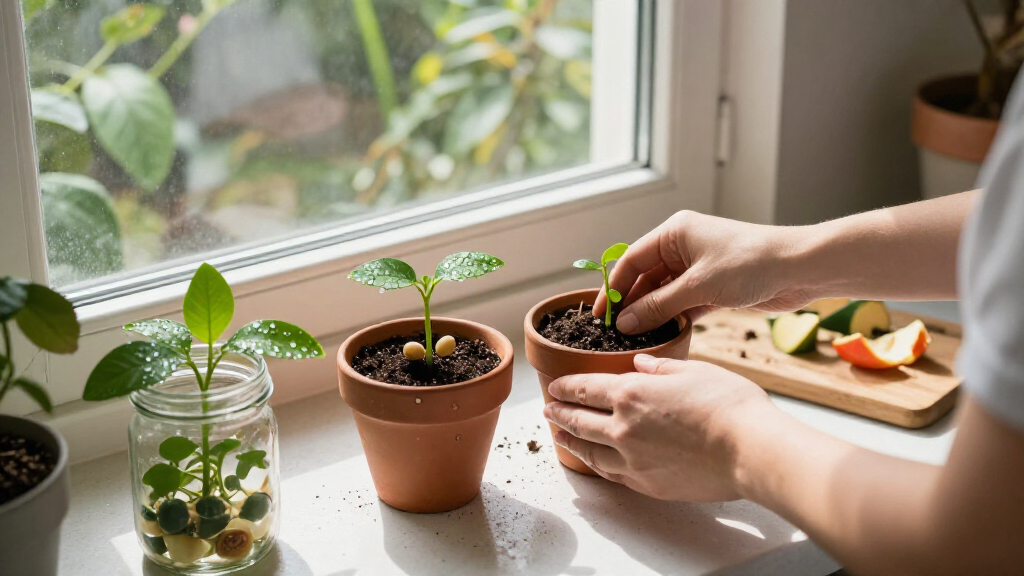
For citrus seeds, the guide recommends washing away pulp, then sowing a seed about one-third of an inch deep in moist potting soil. Scraping the seed’s outer shell is optional, though the report says it may speed germination. A clear cover can retain warmth and moisture; once growth appears, remove it and keep the pot on a bright, sunny windowsill. The report says a seedling may reach about one foot tall by its first birthday with suitable care, but fruit could take a decade or more.
For an avocado stone, the article advises suspending its lower third in water in a bright spot with indirect sunlight. The water should be changed every two to five days, and the broad base kept wet while the top remains dry. After the stone splits and develops roots and a stem, it can be transferred to potting soil. The report says this can happen quickly but may take up to two months. Pruning the stem after it reaches about six inches can encourage branching, according to the guide.
Apple and pear seeds need a cold period before sowing, the report says. It recommends cleaning the seeds, selecting plump ones that sink in water, wrapping them in slightly damp paper and refrigerating them in a sealed bag. Roots may appear around six weeks later, though the article does not present that timing as a guarantee. It also suggests cabbage bases for regrowing leaves and carrot tops for edible foliage, including use in pesto. These are growing suggestions in the source report, not independently verified results for every kitchen or seed.
Low-Cost Windowsill Growing
The methods give readers a way to experiment with plant propagation using kitchen leftovers rather than buying every plant or seed. They can also make an accessible indoor project for children and adults, particularly where outdoor growing space is limited. The edible options differ from the fruit-tree experiments: cabbage leaves and carrot foliage are presented as potential food, while citrus and avocado are chiefly described as foliage houseplants.
The key practical caveat is that growing a plant does not guarantee a useful harvest. The guide cautions that apple and pear seedlings generally do not reproduce the quality of the parent fruit. Citrus may take many years to fruit, and the report does not promise that every seed will germinate or that every plant will thrive in home conditions.
Popular right now

Hisense 85 U6 Pro Series Mini-LED ULED 4K UHD HDR Gaming AI Smart Fire TV (85U6SF Pro)

Vitamix Propel Series 750 Professional-Grade Blender, 4 Programs, Black

Bose QuietComfort Ultra Earbuds (2nd Gen), Deep Plum
As an affiliate, we earn on qualifying purchases.
Seeds, Scraps and Growing Times
The article frames windowsill propagation as an indoor gardening activity, including one suited to rainy days. Its examples cover several different processes: sowing citrus seeds in soil, sprouting avocado stones in water, chilling apple and pear seeds before planting, and regrowing foliage from vegetable bases or tops.
Those approaches have different purposes and timelines. Citrus is described as a foliage-first houseplant while it matures; avocado grows into a leafy indoor plant; and apple or pear seedlings are suggested as possible bonsai projects. The report says fruit from seed-grown apple and pear trees is likely to be small and acidic, reflecting the plants’ genetics. It does not provide a single success rate that applies across these plants.
““While you’ll have to wait a decade or so for fruit, citrus trees make beautiful foliage-first houseplants.””
— Gardening Know How
Germination and Harvest Limits
The report does not give germination rates, controlled trial results or a publication date in the supplied material. Timelines such as citrus reaching a foot in a year or an avocado sprouting within two months are presented as guidance, not guaranteed outcomes. Results can depend on the seed’s condition and growing environment; the source does not quantify those effects.
It is also unclear how much edible cabbage or carrot foliage a reader can expect, or how long regrowth will continue. The article offers household growing instructions but does not report a measured harvest, a comparison with purchased plants, or a verified cost saving.
Trying the Methods at Home
Readers following the guide can begin with clean seeds or vegetable bases, use containers with drainage where soil is involved, and monitor moisture and light as each plant develops. The article advises placing citrus in a sunny spot and giving avocado bright, indirect light; it also calls for regular water changes during avocado sprouting and weekly checks on the damp paper used to chill apple and pear seeds.
There is no announced follow-up study or scheduled next milestone in the source material. The next observable step for a home grower is whether a seed germinates or a scrap produces new growth. Any later claims about fruit production or sustained edible harvest would require time and observation beyond the initial propagation stage.
Key Questions
Can an apple seed grow into a tree with edible apples?
It can grow into a tree, but Gardening Know How warns that seed-grown apple trees are unlikely to produce fruit like the original apple. The fruit may be small and acidic, so the report suggests the seedlings as bonsai projects instead.
How long does an avocado seed take to sprout?
The report says an avocado stone may split quickly, but sprouting can take up to two months. Keep its lower portion in water and change the water every two to five days, following the guide’s instructions.
Do citrus seeds produce fruit quickly?
No quick harvest is promised. The report says citrus seedlings can grow into foliage houseplants and may reach about a foot tall in a year with suitable care, but fruit may take a decade or more.
Can vegetable scraps produce something to eat?
The guide says cabbage bases can regrow leaves for salads or stir-fries and carrot tops can produce flavorful foliage. It does not specify the expected harvest size or how long the plants will keep producing.
Source: rss