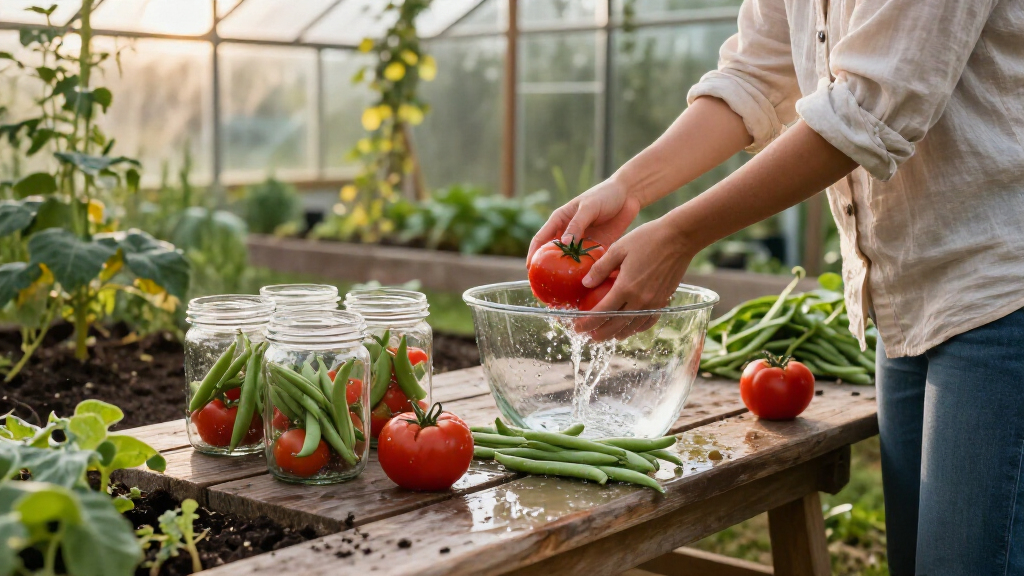

This checklist is for gardeners who want a practical path from gathering fresh produce to preserving it for later. It covers harvest and pruning tools, along with equipment for drying, canning, and vacuum sealing. Match each pick to your harvest and the way you plan to use it.

Get garden gear delivered free with Prime
- Fast, free delivery on millions of items
- Prime Video, Amazon Music and more included
- Member-only deals all year
The sections follow the work: carry produce in a harvest basket, consider the right pruning shears and garden trug, then choose preservation equipment. Product picks are included where provided; the pruning shears and trug sections offer selection advice without naming a product. Each slot has a distinct job, so you can focus on what your routine actually needs.
Use the look-for lists to check capacity, fit, and compatibility before buying. Think about where each item will be used and stored, and whether it suits the volume and types of produce you handle. Start with your own harvest, then use the verdict and bottom line to weigh each pick against that need.
Harvest Basket
A harvest basket is the link between picking and the next step: carrying produce in from the garden. The named pick is the Kings County Tools Garden Harvest Baskets, 2-Pack. Having two baskets may suit a routine that separates produce by type or shares gathering across two people, but the product name alone does not confirm dimensions or load capacity. Check the basket size against what you expect to carry in a typical trip.
A common buying mistake is choosing by appearance or quantity alone. Consider the size of the produce, how far you carry it, and whether you need room for bulky items or a compact basket for smaller harvests. Look for dimensions, handle shape, and care guidance in the listing; do not assume materials or features from the name. If you plan to use the baskets for delicate produce, check whether the interior and construction are suitable. Fit the basket to your route and your harvest rather than buying extra capacity you will not use.
What to look for:
- Basket dimensions that suit your produce
- Handle design that feels comfortable when loaded
- Capacity suited to your typical harvest
- Construction and care instructions in the listing
- Two-basket quantity that fits your gathering routine
Kings County Tools Garden Harvest Baskets, 2-Pack

This set includes one large and one small mesh basket for gathering produce, eggs, or flowers, carrying picnic items, and storing household goods. Made from zinc-plated steel wire with acacia wood handle grips, the baskets nest together for compact storage and can be rinsed clean.
Pros:
- Includes two sizes that nest for space-saving storage
- Rust-resistant zinc-plated wire construction
- Acacia wood handle grips
- Suitable for gathering produce, eggs, flowers, or carrying picnic items
Cons:
- Open mesh construction may not suit carrying small loose items
- Requires rinsing and drying after cleaning
Best for: Gardeners who want two baskets for gathering
Not ideal for: Anyone needing verified capacity or dimensions before choosing
Bottom line: Check dimensions and handling details, then choose this set if two baskets fit your harvest routine.
Pruning Shears
Pruning shears help with selective cutting during garden work, so a suitable pair should match the plants and tasks you handle. No product pick is specified for this slot; focus on the cut type and how the tool feels in your hand. Choose for your actual plants, since stems and branches call for different cutting needs. Check the tool description for the intended cutting range rather than assuming one pair suits every job.
A frequent mistake is buying a tool that feels awkward or is intended for a different kind of cut. Handle size and grip shape affect control, especially during repeated use. If you have smaller or larger hands, look for product details or an opportunity to assess the grip before buying. Also check how the shears open and close, and whether the listing explains cleaning and maintenance. Comfort and control matter as much as the blade description. Match the tool to the work and your hand, and avoid relying on a broad label without checking the intended use.
What to look for:
- Cutting range and intended plant use
- Handle size and grip shape suited to your hand
- Smooth opening and closing action
- Clear cleaning and maintenance guidance
- A design that feels controllable during repeated cuts
Garden Trug
A garden trug can serve as a carry container while you move around the garden, but the right choice depends on what you gather and how you work. No product is named for this slot, so use the basket dimensions, carry style, and care details in each listing to compare options. Think about your usual load: small hand-picked produce has different space needs from bulky items or tools.
A common mistake is treating a trug and harvest basket as interchangeable without checking the form and capacity. Consider whether you will carry it by hand, set it down frequently, or use it for more than one kind of task. Check dimensions and handle placement, and confirm that the construction suits the conditions where you will use it. If you expect to carry delicate produce, look for a shape and interior that will not crowd the items. Choose a size you can manage when filled, not just one that looks roomy when empty. Product listings should answer practical questions about measurements and care.
What to look for:
- Overall dimensions and usable capacity
- Handle placement and comfortable carry style
- A size manageable when filled
- Construction suited to garden use
- Care details and intended uses in the listing
Food Dehydrator
A food dehydrator is for gardeners who want to preserve produce by drying it. The listed pick is the Magic Mill Premium Food Dehydrator with 15 Extra-Large Stainless Steel. Its name identifies a dehydrator and calls out 15 extra-large stainless steel components, but it does not specify their exact dimensions or the appliance’s operating details. Confirm what the listing includes and how much usable space it provides before deciding it suits your harvest.
A common mistake is assuming that a large tray count automatically fits every food or batch size. Check tray measurements, spacing, and any guidance about the kinds of food the appliance can handle. Consider available counter or storage space, plus the controls and cleaning instructions described in the listing. If you expect to dry different kinds of produce, look for clear operating guidance rather than assuming settings or features. Capacity and cleanup shape daily use, so make sure both align with your routine. Verify the electrical and care requirements for your location and use case before purchase.
What to look for:
- Exact tray dimensions and usable drying area
- Details about spacing and included components
- Operating instructions for the foods you plan to dry
- Controls and care guidance in the listing
- Appliance dimensions and storage requirements
Magic Mill Premium Food Dehydrator with 15 Extra-Large Stainless Steel Trays, 80

The Magic Mill Premium Food Dehydrator features 15 extra-large stainless steel trays and a rear-mounted fan with precision airflow circulation for even drying without rotating trays. It offers digital temperature control from 95°F to 167°F, a 48-hour timer, and a 24-hour keep-warm function.
Pros:
- Even drying with rear-mounted fan — no need to rotate trays
- Precise digital temperature and timer controls
- Dishwasher-safe trays for easy cleaning
- Automatic shut-off and overheat protection
Cons:
- Large footprint may take up significant counter space
- Only 1-year limited warranty
Best for: Gardeners comparing a dehydrator with 15 extra-large stainless steel components
Not ideal for: Anyone who needs confirmed tray dimensions or settings first
Bottom line: Verify the included components, operating details, and available space before choosing this dehydrator.
Canning Kit
A pressure canner and starter supplies form a preservation setup for gardeners who plan to can produce. The pick is the 24 Quart Pressure Canner with Gauge & 9-Piece Canning Supplies Starter. Its name gives a stated 24-quart capacity, a gauge, and nine-piece supplies, but does not identify the individual supplies or explain compatibility. Check the complete kit contents and the canner’s instructions before purchase.
A common mistake is treating a starter kit as a complete match for every recipe, jar, or cooktop. Confirm the canner dimensions and the types and sizes of jars it can accommodate, along with the gauge information and operating guidance. Check that the canner is suitable for your cooking surface and that the included supplies cover the tasks you intend to do. Follow the manufacturer’s instructions and current food preservation guidance for safe use; do not infer a process from the product name. Compatibility and instructions come first, especially when choosing equipment for a specific canning routine.
What to look for:
- Exact list of the nine included supplies
- Canner dimensions and jar compatibility
- Gauge details and operating instructions
- Compatibility with your cooking surface
- Care guidance and manufacturer support information
24 Quart Pressure Canner with Gauge & 9-Piece Canning Supplies Starter Kit

This 24-quart aluminum pressure canner is ideal for home food preservation, allowing batch canning of meats, vegetables, and seafood. It features a built-in pressure gauge, induction compatibility, and includes a comprehensive starter kit with essential canning tools.
Pros:
- Large 24-quart capacity for bulk canning
- Durable aluminum construction for fast, even heating
- Includes a complete 9-piece canning supplies starter kit
- Compatible with induction cooktops
Cons:
- Heavy weight may be difficult to handle for some users
- Requires separate purchase of 10 PSI regulator for lower pressure canning
- Not suitable for canning low-acid foods without proper pressure regulation
Best for: Gardeners seeking a named pressure canner and starter set
Not ideal for: Anyone whose jars or cooktop compatibility is unconfirmed
Bottom line: Confirm the kit contents, jar fit, and cooktop guidance before choosing this pressure canner.
Vacuum Sealer
A vacuum sealer can be part of a food-preservation routine, and the named option here is the VacMaster VP320 Commercial Chamber Vacuum Sealer. The product name identifies it as a commercial chamber model, but does not specify chamber dimensions, controls, or included accessories. Check the working space and the instructions to see whether it fits your planned batches and storage area.
A common buying mistake is assuming that bags, containers, and sealing routines will all be compatible without checking the product details. Look for chamber dimensions and guidance on the bags or other materials the sealer accepts. Consider where you will place the unit and whether its operating and cleaning requirements fit your routine. If you are comparing it with another type of sealer, verify the differences from product documentation rather than relying on the name alone. Compatibility shapes the whole workflow, from preparing portions to storing them. Confirm the power, care, and operating information for your intended setup before buying.
What to look for:
- Chamber dimensions and usable space
- Compatible bag types and sizes
- Operating controls and instructions
- Cleaning and maintenance requirements
- Unit dimensions and placement needs
VacMaster VP320 Commercial Chamber Vacuum Sealer

A countertop chamber vacuum sealer with a stainless steel body and a 1/2 HP oil pump for commercial and high-volume home use. Its 16-inch double-seal bar, digital controls with 10 programmable settings, and compatibility with bags up to 16 x 18 inches support food storage, liquids, and sous vide preparation.
Pros:
- Stainless steel body designed for commercial use
- Chamber sealing supports liquids and multiple bag types
- Double-seal bar is designed to create airtight seals
- Digital controls include a pressure indicator and 10 programmable settings
Cons:
- Large countertop footprint
- Semi-automatic operation
Best for: Shoppers specifically seeking a chamber vacuum sealer
Not ideal for: Anyone without space or confirmed bag compatibility
Bottom line: Check chamber size, compatible materials, and placement requirements before choosing the VP320.
Build your checklist around the work you do most: start with the tools that help you gather and handle produce, then add preservation equipment that matches your planned methods. Prioritize fit and compatibility before filling gaps with less-used items. Check dimensions, instructions, and included components for each product.
You can assemble a useful setup one task at a time. Begin with what your garden produces and the steps you are ready to take, then revisit the checklist as your routine grows. A well-matched tool earns its place by making your own harvest easier to handle and preserve.
Black Friday Picks

Vitamix Nano Personal Blender with SmoothiePilot, Black
As an affiliate, we earn on qualifying purchases.