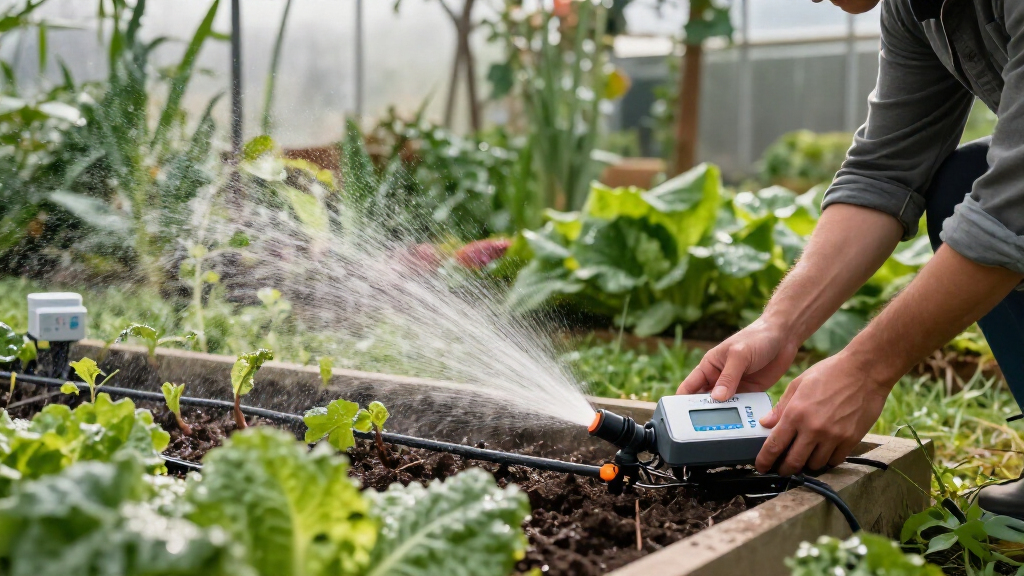

TL;DR
Smart garden irrigation systems use schedules, local weather data, soil moisture sensors, or a combination of these to decide when and how much to water. Choose sprinklers for broad areas and drip lines for beds or containers, then divide the garden into zones with similar plants and conditions. Automation can skip unnecessary watering, but you still need to check soil, sensors, emitters, and seasonal settings.
A sprinkler can run through a summer downpour as if the sky were clear. A smart controller can skip that cycle, but only if it has the right schedule, data, and garden setup. The word “smart” helps most when the system responds to what your plants actually need.

Get garden gear delivered free with Prime
- Fast, free delivery on millions of items
- Prime Video, Amazon Music and more included
- Member-only deals all year
Smart garden irrigation systems use timers, weather information, soil moisture sensors, or a combination of these to control watering. In this guide, you’ll learn how those approaches differ, which setups suit lawns, beds, and containers, and what to check before buying. You’ll also see why a little hands-on observation still matters: an app cannot tell whether an emitter is clogged unless the system can detect the problem.
Think of automation as a helpful gardener with a watch and a weather report. It can follow a routine and adjust to conditions, but you still have to show it which parts of the garden belong together. Get that match right, and the system can save time while avoiding needless watering.
A smart controller can follow a timer, use weather data, respond to a soil sensor, or combine these inputs.
Sprinklers often suit lawns and broad areas; drip irrigation often suits beds, rows, and containers.
Separate zones help you water areas with different plants, exposure, soil, or slopes on their own schedules.
A sensor only represents the soil and location where you place it, so match placement to the zone it controls.
Check compatibility, Wi-Fi, offline behavior, and the full equipment and subscription cost before buying.
How smart garden irrigation systems decide when to water
Smart garden irrigation systems decide when to water by following a schedule, responding to weather information, measuring soil moisture, or combining those inputs. A basic timer opens a valve at set times. That makes watering predictable, but a fixed schedule keeps running through cool spells or rain unless someone changes it. A weather-based controller may adjust the schedule for rain, temperature, or estimated evapotranspiration, while a sensor-based setup reacts to moisture measured in the soil.
These approaches work like different ways to decide whether to carry an umbrella. A timer checks the clock; a weather controller checks the forecast; a soil sensor checks what is happening right where you stand. The tradeoff is between simplicity and how closely the system observes conditions. A timer is usually straightforward and does not depend on weather data, but it needs more manual adjustment. Weather controls can respond across a larger area, though regional data may not capture a tree’s rain shadow. Sensors measure local conditions, but only at their installation point and only for the zone they represent. Each gives useful information, but none sees every corner of a garden.
For example, imagine a vegetable bed under a tree beside a sun-baked strip of lawn. A regional rain report may show a shower, yet the tree canopy keeps most of that water from reaching the bed. A weather-based controller could skip watering for both zones, even though the bed remains dry. Separate zones let you assign different schedules, and a sensor placed in representative soil can reveal whether the bed needs water. Together, those choices address the gap between broad weather information and local growing conditions.
According to the supplied June 2024 category overview, products in this area were increasingly combining local sensors, weather-based scheduling, app controls, and smart-home integrations. Features differ by model, and product capabilities change; check current specifications before buying. More inputs do not automatically make a system more accurate: they help only when they measure relevant conditions and control zones that share those conditions. The useful question is simple: what does this system measure, and how closely does that measurement match your plants?
Popular right now

iRobot Roomba 105 Combo Robot Vacuum & Mop with AutoEmpty Dock

Vitamix Touch & Go Advance 32-Ounce Bar Blender, White

De'Longhi Magnifica Duo Fully Automatic Espresso Machine with Milk Frother, Silver
As an affiliate, we earn on qualifying purchases.
Choose sprinklers or drip lines to match your garden
Choose sprinklers for broad areas such as lawns and drip irrigation for beds, rows, and containers where you want water delivered near plant roots. A smart timer or valve can automate either approach, so the water delivery method matters as much as the controller. The choice affects where water lands, how evenly it reaches plants, and what you will need to inspect over time. The best fit depends on your garden’s layout, plants, water pressure, and maintenance needs.
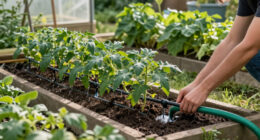
Sprinklers can cover a wide stretch quickly. They make sense for a lawn where you want even coverage, but wind can carry spray onto a path or fence, and nearby plants may receive different amounts if the spray pattern is blocked. Drip tubing and emitters put water closer to roots, which can keep paths dry and reduce unnecessary wetting of leaves. That precision comes with more parts to maintain: inspect filters and emitters so a blockage doesn’t quietly leave one plant thirsty. Drip systems also need a layout that puts emitters near the plants as they grow.
Consider a gardener with six patio pots and a narrow row of tomatoes. A hose-connected smart timer may suit the pots, while a drip line can water the tomatoes steadily at soil level. Replacing an entire sprinkler controller would add complexity without much benefit. For a large lawn with several existing sprinkler zones, a compatible smart controller may be the more direct upgrade, since it can use existing infrastructure instead of requiring a new delivery system.
| Setup | Often suits | Check before you buy |
|---|---|---|
| Sprinklers with a controller | Lawns and broad planting areas | Existing controller, wiring, and zone count |
| Drip lines with a smart timer or valve | Beds, rows, and containers | Water pressure, filters, emitters, and tubing layout |
| Soil moisture sensor | Zones where local soil conditions matter | Placement, coverage, and compatible equipment |
Match the water delivery to the plants first, then choose the smart controls that suit that setup. A controller can decide when water flows, but it cannot correct a poor spray pattern, uneven coverage, or a clogged emitter. Those practical limits determine whether automation saves effort or merely runs an unsuitable setup on schedule.
Set up separate zones so each part gets the right amount
Divide your garden into watering zones when plants have different needs, sun exposure, soil, or slopes. A zone lets you give one group of plants its own schedule rather than watering every area alike. This matters because the same run time can leave one area dry while another stays saturated: containers may lose moisture quickly, while shaded beds hold it longer. Smart garden irrigation systems make that control easier, but the garden’s layout still guides the settings.
Start by grouping plants that experience similar conditions. A sunny lawn, shaded flower bed, and container collection usually do not belong on one schedule. Soil type matters too: sandy soil drains faster than heavier soil, and a sloped bed may shed water before it reaches deeper roots. These differences affect how long water remains available to plants. Separate zones let you adjust the amount or timing for each group without overwatering the others.
Try this practical setup: your raised vegetable bed gets morning sun, while pots on the south-facing patio heat up by midday. Put them on separate zones. If the pots dry out by late afternoon, you can adjust their watering without soaking the vegetable bed. That separation also helps you interpret what you observe: a dry pot points to the pot zone’s schedule or delivery, instead of prompting a change that affects every plant. It can be more useful than adding a sensor that measures only one spot but controls the entire garden.
- Map the garden: Note the water source, plant groups, sun, shade, slopes, and containers.
- Group similar areas: Keep plants with comparable watering needs together.
- Check water delivery: Confirm that each sprinkler or drip line reaches the plants in its zone.
- Set a starting schedule: Use your plants, soil, and local conditions as a guide, then observe the results.
- Adjust after checking: Feel the soil near the roots and change the schedule if it stays soggy or dries too quickly.
Schedules need to change as seasons, plant growth, and rainfall change. There is no single watering frequency that fits every garden. Established plants may do well with deeper, less frequent watering, while seedlings and small containers can need closer attention. The goal is not a fixed schedule that never changes; it is a manageable starting point that you refine using conditions at the roots.
Use sensors and weather data with a bit of garden judgment
Use weather data to adjust watering across a broad area and soil sensors to check moisture near a particular group of plants. Either method can help avoid watering when conditions do not call for it, but a system’s readings only describe the places and conditions it can measure. The choice involves a tradeoff: weather data can cover many zones without installing a sensor in each one, while sensors offer a closer reading of soil but require careful placement. Good placement matters as much as the feature itself.
A weather controller may skip watering after rain, a useful safeguard for a lawn in an open yard. Yet the same rain might barely reach a bed tucked beneath a leafy tree. A soil sensor in the open lawn would not resolve the bed’s needs. Put a sensor in representative soil for the zone it controls, at a depth that reflects the plants’ root area. Otherwise the controller may make a confident decision based on a spot that dries or stays wet differently from most of the plants.
Imagine that your sensor sits beside a dripping hose connection or directly under a sprinkler head. It may report damp soil while plants farther away stay dry. A better location is near the plants you want to represent, away from unusual wet or dry spots. If two beds have different soil or exposure, one reading may not represent both. A sensor can improve decisions within its limits, but adding sensors also means more installation, compatibility checks, and upkeep.
Automation can reduce unnecessary watering, especially when a system skips cycles after rain or adjusts for changing conditions. It does not guarantee water savings: a poorly configured schedule can still overwater, and a sensor placed in unrepresentative soil can encourage the same mistake. Check the soil and watch the plants. Let sensor and weather readings guide you, then use what you see in the garden to refine the schedule. That combination preserves the convenience of automation while catching the local exceptions its inputs miss.
Check these details before buying a smart irrigation system
Before buying, confirm that the system fits your water source, number of zones, existing equipment, and preferred way to control it. The headline price may cover only the controller; you may also need valves, sensors, a hub, tubing, installation, or a subscription. These extra costs matter because the controller alone cannot deliver water: it must connect to suitable hardware and reach the areas you want to automate. A few checks now can prevent a box of incompatible parts later.
Start with the connection. An existing sprinkler system may use a wired multi-zone controller, while a small garden may need a hose-connected timer. Check valve and power requirements, as well as water pressure and flow. Pressure and flow affect whether sprinklers cover their intended area or drip emitters deliver consistently, so a smart schedule cannot compensate for a poor water supply. If your Wi-Fi signal fades at the garden shed, an app-dependent controller may be frustrating even if its features look appealing in the shop.
Next, check how the system behaves without internet access. Some devices retain their schedules or allow manual operation offline; others depend more heavily on an app or cloud service. This difference affects whether watering continues during a connection outage and how easily you can make a change at the controller. A homeowner who travels often may value remote monitoring and alerts, while someone watering six balcony pots may prefer straightforward local controls.
- Compatibility: Match the controller to your existing valves, wiring, hose, or sprinkler setup.
- Coverage: Choose enough zones for areas with different plants and conditions.
- Connectivity: Check Wi-Fi range, app support, voice assistants, and offline controls.
- Full cost: Count sensors, hubs, tubing, valves, installation, and any ongoing fees.
- Current features: Confirm supported platforms and subscription terms in the latest product specifications.
A larger garden with an existing sprinkler system may benefit from adaptive scheduling and multiple zones, but that convenience is useful only if the controller supports the installed valves and the zones reflect real differences in plant needs. A handful of pots may be easier to manage with a simple timer. Buy for the garden you have, not for features you may never use. The right level of automation is the one whose added control is worth its added cost and maintenance.
Keep the system working with quick checks through the season
Keep a smart irrigation system useful by checking that water reaches the plants, sensors represent their zones, and schedules still fit the season. Automation handles routine decisions; it does not inspect every hose, emitter, or patch of soil. A short walk through the garden can catch problems before wilting leaves or soggy roots make them obvious, and can show whether the system’s assumptions still match actual conditions.
After installing a drip line, run it and look for water at each emitter. A clogged filter can slow delivery, while a loose connection may send water onto the patio instead of the tomatoes. With sprinklers, watch one complete cycle to see whether water reaches the intended area or sprays onto a wall or path. These checks matter because a controller may record that a zone ran without knowing whether plants received the intended amount.
Check soil near the roots after watering. If it stays wet long after a cycle, shorten or space out watering; if it feels dry where plants are growing, check the zone’s coverage and schedule. Revisit settings when the weather shifts, plants grow, or rain changes the soil. A schedule that suited a warm July week may not fit a cool, rainy stretch. Adjusting based on what you find keeps the system from treating an old pattern as a permanent need.
Some connected systems report watering activity, connection issues, or leaks, but the features vary. Alerts can be useful when you are away, but they cannot guarantee leak prevention or protect plants if a sensor, water supply, or schedule fails. Treat notifications as another clue, alongside what you see and feel in the garden. Smart means adjustable: let the system do routine work, and keep your eyes on the plants.
Frequently Asked Questions
Do smart irrigation systems actually save water?
They can reduce unnecessary watering by skipping cycles after rain or adjusting schedules for changing conditions. Savings depend on the setup, plant needs, soil, weather, and maintenance; a poorly configured system can still overwater.
Are smart garden irrigation systems worth the cost?
They may suit a larger garden, multiple watering zones, frequent travel, or an existing sprinkler system that you want to automate. For a few containers, a simple timer or manual watering may be enough. Include sensors, valves, tubing, installation, and possible subscription fees in your budget.
Do I need a soil moisture sensor?
No. Weather-based scheduling can suit many gardens. A sensor can help when local soil conditions vary, but place it in representative soil for the plants and zone it controls; one sensor may not represent very different beds.
Can a smart irrigation system work without Wi-Fi?
Some devices keep their schedules or allow manual operation offline, while others rely more on an app or cloud connection. Check the exact model’s offline behavior before you buy, especially if the controller will sit beyond reliable Wi-Fi range.
Is drip irrigation better than sprinklers?
Neither suits every garden. Drip irrigation can deliver water near roots in beds, rows, and containers, while sprinklers cover lawns and broad areas more easily. Choose based on the plants, layout, pressure, and maintenance you can manage.
How often should I water my garden?
There is no universal schedule: plant type, growth stage, soil, temperature, rainfall, and container size all affect watering needs. Established plants often suit deeper, less frequent watering, while seedlings and containers may need closer attention. Check soil near the roots and adjust to what you find.
Conclusion
Choose a system that fits your garden’s water source and layout, then group plants with similar needs into zones. Weather data, sensors, and apps can make watering more convenient, but the soil and plants still tell you whether the schedule works.
Start with one sensible setup, watch the water reach the roots, and adjust as the seasons change. The best automation leaves you with less guesswork—and more time to enjoy the garden.