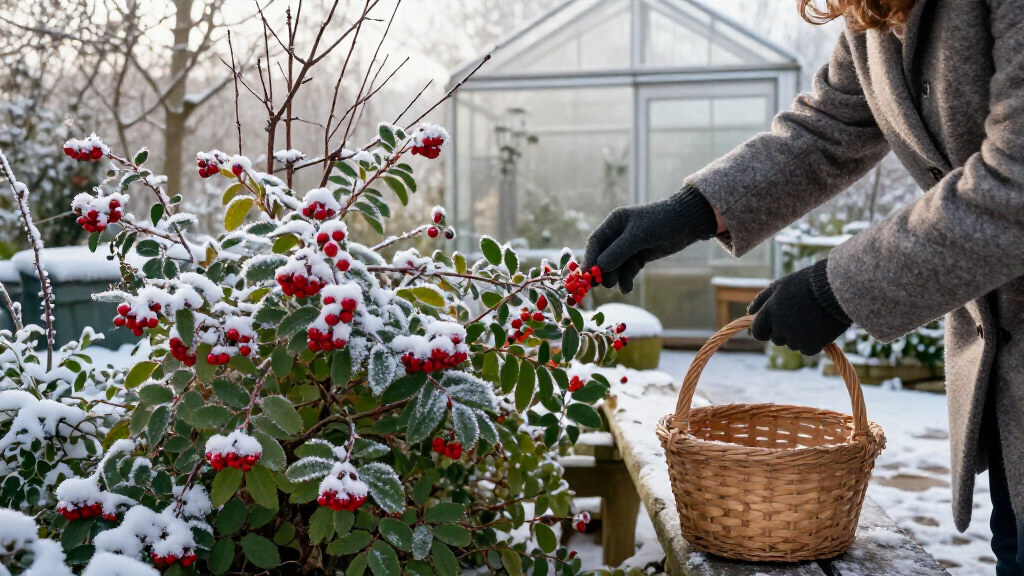

The best winter berry shrubs pair persistent cold-season color with a size and care profile that suits your garden. My best overall pick is Winter Red Winterberry Shrub in a #3 container, which offers a more established starting point than the 4-inch plants. For evergreen structure, Christmas Jewel Holly stands out, while Serviceberry is the better fit if edible fruit matters as much as wildlife value. The main tradeoffs are berry color and persistence, mature size, evergreen versus deciduous foliage, and whether you can provide the right pollinator plant. Read on for the full comparison and guidance on matching a shrub to your site.

Get garden gear delivered free with Prime
- Fast, free delivery on millions of items
- Prime Video, Amazon Music and more included
- Member-only deals all year
Complete the kit


Key Takeaways
- Plant size changes the starting point: the #3 Winter Red container is a more established option than the 4-inch Winter Red and Red Winterberry starter plants, though it needs more room and a larger planting hole.
- Berry display depends on pollination: female winterberry hollies need a compatible male plant with overlapping bloom time, so Southern Gentleman is a functional companion candidate rather than a berry-bearing substitute.
- Evergreen hollies solve a different problem: Steeds, China Girl, Blue Girl, and Christmas Jewel provide foliage through winter, while deciduous winterberries emphasize fruit on bare branches.
- Unusual berry colors involve tradeoffs: Yellow Winterberry offers a less common look, but buyers should verify plant sex and pollination needs before expecting fruit.
- Not every name in the roundup means the same garden use: snowberry, serviceberry, American beautyberry, and Gaultheria offer distinct fruit, foliage, or seasonal roles rather than interchangeable winterberry holly displays.
| Winter Red Winterberry Shrub Starter Plant, 4-Inch Pot |  | Best for Classic Red Winterberry Color | Plant type: Deciduous shrub | Pot diameter: 4 inches | Quantity: 1 plant | VIEW LATEST PRICE | See Our Full Breakdown |
| Perfect Plants Steeds Holly, 3-Gallon Evergreen Shrub |  | Best for Evergreen Structure | Plant type: Steeds Japanese holly (Ilex crenata) | Hardiness zones: USDA zones 5–9 | Planting size: 3-gallon growers pot | VIEW LATEST PRICE | See Our Full Breakdown |
| Ilex China Girl Holly, 3 Large Gallon-Size Plants |  | Best Multi-Plant Hedge Starter | Plant count: 3 | Plant type: Evergreen shrub | Variety: China Girl Holly (Mesdob) | VIEW LATEST PRICE | See Our Full Breakdown |
| Common Snowberry Seeds, 50+ Non-GMO Heirloom Seeds |  | Best for Naturalized, Low-Fuss Plantings | Species: Symphoricarpos albus (Common Snowberry) | Seed quantity: 50+ | Seed type: Open-pollinated, non-GMO heirloom | VIEW LATEST PRICE | See Our Full Breakdown |
| Red Winterberry Holly Live Plant, 4-Inch Pot |  | Best for a Cold-Hardy Border Starter | Plant type: Winterberry holly (Ilex) | Pot size: 4 inches | Quantity: 1 | VIEW LATEST PRICE | See Our Full Breakdown |
| Serviceberry (Juneberry) Bush Plants, Hardy Edible Berry Shrubs, 2 Plants |  | Best for Edible Harvests | Quantity: 2 plants | Plant type: Hardy deciduous shrub | Sun exposure: Full sun to partial shade | VIEW LATEST PRICE | See Our Full Breakdown |
| Live Yellow Winterberry Holly Starter Plant, 4-Inch Pot |  | Best for Yellow Winter Berries | Plant type: Yellow winterberry holly shrub | Pot size: 4 inches | Plant height: Approximately 3 to 6 inches | VIEW LATEST PRICE | See Our Full Breakdown |
| Winterberry Holly Seeds, 100 Seeds |  | Best for Seed-Growing Projects | Seed count: 100 | Species: Ilex verticillata (winterberry holly) | Mature size: Approximately 6–12 feet tall and wide | VIEW LATEST PRICE | See Our Full Breakdown |
| Blue Girl Holly Evergreen Shrub with Red Berries, 2 Gallon |  | Best Evergreen Structure | Plant type: Evergreen shrub | Container size: 2 gallon | Expected plant height: Approximately 4.5 feet | VIEW LATEST PRICE | See Our Full Breakdown |
| Gaultheria (Winterberry) Live Evergreen Plant, 5 × 6 in, 4.5 in Pot |  | Best Compact Ground Cover | Plant type: Live evergreen | Pot size: 4.5-inch round pot | Listed dimensions: 5 inches tall by 6 inches wide | VIEW LATEST PRICE | See Our Full Breakdown |
| American Beautyberry Shrubs, 2 Live Plants, 8–12 Inches Tall, Quart Pots |  | Best for Purple Winter Color | Quantity: 2 plants | Plant height: 8–12 inches | Pot size: Quart | VIEW LATEST PRICE | See Our Full Breakdown |
| Christmas Jewel Holly Live Evergreen Shrub, 3 Gallon |  | Best Evergreen Winter Display | Botanical name: Ilex x ‘HL10-90’ PP14477 | Container size: 3 gallon | Mature height: 10–12 feet | VIEW LATEST PRICE | See Our Full Breakdown |
| Winter Red Winterberry Shrub, #3 Container |  | Best Ready-to-Plant Red Berry Shrub | Botanical name: Ilex verticillata ‘Winter Red’ | Container size: #3 | Expected plant height: 10 feet | VIEW LATEST PRICE | See Our Full Breakdown |
| Southern Gentleman Winterberry Shrub Starter Plant, 4-Inch Pot |  | Best Pollinator Companion | Plant type: Deciduous male winterberry shrub | Pot diameter: 4 inches | Quantity: 1 starter plant | VIEW LATEST PRICE | See Our Full Breakdown |
| winter berry shrub | Plant type |
|---|---|
| Winter Red Winterberry Shrub S | Deciduous shrub |
| Perfect Plants Steeds Holly | Steeds Japanese holly (Ilex crenata) |
| Ilex China Girl Holly | Evergreen shrub |
| Common Snowberry Seeds | Hardy deciduous shrub |
| Red Winterberry Holly Live Pla | Winterberry holly (Ilex) |
| Serviceberry | Hardy deciduous shrub |
| Live Yellow Winterberry Holly | Yellow winterberry holly shrub |
| Winterberry Holly Seeds | — |
| Blue Girl Holly Evergreen Shru | Evergreen shrub |
| Gaultheria | Live evergreen |
| American Beautyberry Shrubs | — |
| Christmas Jewel Holly Live Eve | — |
| Winter Red Winterberry Shrub | — |
| Southern Gentleman Winterberry | Deciduous male winterberry shrub |
More Details on Our Top Picks
Winter Red Winterberry Shrub Starter Plant, 4-Inch Pot
Winter Red is the most direct choice here for gardeners who want a traditional deciduous winterberry and can provide the conditions it needs to fruit. It grows 6 to 8 feet tall, with green foliage through the growing season and red berries described for late summer. The key limitation is pollination: a nearby male plant, such as Southern Gentleman, is needed for berry production, so a lone shrub may not deliver the display buyers expect. Compared with the evergreen Steeds Holly, this starter will not provide year-round foliage, but it offers the classic winterberry growth habit and a clear path to red fruit when paired appropriately. It also needs regular watering and moist, well-drained soil, making it less forgiving than Common Snowberry.
Pros:- Red berries are possible with a nearby male pollinator.
- Deciduous growth provides green foliage during the growing season.
- Low-maintenance once established in suitable conditions.
Cons:- Needs a male pollinator nearby to produce berries.
- Requires regular watering and moist, well-drained soil.
- The 4-inch starter takes time to reach its mature 6-to-8-foot size.
Best for: Gardeners with a moist planting site who can add or already have a compatible male winterberry for red fruit.
Not ideal for: Anyone seeking an immediate berry display from one plant, or a year-round evergreen screen.
- Plant type:Deciduous shrub
- Pot diameter:4 inches
- Quantity:1 plant
- Mature height:6 to 8 feet
- Spacing:6 to 8 feet
- Sunlight:Full sun to partial shade
- Soil and moisture:Moist, well-drained soil; regular watering
- Berry production:Red berries in late summer when planted near a male pollinator
Our verdict“Choose Winter Red if you can meet its moisture needs and pair it with a male pollinator for the classic red-fruited winterberry look.”
Perfect Plants Steeds Holly, 3-Gallon Evergreen Shrub
Steeds Holly suits buyers who want berries as part of a larger year-round planting rather than a bare winter silhouette. Its glossy evergreen leaves and mature 6-to-8-foot height make it more useful for screening than the smaller Winter Red 4-inch starter, while the 3-gallon pot offers a larger planting start. The berry description needs careful reading: fruit is listed as red, deepening to bluish-black in winter, unlike the distinctly red-fruited winterberry options in this roundup. It also prefers slightly acidic, well-draining soil and weekly watering during hot summer weather, so it is not the easiest choice for dry or alkaline sites. Choose it for evergreen form and adaptable pruning, not as a guaranteed red-berry display.
Pros:- Glossy evergreen foliage provides screening and winter structure.
- Mature size and pruning suitability work well for hedges and borders.
- Hardy across USDA zones 5–9.
- Berries can attract birds.
Cons:- Berry color is described as deepening to bluish-black, not consistently red.
- Prefers slightly acidic, well-draining soil.
- Needs weekly summer watering in hot weather and spring fertilization.
Best for: Gardeners in USDA zones 5–9 who need an evergreen hedge or foundation shrub and can provide suitable soil and summer water.
Not ideal for: Buyers focused specifically on reliably red winter berries or those with dry, poorly drained, or alkaline planting sites.
- Plant type:Steeds Japanese holly (Ilex crenata)
- Hardiness zones:USDA zones 5–9
- Planting size:3-gallon growers pot
- Mature size:6–8 feet tall and 4–5 feet wide
- Growth rate:6–12 inches per year
- Foliage:Glossy green and evergreen
- Light:Full to partial sun
- Soil and care:Slightly acidic, well-draining soil; weekly summer watering and spring fertilization
- Flowers and berries:Small white flowers in late summer; berries described as red, deepening to bluish-black in winter
Our verdict“Pick Steeds Holly for an evergreen screen with seasonal fruit, but choose Winter Red if red winterberry color is your main goal.”
Ilex China Girl Holly, 3 Large Gallon-Size Plants
China Girl Holly stands out for buyers who want several evergreen shrubs to establish a hedge or layered border at once. The three-plant bundle gives more planting coverage than the single Steeds Holly, while its dense, glossy foliage keeps the planting green beyond winter. Its red berries depend on a nearby male pollinator, a requirement that makes placement and companion selection part of the plan rather than an optional detail. Unlike Common Snowberry, China Girl does not offer broad soil tolerance in the supplied details; it calls for well-drained soil. Regular pruning can help maintain a compact shape and encourage dense growth, but that means a little more ongoing attention than a hands-off naturalized shrub. The listing gives no mature dimensions or hardiness zones, so buyers should verify local fit before planting.
Pros:- Three plants offer a head start on a hedge or grouped border.
- Dense, glossy evergreen foliage provides year-round greenery.
- Grows in full sun or partial shade.
- Pruning can maintain shape and encourage dense growth.
Cons:- Red berry production requires a nearby male pollinator.
- Requires well-drained soil.
- The supplied product details do not state mature size or hardiness zones.
Best for: Gardeners planting an evergreen border or hedge who want three shrubs and can confirm a compatible male pollinator is nearby.
Not ideal for: Buyers who need documented mature dimensions or hardiness information, or who want a berry-producing single shrub without a pollination plan.
- Plant count:3
- Plant type:Evergreen shrub
- Variety:China Girl Holly (Mesdob)
- Sunlight:Full sun or partial shade
- Soil:Well-drained
- Flowers:Small white flowers in spring
- Berries:Red berries when a male pollinator is nearby
- Brand:Florida Foliage
Our verdict“Choose this bundle for multi-plant evergreen coverage if you can provide drainage and a male pollinator for the promised red berries.”
Common Snowberry Seeds, 50+ Non-GMO Heirloom Seeds
Common Snowberry is the most adaptable choice in this group, but it asks for patience rather than an instant shrub. Its white berries persist into winter, giving a different look from the red-fruited Winter Red and China Girl Holly. The plant tolerates sun through shade and a wide range of soils, including clay and dry sites, which makes it better suited to difficult areas than those hollies. Seeds bring a slower, less predictable start: natural dormancy may require extra preparation, unlike buying a potted starter. Once established, its dense, suckering habit can shelter wildlife and help stabilize slopes, but that same spread can carry beyond the intended planting area. I would favor it for naturalized spaces where spreading is useful, not tightly controlled beds.
Pros:- Tolerates full sun to full shade and a wide range of soils.
- White berries can persist into winter.
- Dense growth offers wildlife shelter.
- Suckering habit can help stabilize slopes.
Cons:- Seed dormancy may require extra preparation before germination.
- Seeds take longer to establish than a potted shrub.
- Suckering growth can spread beyond the planting area.
Best for: Patient gardeners establishing a wildlife-friendly naturalized area or stabilizing a slope across varied light and soil conditions.
Not ideal for: Gardeners who want a ready-to-plant shrub, red berries, or a compact specimen that stays within a defined footprint.
- Species:Symphoricarpos albus (Common Snowberry)
- Seed quantity:50+
- Seed type:Open-pollinated, non-GMO heirloom
- Plant type:Hardy deciduous shrub
- Light:Full sun to full shade
- Soil tolerance:Wide range, including clay and dry sites
- Flowers and fruit:Pinkish, bell-shaped summer flowers; white berries that persist into winter
- Growth habit:Dense, suckering growth
Our verdict“Choose Common Snowberry seeds for a flexible, spreading naturalized planting, not for quick results or a restrained red-berry feature.”
Red Winterberry Holly Live Plant, 4-Inch Pot
Red Winterberry Holly is a straightforward small-pot option for a border, with cold hardiness listed for USDA zones 5–9 and a low-maintenance description. Its 4-inch size is comparable to the Winter Red Winterberry Shrub Starter, so neither is an instant landscape feature; both need time to grow. The important difference is that Winter Red clearly states that red berries require a nearby male pollinator, while this listing does not explain pollination or give a specific fruiting condition. I would not buy it expecting berries from a single plant without checking that point. Its listed sandy soil and moderate watering guidance also make the site requirements less clear than Winter Red’s moist, well-drained soil instructions. This is a modest starter choice, but sparse growing details leave more questions for the buyer.
Pros:- Rooted starter plant comes in a 4-inch pot.
- Listed as cold hardy in USDA zones 5–9.
- Described as low maintenance.
- Suitable for outdoor garden borders.
Cons:- The listing does not specify pollination requirements for berry production.
- Sandy soil and moderate watering guidance may not suit every winterberry planting site.
- A small starter will need time to develop into a substantial shrub.
Best for: Gardeners in USDA zones 5–9 who want a small outdoor winterberry starter for a border and can confirm its pollination needs.
Not ideal for: Buyers who need detailed planting guidance or a clearly specified route to reliable berries from one shrub.
- Plant type:Winterberry holly (Ilex)
- Pot size:4 inches
- Quantity:1
- Use:Outdoor
- Cold hardiness:USDA zones 5–9
- Soil type:Sandy soil
- Moisture needs:Moderate watering
- Special feature:Described as low maintenance
- Planting period:Winter
Our verdict“Consider this starter for a cold-hardy border if you can verify its fruiting and site requirements before planting.”
Serviceberry (Juneberry) Bush Plants, Hardy Edible Berry Shrubs, 2 Plants
Serviceberry is the pick for gardeners who want berries to eat, not just winter color. Its sweet, blueberry-like fruit ripens in early summer, after white spring flowers and before the red-orange fall foliage. That gives it a broader seasonal show than Gaultheria (Winterberry), which is better suited to low ground cover and fall-to-winter berries. The two-plant offering also gives you more than a single shrub to establish in the garden, though it does not guarantee fruit in the first seasons: harvests may take a few years. Serviceberry tolerates full sun to partial shade and is described as low-maintenance once established, but it is less forgiving of poorly drained soil. Choose it for edible fruit and multi-season interest; skip it if your main goal is bright berries on bare winter branches.
Pros:- Produces sweet, edible, blueberry-like berries.
- White spring flowers and red-orange fall foliage extend seasonal interest.
- Attracts pollinators and birds.
- Hardy and low-maintenance once established.
Cons:- Fruit production may take a few years.
- Needs well-drained soil.
- Its early-summer fruit does not provide the prominent winter display offered by winterberry holly.
Best for: Gardeners who want edible fruit for fresh eating or baking alongside spring flowers and fall color.
Not ideal for: Shoppers focused on red winter berries, or gardeners whose planting area stays waterlogged.
- Quantity:2 plants
- Plant type:Hardy deciduous shrub
- Sun exposure:Full sun to partial shade
- Soil:Well-drained
- Flower color:White
- Fruit:Edible, sweet, blueberry-like purple berries
- Fall foliage:Red and orange
Our verdict“Choose this two-plant serviceberry option if edible summer berries matter more to you than a vivid winter berry display.”
Live Yellow Winterberry Holly Starter Plant, 4-Inch Pot
This starter is the unusual-color choice in a lineup otherwise centered on red winter fruit. Its yellow winterberry berries can give a planting a different look from the red display of Red Winterberry Holly or the red-fruited Blue Girl Holly. The tradeoff is scale: at roughly 3 to 6 inches tall, it is a young plant, so buyers should expect to nurture it rather than get an immediate landscape focal point. It is intended for outdoor planting, prefers full sun, and is described as cold hardy and low maintenance, but still calls for moderate watering. The listing does not specify pollination needs, so I would not assume this single starter will produce a full berry display on its own. Pick it for color variation and patience, not instant impact.
Pros:- Yellow berries offer a distinct alternative to the red fruit on other holly options.
- Supplied as a live plant for outdoor planting.
- Cold hardy and described as low maintenance.
- Full-sun preference suits bright garden sites.
Cons:- Small, approximately 3-to-6-inch starter requires time to establish and grow.
- Moderate watering is needed.
- Pollination requirements are not specified in the supplied product details.
Best for: Gardeners with a sunny outdoor spot who want to grow an uncommon yellow-berried winterberry from a small starter plant.
Not ideal for: Buyers seeking an established shrub or a dependable berry display right away, especially without space to plan for pollination.
- Plant type:Yellow winterberry holly shrub
- Pot size:4 inches
- Plant height:Approximately 3 to 6 inches
- Use:Outdoor
- Sun exposure:Full sun
- Watering:Moderate
- Hardiness:Cold hardy
- Berry season:Winter
Our verdict“Choose this if yellow winter berries are your priority and you are comfortable raising a small starter rather than buying an instant feature plant.”
Winterberry Holly Seeds, 100 Seeds
These seeds suit patient gardeners who want to raise native winterberry from scratch, rather than plant a ready-grown shrub. The species can reach about 6–12 feet tall and wide and bears bright red winter fruit, making it a much larger landscape commitment than the compact, spreading Gaultheria (Winterberry). Seeds also make it possible to grow several plants, but they introduce two hurdles: establishment calls for consistently moist, acidic soil, and berry production depends on compatible male and female plants flowering at the same time. Seed-grown plants cannot reliably be sexed until mature, so a large seed count is no guarantee of a berry-bearing group. Compared with the small live starter from Yellow Winterberry Holly, this route asks for more planning and patience, but offers a native planting project with broad wildlife appeal.
Pros:- Native Ilex verticillata can provide bright red berries through winter.
- A 100-seed count supports a larger growing project.
- Grows in full sun to partial shade.
- Suitable for moist-soil gardens and wildlife plantings.
Cons:- Fruit requires compatible male and female plants flowering at the same time.
- Seed-grown plants cannot reliably be sexed until mature.
- Requires consistently moist, acidic soil during germination and establishment.
Best for: Patient gardeners and native-plant growers with moist, acidic soil who can raise multiple seedlings and wait for mature plants.
Not ideal for: Buyers who want an established shrub, quick winter berries, or a predictable female plant without room for pollination partners.
- Seed count:100
- Species:Ilex verticillata (winterberry holly)
- Mature size:Approximately 6–12 feet tall and wide
- Sun exposure:Full sun to partial shade
- USDA hardiness zones:3–9
- Soil:Moist, acidic loam
- Berry color:Bright red
- Pollination:Compatible male and female plants required for fruit
Our verdict“Choose these seeds for a long-term native planting project, not when you need predictable winter berries from a near-term purchase.”
Blue Girl Holly Evergreen Shrub with Red Berries, 2 Gallon
Blue Girl Holly is the strongest choice here for year-round structure: its glossy evergreen foliage stays on the plant while red berries add winter color. That makes it a better fit for a hedge, foundation planting, or specimen spot than deciduous Winterberry Holly Seeds, which shed their leaves and require years of growth before they become a full shrub. The listed plant is expected to be about 4.5 feet tall, with mature dimensions of 8–10 feet tall and a similar spread, so it needs room beyond the initial planting. Its key limitation is pollination: this female holly needs a nearby male, such as Blue Boy, for optimal berry production. It also calls for well-draining, acidic soil. Choose it for evergreen mass and a larger landscape presence, not for a self-contained, compact planting.
Pros:- Glossy evergreen foliage provides year-round structure.
- Red berries persist through winter and attract birds.
- Can serve as a specimen, hedge, or foundation planting.
- Supplied in a 2-gallon container with an expected height of about 4.5 feet.
Cons:- Needs a nearby male holly for optimal berry production.
- Mature size of 8–10 feet tall and a similar spread demands space.
- Requires well-draining, acidic soil.
Best for: Homeowners planning a substantial evergreen specimen, foundation planting, or hedge who can provide a compatible male holly nearby.
Not ideal for: Small-space gardeners or anyone unable to supply the acidic, well-draining soil and male pollinator needed for strong berry production.
- Plant type:Evergreen shrub
- Container size:2 gallon
- Expected plant height:Approximately 4.5 feet
- Mature size:8–10 feet tall; spread similar to height
- USDA hardiness zones:5–9
- Sun exposure:Full sun to partial shade
- Soil:Well-draining, acidic
- Pollination:Nearby male holly needed for optimal berry production
Our verdict“Choose Blue Girl Holly when evergreen foliage and a large winter presence matter, provided you have room and a male pollinator.”
Gaultheria (Winterberry) Live Evergreen Plant, 5 × 6 in, 4.5 in Pot
Gaultheria is the compact pick for winter color near the ground, not a substitute for a large winterberry shrub. Its evergreen leaves, white bell-shaped flowers, and red fall-to-winter berries suit containers, shaded borders, and low ground-cover plantings. By contrast, Blue Girl Holly grows into a much taller evergreen shrub and makes more sense when you need height or a hedge. This Gaultheria is listed at about 5 by 6 inches in a 4.5-inch pot, though its spreading habit can eventually reach up to 3 feet in every direction. It prefers partial shade and well-drained soil, so it is not the best match for a hot, exposed site. Older woody stems may need spring pruning to encourage fresh growth.
Pros:- Evergreen foliage and red berries provide fall and winter color.
- Low, spreading growth works as ground cover.
- Can be grown indoors in a pot or outdoors in a garden.
- White bell-shaped summer flowers add another seasonal feature.
Cons:- Needs partial shade and well-drained soil.
- Older woody stems need spring pruning to encourage new growth.
- Spreading growth can take up to 3 feet in every direction.
Best for: Gardeners seeking a low, spreading evergreen with red berries for a partly shaded border, ground-cover area, or container.
Not ideal for: Buyers looking for a tall shrub, a sunny-site plant, or a low-maintenance choice that will never need pruning.
- Plant type:Live evergreen
- Pot size:4.5-inch round pot
- Listed dimensions:5 inches tall by 6 inches wide
- Expected height:8 inches
- Growth habit:Low, spreading ground cover; spreads up to 3 feet in every direction
- Sun exposure:Partial sun
- Flowers and berries:White bell-shaped flowers; red berries
- USDA hardiness zones:3–8
Our verdict“Choose this Gaultheria for compact, spreading winter color in partial shade, rather than for the height of a traditional holly shrub.”
American Beautyberry Shrubs, 2 Live Plants, 8–12 Inches Tall, Quart Pots
I’d choose this pair for a winter garden where unusual berry color matters more than evergreen foliage. American beautyberry produces bright purple clusters after pink summer flowers, and the berries may remain for months after the leaves fall. That makes it a more distinctive seasonal accent than the red-fruited Winter Red Winterberry or Christmas Jewel Holly. Two plants offer a head start on a small grouping, but each arrives only 8–12 inches tall, so this is a slower route to a substantial display than the larger #3-container Winter Red. The specified partial-sun exposure also makes placement less flexible than Christmas Jewel’s full-sun-to-partial-shade range. I’d favor it for gardeners willing to wait for growth and wanting pollinator-friendly summer flowers alongside fall and winter interest.
Pros:- Bright purple berry clusters offer a different look from the lineup’s red-fruited hollies.
- Berries may persist for months after the leaves drop.
- Two plants arrive in the set, making a grouped planting possible.
- Pink flowers and berries can attract pollinators.
Cons:- At 8–12 inches tall, the plants need time to fill out and make a prominent display.
- Partial sun is the stated exposure, limiting placement compared with Christmas Jewel Holly.
- The description does not give a mature size or hardiness zone for planning.
Best for: Gardeners who want distinctive purple berry clusters, have a partial-sun outdoor spot, and are comfortable growing two young shrubs to maturity.
Not ideal for: Buyers seeking an immediate, large red-berry hedge or a shrub suited to full-sun-only sites; these plants arrive small and partial sun is specified.
- Quantity:2 plants
- Plant height:8–12 inches
- Pot size:Quart
- Sunlight exposure:Partial sun
- Scientific name:Callicarpa americana
- Blooming period:Spring
- Use:Outdoor
Our verdict“Pick this pair for a patient gardener seeking purple berries and seasonal variety rather than a fast, tall red-berry screen.”
Christmas Jewel Holly Live Evergreen Shrub, 3 Gallon
For buyers who want green foliage and red berries together through winter, Christmas Jewel Holly is the most direct fit here. Its glossy evergreen leaves keep the planting structured after deciduous beautyberry and Winter Red have dropped their foliage, while its self-pollinating habit removes the need to add a separate male holly for berry production. That gives it a practical advantage over the Southern Gentleman Winterberry, which is a male pollinator and does not provide the berry display itself. The upright shape can suit a screen or foundation planting, but the mature footprint—10–12 feet tall and 6–8 feet wide—is a real space commitment, not a compact accent shrub. It also cannot ship to several listed states, so location may rule it out before planting plans begin.
Pros:- Glossy evergreen foliage keeps winter structure in the garden.
- Self-pollinating, so a separate male holly is not required for berry production.
- Upright, column-shaped growth can suit screens, hedges, and foundation plantings.
- Specified for full sun to partial shade.
Cons:- Matures to 10–12 feet tall and 6–8 feet wide, requiring substantial space.
- Shipping is unavailable to AK, AZ, CA, CO, HI, ID, MT, NM, NV, OR, UT, WA, and WY.
- Moderate watering and well-drained soil are needed.
Best for: Gardeners in USDA zones 6–9 who want an evergreen red-berry shrub that can fruit without a separate male pollinator and have room for a large upright plant.
Not ideal for: Gardeners in excluded shipping states, small-yard owners, or anyone needing a compact shrub with a modest mature footprint.
- Botanical name:Ilex x ‘HL10-90’ PP14477
- Container size:3 gallon
- Mature height:10–12 feet
- Mature width:6–8 feet
- USDA hardiness zones:6–9
- Sunlight exposure:Full sun to partial shade
- Pollination:Self-pollinating
- Soil:Well-drained
Our verdict“Choose Christmas Jewel for self-pollinating red berries on an evergreen, space permitting and if your state is eligible for shipping.”
Winter Red Winterberry Shrub, #3 Container
I’d rank Winter Red for buyers who want a substantial, established winterberry rather than a small starter plant. It arrives fully rooted in a #3 container and is described as ready to plant when weather permits, while the 4-inch-pot Southern Gentleman is a pollinator companion, not a berry-bearing substitute. Winter Red’s dense, multi-stem form also gives borders a fuller look than the more upright Christmas Jewel Holly, though it loses its foliage and does not provide that shrub’s evergreen winter structure. Bright red fruit and songbird appeal are the main attractions. The tradeoff is scale: at 8–10 feet in both height and width, it needs room, and its planting timing depends on suitable weather. The listing specifies sandy soil, so gardeners with different soil conditions should check site suitability before choosing it.
Pros:- Fully rooted #3-container shrub is a more established starting point than a 4-inch-pot winterberry.
- Bright red berries provide fall and winter color.
- Dense, multi-stem growth suits landscape borders.
- Berries can attract songbirds.
Cons:- Mature size of 8–10 feet tall and wide calls for ample planting space.
- Planting upon arrival depends on suitable weather.
- The listing specifies sandy soil and does not describe a pollination partner.
Best for: Gardeners with room for a large, multi-stem shrub who want a rooted red-berry winterberry for a border or wildlife-friendly planting.
Not ideal for: Small-space gardeners seeking evergreen foliage, or buyers who need a compact plant or cannot accommodate weather-dependent planting.
- Botanical name:Ilex verticillata ‘Winter Red’
- Container size:#3
- Expected plant height:10 feet
- Mature size:8–10 feet high × 8–10 feet wide
- USDA hardiness zone:3–8
- Soil type:Sandy
- Foliage:Deep green
- Plant form:Dense, multi-stem
Our verdict“Choose Winter Red for a larger, rooted red-berry display if you have border space and can plant when conditions allow.”
Southern Gentleman Winterberry Shrub Starter Plant, 4-Inch Pot
Southern Gentleman has a supporting role in a winter-berry garden: this is a male pollinator plant, not the shrub to buy for its own berry display. It makes sense beside compatible female winterberries such as Winter Red, helping them produce fruit; on its own, it will not deliver the red clusters that define this roundup. That distinction separates it from Christmas Jewel Holly, which is listed as self-pollinating and can produce berries without a separate male plant. Southern Gentleman grows to 6–8 feet and can serve in a border or privacy hedge, but the 4-inch starter pot means it will take time to become a substantial screen. It also calls for full sun, regular watering, and moist, well-drained soil, making it a better fit for gardeners prepared to manage both the planting and its pollination role.
Pros:- Can support berry production on nearby female winterberry shrubs.
- Attracts pollinators.
- Mature 6–8-foot growth can contribute to a border or privacy hedge.
- Deer-resistant according to the supplied product information.
Cons:- Male plant does not provide the winter berry display itself.
- Requires a compatible female winterberry nearby for its main purpose.
- Needs regular watering and moist, well-drained soil.
Best for: Gardeners who already have compatible female winterberries and need a male pollinator, with a sunny site and capacity for regular watering.
Not ideal for: Buyers seeking a standalone winter berry display, or gardeners without a female winterberry nearby to pollinate.
- Plant type:Deciduous male winterberry shrub
- Pot diameter:4 inches
- Quantity:1 starter plant
- Mature height:6 to 8 feet
- Plant spacing:6 to 8 feet
- Sunlight exposure:Full sun
- Moisture needs:Regular watering
- Soil:Moist, well-drained
Our verdict“Buy Southern Gentleman as a pollinator companion for female winterberries, not as a standalone berry-producing shrub.”
How We Picked
I ranked these options by how clearly each fits a winter-berry planting goal, weighing berry display, seasonal foliage, plant size, and the practical information a buyer needs before ordering. I gave more weight to established live shrubs when they offer a quicker route to a planted display, while treating small starters and seed packets as lower-cost, slower projects that require more patience. I also separated evergreen hollies from deciduous berry shrubs, since year-round foliage and bright fruit on bare stems serve different garden designs.
Pollination compatibility, likely maintenance, and the usefulness of the listing details shaped the order as well. A female winterberry without a compatible male may not produce the display buyers expect, so pollinator planning affects its real-world value. Products with distinct roles—such as edible serviceberry, yellow-fruited winterberry, or evergreen holly—remain worthwhile for specific needs, but they rank below the strongest all-around fit when their appeal depends on a narrower garden goal.
Factors to Consider When Choosing Best Winter Berry Shrubs
Before choosing a shrub, decide what you want to see in winter and what your site can support. The berry name alone does not tell you whether a plant is evergreen, whether it needs a pollinator, or how soon it may fill its space.
Match the plant to the winter effect you want
Deciduous winterberry holly drops its leaves, leaving fruit visible against bare stems; evergreen holly keeps its foliage and creates a fuller screen. Those effects are not interchangeable, so start with the view from your windows and the role the shrub will play in the landscape. A dense evergreen can provide structure beside a doorway, while a deciduous shrub may show berries more clearly against snow or a fence. Also check the plant’s mature width before using it in a narrow bed. Choosing for winter appearance first can prevent a mismatch that no amount of pruning fixes.
Plan pollination before buying a fruiting holly
Many hollies sold for berries are female plants and need a compatible male nearby to set fruit. A second female does not solve that problem, and a male plant generally will not provide the showy berries shoppers expect. Check that the proposed plants are compatible and bloom at overlapping times; species and cultivar labels matter more than simply choosing two hollies. Distance also matters, since pollinating insects need practical access between plants. If your garden lacks room for a companion, choose a shrub whose fruiting habit does not depend on that pairing or confirm a suitable pollinator is already nearby.
Choose container size for your patience and planting space
A small starter plant is easier to handle and can suit a tight budget or a gardener willing to wait, but it may take longer to create a visible screen or berry display. Larger container plants give a more substantial beginning, yet they need a wider planting area and careful watering while roots settle in. Seeds ask for the most patience and add uncertainty around germination and the time needed to reach landscape size. Avoid buying by container size alone: compare the listed plant height, root establishment, and mature dimensions where available. If the listing leaves those details unclear, treat the plant as a longer-term project.
Check winter hardiness and site conditions
Cold tolerance is only one part of site fit. Soil moisture, drainage, light, and summer heat can all affect growth and fruiting, and different berry shrubs have different preferences. Check the seller’s growing guidance against your local conditions rather than assuming every plant called winterberry suits every winter garden. A damp low spot may suit one deciduous shrub but create problems for a plant that needs sharper drainage. Note exposure to wind and winter sun as well, especially for evergreen foliage. When the site is marginal, favor a plant with clearly stated climate and soil guidance over a listing with little growing information.
Decide whether berries are for display, wildlife, or eating
Fruit that looks attractive on a branch is not automatically edible or suitable for people to eat. Serviceberry is the clearest choice here for buyers who want edible fruit, while winterberry holly and other ornamental selections are better approached as landscape or wildlife plants. Berry persistence can vary with weather and how quickly birds feed, so a shrub planted for a long-lasting display may not hold fruit throughout the season. If wildlife value is the priority, consider a mix of species with different fruiting times rather than relying on one cultivar. Keep children and pets in mind and identify plants before anyone samples the fruit.
Treat seeds and starter plants as different projects
Seed packets can make sense for gardeners who enjoy propagation and can accept uneven results, but they are not a shortcut to a mature winter display. Seed-grown plants may vary, and the time to fruit can be longer than with a named live shrub. Starter plants reduce the germination step but still need time to establish and grow. Before choosing seeds, check whether the listing identifies the species, provides sowing instructions, and explains any cold treatment needed. For a specific berry color or known cultivar, a clearly labeled live plant is generally the more predictable route.
Frequently Asked Questions
Do I need to buy a male winterberry holly for every female plant?
No, but fruiting female plants need access to a compatible male whose flowering period overlaps. One well-placed male can often pollinate multiple nearby females, though spacing and cultivar compatibility affect results. Do not assume that any male holly will work with any winterberry. Check the plant labels or ask the nursery which pollinator matches the cultivar you are buying. If you already have a compatible male in the neighborhood, you may not need another, but nearby plants are not always easy to identify.
Can I mix evergreen holly and deciduous winterberry in one planting?
Yes, and the contrast can provide foliage as well as fruit through winter. Make sure each plant has enough room at mature size, since evergreen hollies can form a denser year-round backdrop than deciduous winterberries. Match sunlight, soil, and moisture needs rather than grouping plants only by berry color. If fruit is a priority, handle pollination needs separately for each holly type. A small planting plan can help prevent crowding and make the seasonal roles clear.
Is a 4-inch winterberry starter a poor choice if I want berries soon?
Not necessarily, but it is a slower route to a substantial display than a larger established shrub. The 4-inch plants may suit gardeners with limited planting space or those happy to grow the shrub over time. Fruit also depends on plant maturity, sex, pollination, and growing conditions, so a small plant may not produce berries right away. If near-term visual impact matters, compare larger containers and confirm whether the plant is female and has a compatible pollinator. A larger plant still needs time to settle after planting.
Should I choose a winterberry shrub or a seed packet?
Choose a live shrub if you want a more predictable species or cultivar and a shorter path to a landscape plant. Seeds suit gardeners who enjoy propagation, have room to raise seedlings, and are comfortable with slower growth and variable results. A seed listing may not promise the same berry color or plant characteristics as a named cultivar. Check sowing directions and any cold-stratification requirements before ordering. For a planned border or a particular fruit display, a labeled live plant is usually easier to place with confidence.
Are all the shrubs in this roundup suitable for edible berries?
No. Serviceberry is the edible-fruit option among these selections, while ornamental hollies and other berry shrubs should not be treated as food plants. Berry appearance alone does not establish that fruit is safe to eat, and plant names can be used inconsistently in listings. Identify the exact species and follow reliable guidance before harvesting anything. If edible fruit is your main goal, choose a clearly identified edible shrub and plan for its harvest needs rather than selecting an ornamental plant for its winter color.
Conclusion
For most buyers seeking a strong balance of winter display and a substantial starting plant, I recommend Winter Red Winterberry Shrub in a #3 container as the best overall pick. The 4-inch Winter Red or Red Winterberry starter is the value choice for patient gardeners, while Christmas Jewel Holly is my premium-style option for those who want evergreen structure alongside berries. Beginners who want to avoid a seed-growing project should start with a clearly labeled live shrub and confirm its pollination needs before planting. For specific goals, choose Serviceberry for edible fruit, Yellow Winterberry for a less common berry color, or Southern Gentleman as a potential pollinator companion after checking compatibility. If your garden cannot support the right pollinator or the shrub’s mature size, prioritize a different plant over a berry promise that your site cannot deliver.