
TL;DR

Get garden gear delivered free with Prime
- Fast, free delivery on millions of items
- Prime Video, Amazon Music and more included
- Member-only deals all year
Garden designer Sophie Butcher turned a 20-by-9-metre former concrete farmyard into a grass-free patchwork garden with nearly 100 plant types. The design changes through the year and, according to Butcher, attracts pollinators and other wildlife, but it needs ongoing weeding and control of plants that spread.
Garden designer Sophie Butcher has turned a 20-by-9-metre former concrete farmyard into a grass-free patchwork garden, planting nearly 100 types over five years to provide changing colour and texture through the seasons. The project offers an alternative to a conventional lawn, though Butcher says it requires regular attention to manage self-seeding and spreading plants.
The garden was created during a barn conversion, when Butcher was left with a large patch of earth where the farmyard’s concrete had been. Rather than lay turf, she wanted a low-growing planted area surrounded by taller herbaceous planting. She installed 20 tonnes of compost from a local recycling centre and edged the area with reclaimed bricks. The dug-up concrete was reused as a foundation for the conversion project.
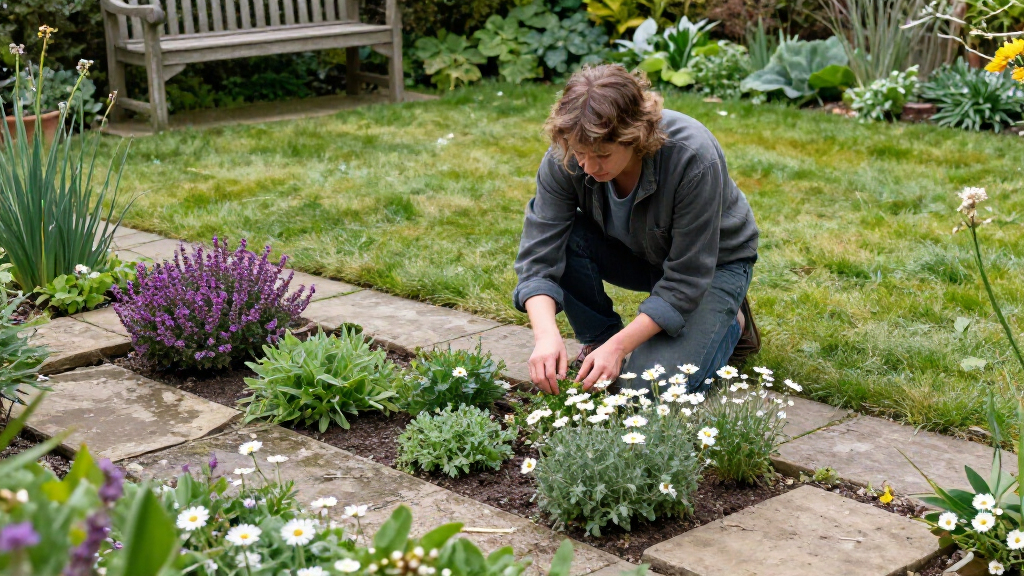
Over five years, Butcher added nearly 100 plant types, combining bulbs and corms, cultivated ground covers and wildflowers. The listed planting includes dwarf narcissus and tulips, irises, thyme, sedums, geraniums, daisies, clover, violets and forget-me-nots. Some plants flower close to the ground, while others provide seasonal changes in bloom, foliage or seed heads.
Butcher says the planting provides interest at different points in the year: hellebores and frost-catching seed heads in winter, bulbs and pulmonaria in spring, geraniums and St John’s wort in summer, and erigeron and gentian into autumn. She reports that bees visit from around March to November and that the garden is used by honey bees, bumblebees, butterflies, birds and other wildlife during summer.
A Lawn That Changes Through the Year
The project shows how a lawn-like space can be designed without a continuous area of grass. Its low-growing central planting gives the space a lawn-like role, while a wider mix of flowers and foliage brings changes in colour and texture over the year. That approach may appeal to gardeners seeking alternatives to turf or ways to reuse a difficult site.
Its reported wildlife activity is another reason the design may interest readers. Butcher says the garden supports visiting pollinators across several months, rather than relying on one short flowering period. The source does not provide a wildlife survey or measured comparison with a grass lawn, so those observations should be understood as her account of this particular garden, not as quantified evidence of a general ecological effect.
The practical trade-off is clear: a diverse planted surface is not maintenance-free. Butcher describes pulling out invasive plants, removing some seed heads and weeding while learning how the different species behave. The project is therefore both a design example and a reminder that plant selection and ongoing management shape how a grass-free lawn develops.
Popular right now

Samsung 65-Inch The Frame Pro Neo QLED 4K TV (2026) Bundle with Modern Brown Bezel, HDMI Cables, and Home Theater Guide

Samsung 55-Inch The Frame QLED 4K TV (2026) Bundle

Apple AirPods Pro 3 Wireless Earbuds with Active Noise Cancellation
As an affiliate, we earn on qualifying purchases.
From Farmyard Concrete to Planting
The patchwork garden formed part of a barn conversion, rather than a standalone lawn replacement scheme. The former farmyard left a 20-by-9-metre area that needed planting. Butcher’s choice to reuse reclaimed bricks for edging and compost from a local recycling centre for the garden beds tied the planting work to the renovation’s existing materials.
Her design aim was to create a low-growing centre with taller herbaceous planting around it. As plants spread and the garden developed, she says the distinction between central patch and borders began to blur. The planting list includes both named cultivated varieties and wildflowers, giving the design a mix of deliberate ground-cover choices and plants that can establish or seed themselves.
Seasonality is built into the mix: bulbs and corms provide spring flowers; thyme, geraniums and St John’s wort contribute in warmer months; and late-flowering plants and retained seed heads extend interest into autumn and winter. The report does not give a full planting plan, individual plant quantities or site conditions, so the list should not be read as a complete specification for reproducing the garden.
““I’ve always looked on perfect green lawns as perfectly banal and utterly bland.””
— Sophie Butcher, garden designer at Hither Garden Designs
Maintenance and Wildlife Evidence
The report does not specify the garden’s location, its exact planting layout, how often it is maintained or the amount of time that work takes. It also does not give costs for compost, plants or installation, making it difficult to compare the project’s overall expense with laying and maintaining turf.
Claims about wildlife are based on Butcher’s observations. No counts, monitoring period beyond the reported seasonal visits, or comparison with the site before planting are provided. It is also not clear how much of the garden’s wildlife use is attributable to particular plants or to other features of the property.
Plant behaviour varies within the design: Butcher says forget-me-nots die back after setting seed, while some plants spread into neighbouring areas. She specifically warns that creeping cinquefoil can become difficult to control and says she would avoid it. The report does not provide a complete care schedule or guidance tailored to different climates and soils.
How the Planting Will Be Managed
The report describes a garden that has developed over five years, but does not announce a new phase of work or give a future project timetable. The next steps in the garden are therefore ongoing seasonal care: removing plants that spread too aggressively, weeding as new species emerge and deciding whether to leave or remove seed heads.
For readers considering a similar approach, the account points to practical questions to resolve before planting: whether ground covers suit the site, how plants may spread, and what seasonal upkeep is manageable. Butcher’s experience suggests that monitoring the planting over time is part of the design process, not a task that ends once the garden is established.
Key Questions
What is a grass-free patchwork lawn?
It is a lawn-like area planted with a mix of low-growing plants rather than a continuous surface of grass. Butcher’s garden combines ground covers, bulbs, corms and wildflowers, with taller planting around the central area.
How large is Butcher’s garden?
The former farmyard area measures 20 metres by 9 metres. The report says it was developed during a barn conversion.
Does a grass-free lawn need maintenance?
Yes. Butcher says the garden needs weeding and control of spreading plants. She also describes removing some seed heads to limit self-seeding and warns against creeping cinquefoil.
Which plants provide seasonal interest in the garden?
The report lists hellebores and retained seed heads in winter; pulmonaria and spring bulbs in spring; geraniums and St John’s wort in summer; and erigeron and gentian in autumn. The garden also includes ground covers, thyme and wildflowers.
Is the garden proven to attract more wildlife than grass?
No comparison or wildlife survey is included in the report. Butcher says she sees bees, butterflies, birds and other wildlife in the garden, but those observations are not presented as measured evidence against a conventional lawn.
Source: amateurgardening.com