
TL;DR

Get garden gear delivered free with Prime
- Fast, free delivery on millions of items
- Prime Video, Amazon Music and more included
- Member-only deals all year
Borage (Borago officinalis) is a sun-loving annual that grows readily from seed and produces star-shaped flowers visited by bees. Gardeners can manage its tendency to self-seed by removing unwanted seedlings or fading blooms. Its leaves and flowers can contain pyrrolizidine alkaloids, so traditional culinary uses do not establish that they are safe to eat.
Grow Organic’s guide to borage describes how to grow the annual herb for its star-shaped flowers and visiting bees, while warning that the plant’s leaves and flowers can contain compounds associated with food-safety concerns. The guidance matters to gardeners because borage is easy to sow and can spread through self-seeding, but its traditional culinary uses should not be treated as proof that eating it is safe.
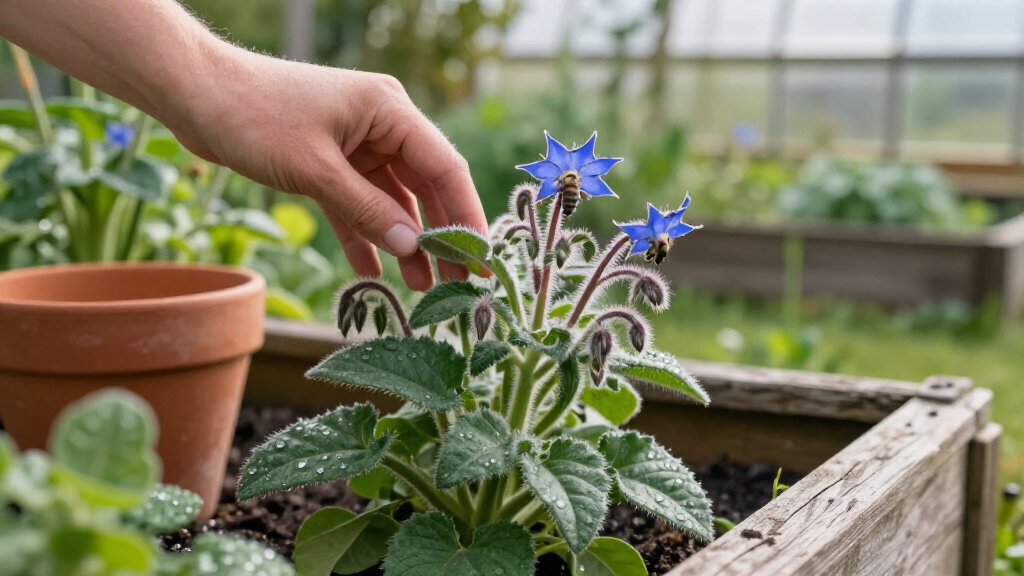
Borage, botanically named Borago officinalis, is an annual native to the Mediterranean region. The guide says plants commonly grow about two to three feet tall, with hairy stems, rough gray-green leaves and usually blue, five-pointed flowers. White-flowered forms also exist. It advises identifying plants using several features together, rather than relying on flower color alone.
For planting, the guide recommends full sun and well-drained soil. Sow seeds outdoors after the danger of frost has passed, following the seed packet’s instructions for planting depth. Keep the soil moist during germination, then thin seedlings to about 12 inches apart. Water young plants as they establish; established borage can tolerate some dryness, but the roots should not remain in soggy ground.
Borage’s flowers provide a resource visited by bees, making the herb an option for sunny borders or spaces beside vegetable gardens. The source cautions that benefits such as pest protection or changes to nearby crops’ flavor are not guaranteed. Because plants can self-seed, remove unwanted seedlings while small or cut off fading flowers before seeds mature. Leave some blooms to develop seed if you want plants to return next season.
Flowers, Bees and Garden Planning
For gardeners looking to add flowering plants for pollinators, borage offers seasonal color and flowers that bees visit, along with foliage that contrasts with finer-leaved herbs and grasses. Its informal growth can suit a loose, natural-looking bed, but plants need room to branch so they do not crowd or shade smaller neighbors.
Its ability to self-seed is both a practical benefit and a management issue. Gardeners can let some plants return, or remove seedlings and fading blooms to keep borage within its allotted space. Pairing it with other flowers that bloom at different times can help maintain flowers in the garden across the season; borage alone does not guarantee continuous bloom.
The food-safety distinction is also relevant. The guide says borage leaves and flowers can contain pyrrolizidine alkaloids, which raise safety concerns. It does not provide a safe serving amount, and drying is not described as a reliable way to make the plant safe to eat.
As an affiliate, we earn on qualifying purchases.
Borage’s Growth and Uses
The guide focuses on borage as a garden plant, not a health treatment. It notes that older accounts describe using young leaves in food and flowers in ice cubes, but says traditional use does not establish a safe amount to consume. Gardeners can enjoy the plant’s visual texture and blooms without harvesting it for food.
Borage seed oil is a separate preparation from leaves soaked in kitchen oil. The source identifies seed oil as a source of gamma-linolenic acid (GLA), an omega-6 fatty acid, but does not make a recommendation to use it or to prepare oil at home. It also says questions about teas, tinctures or use for health conditions should be discussed with a qualified healthcare professional.
““Borage brings blue stars and bees to sunny gardens.””
— Grow Organic gardening guide
Food Safety and Garden Effects
The guide does not specify the amount or frequency of exposure that would be safe for eating borage, and it offers no measured safe serving. It warns that leaves and flowers can contain pyrrolizidine alkaloids and says drying should not be assumed to remove the concern. Readers seeking advice about consuming borage or using it for a health condition should consult a qualified healthcare professional.
The source also does not promise particular effects on pests, crop flavor or garden yields. Those outcomes should not be inferred from borage’s pollinator value, which the guide describes in terms of bees visiting its flowers.
Sowing and Managing Seedlings
Gardeners planning to grow borage can sow seeds outdoors after frost danger passes, then follow the packet directions, keep the soil moist during germination and thin young plants to about 12 inches apart. Once established, they can adjust watering to rainfall and soil moisture while avoiding waterlogged ground.
As flowering ends, decide whether to save seed for next season or limit volunteers by removing fading flowers before seeds mature. Check nearby beds for seedlings and remove those that are unwanted while they are small. The guide provides general growing advice; local frost dates, seed packet directions and garden conditions will shape the timing.
Key Questions
What is borage?
Borage is the annual herb Borago officinalis, commonly grown for its hairy foliage and blue, star-shaped flowers. White-flowered forms also exist.
How do you grow borage?
Sow borage outdoors after frost danger passes in a sunny spot with well-drained soil. Keep seeds moist while they germinate, then thin seedlings to about 12 inches apart, following the seed packet’s planting instructions.
Does borage attract bees?
Grow Organic’s guide says bees visit borage flowers. It recommends pairing borage with other pollinator flowers that bloom at different times for a longer period of flowers in the garden.
Can borage leaves and flowers be eaten?
The guide cautions that borage leaves and flowers can contain pyrrolizidine alkaloids and does not identify a safe serving amount. Traditional culinary use or drying should not be taken as proof of safety; consult a qualified healthcare professional about consumption.
Will borage come back next year?
Borage often self-seeds. Leave some flowers to develop seed if you want volunteer plants next season, or remove fading blooms before seeds mature to reduce them.
Source: rss
Columbus Day / Indigenous Peoples' Day Picks
long weekend sales
As an affiliate, we earn on qualifying purchases.