
TL;DR

Get garden gear delivered free with Prime
- Fast, free delivery on millions of items
- Prime Video, Amazon Music and more included
- Member-only deals all year
A Gardener’s Path guide says perennial coreopsis is best prepared for winter by leaving most dead stems and foliage in place, applying organic mulch and watering until the first hard freeze. The advice varies with local winter conditions and cultivar hardiness; it is gardening guidance, not a new horticultural study.
Gardener’s Path’s winter-care guide recommends leaving most dead coreopsis stems and foliage standing through winter, adding three to four inches of organic mulch around the plant, and watering it until the first hard freeze. The advice matters because a severe fall cutback may leave the crown less protected from cold, particularly for perennial plants exposed to prolonged freezes.
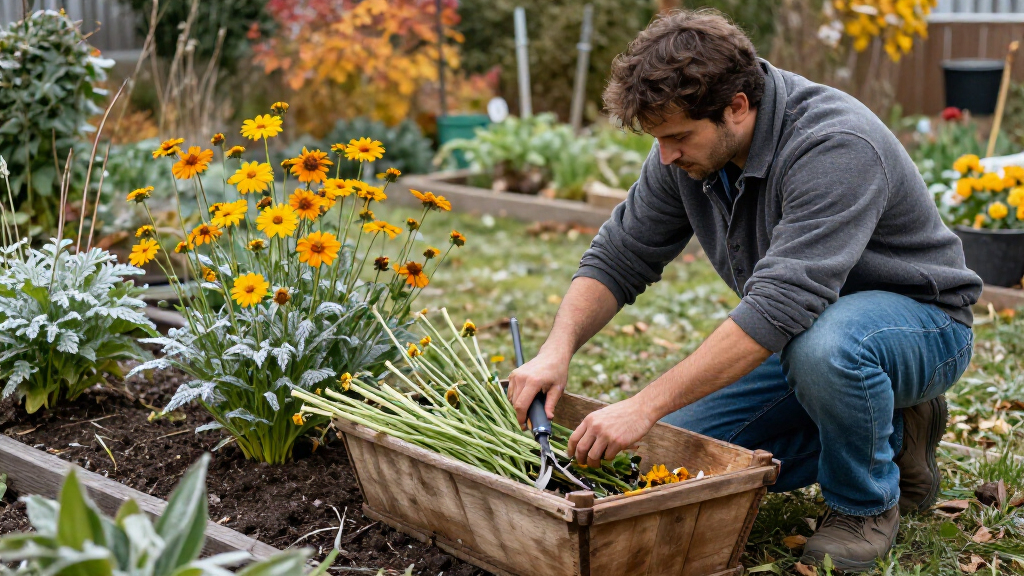
The guide cautions against cutting perennial coreopsis to the ground in fall. It says the stems and foliage can insulate the plant’s crown, the area where shoots emerge, as cold weather sets in. Gardeners who prefer a tidier winter appearance can trim stems to four to six inches above the ground, but the article advises against cutting lower. Its suggested alternative is to wait until the soil thaws and frost danger has passed in spring, then cut dead stems to about two to three inches.
For root protection, the article recommends spreading three to four inches of organic mulch, such as chopped leaves, bark chips or straw, around the plant. In places where winter lasts five months or more and the ground freezes for extended periods, it suggests adding another two to three inches. If plants have been cut back, leaves or straw can also be laid over them for extra insulation; that covering should be removed in spring after frost danger passes.
Coreopsis should continue to receive water in fall, according to the guide, even after flowering ends. It recommends a deep watering about once a week until the first hard freeze if rainfall has not supplied enough moisture. A simple check is to feel the soil about an inch down and water deeply if it is dry. The source also advises against fall compost and fertilizer: it describes coreopsis as tolerant of average soil and warns that rich soil or late-season feeding can encourage growth vulnerable to frost.
Protecting Coreopsis Through Freeze
The central takeaway is that more cutting is not necessarily better for perennial coreopsis in autumn. Leaving stems in place is a low-cost way to retain some insulation over the crown, while mulch provides added protection around the roots. That guidance can help gardeners avoid treating the plant like perennials that benefit from being cut back hard before winter.
Timing also matters. The guide’s advice to keep watering until a hard freeze addresses the period when plants have stopped blooming but winter conditions have not fully arrived. Its recommendations offer practical steps, but they do not guarantee survival: local climate, drainage and cultivar hardiness affect how a plant fares.
Popular right now

Bose QuietComfort True Wireless Noise-Cancelling Earbuds, Black

Vitamix Propel Series 510 Professional-Grade Blender, 3 Programs, Black

TCL T7 Series 85-Inch 4K 144Hz QLED Smart Google TV
As an affiliate, we earn on qualifying purchases.
Hardiness Depends on Variety
Coreopsis, also called tickseed, includes annual and perennial species and cultivars. The Gardener’s Path report says many wild species and cultivars, including ‘Moonbeam,’ ‘Sun Up’ and ‘Zagreg,’ are suited to USDA Hardiness Zones 4 to 9, while some newer, more colorful cultivars are hardy in Zones 6 to 9. These ranges are not interchangeable: gardeners need to identify their variety and compare its stated hardiness with local winter conditions.
The source also notes that some coreopsis can be grown as annuals and that many varieties readily reseed. Allowing flowers to set seed in fall may produce new plants and blooms the following summer, but that is separate from the question of whether an existing perennial will survive winter. The guidance here concerns preparing established perennial coreopsis, not a guarantee that every variety will return.
Cultivar and Climate Limits
The source does not specify a publication date or present new trial data comparing winter-care methods. Its recommendations are general gardening guidance, and the supplied material does not establish that the same treatment will work equally well for every cultivar or location. It also does not give a precise watering volume, since soil type, rainfall and plant size vary.
Whether a plant returns depends in part on whether it is a perennial suited to the local hardiness zone. The article gives zone ranges for selected groups but does not identify every cultivar or address unusual cold snaps, waterlogged soil or other local conditions. Gardeners should check the plant’s label and regional advice before applying the guidance to a specific variety.
Spring Cutback and New Growth
For gardeners following the report’s advice, the next steps come after winter: wait until the soil has thawed and the danger of frost has passed, remove any temporary leaf or straw covering, then cut dead stems to two to three inches above the ground. Watch for new growth as the weather warms. If a plant does not return, the source does not identify a single cause; gardeners may need to review its variety, winter conditions and soil drainage.
Key Questions
Should I cut coreopsis back in fall?
The Gardener’s Path guide recommends leaving dead stems and foliage standing through winter. If you want a neater garden, it says to leave four to six inches of stem rather than cutting the plant to the ground.
How much mulch should I use?
Spread three to four inches of organic mulch around the plant. The source suggests an additional two to three inches in regions with long winters and prolonged ground freezes.
Should I water coreopsis after it stops blooming?
Yes, the guide recommends watering until the first hard freeze if autumn rainfall is insufficient. It suggests checking the soil about an inch down and watering deeply when it is dry.
When should I remove the old stems?
Wait until the soil has thawed and frost danger has passed in spring, then cut dead stems to about two to three inches above the ground. Remove any extra leaf or straw covering at that time.
Can every coreopsis variety survive winter?
No. The source gives different hardiness ranges for different species and cultivars, and says some types are grown as annuals. Check the variety’s USDA hardiness range against your local conditions.
Source: gardenerspath.com