
TL;DR

Get garden gear delivered free with Prime
- Fast, free delivery on millions of items
- Prime Video, Amazon Music and more included
- Member-only deals all year
Garden mums are perennials, but plants bought in bloom in late summer or fall may not establish enough roots to survive winter. Country Living’s gardening guidance recommends choosing hardy garden mums, planting in spring where possible, and watering and deadheading fall purchases.
Garden mums can return as perennials, but mums planted in late summer or fall may not survive winter if they have too little time to establish roots, according to a gardening report by Country Living. The report says choosing hardy garden varieties and planting them in spring where possible can improve the chances of seeing them again the following year.
The first step is identifying what kind of mum is being purchased. Hardy garden mums, also called garden mums, are suited to U.S. Department of Agriculture hardiness zones 4 to 9, while florist mums are generally hardy only in warmer areas, typically zones 7 to 9, Country Living reports. Mums sold in gift pots at grocery stores may not be the hardy garden type; garden mums are generally available at nurseries and home-improvement stores.
Planting time matters. Mums are often sold in late summer or fall when they are already directing energy toward flowering. Planting then can leave limited time for roots to grow before cold weather. Country Living recommends planting in spring for gardeners outside warm climates, noting that specialty nurseries may be needed because many local retailers stock mums mainly in fall. For a fall purchase, plants still in tight bud may have a better chance to establish than those already in full bloom, but the report describes that advantage as slight, not guaranteed.
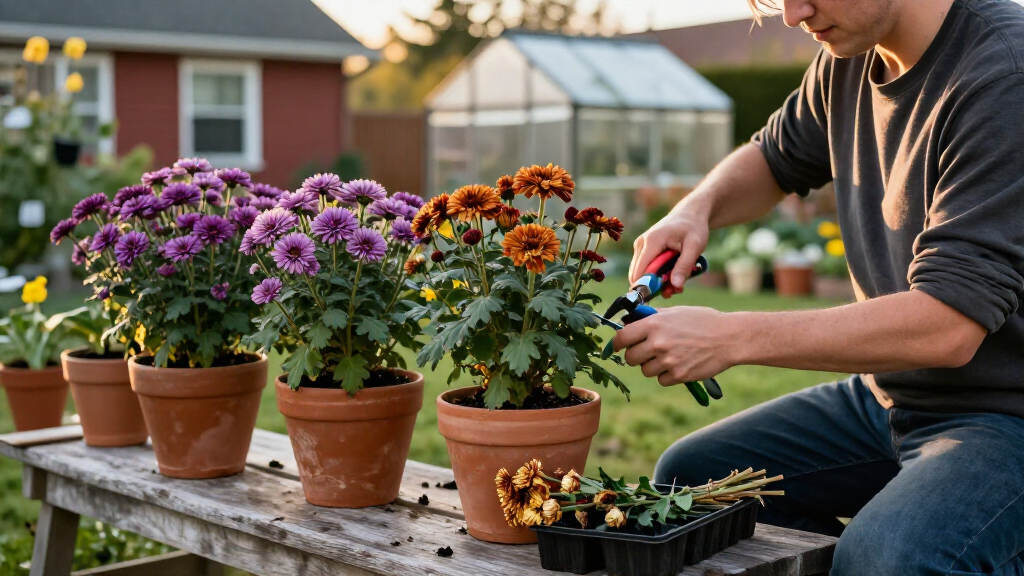
For fall-planted mums, the report advises planting promptly, roughening the outside of the root ball with a gloved hand, and keeping the soil sufficiently moist so the plants do not wilt in hot, dry weather. It also recommends deadheading fading flowers: cut a few inches below the flower head as color begins to fade, before the plant sets seed. These measures may redirect energy toward roots, but they cannot guarantee winter survival.
Timing Shapes Winter Survival
The advice matters to gardeners who buy mums for fall color and expect the same plants to return in spring. Buying a perennial does not guarantee it will behave like one: variety, local climate and the time available for root establishment all affect whether it survives. A plant that fails to return may have been a florist variety unsuited to the area, or it may simply have been planted too late to establish well.
Spring planting gives roots more time to develop before winter, but it can require planning ahead and ordering from a specialist nursery. Gardeners who plant in fall can take steps to improve the odds while recognizing that the result is uncertain. Even a surviving mum may not keep the large, rounded shape it had in its nursery pot; Country Living says it may grow back with a more informal form.
hardy garden mums for USDA zones 4-9
As an affiliate, we earn on qualifying purchases.
As an affiliate, we earn on qualifying purchases.
Garden Mums Versus Florist Mums
Mums are chrysanthemums, a familiar autumn flower often grown alongside other late-season plants such as asters and upright sedums. The term “perennial” means a plant can live and grow for multiple years, but it does not mean every variety will withstand every winter or that a newly planted specimen will establish successfully.
The report distinguishes hardy garden mums from florist mums, which are often sold as decorative potted plants. Their hardiness ranges differ: garden mums are suited to zones 4 to 9, while florist mums are generally hardy in zones 7 to 9. Because labels may not always make the distinction clear, the report advises checking the plant type and local hardiness zone before planting.
“When mums first show up at nurseries and garden centers, it’s usually late summer or early fall.”
— Country Living gardening report
Survival Is Not Guaranteed
No method guarantees that a mum will return, and the report does not give a survival rate for spring- or fall-planted plants. Results depend on the variety, local conditions and how much time roots have to establish before winter. The precise care needed can also vary by site and weather.
The report offers general guidance rather than a location-specific planting schedule. Gardeners should check their local hardiness zone and the plant’s label; it may not be clear from a gift pot alone whether a mum is a hardy garden variety. It is also uncertain how closely a returning plant will resemble its original nursery form.
Plan Planting for Spring
Gardeners hoping for mums next year can check the variety and their growing zone before planting. In areas where fall is already underway, the report’s general recommendation is to look for hardy garden mums and plant them in spring, potentially through a specialty nursery. Those planting in fall can choose plants in tight bud, get them into the ground promptly, water consistently, and remove fading flower heads.
After winter, gardeners will be able to see whether their plants have survived and sent out new growth. If a mum does not return, or if the effort is not worthwhile for the gardener, Country Living says it is also reasonable to treat the flowers as annuals and replace them the following fall.
Key Questions
Which mums are most likely to come back?
Hardy garden mums are the type to look for. Country Living says they are suited to USDA hardiness zones 4 to 9; florist mums are generally hardy only in zones 7 to 9.
Is spring or fall better for planting mums?
Spring is the report’s recommendation for gardeners outside warm climates because plants have more time to establish roots before winter. Fall planting can work, but the report says the window may be short.
Can fall-planted mums survive winter?
They may, but survival is not guaranteed. Choosing a hardy variety, planting promptly, watering it and selecting a plant still in bud may improve its chances, according to Country Living.
Will mums look the same when they grow back?
Not necessarily. Country Living says a surviving mum may return with a more carefree shape rather than the large, rounded form it had when purchased.
Source: rss
Columbus Day / Indigenous Peoples' Day Picks
long weekend sales
As an affiliate, we earn on qualifying purchases.