TL;DR

Get garden gear delivered free — and shop member deals
- Fast, free delivery on millions of items
- Access to Prime Big Deal Days deals on October 6–7
- Prime Video, Amazon Music and more included
A Grow Organic report explains that floating row covers protect plants during radiation frost by holding some of the heat released from soil and limiting direct frost exposure. Lightweight covers suit mild frost, while heavier or layered covers offer more insulation; covers should reach the ground, have secured edges and be removed or opened when daytime temperatures rise. They may not be enough during a windy, severe freeze.
Floating row covers can reduce frost damage by holding some of the heat that soil releases overnight and shielding plants from direct frost, according to a Grow Organic gardening report. The advice is most relevant to radiation frost, which forms on clear, calm nights; the report cautions that covers alone may not protect crops during a severe, windy freeze.
Soil absorbs heat during the day and releases it gradually after sunset. A floating row cover, laid over plants or supported above them, can help keep some of that warmth near the crop and create a more stable microclimate. The report describes the cover as a barrier that helps prevent frost from settling directly on plants; it does not claim that a cover generates heat or guarantees protection at a particular temperature.
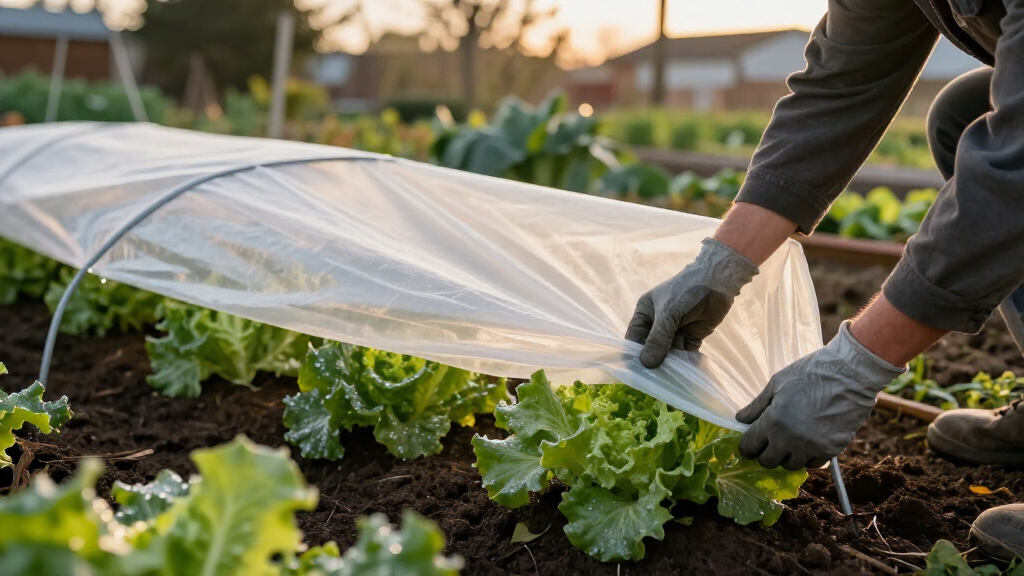
Installation affects performance. Grow Organic advises extending the fabric all the way to the ground and securing the edges with soil, bricks or other weights to reduce heat loss and cold-air entry, using anti-frost blankets suited to the conditions. Mulch such as straw or compost beneath a cover can also help soil retain warmth. Gardeners should monitor conditions and open or remove covers as temperatures rise, because trapped daytime heat can become excessive.
The source groups covers by weight: lightweight Agribon AG-15 and AG-19 for light frost and insect protection, medium-weight AG-30 for cold-sensitive crops in mild winters, and heavier AG-50 or AG-70 for stronger insulation. These are product examples in the report, not a universal temperature rating. It does not provide test results or specify how many degrees of protection each fabric provides.
Choosing Protection for the Forecast
For gardeners, the practical distinction is between a cold night when soil warmth can still help and a cold-air outbreak that may overwhelm a fabric barrier. On a calm, clear night, a properly placed cover can help protect kale, carrots, spinach and other crops while extending the growing season. Matching cover weight to conditions, securing it properly and checking plants the next day can reduce the risk of preventable damage.
The advice also sets limits on what a row cover can do. Grow Organic says an advective freeze brings a mass of cold air, often with strong winds and rapidly falling temperatures, replacing warmth rather than simply allowing it to radiate away. In that situation, thicker or layered covers and other heat-retention methods may add protection, but the source does not establish that any method will save plants in every freeze. Gardeners should use local forecasts and crop-specific cold tolerance rather than treat a cover label as a guarantee.
floating row covers for frost protection
As an affiliate, we earn on qualifying purchases.
As an affiliate, we earn on qualifying purchases.
Radiation Frost Versus Cold-Air Freeze
The report distinguishes two kinds of cold event because they affect gardens differently. A radiation frost typically develops under clear skies and calm winds: ground loses heat overnight, and near-surface temperatures can fall enough for frost to form. Row covers and low tunnels can help hold warmth around crops, while mulch helps insulate soil and roots.
An advective freeze occurs when a larger mass of cold air moves into an area, often with wind. The report recommends thicker or doubled covers for such conditions, alongside options such as plastic mulch, water containers near plants and traditional incandescent Christmas lights. These are recommendations from the source, not independently verified performance claims. In particular, the report gives no quantified temperature gains or safety instructions for using electrical lights outdoors.
“Ensure full ground coverage – Drape covers all the way to the ground to prevent warm air from escaping.”
— Grow Organic report
Limits of the Frost Guidance
The source does not give a publication date, measured results, local climate conditions or the temperatures at which specific covers stop protecting plants. Its Agribon examples therefore cannot be treated as exact frost ratings, and actual results may vary with crop, exposure, wind, soil moisture and how tightly the cover is secured. The report also does not identify a particular forecast threshold for adding layers or taking covers off.
It is unclear how much warmth the suggested water containers or lights would provide in a given garden. The source does not provide electrical-safety guidance for outdoor lights, so readers should follow the product manufacturer’s instructions and applicable safety guidance rather than assume any string of lights is suitable. No independent testing or expert interviews accompany the supplied material.
Check Conditions Before Covering Crops
Before a cold night, gardeners can check the local forecast and determine whether conditions are expected to be calm and clear or windy with incoming cold air. They can select a cover suited to the crop and forecast, lay it to the ground, secure the edges and consider mulch for added soil insulation. During the day, check temperatures under the cover and open or remove it if conditions warm.
If forecasts call for a hard freeze, the report’s guidance is to consider heavier or doubled covers and other insulation, while recognizing that protection is not assured. The next useful information would be locally tested guidance specifying cover performance by temperature, crop and weather conditions; the supplied report does not provide those measurements.
Key Questions
How does a floating row cover protect plants from frost?
It helps retain some of the heat released from soil overnight and provides a barrier between frost and plant foliage. Its effect depends on the cover, installation and weather.
Should a row cover touch the ground?
Grow Organic advises extending the cover to the ground and securing its edges with soil, bricks or weights. This helps limit the loss of warm air from beneath it.
Which weight of cover should I use?
The report lists lightweight fabrics for light frost, medium-weight covers for cold-sensitive crops in mild winters, and heavy covers for stronger insulation. It does not give specific temperature ratings, so check the maker’s instructions and local conditions.
Can row covers protect plants in a hard freeze?
They may help, but the report warns that covers alone might not be enough in extreme cold, particularly during a windy advective freeze. Heavier or layered covers and other measures may provide added insulation, but protection is not guaranteed.
When should I uncover plants?
Check temperatures during the day and open or remove the cover when conditions rise to avoid overheating beneath the fabric, as the report advises.
Source: rss
Fall yard work Picks
leaf blowers
As an affiliate, we earn on qualifying purchases.