TL;DR

Get garden gear delivered free with Prime
- Fast, free delivery on millions of items
- Prime Video, Amazon Music and more included
- Member-only deals all year
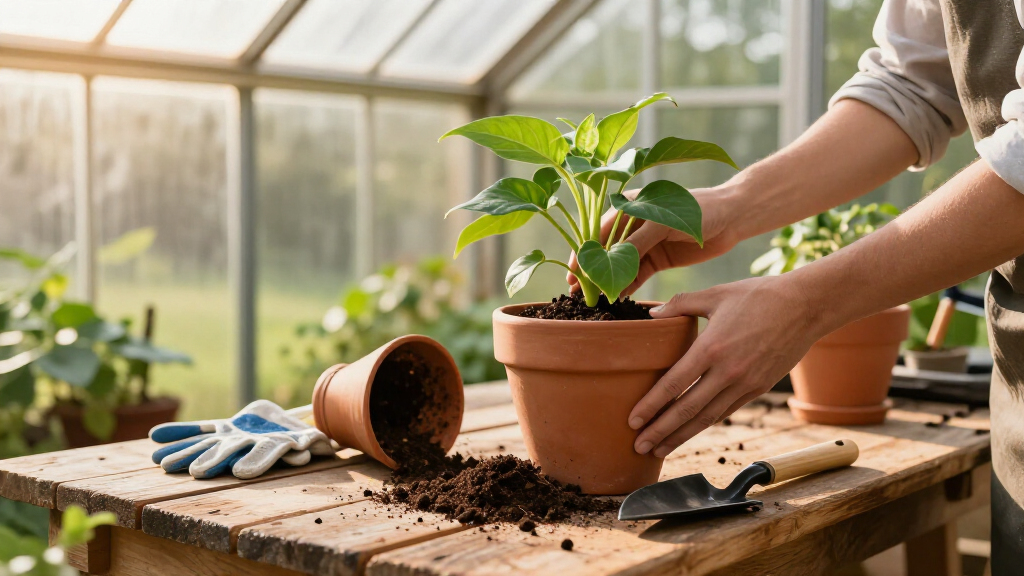
A Homes & Gardens guide describes five steps for repotting houseplants: check the roots, remove the plant carefully, trim damaged roots, move it to a slightly larger pot with fresh mix, and water it. The advice is general; the right timing and frequency depend on the plant, and the source says some houseplants tolerate being root-bound.
Homes & Gardens has published a five-step guide to repotting houseplants, advising readers to inspect the roots before moving a plant into a slightly larger container. The practical guidance matters to indoor gardeners because a cramped or poorly draining root area can affect how a plant takes up water, while repotting at the wrong time or watering too heavily may create new problems.
The guide begins by recommending a root check rather than repotting on a fixed schedule. Gently lift the plant from its pot and look for roots tightly circling one another or forming a dense mass. If the roots still have room, the article says, repotting may not yet be needed. It gives one to three years as a general interval for many popular indoor plants, while stressing that growth rate and tolerance of confined roots differ by species.
Other signs to investigate include soil that no longer absorbs water and yellowing foliage when watering or pest issues do not explain it. If the plant is stuck, the guide suggests gently twisting the pot or loosening the soil, and supporting the plant at its base if turning it over. It recommends trimming mushy or rotting roots with sharp tools, keeping most of the root ball intact and avoiding removal of more than about one third.
For the move, choose a pot one or two sizes larger than the current container and use fresh potting mix suited to the plant. Set the plant in place, press the mix gently around its base, then water thoroughly to help settle it. The article mentions bottom watering or soaking a pot with a drainage hole for about 20 minutes, but cautions readers not to leave the soil oversaturated. A moisture meter can help check when the soil has dried enough for the next watering.
Root Space and Watering Matter
Repotting can give expanding roots more room and provide fresh growing medium, but the guide does not recommend moving every plant simply because time has passed. Checking root condition first helps avoid unnecessary disturbance, while a pot that is only modestly larger can reduce the risk of giving the plant far more soil than its roots can use.
The advice also connects repotting with common care problems. Soil that repels water or foliage that yellows may be a sign to investigate, but neither symptom alone proves that a larger pot is needed. Readers should also consider watering, pests and plant-specific needs. The article cautions that excess water, particularly in fall and winter, can be harmful.
As an affiliate, we earn on qualifying purchases.
Timing Depends on Plant Growth
The guide recommends repotting in early to mid-spring or early fall, describing these as temperate periods that can help plants recover. It notes that some houseplants prefer to remain somewhat root-bound, so the suggested timing and one-to-three-year interval are broad guidance, not rules for every species.
The source also places repotting among seasonal indoor-plant tasks. For fall care, it advises adjusting watering, moving plants nearer windows where appropriate, removing damaged leaves and rotating plants to discourage uneven, leggy growth. Those suggestions are general; the needs of an individual plant depend on its species and growing conditions.
“Generally speaking, the most popular indoor plants can be repot every 1-3 years, but you should assess the roots to determine this.”
— Homes & Gardens
Plant-Specific Advice Remains Necessary
The guide does not provide separate instructions for every houseplant species, nor does it identify a particular plant or reader’s growing conditions. Repotting frequency, potting mix and watering needs vary, so the broad steps may need adjustment for plants with specialized roots or care requirements.
Yellow leaves and soil that resists water can have causes other than a pot that is too small. The article advises ruling out watering and pest problems but does not offer a diagnosis for any individual plant. It also does not supply evidence that repotting will prevent pests or guarantee healthier growth; those outcomes depend on the plant and its care.
Check Roots Before Choosing a Pot
Readers following the guide should first inspect the root ball and confirm that the plant needs more space. If it does, the next steps are to prepare a slightly larger container and suitable fresh mix, trim only damaged roots, and water according to that plant’s needs. After repotting, monitor soil moisture rather than watering again on a fixed schedule, especially during cooler months.
The source gives no announced follow-up or reporting milestone. For an individual plant, the next useful step is to identify its species and check care guidance specific to it; the five-step process is a general starting point, not a substitute for those details.
Key Questions
How can I tell whether a houseplant needs repotting?
Check whether roots are tightly circling or packed into a dense mass. Soil that no longer absorbs water or unexplained yellowing may also warrant investigation, but those symptoms can have other causes.
How often should houseplants be repotted?
Homes & Gardens gives one to three years as a general range for popular indoor plants, while advising readers to assess root growth. Species and growth rates differ, and some plants tolerate being root-bound.
What size pot should I use?
The guide suggests choosing a container one or two sizes larger than the existing pot. Its example is moving from an eight-inch pot to a 10-inch pot.
Should I water a plant after repotting?
The guide recommends watering thoroughly after repotting to help settle the plant. Avoid keeping the mix oversaturated, and check the soil before watering again, particularly in fall and winter.
When is a good time to repot?
The article recommends early to mid-spring or early fall as general timing. A plant’s species, condition and growing environment can affect what is appropriate.
Source: rss
Halloween Picks
halloween
As an affiliate, we earn on qualifying purchases.