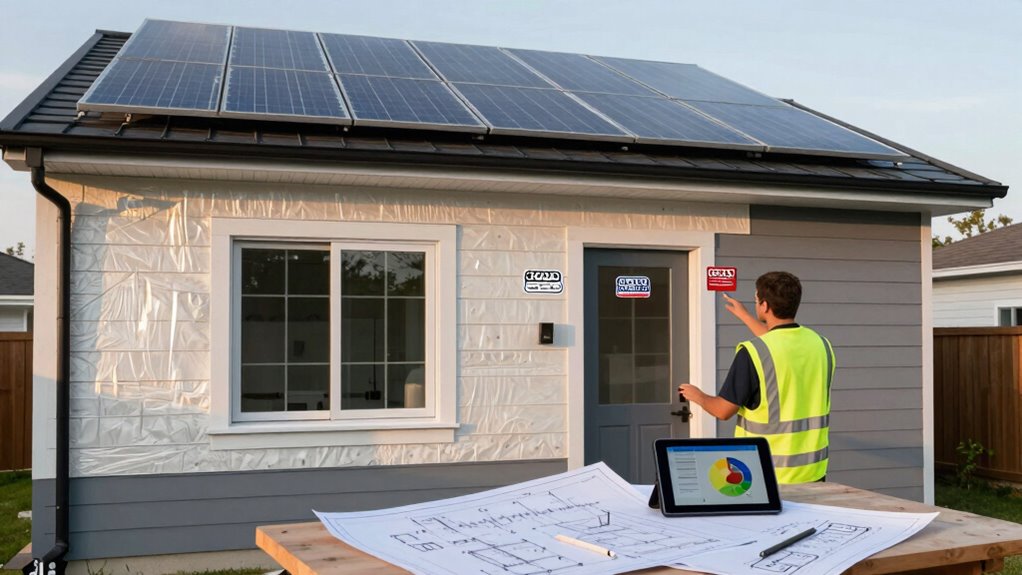
Building codes shape your home energy upgrades by setting clear standards for insulation, ventilation, and materials, ensuring safety and comfort. They guide you to choose proper insulation levels, proper air exchange systems, and safe building practices, which help lower energy bills and prevent issues like mold. Following these codes means your upgrades are effective and compliant. If you want to discover how these rules can maximize your home’s efficiency, keep exploring the details behind these important standards.
Key Takeaways
- Building codes set minimum standards for insulation and ventilation, guiding effective energy upgrade choices.
- They ensure proper installation methods to maintain insulation effectiveness and prevent energy loss.
- Codes influence material selection, promoting energy-efficient windows, doors, and sealing techniques.
- They help identify and address potential issues early, reducing costs and enhancing safety during upgrades.
- Building codes promote balanced indoor air quality and moisture control, improving overall home health and energy performance.
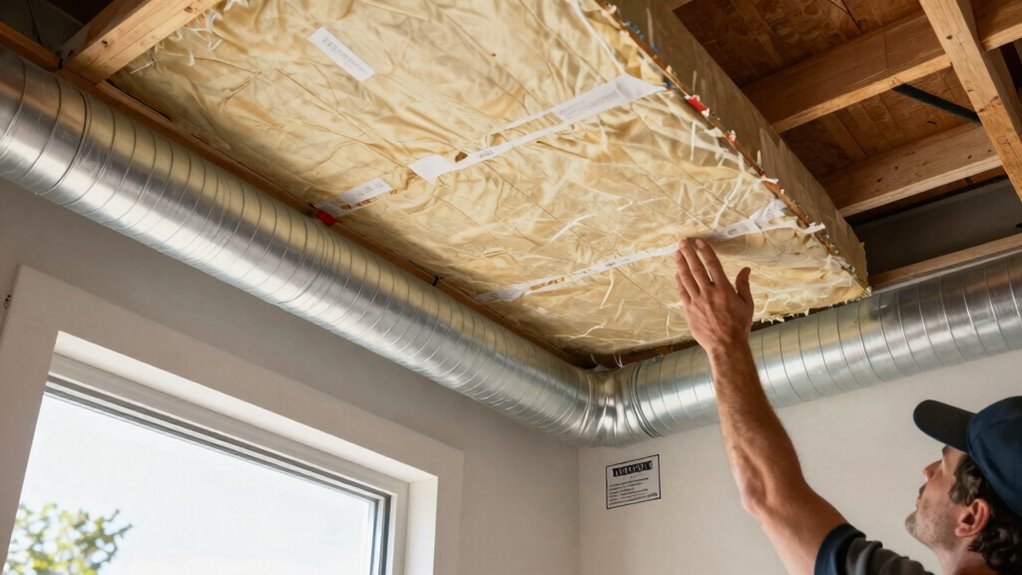
Building codes play a crucial role in shaping how homes are constructed and upgraded for energy efficiency. These regulations set the foundation for ensuring your home is safe, comfortable, and sustainable. When it comes to energy upgrades, codes influence everything from insulation standards to ventilation requirements, guiding you to make choices that maximize efficiency while maintaining safety.
Insulation standards are a key aspect of building codes that directly impact your home’s energy performance. The codes specify the minimum R-values for walls, attics, floors, and other building components, meaning you need to meet certain insulation thicknesses and materials. This guarantees your home retains heat in winter and stays cool in summer, reducing your reliance on heating and cooling systems. Upgrading to meet or exceed these standards can markedly lower your energy bills and enhance comfort. When you plan an upgrade, you’ll find that local codes often specify not only the type of insulation but also installation methods, ensuring it performs as intended. This prevents gaps and compression that can otherwise compromise its effectiveness. Additionally, building code compliance helps identify potential issues early, saving costs and time during construction or renovation.
Building codes specify insulation R-values to improve home comfort and energy efficiency.
Ventilation requirements are equally critical in building codes, aiming to maintain good indoor air quality and moisture control. Proper ventilation prevents issues like mold, mildew, and indoor air pollution, which can be common in tightly sealed, energy-efficient homes. Building codes typically specify how much fresh air needs to be introduced and how excess indoor air should be exhausted. This might involve mechanical systems, such as exhaust fans or heat recovery ventilators, which work in tandem with the structure’s design. When you upgrade your home, adhering to ventilation requirements means you balance energy conservation with healthy indoor environments. It guarantees your home doesn’t become too airtight, which can trap pollutants and humidity, yet stays energy-efficient. Additionally, integrating ventilation systems effectively can improve overall indoor comfort and air quality.
Furthermore, building codes influence the choice of windows, doors, and sealing techniques, all of which tie into insulation and ventilation strategies. They often mandate testing and certification processes that guarantee your upgrades meet safety and efficiency standards. By following these regulations, you avoid potential issues like moisture buildup or thermal bridging, which can undermine your efforts to improve energy performance. Additionally, many building codes incorporate energy efficiency standards, guiding you to select materials and systems that optimize your home’s overall performance.
In essence, building codes serve as a blueprint for your home’s energy efficiency journey. They guide you through the necessary steps to upgrade insulation and ventilation systems correctly, ensuring your home is not just compliant but also optimized for comfort, safety, and cost savings. When you stay informed about these standards, you empower yourself to make smarter decisions that benefit both your wallet and your well-being.
As an affiliate, we earn on qualifying purchases.
Frequently Asked Questions
How Often Are Building Codes Updated for Energy Efficiency?
Building codes are typically updated every three to five years to improve energy efficiency standards. You need to stay current on these updates for energy code compliance and certification requirements. When codes change, they often include stricter insulation, HVAC, and lighting standards. Regularly checking local or national building authority updates helps you guarantee your home upgrades meet the latest energy efficiency rules, making your home more sustainable and cost-effective.
Do Building Codes Vary by City or State?
Yes, building codes vary by city or state, affecting your home energy upgrades through different zoning regulations and permit requirements. You’ll find that local governments set specific standards, making some areas more restrictive or lenient. This variation influences how easily you can implement upgrades, what permits you need, and how zoning regulations might impact your project’s scope. Staying informed guarantees your upgrades meet local codes and avoid potential issues.
Can Homeowners Retrofit Homes to Meet New Codes?
Yes, homeowners can retrofit homes to meet new codes, but they often face retrofit challenges like updating outdated systems or materials. These upgrades can have significant cost implications, especially if extensive work is needed. To minimize surprises, it’s wise to get a thorough assessment upfront. Planning ahead helps you navigate retrofit challenges more smoothly and guarantees your upgrades align with current building codes efficiently.
Are There Exemptions for Historic or Unique Homes?
Think of your historic or unique home as a cherished old book, with pages that tell a special story. You might find historic exemptions that protect its character, allowing some flexibility in upgrades. Unique home considerations also come into play, recognizing the one-of-a-kind features. Building codes often offer these exemptions to preserve your home’s charm while still encouraging energy efficiency improvements, ensuring both history and modern comfort coexist harmoniously.
How Do Building Codes Impact Renovation Costs?
Building codes can increase your renovation costs due to compliance challenges and necessary upgrades. You’ll need to perform a cost-benefit analysis to determine if the long-term savings outweigh the initial expenses. While codes aim to improve efficiency, they may require you to install specific materials or systems, potentially raising costs. However, adhering to these standards can enhance your home’s value and energy performance over time.
Conclusion
Just as Icarus’ wings were bound by wax, your home’s potential is shaped by building codes. These regulations might seem restrictive, but they’re the blueprint for safer, more efficient living. When you upgrade your home, you’re not just following rules—you’re building a legacy of sustainability and comfort. Embrace these codes as your guiding star, illuminating a future where your home soars with energy efficiency, much like Icarus reaching for the sun—safely and purposefully.