
Your neighborhood design greatly impacts heat risk by influencing how much heat is absorbed, stored, and radiated. Incorporating green spaces like parks and green roofs can cool the area and improve air quality, while using reflective materials on buildings helps reduce heat absorption. Proper orientation and spacing promote natural ventilation, lowering reliance on air conditioning. When you understand these strategies, you’ll see how thoughtful planning creates cooler, healthier, and more resilient communities. Keep exploring to learn how to make your neighborhood more climate-friendly.
Key Takeaways
- Incorporating green spaces and trees cool microclimates, reducing urban heat island effects.
- Reflective building materials decrease heat absorption and surface temperatures.
- Proper building orientation and spacing enhance natural ventilation and airflow.
- Neighborhood design integrating greenery and reflective surfaces improves resilience to heatwaves.
- Thoughtful planning reduces heat retention, lowers temperatures, and promotes healthier communities.
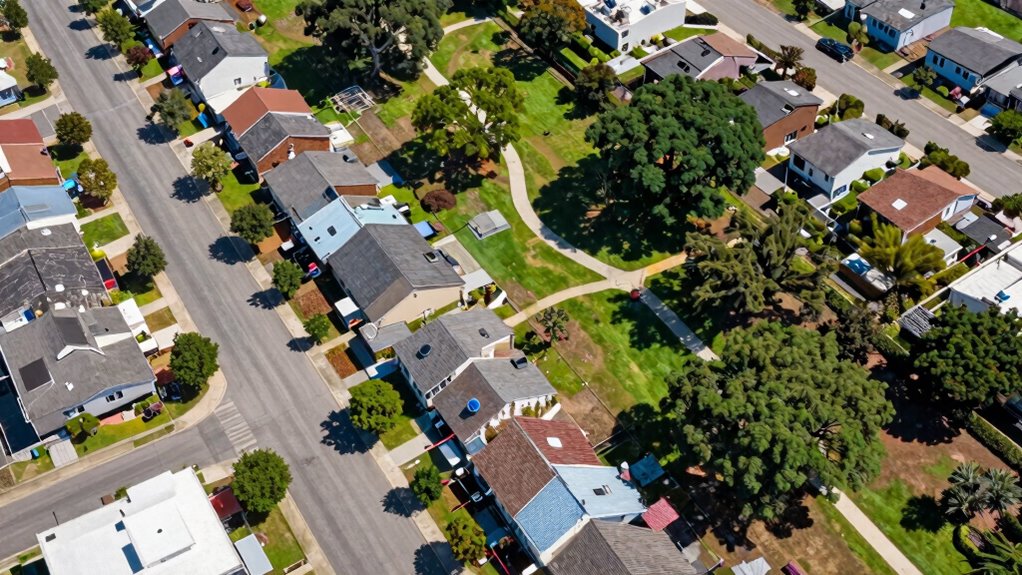
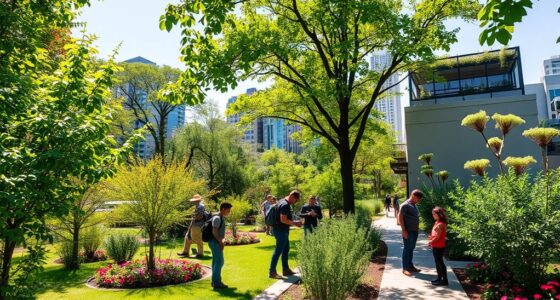
Neighborhood design plays a crucial role in determining how exposed communities are to heat risks, especially as temperatures continue to rise. The way a neighborhood is laid out influences how heat is absorbed, stored, and radiated back into the environment. One of the most effective strategies you can consider is incorporating urban greenery—trees, parks, and green roofs. These elements provide shade, reduce surface temperatures, and improve air quality, making your community less vulnerable to extreme heat. When you prioritize green spaces, you create cooler microclimates that benefit everyone, especially during heatwaves. Urban greenery doesn’t just cool the environment; it also encourages outdoor activity and community interaction, which are often limited during intense heat.
Urban greenery cools neighborhoods, boosts air quality, and fosters outdoor activity during heatwaves.
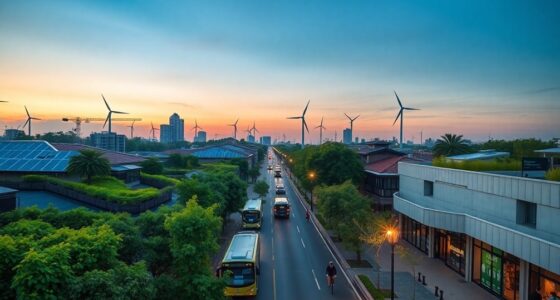
Another essential aspect of neighborhood design that impacts heat risk is the choice of building materials. You might not realize it, but the materials used in construction can dramatically influence how much heat is retained and transmitted. Light-colored or reflective surfaces, such as certain types of roofing and paving materials, reflect more sunlight, helping to keep surfaces cooler. Conversely, dark, heat-absorbing materials can considerably raise local temperatures. When you opt for heat-resistant, reflective, or insulation-enhanced building materials, you reduce the amount of heat that buildings absorb and radiate. This not only makes individual structures more comfortable but also contributes to lowering the overall temperature of the neighborhood. Additionally, integrating urban heat island mitigation strategies can further enhance cooling effects and resilience. Incorporating thermal comfort principles in design helps create environments that stay cooler during hot weather. Furthermore, considering the placement of reflective or cool roofing materials can significantly reduce heat absorption at the source. Proper material selection also helps prevent the exacerbation of heat-related health issues, especially among vulnerable populations.
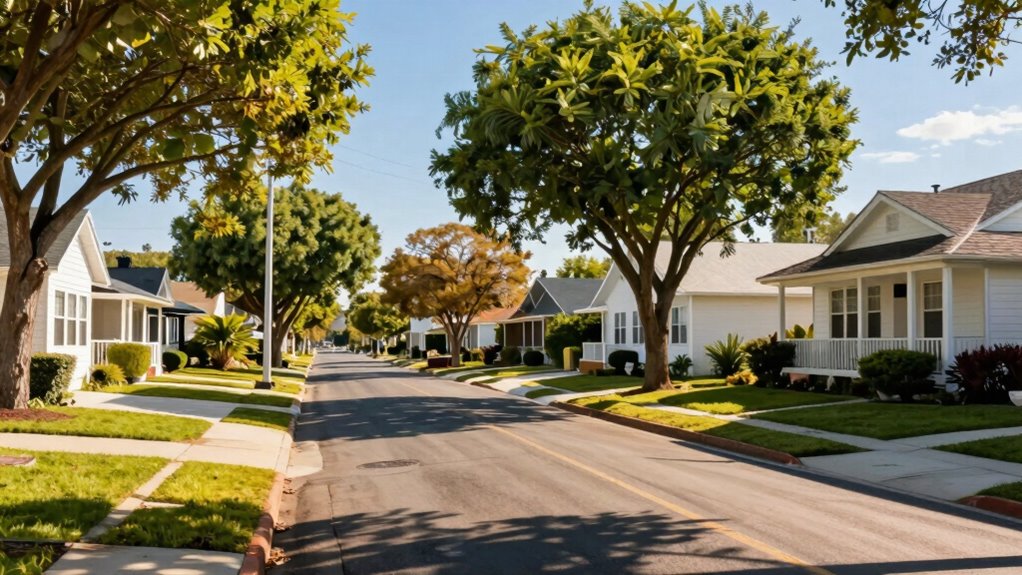
Designing with ventilation in mind is another way to combat heat. Proper placement of buildings can facilitate airflow, allowing hot air to escape and cooler breezes to circulate. You can achieve this by spacing buildings appropriately and orienting streets to catch prevailing winds. This passive cooling strategy reduces the need for energy-intensive air conditioning, which further contributes to heat stress and urban heat island effects. Paying attention to building orientation and open space planning enhances natural ventilation, making neighborhoods more comfortable during heat waves. Incorporating ventilation into neighborhood planning not only improves thermal comfort but also enhances overall air quality, creating healthier environments for residents.
Incorporating these concepts into your neighborhood’s design isn’t just about aesthetics; it’s about resilience and health. When you integrate urban greenery, choose suitable building materials, and plan for natural ventilation, you create a community better equipped to handle higher temperatures. These design choices work together to mitigate the urban heat island effect, making your neighborhood a cooler, healthier, and more livable space. As climate patterns shift, thoughtful neighborhood design becomes an essential tool in protecting residents from heat risks and ensuring sustainable urban living.

YoleShy Double Reflective Insulation 48 in X 10 FT RV Window Insulation for Summer Heat Reflective Window Film for Roof, Car, Garage Doors
- Size and Fasteners: 48 inch x 10 ft with 12 fasteners
- Premium Materials: Double-sided aluminum foil and bubble film
- Temperature Protection: Effective for summer and winter insulation
As an affiliate, we earn on qualifying purchases.
As an affiliate, we earn on qualifying purchases.
Frequently Asked Questions
How Do Trees Influence Neighborhood Heat Levels?
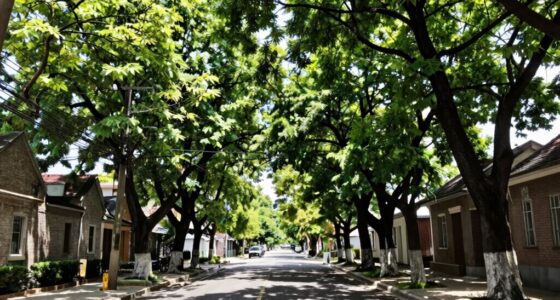
Trees considerably lower neighborhood heat levels through their tree canopy, which provides essential shade. When you plant more trees, they create shade provision that cools surfaces and air, reducing the urban heat island effect. This natural cooling helps you stay comfortable during hot days, lowers your energy bills by reducing air conditioning needs, and improves overall air quality. So, expanding your tree canopy is a simple, effective way to combat heat in your neighborhood.
What Materials Reduce Urban Heat Absorption?
You can markedly cut urban heat absorption by choosing materials like reflective surfaces and permeable pavements. Reflective surfaces bounce sunlight away, turning urban areas into cooler zones, while permeable pavements allow water to seep in, reducing heat buildup and promoting cooling. These materials are like shields against the scorching sun, making neighborhoods notably cooler and more comfortable. Incorporating them into your community design can transform extreme heat risks into manageable, even pleasant, environments.
How Does Street Layout Impact Heat Retention?
You’ll find that street layout considerably impacts heat retention. Narrow streets and dense building arrangements trap heat, while more open layouts with pavement permeability allow better airflow and cooling. Incorporating alleyway shading, like trees or awnings, reduces heat absorption on pavement surfaces. These design choices create cooler environments by promoting airflow and minimizing heat buildup, making neighborhoods more comfortable and less prone to heat-related risks.
Can Community Parks Lower Neighborhood Temperatures?
Community parks can dramatically lower neighborhood temperatures—like turning your entire block into an oasis! Through smart urban cooling strategies, park design can create essential shade, increase greenery, and promote airflow, drastically reducing heat. When you prioritize these elements, you transform hot, concrete jungles into cool, inviting spaces. So yes, well-designed community parks are powerful tools in fighting urban heat, making your neighborhood more comfortable and resilient during scorching days.
What Role Do Building Heights Play in Heat Management?
Building heights influence heat management by affecting building density and airflow. Taller buildings can create shaded areas and promote better air circulation, reducing heat buildup. Incorporating rooftop gardens on high-rise structures further cools the environment by providing insulation and absorbing heat. As you design neighborhoods, consider how varying building heights and rooftop gardens can optimize airflow and temperature regulation, making your community more resilient to heat risks.
Conclusion
By understanding how neighborhood design impacts heat risk, you can make smarter choices for your community. Did you know that areas with more green spaces can be up to 5°C cooler than those dominated by concrete? Incorporating trees, parks, and shaded streets isn’t just about aesthetics — it’s a crucial step in reducing heat-related health risks. So, next time you’re planning or advocating for your neighborhood, remember: thoughtful design can keep everyone safer and cooler.