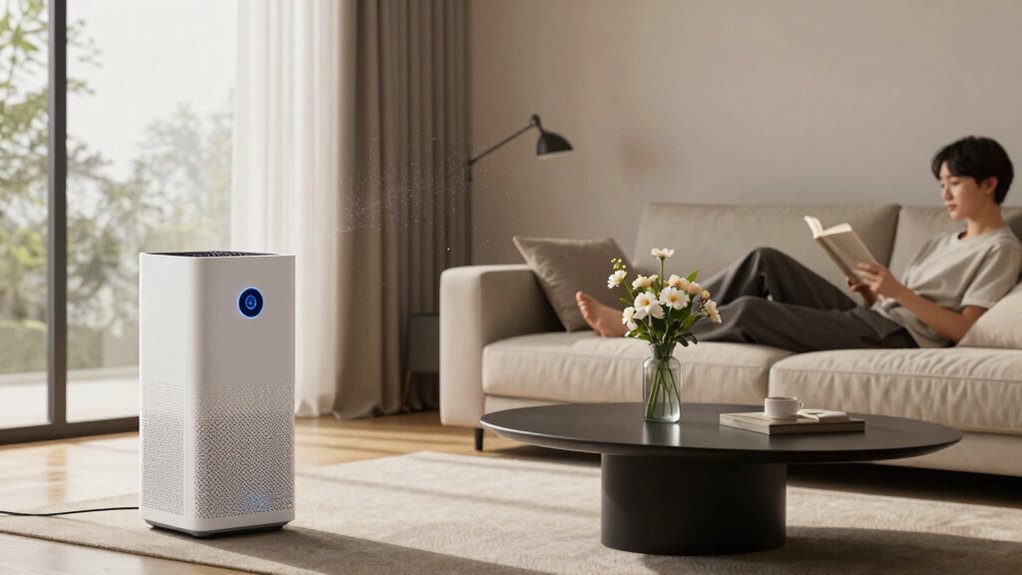

Air purifiers mainly trap airborne particles like dust and pollen, but they can’t remove gases, odors, or chemicals from indoor air. Ventilation is essential for exchanging stale air and reducing pollutants, which purifiers alone can’t do effectively. Also, filters need regular maintenance to stay effective. For truly healthier indoor air, you need to combine purifiers with good ventilation, source control, and humidity management. Keep exploring to discover how a complete approach makes a real difference.
Key Takeaways
- Air purifiers mainly remove airborne particles but do not eliminate chemical gases or odors.
- They rely on proper ventilation to effectively improve overall indoor air quality.
- Filter maintenance is essential; clogged filters reduce efficiency and device lifespan.
- They cannot control humidity or prevent mold growth caused by moisture issues.
- A comprehensive approach, including ventilation and source control, is necessary for healthier indoor environments.
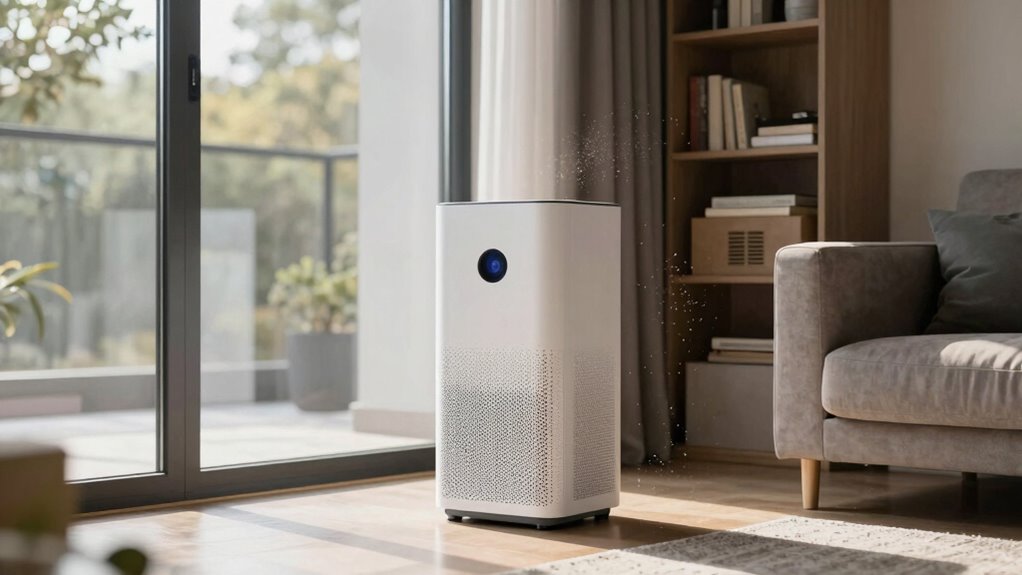
Have you ever wondered if an air purifier alone can truly make your indoor air safe? It’s a common question, especially when you’re trying to improve the air quality in your home or office. While air purifiers are effective at capturing airborne particles like dust, pollen, and pet dander, they can’t do everything. Their effectiveness depends heavily on ventilation, which is how well fresh air is circulated and exchanged in your space. If you rely solely on an air purifier without guaranteeing proper ventilation, you might still be trapping pollutants inside. Ventilation effectiveness is key to diluting indoor contaminants, bringing in fresh air, and removing stale, polluted air. Without it, even the best air purifier can only do so much, leaving behind odors, chemicals, and other pollutants that linger in your indoor environment.
Another important aspect often overlooked is filter maintenance. An air purifier’s filters need regular cleaning or replacement to perform at its best. When filters become clogged with dust and debris, they lose efficiency and fail to trap particles effectively. This not only diminishes the purifier’s ability to clean your air but can also cause it to work harder, increasing energy consumption and reducing its lifespan. If you neglect filter maintenance, you might believe the purifier isn’t working properly when, in reality, it’s simply due for a filter change. Proper maintenance ensures the device functions at peak performance, but it doesn’t address other issues like chemical pollutants or humidity levels. Regularly monitoring filter lifespan and following proper replacement routines are essential for sustained effectiveness. Additionally, understanding air quality factors can help you identify which improvements are most necessary for your environment.
It’s also important to understand that air purifiers primarily target particles in the air but often fall short when it comes to gases, odors, and humidity control. For example, volatile organic compounds (VOCs) emitted from furniture, cleaning products, or paints are often not captured effectively by standard filters. Without addressing these sources directly or improving ventilation, these pollutants can accumulate over time. Additionally, humidity levels play a significant role in overall indoor air quality. High humidity can foster mold growth, while low humidity can cause discomfort and respiratory issues. Relying solely on an air purifier doesn’t tackle these physical aspects of indoor air quality. Incorporating proper ventilation strategies and addressing sources of indoor pollution are essential for a comprehensive approach to healthier indoor environments. Moreover, considering the effectiveness of different filtration technologies can help you choose the right solution for your specific needs.
In essence, an air purifier is a helpful tool, but it’s just one part of a thorough approach. To truly improve your indoor air quality, you need to take into account ventilation effectiveness, maintain your filters regularly, and address other sources of indoor pollutants. Combining these strategies will give you a much more effective solution than relying on an air purifier alone.

MOOKA Air Purifiers for Home Large Room up to 1076ft², H13 True HEPA Air Filter Cleaner, Odor Eliminator, Remove Smoke Dust Pollen Pet Dander, Night Light, B-D02L White
- Large Coverage Area: Covers up to 1076 ft² with 6 air changes/hour
- Effective True HEPA Filter: Captures pet dander, smoke, dust, pollen, and odors
- Quiet and Energy Efficient: Operates at 20dB, energy-saving brushless motor
As an affiliate, we earn on qualifying purchases.
As an affiliate, we earn on qualifying purchases.
Frequently Asked Questions
Can Air Purifiers Remove All Indoor Air Pollutants?
Air purifiers can’t remove all indoor air pollutants due to their limitations. They mainly target airborne particles like dust, pollen, and pet dander, but struggle with gases, VOCs, and odors. To improve indoor air quality fully, you need good ventilation, source control, and regular cleaning alongside an air purifier. Relying solely on an air purifier leaves some pollutants behind, so it’s a part of a broader approach to cleaner indoor air.
How Often Should Filters in Air Purifiers Be Replaced?
You should replace your air purifier filters every 6 to 12 months, depending on filter lifespan and usage. Coincidentally, this timing often aligns with seasonal changes when indoor air quality fluctuates. Regular replacement maintains efficiency and guarantees cleaner air. Check your specific model’s recommendations, as some filters need more frequent changes, especially if you have pets or allergies. Staying attentive to filter replacement frequency helps your purifier operate at its best.
Do Air Purifiers Eliminate Odors Effectively?
Air purifiers can be effective at reducing odors, especially if they include activated carbon filters. However, they primarily mask odors rather than completely eliminate them. Keep in mind, the filter lifespan impacts their effectiveness; over time, filters become less capable at odor absorption. Regularly replacing filters guarantees peak performance, but for persistent smells, combining air purifiers with proper ventilation or odor masking products yields better results.
Are Air Purifiers Safe for Pets and Children?
Air purifiers are generally safe for pets and children when used properly, but you should choose models with non-toxic filters and avoid ozone generators. Pet safety and children’s health depend on regular maintenance, like changing filters, and ensuring the device is placed out of reach. Always read manufacturer instructions, and consult your vet or pediatrician if you have specific concerns about allergies or sensitivities.
What Maintenance Is Required for Optimal Air Purifier Performance?
To keep your air purifier running smoothly, you need a maintenance checklist that’s as simple as changing filters and cleaning vents. Regularly replace filters before the end of their lifespan, usually every 3-6 months, depending on use. Don’t forget to wipe down exterior surfaces and check for any blockages. Think of it as a spa day for your device—only it’s essential for fresh air, not relaxation.
Conclusion
While air purifiers can certainly help brighten the air in your space, they’re just one piece of the puzzle. To truly create a healthier indoor environment, you’ll want to contemplate proper ventilation, reducing sources of pollution, and maintaining good habits. Think of air purifiers as a helpful friend, but not the entire support team. By taking a well-rounded approach, you’ll be better equipped to enjoy a fresher, more comfortable home every day.