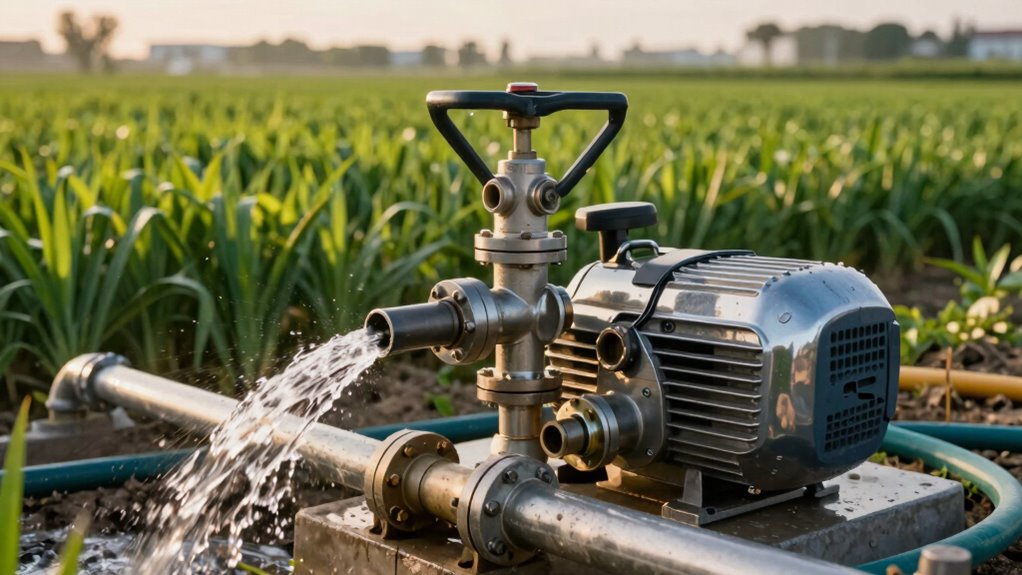
Understanding irrigation pumps involves knowing how flow and head affect performance. Flow measures how much water your pump delivers, while head indicates the height water can be lifted. Picking the right size means balancing these factors to match your field’s needs—using a pump too small can lead to under-watering, while too large wastes energy. To guarantee efficiency and longevity, choosing the correct pump size is key. Keep exploring to learn how to optimize your irrigation system effectively.
Key Takeaways
- Flow measures the volume of water a pump can deliver per minute, essential for meeting irrigation demands.
- Head indicates the maximum height water can be lifted, affecting coverage over elevation changes.
- Proper pump sizing balances flow and head to ensure efficient, adequate water delivery without waste.
- Selecting a pump with appropriate capacity prevents under- or over-watering and minimizes energy costs.
- Regular maintenance enhances pump efficiency, prolongs lifespan, and optimizes performance for your irrigation system.
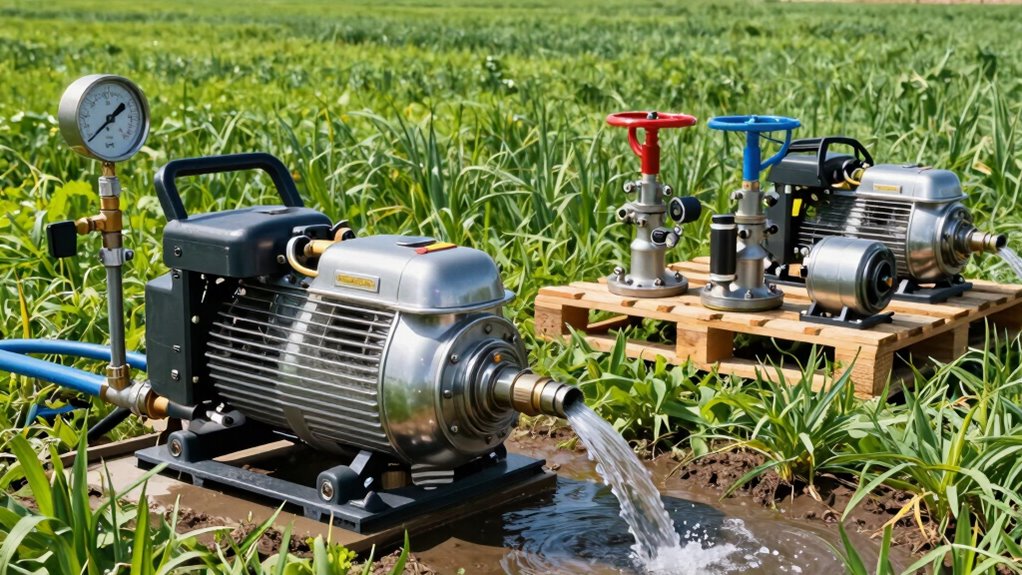
Have you ever wondered how farmers efficiently water large fields? The secret lies in choosing the right irrigation pump and maintaining it properly. Pump maintenance is vital because a well-maintained pump runs smoothly, uses less energy, and lasts longer. When your pump is in top shape, it operates at peak energy efficiency, meaning you get the most water flow for the least power consumption. Regular inspections, cleaning filters, checking seals, and lubricating moving parts help prevent breakdowns and keep your system running at maximum energy efficiency. Neglecting maintenance can lead to decreased performance, higher energy costs, and even costly repairs down the line.
Proper pump maintenance boosts efficiency, reduces costs, and prolongs lifespan of your irrigation system.
Understanding flow and head is essential for selecting the right pump. Flow refers to how much water the pump can deliver in a given time, usually measured in gallons per minute (GPM) or liters per second. Head, on the other hand, is the height the pump can lift water, measured in feet or meters. To match your needs, you need to consider both. For example, if you’re irrigating a large field with uneven terrain, you’ll want a pump that can deliver a high flow rate while overcoming the elevation differences—this means selecting a pump with an adequate head capacity. Picking a pump that’s too small will result in insufficient water, while one that’s too large can waste energy and increase operational costs.
Energy efficiency plays a significant role in your overall irrigation operation. An efficient pump reduces electricity bills and minimizes environmental impact. Modern pumps often come with features like variable frequency drives (VFDs), which adjust the motor speed to match real-time demands, further improving energy efficiency. Regular pump maintenance not only prolongs the lifespan of your equipment but also keeps it running at maximum energy efficiency. When your pump operates smoothly and efficiently, you save money, conserve resources, and ensure your crops get the right amount of water without waste. Additionally, selecting a pump with appropriate flow and head capacity ensures optimal performance and energy savings, preventing over- or under-watering your crops. Picking the correct size and maintaining it properly are key steps toward a sustainable, cost-effective irrigation system.

ECO-WORTHY 110V AC Fresh Transfer Diaphragm Water Pump On Demand 5.5GPM 70PSI High Pressure Water Booster Pump 110 Volt with Pressure Switch for Irrigation Garden Hose Sprinkler Home RV
Diaphragm Pump Specifications: 110V AC water pump features 5.5 gallons per minute water flow, the pressure switch is…
As an affiliate, we earn on qualifying purchases.
As an affiliate, we earn on qualifying purchases.
Frequently Asked Questions
How Often Should Irrigation Pumps Be Maintained?
You should maintain your irrigation pump at least once a year to guarantee peak performance and extend its lifespan. Regular maintenance, including checking for leaks, lubricating moving parts, and cleaning filters, helps prevent breakdowns. Follow a scheduled maintenance routine, especially before peak usage seasons. Proper care now keeps your pump running efficiently, reduces repair costs, and maximizes its lifespan, saving you time and money in the long run.
Can I Upgrade My Existing Pump for Better Efficiency?
Yes, you can upgrade your existing pump for better efficiency, focusing on pump durability and efficiency upgrades. First, evaluate your current system’s performance and identify areas where improvements are needed. Consider installing a more energy-efficient model or adding variable frequency drives (VFDs) to optimize flow and reduce energy consumption. Regular maintenance and choosing a pump with higher efficiency guarantees longer durability and better overall performance.
What Are Signs My Pump Needs Repair?
You’ll know your pump needs repair if it starts making unusual pump noise or if you notice leaks around fittings or seals. Increased noise often signals mechanical issues, while leaks can cause pressure drops or inefficiency. Regular leak detection and listening for abnormal sounds help catch problems early. Addressing these signs promptly guarantees your irrigation system stays efficient and prevents costly damage.
Are There Eco-Friendly Irrigation Pump Options?
Yes, eco-friendly irrigation pump options exist. You can choose solar-powered pumps, which use renewable energy and reduce electricity consumption. Additionally, look for pumps made from biodegradable materials, minimizing environmental impact. These options help you conserve resources and lower your carbon footprint, making your irrigation system more sustainable. Switching to solar or eco-friendly materials is a great step toward environmentally responsible gardening and farming practices.
How Does Pump Size Affect Energy Consumption?
Imagine you’re back in the days of steam engines—your pump size greatly impacts energy consumption. When you choose the right pump sizing, it boosts energy efficiency and prevents waste. Oversized pumps use more power than needed, wasting fuel and increasing costs, while undersized ones struggle to meet demands. Proper pump sizing guarantees you operate efficiently, save energy, and keep your irrigation system running smoothly, just like a well-oiled machine.

Aquastrong Sump Pump 1 HP 4500 GPH Submersible Water Pump Thermoplastic Portable Utility Pump High Flow Water Removal for Swimming Pool Garden Pond Basement Window Wells with 10ft Long Power Cord
Efficient Sump Pump: Aquastrong sump pump with 1HP powerful motor. Draining water up to 4500GPH Per Hour( 75…
As an affiliate, we earn on qualifying purchases.
As an affiliate, we earn on qualifying purchases.
Conclusion
Think of choosing the right irrigation pump as selecting the perfect key for a lock. Just as a key must fit perfectly to turn smoothly, your pump needs the right flow and head to release your garden’s potential. When you understand these concepts, you’re equipped to make a confident choice, ensuring your plants get just what they need. With the right pump, your irrigation system becomes a well-oiled machine, thriving and blooming like a beautiful garden unlocked by the perfect key.
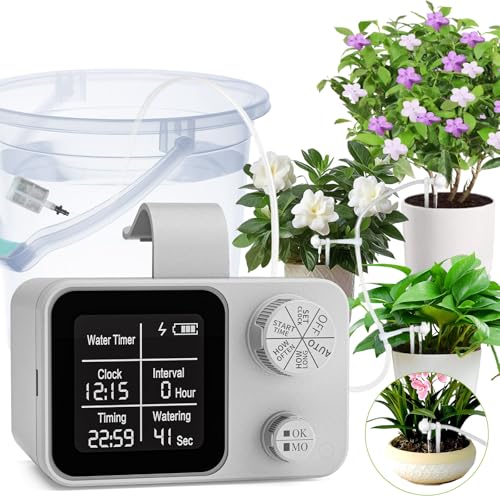
Automatic Plant Waterer Indoor Plant Watering Devices System, Self Drip Irrigation System Kit for Indoor Outdoor Garden, Adjustable Drippers, Water 15 Plants
⏰ Customizable Watering Schedule: This automatic plant waterer offers flexible timing to meet the needs of different plants….
As an affiliate, we earn on qualifying purchases.
As an affiliate, we earn on qualifying purchases.

Aquastrong 115V Shallow Well Garden Pump, Stainless Steel, 1320 GPH, Water Transfer Draining Irrigation Sprinkler Pump, for Lawn,Garden,1.6 HP Portable
1.6 HP motor can deliver water up to 164ft. The powerful suction can reach Max.Flow 1320 GPH at…
As an affiliate, we earn on qualifying purchases.
As an affiliate, we earn on qualifying purchases.