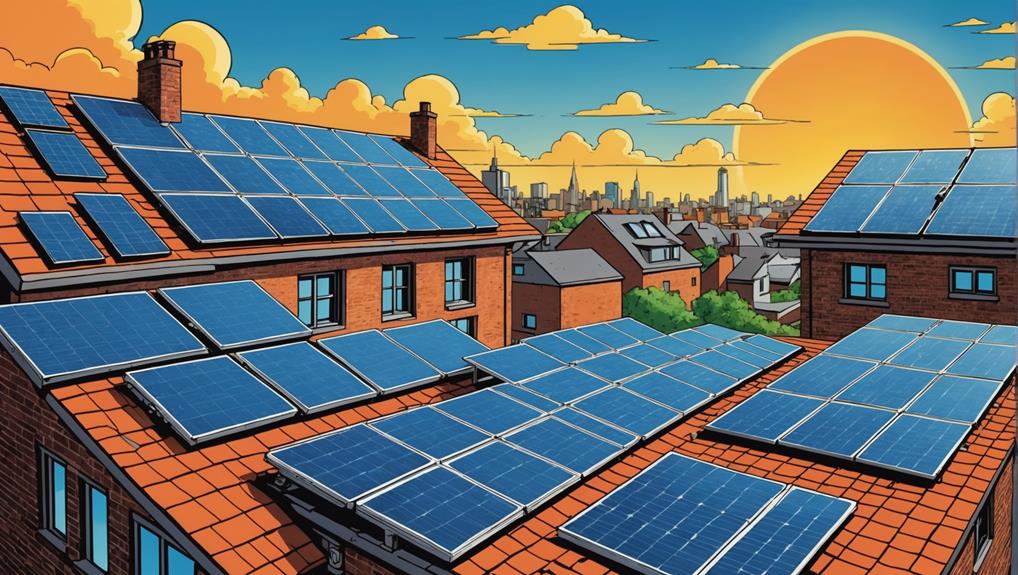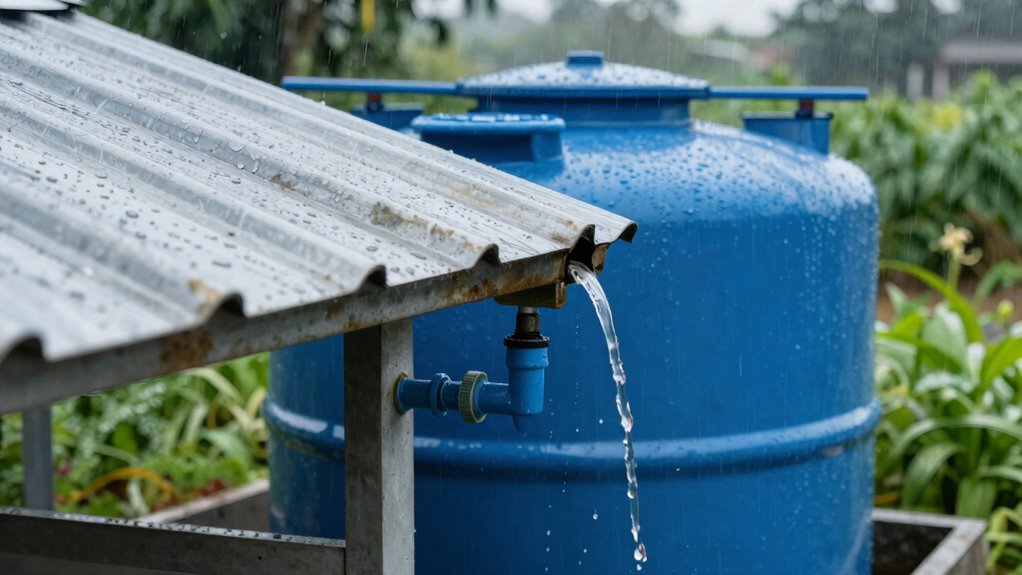
To start rainwater harvesting, you should collect water from a clean catchment surface like your roof, ensuring it’s made of non-toxic materials. Use gutters and downspouts to direct water into storage tanks, keeping them sealed and properly maintained. Install filters like inlet screens, and add a first-flush diverter to remove debris and dirty runoff. These steps help improve water quality and system efficiency—if you continue, you’ll discover how to optimize every part of your setup.

Get garden gear delivered free with Prime
- Fast, free delivery on millions of items
- Prime Video, Amazon Music and more included
- Member-only deals all year
Key Takeaways
- The catchment area, often a roof, collects rainwater, requiring clean surfaces for quality water collection.
- Gutter systems direct water from the catchment to storage tanks, needing regular maintenance to prevent debris buildup.
- Storage tanks should be sealed with non-toxic materials to prevent contamination and mosquito breeding.
- First-flush diverters remove initial runoff that contains dirt and pollutants, improving water quality.
- Proper filtration, including inlet screens and diverters, is essential for maintaining clean rainwater suitable for intended uses.
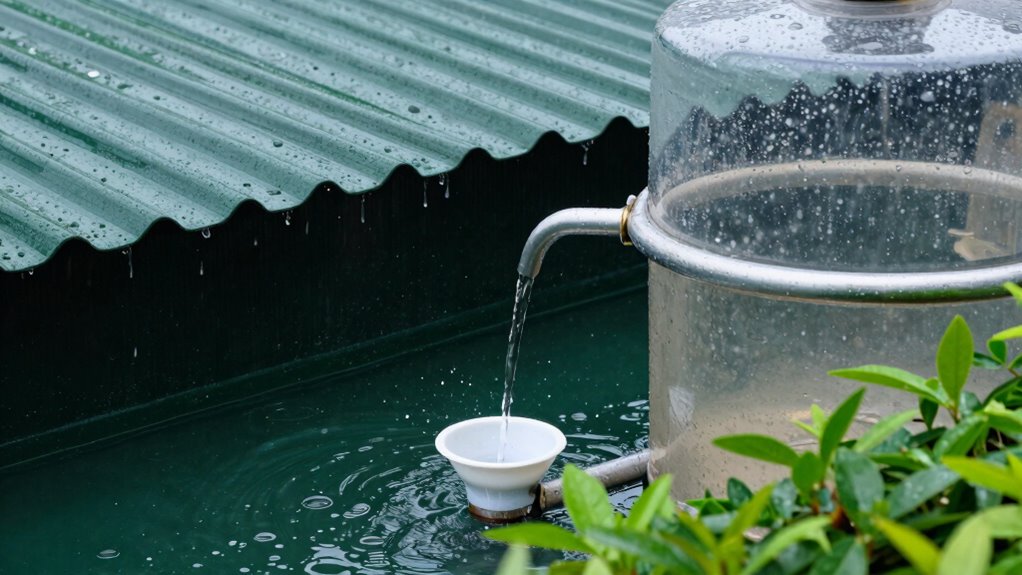
Rainwater harvesting is a simple yet effective way to collect and store rainwater for later use. When you set up a harvesting system, you’re essentially capturing the rain that falls on your roof or other surfaces, then directing it into storage containers. One of the most important aspects to consider is rainwater quality. The water that you collect can vary in cleanliness depending on the surfaces it contacts and the system’s components. For example, rain falling on a clean roof made of non-toxic materials usually provides better quality water. However, if your roof has debris, bird droppings, or other pollutants, your harvested rainwater might require filtration or treatment before it’s suitable for drinking or irrigation.
Your harvesting system consists of several key components that influence both the efficiency and quality of the water collected. First, you need a catchment area, typically your roof, which acts as the initial surface to gather rainwater. The gutters and downspouts are critical components that channel water away from the roof and direct it toward your storage system. Properly maintained gutters prevent debris build-up and reduce contamination, ensuring better water quality. When you choose storage, tanks or cisterns should be made from non-toxic, durable materials like plastic or concrete, and they must be sealed to prevent mosquito breeding and contamination. The inlet screen or first-flush diverter is another essential component; it helps remove the initial runoff, which often contains dirt, leaves, or bird droppings, thereby improving the overall water quality.
Maintaining the integrity of these harvesting system components is vital. Regular cleaning of gutters, screens, and filters ensures that debris doesn’t clog your system or degrade water quality. Installing a first-flush system is a smart move—this device diverts the initial flow of rainwater away from your storage tank, carrying away contaminants before they enter your reservoir. Additionally, understanding the importance of water quality can help you determine appropriate filtration and treatment methods for various uses. When you’re considering rainwater quality, keep in mind that it can be used for many purposes, but if you plan to drink it, proper filtration and treatment are necessary. For irrigation or toilet flushing, standard filtration may suffice, but always assess the water’s purity to prevent damage to your plants or appliances.
rainwater harvesting storage tank
As an affiliate, we earn on qualifying purchases.
As an affiliate, we earn on qualifying purchases.
Frequently Asked Questions
How Much Rainwater Can a Typical System Collect Annually?
A typical rainwater harvesting system can collect about 600 to 1,200 gallons of water annually, depending on your catchment size and rainfall. Your rainwater efficiency depends on local rainfall patterns and system design. To maximize annual collection, make sure your system is well-maintained, properly sized, and free from obstructions. By doing so, you can considerably increase your rainwater harvesting potential and reduce reliance on other water sources.
What Are Common Contaminants in Harvested Rainwater?
You’ll find common contaminants in harvested rainwater come from contaminant sources like leaves, dirt, bird droppings, and dust. These introduce bacteria, viruses, and debris that can affect water quality. To stay safe, you should conduct regular water quality testing, identify potential pollutants, and implement proper filtration and disinfection methods. This proactive approach guarantees your rainwater remains clean, safe, and suitable for your intended use.
How Often Should Rainwater Storage Tanks Be Cleaned?
You should clean your rainwater storage tanks at least twice a year to maintain a proper maintenance schedule and prevent contamination. Regular cleaning removes debris, algae, and sediment that can harbor bacteria. After heavy storms or if you notice odors or discoloration, clean the tank promptly. Consistent maintenance guarantees safe, clean water, reduces health risks, and prolongs your system’s lifespan, keeping contamination prevention effective and your water quality high.
Can Rainwater Harvesting Be Used for All Household Needs?
Imagine filling your daily glass with rain’s pure promise—yes, rainwater harvesting can meet most household needs. But, to guarantee rainwater quality, you need regular system maintenance to keep it safe. While it’s great for toilets, laundry, and gardening, using it for drinking requires proper filtration and treatment. So, with diligent upkeep, your rainwater can become a reliable, eco-friendly source for many household chores.
What Permits Are Required for Installing a Rainwater Harvesting System?
You need to check your local regulations before installing a rainwater harvesting system. Typically, you must submit permit applications to your municipality or relevant authorities to meet legal requirements. These permits guarantee your system complies with safety and health standards. Contact your local building department or water authority to find out specific permit procedures and any documentation needed, so you can install your system legally and avoid potential penalties.
Conclusion
Now that you know the basics of rainwater harvesting, you’re like a gardener planting seeds for a sustainable future. By understanding catchment, storage, and first-flush, you can turn your roof into a treasure chest of clean water. Think of it as catching rain’s gentle kiss—transforming a simple downpour into a gift that keeps giving. With these simple steps, you’re ready to make every drop count and nurture a greener, more resilient world.
Halloween Picks
halloween
As an affiliate, we earn on qualifying purchases.