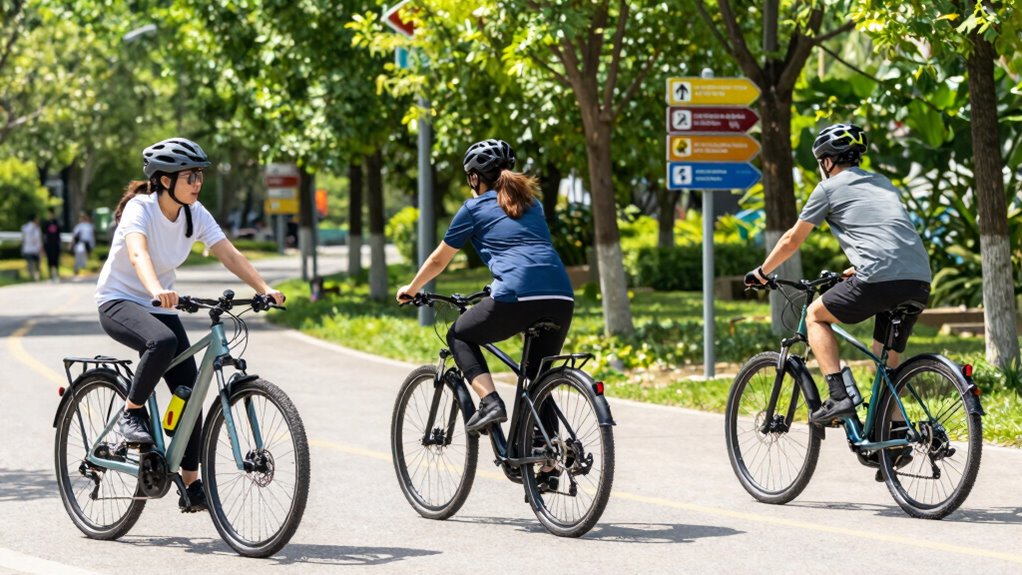
Understanding e-bike classes helps you know where you can ride. Class 1 bikes, with pedal assistance up to 20 mph, are typically allowed on bike lanes and shared-use paths. Class 2 bikes, which have throttle and also max out at 20 mph, may face restrictions and are sometimes considered motorized vehicles. Class 3 bikes, reaching speeds of 28 mph with pedal assist, are often limited to streets and bike routes. Knowing these rules helps you stay compliant on your rides.
Key Takeaways
- Class 1 e-bikes are allowed on bike lanes, shared-use paths, and bicycle streets where local laws permit.
- Class 2 e-bikes may be restricted from bike lanes, depending on city regulations and signage.
- Class 3 e-bikes are typically limited to streets and designated bike routes, often prohibited from bike lanes.
- Signage and local laws determine specific riding zones for each e-bike class; always obey posted signs.
- Understanding e-bike classifications helps ensure compliance with regulations and safe riding in different areas.
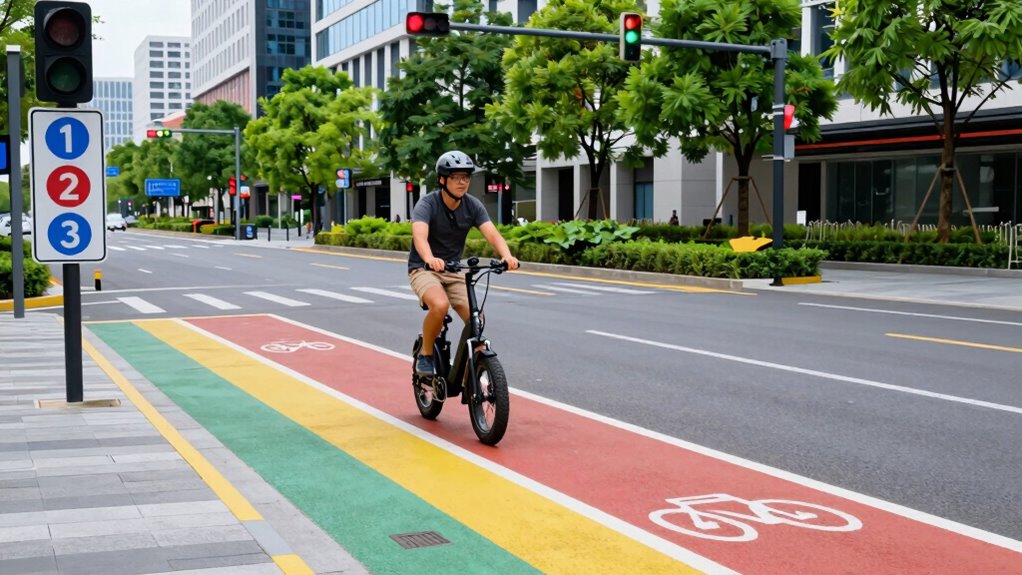
E-bike classes and riding rules can seem complicated at first, but understanding them is essential for safe and legal riding. Knowing which class your e-bike falls into and how that impacts where you can ride helps you avoid fines or accidents and guarantees you’re respecting local laws. The different e-bike classes—Class 1, 2, and 3—each have specific regulations about speed, motor power, and where you’re allowed to operate. These rules are often connected to electric scooter regulations, which frequently share similar guidelines, especially in urban areas. Additionally, bike lane signage plays a vital role in guiding you on where you can ride safely and legally. Recognizing and obeying these signs prevents confusion and helps you stay compliant with local laws.
Class 1 e-bikes are pedal-assist bikes that provide power only when you’re pedaling, with a maximum motor-assisted speed of 20 mph. These bikes are generally the most accepted and are often permitted on bike lanes, shared-use paths, and streets designated for bicycles. Because they’re similar to traditional bikes in function, many places treat them like regular bikes, provided you follow posted bike lane signage. Electric scooter regulations often align with Class 1 rules, especially in cities that restrict motorized vehicles from certain paths. Watch out for signs indicating bike lane boundaries or restrictions; ignoring these can lead to fines or unsafe situations. Understanding e-bike classifications helps you navigate legal requirements more effectively.
Class 2 e-bikes have a throttle that can propel the bike without pedaling, also limited to a top speed of 20 mph. They are typically considered motorized vehicles, which impacts where you can ride. Some cities restrict Class 2 bikes from bike lanes and require you to stay on streets or bike paths designated for motorized vehicles. Pay close attention to bike lane signage—if a sign indicates a bike lane is for non-motorized bikes only, you must switch to the street or a designated area. Electric scooter regulations often specify whether they are allowed on bike lanes or shared paths, so knowing the class of your e-bike can help you navigate these rules confidently.
Class 3 e-bikes are pedal-assist bikes that can reach speeds up to 28 mph. Due to their increased speed, many jurisdictions restrict them from bike lanes and instead require riding on streets or designated bike routes. Local bike lane signage will often specify whether fast e-bikes are permitted, and it’s crucial to follow these signs to stay within legal boundaries. Since Class 3 bikes are considered faster and more powerful, some areas require riders to wear helmets or have specific licenses. Understanding electric scooter regulations in your area can help you determine if modifications are needed for your e-bike to comply with local laws.
Frequently Asked Questions
Can I Ride an E-Bike on Mountain Trails?
You can ride an e-bike on mountain trails, but you need to check mountain trail regulations first. Off-road e-bike rules differ by location, so some trails may prohibit e-bikes altogether or restrict certain classes. Always look for posted signs or contact local authorities to guarantee you’re compliant. Respect trail regulations and other trail users, and stay on designated paths to protect the environment and avoid fines.
Are There Age Restrictions for E-Bike Riders?
Yes, there are age restrictions for e-bike riders. You typically need to be at least 14 or 16 years old, depending on your state or local laws. Licensing requirements may also apply, especially for higher-powered bikes. Always verify your area’s specific regulations before riding. Following these rules helps ensure your safety and legal compliance while enjoying your e-bike adventures.
Do E-Bike Laws Vary by City or State?
Yes, e-bike laws vary by city and state. You need to check local regulations because rules can differ considerably, affecting where and how you can ride. Some areas require licensing or registration, while others don’t. Always stay informed about local regulations before riding to avoid fines or penalties. This way, you guarantee you’re following the rules and enjoying your e-bike ride responsibly.
Can I Ride a Class 3 E-Bike on Bike Paths?
Yes, you can ride a Class 3 e-bike on bike paths, but it depends on local bike lane regulations and state laws. Some areas restrict Class 3 bikes from certain bike paths or require e-bike licensing. Always check your city or state’s bike lane regulations and licensing requirements before riding, as rules vary widely. Staying informed guarantees you ride legally and safely on designated bike paths.
What Safety Gear Is Required for E-Bike Riders?
You’ll want to gear up before hitting the road; a helmet is usually required by law, and wearing reflective gear is highly recommended for visibility. Always check local regulations, but generally, you should wear a properly fitted helmet and use reflective clothing or accessories, especially during low-light conditions. Staying visible and protected keeps you safe, so don’t skip these essentials on every ride.
Conclusion
Understanding the different e‑bike classes and their rules is like having a map for an exciting journey—you stay safe and enjoy every mile. Remember, Class 1 and 2 bikes are more flexible, but Class 3 bikes demand caution and adherence to specific paths. By following these guidelines, you can ride confidently and explore with the ease of a bird soaring through the sky. Stay informed, stay safe, and keep your adventures riding smoothly.