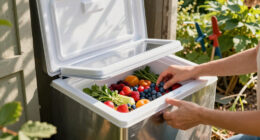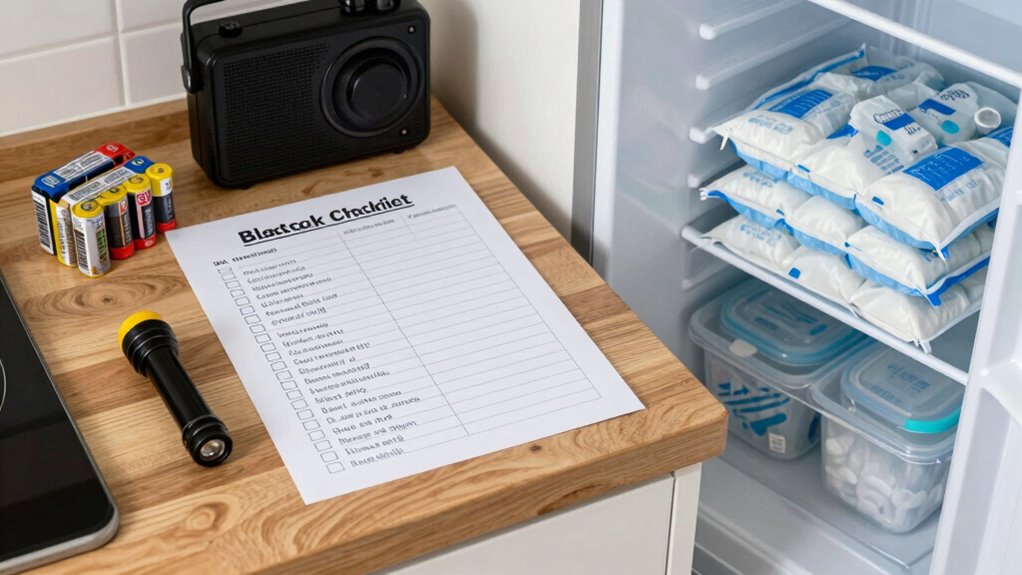
In the first 15 minutes of a blackout, you should quickly unplug or switch off appliances, keep your freezer door closed, and verify that your freezer is full to retain maximum chill. Transfer any highly perishable items to a cooler with ice if needed. Make certain emergency supplies like bottled water, snacks, and a battery-powered radio are accessible. Acting swiftly now can prevent spoilage and protect your food—continue to learn how to optimize your response effectively.
Key Takeaways
- Keep the freezer door closed immediately to preserve cold air and extend freezing time.
- Transfer perishable items into a cooler with ice packs if the outage persists beyond 4 hours.
- Confirm freezer is full to maximize insulation and cold retention during the blackout.
- Unplug or switch off non-essential appliances to prevent overload when power returns.
- Prepare backup power sources, like portable generators, to maintain critical refrigeration if outages last longer.
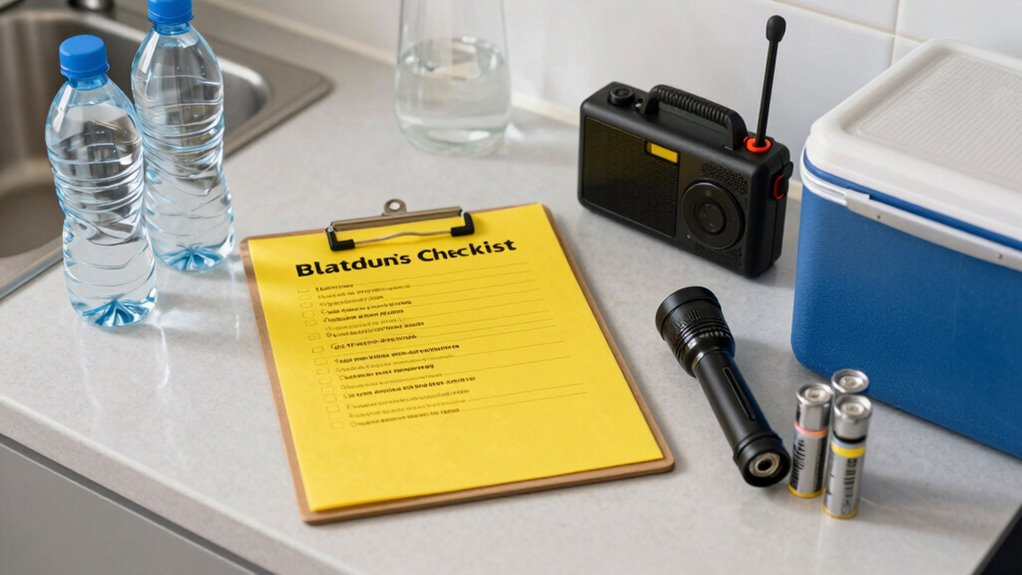
A blackout can happen unexpectedly, leaving you without power and disrupting your daily routine. When the lights go out, your immediate concern is often the safety of your food, especially if you rely heavily on your freezer to store perishables. That’s why being prepared with the right emergency supplies and understanding power outage preparedness can make all the difference. In the first 15 minutes of a blackout, you have a essential window to act that can save your frozen goods from spoiling and prevent unnecessary waste.
Start by gathering your emergency supplies. Keep a cooler and ice packs nearby so you can transfer perishable items if the power outage lasts longer than a few hours. It’s smart to have a battery-powered or hand-crank radio, extra batteries, and a flashlight within reach. These tools will help you stay informed and navigate the outage safely, especially if it extends into the night. Additionally, having a supply of bottled water and non-perishable snacks ensures you and your family remain comfortable and hydrated even if your food supplies are temporarily compromised.
Power outage preparedness isn’t just about having supplies; it’s about knowing what to do immediately when the blackout hits. First, switch off or unplug appliances and electronics, particularly your refrigerator and freezer. This prevents power surges when electricity is restored and helps conserve the remaining cold inside. For your freezer, keep the door closed to maintain the internal temperature as long as possible—typically up to 48 hours if unopened. If you notice your freezer is full, the frozen items will stay colder longer, giving you more time to decide how to handle them.
During those critical initial minutes, check the status of your emergency supplies. Confirm that your cooler is stocked with ice and that your backup power sources, like portable generators, are ready to activate if needed. If the outage persists, consider transferring highly perishable items into the cooler to keep them cold longer. Keep a record of what’s in your freezer, so you’re aware of what needs priority if you need to discard spoiled food. Staying calm and organized helps you make quick decisions that protect your food and safety. Understanding home appliance efficiency can also help reduce electrical load and prevent overloads during power restoration.
portable freezer thermometer
As an affiliate, we earn on qualifying purchases.
As an affiliate, we earn on qualifying purchases.
Frequently Asked Questions
How Long Can My Freezer Keep Food Frozen During a Blackout?
During a power outage, your freezer can keep food frozen for about 24 to 48 hours if it remains unopened. To maximize this time, avoid opening the freezer, as each door opening raises the temperature. Keep the freezer door closed to maintain its temperature and prevent spoilage. If the power outage lasts longer, consider using ice or dry ice to help keep the freezer cold and preserve your food.
What Are the Signs My Freezer Has Lost Its Cold?
You’ll notice your freezer has lost its cold if you see temperature fluctuations or if food starts to thaw. Additionally, pay attention to odor changes; a sour or off smell indicates spoilage. When these signs appear, it’s best to check the temperature with a thermometer, and if the freezer isn’t cold enough, you should prioritize using or discarding perishable items to prevent waste and foodborne illness.
Can I Use Dry Ice to Preserve My Freezer’s Contents?
Yes, you can use dry ice to preserve your freezer’s contents during a power outage. Place dry ice carefully inside, ensuring it doesn’t touch your food directly to avoid freezer burns. Always follow safety precautions—wear gloves, handle it in well-ventilated areas, and keep it away from children and pets. Use enough dry ice to maintain the cold, but don’t overdo it, to prevent dangerous carbon dioxide buildup.
How Often Should I Check My Blackout Preparedness Supplies?
You should check your blackout preparedness supplies at least once every three to six months. During these checks, focus on storage organization and inventory management to guarantee everything is accessible and well-stocked. Update your supplies as needed, replacing expired items and adjusting for any changes in your household. Regular inspections help you stay ready, so you can quickly respond and keep your freezer contents safe during a power outage.
What Safety Precautions Are Needed When Handling Emergency Cooling Methods?
You might worry about handling emergency cooling methods safely, but staying cautious keeps your food safe. Always wear gloves and eye protection to prevent frostbite or splashes from cold packs or dry ice. Work in a well-ventilated area to avoid CO2 buildup. Remember, proper handling precautions are essential for food safety and your safety—never rush, and follow instructions carefully to prevent accidents.
battery-powered emergency radio
As an affiliate, we earn on qualifying purchases.
As an affiliate, we earn on qualifying purchases.
Conclusion
Preparing your freezer for a blackout is like locking your treasure chest before a storm—peace of mind is worth the effort. Remember, a simple checklist can make all the difference; I once saw a family save hundreds of dollars’ worth of food because they acted swiftly during a blackout. Just 15 minutes of readiness can turn chaos into control. Stay prepared, stay calm, and let your efforts safeguard your stored treasures when the lights go out.
ice packs for coolers
As an affiliate, we earn on qualifying purchases.
As an affiliate, we earn on qualifying purchases.
portable generator for home use
As an affiliate, we earn on qualifying purchases.
As an affiliate, we earn on qualifying purchases.