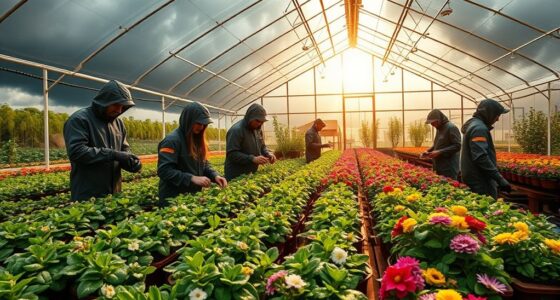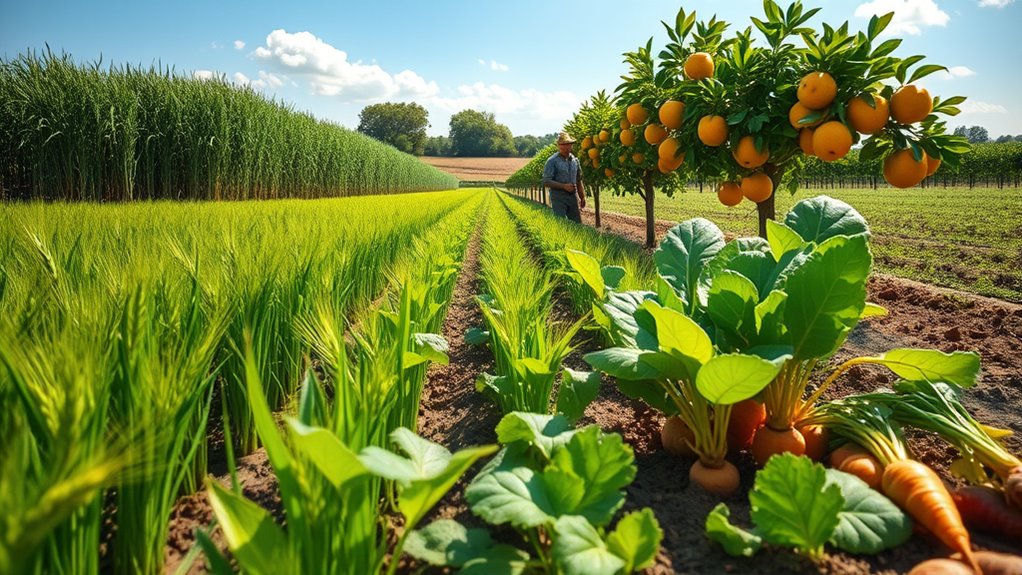
To match crops to your land’s conditions, start by testing your soil to understand its composition, drainage, and fertility. Choose drought-tolerant crops for sandy soils and crops suited for clay-heavy lands, possibly with amendments. Use efficient irrigation methods like drip systems to conserve water. Integrating soil compatibility and water management minimizes environmental impact and boosts yields. Keep exploring these strategies to create a sustainable farm tailored to your land’s unique climate and soil profile.

Get garden gear delivered free with Prime
- Fast, free delivery on millions of items
- Prime Video, Amazon Music and more included
- Member-only deals all year
Key Takeaways
- Conduct soil testing to determine composition and suitability for specific crops.
- Match drought-tolerant crops to sandy, well-drained soils to conserve water.
- Use soil amendments or select different crops for clay-heavy soils to improve structure.
- Implement efficient irrigation methods like drip systems to optimize water use and reduce waste.
- Align crop choices with land and water conditions to promote sustainable farming and reduce environmental impact.
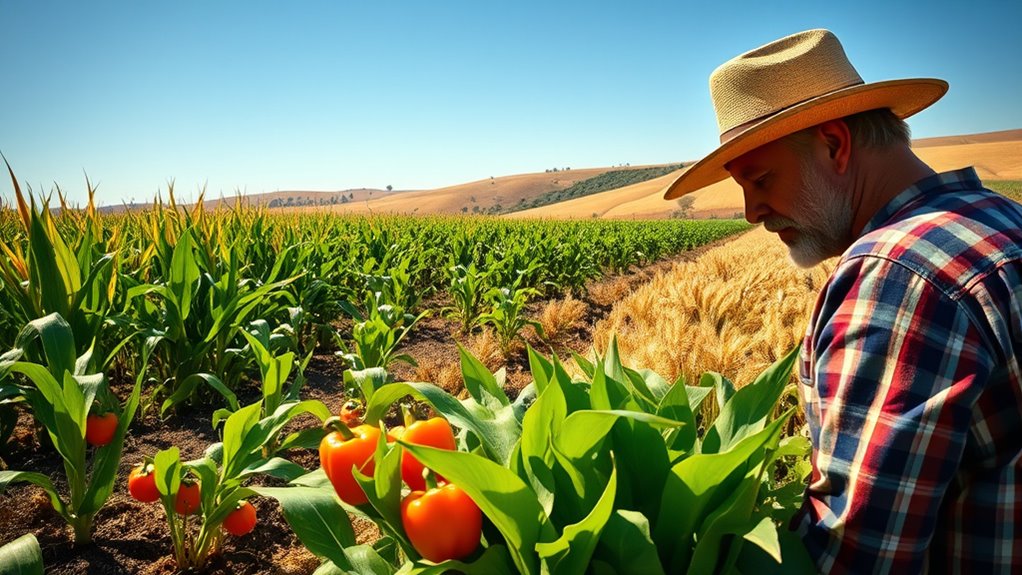
Have you ever wondered if small changes in your daily habits could help combat climate change? “Climate Recipes” offers practical, easy-to-follow strategies that empower you to reduce your carbon footprint. One impactful approach is matching your crops to the specific conditions of your land, guaranteeing they thrive while minimizing environmental harm. This begins with understanding soil compatibility. Not all soils are created equal; some are better suited for certain crops than others. By testing your soil’s composition, you can choose plants that naturally grow well in those conditions, reducing the need for fertilizers and amendments that often produce greenhouse gases. For example, if your soil is sandy and drains quickly, selecting drought-tolerant crops can prevent excess watering, conserving water and energy. Conversely, clay-heavy soils might require different crops or amendments to improve their structure, promoting healthier growth and reducing runoff. Incorporating certifications and standards into your planning can further ensure sustainable practices and environmental benefits.
Once you’ve identified the right crops for your land, focusing on efficient irrigation techniques becomes essential. Traditional watering methods can waste significant water resources, especially if not properly managed. Instead, adopt drip irrigation or soaker hoses, which deliver water directly to the plant roots, minimizing evaporation and runoff. These techniques not only conserve water but also reduce the energy needed to pump and distribute it. Timing your watering to early mornings or late evenings further enhances efficiency, preventing unnecessary evaporation caused by the sun’s heat. By fine-tuning your irrigation practices, you lower your energy consumption and lessen the carbon emissions associated with water delivery systems.
Matching crops to soil conditions and implementing smart irrigation techniques work hand in hand to create a sustainable farming or gardening system. When plants are suited to your soil, they grow more robustly and require fewer chemical inputs, which cuts down on pollution and greenhouse gases. Proper irrigation ensures that you’re not wasting water or energy, both indispensable resources in the fight against climate change. These strategies also contribute to healthier soil over time, as less unnecessary watering and chemical use help maintain soil integrity and biodiversity.
As an affiliate, we earn on qualifying purchases.
Frequently Asked Questions
How Do Soil Types Influence Crop Selection?
Soil types substantially influence your crop choices because they determine soil fertility and drainage. If you have sandy soil, you might select crops that tolerate well-draining conditions, while clay soils require crops that thrive in moisture-rich environments. You should also plan crop rotation to maintain soil health and prevent nutrient depletion, ensuring your soil remains productive and suitable for different crops over time.
What Are the Best Irrigation Methods for Specific Climates?
Imagine a hot, dry climate where efficient water use becomes essential. You should opt for drip irrigation to deliver water directly to plant roots, reducing waste. In cooler, wetter areas, sprinkler systems work well, covering larger fields uniformly. Both methods help conserve water and optimize crop growth. Choosing the right system based on your climate guarantees healthy crops and sustainable water use, making your farming more successful and eco-friendly.
How Can Farmers Adapt to Changing Climate Patterns?
To adapt to changing climate patterns, you should embrace crop diversification, which reduces risk and improves resilience. Keep an eye on climate forecasting data to anticipate shifts in weather, allowing you to modify planting schedules and select suitable crop varieties. By staying flexible and informed, you can better manage uncertainties, protect your yields, and ensure a sustainable future despite unpredictable climate changes.
Which Crops Are Most Resilient to Drought Conditions?
Drought-tolerant crops like millet, sorghum, and chickpeas are your best bet during water shortages, as they can survive with minimal watering. Studies show these varieties use up to 50% less water than traditional crops, making them highly water-efficient. By planting drought-resistant and water-efficient varieties, you can maintain yields despite drought conditions, helping you adapt effectively to climate challenges and guarantee food security on your farm.
How Do Pest and Disease Risks Vary With Climate?
You’ll notice pest outbreak patterns and disease prevalence zones shift with climate change. Warmer temperatures and increased humidity can expand these zones, making pests and diseases more common in new areas. You might see more frequent outbreaks or new pest species appearing. To protect your crops, stay vigilant, monitor environmental changes, and adapt your pest and disease management strategies accordingly, considering how climate influences these risks.
Conclusion
By matching crops to your local climate, you create a garden as resilient as a seasoned sailor steering rough seas. When you choose the right plants for your conditions, you not only boost yields but also nurture a sustainable future. Think of it as finding the perfect recipe—each ingredient in harmony with the environment. Embrace these climate recipes, and watch your garden flourish like a well-tuned symphony, resilient and full of life.
Fall Picks
fall essentials
As an affiliate, we earn on qualifying purchases.