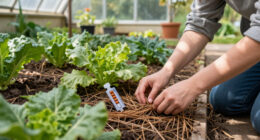
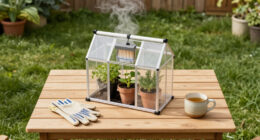
When growing greenhouse tomatoes, choose varieties based on your desired harvest style—determinate for concentrated yields or indeterminate for continuous production. Use training techniques like vertical staking or trellising to keep fruits off the ground and improve airflow, which helps prevent disease. Combining these choices with proper environmental control creates ideal growing conditions. To discover more tips on selecting varieties and training methods that maximize your greenhouse tomato success, keep exploring!

Get garden gear delivered free — and shop member deals
- Fast, free delivery on millions of items
- Access to Prime Big Deal Days deals on October 6–7
- Prime Video, Amazon Music and more included
Key Takeaways
- Choose between determinate and indeterminate tomato varieties based on harvest timing and growth habits.
- Use vertical staking or trellising to support plant growth and improve airflow.
- Regular pruning of suckers and foliage enhances fruit production and reduces disease risk.
- Maintain optimal environmental conditions—temperature, humidity, and light—for healthy growth.
- Implement hydroponic systems for precise nutrient control and a sterile, pest-resistant environment.

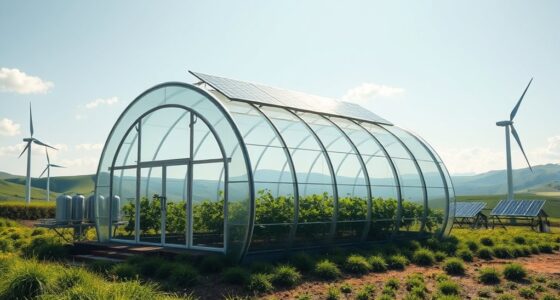
Growing tomatoes in a greenhouse offers you a controlled environment that extends the growing season and boosts production. When you choose to cultivate your tomatoes using hydroponic systems, you create an efficient setup that minimizes soil-related issues and maximizes growth potential. Hydroponic systems deliver nutrients directly to the roots through a water-based solution, allowing you to precisely control feeding schedules and guarantee ideal plant health. This method reduces the risk of soil-borne pests and diseases, which can otherwise threaten your crop. Plus, because pests are less likely to find their way into soilless systems, pest management becomes more straightforward and less reliant on chemical controls. You can focus on maintaining a clean, sterile environment, which helps keep your tomatoes healthy and reduces the need for pesticides. Implementing analytical cookies can help you monitor and optimize your environmental conditions for better crop results.
Growing tomatoes in a greenhouse with hydroponics reduces pests and soil issues, ensuring healthier plants and easier pest management.
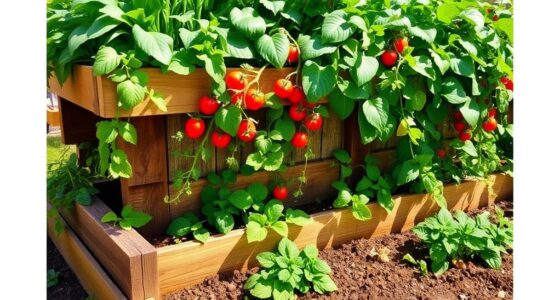
Training your tomato plants properly is essential to maximize space and increase yields. Vertical staking or trellising allows you to support the plants, keeping fruits off the ground and improving air circulation. When plants are well-supported, they’re less susceptible to fungal diseases and pest infestations, which thrive in damp, crowded conditions. Training also makes harvesting easier, guaranteeing you can pick ripe tomatoes efficiently while avoiding damage to the plant. As your plants grow, regularly pruning suckers and unnecessary foliage enhances airflow and directs energy toward fruit production, resulting in a healthier, more productive crop.
Choosing the right tomato varieties is vital for your greenhouse success. Determinate varieties tend to produce a concentrated harvest over a short period, making them ideal if you want a quick, abundant yield. Indeterminate types, on the other hand, continue to grow and produce fruit throughout the season, giving you a steady supply. Consider factors like flavor, size, and intended use when selecting varieties. Some tomatoes are better suited for slicing, while others excel as cherry or heirloom types. Understanding your goals will help you pick varieties that thrive in a greenhouse setting and respond well to your training methods.
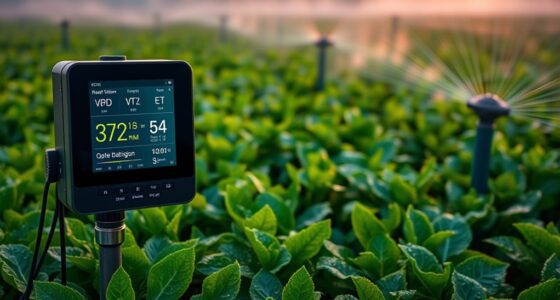
In addition to choosing the right system and varieties, you should pay close attention to environmental controls such as temperature, humidity, and light. These factors influence plant growth and fruit development. Regularly monitoring and adjusting conditions guarantees your tomatoes grow healthy, vibrant, and flavorful. Combining good training techniques with an efficient hydroponic setup and proper pest management creates a thriving environment where your greenhouse tomatoes reach their full potential. With careful planning and attention, you’ll enjoy a bountiful harvest year-round.
As an affiliate, we earn on qualifying purchases.
Frequently Asked Questions
What Is the Best Climate for Greenhouse Tomato Growth?
You want a warm, stable climate for greenhouse tomatoes, ideally with daytime temperatures around 70-75°F and slightly cooler nights. Effective climate control and temperature regulation are key to preventing stress and promoting healthy growth. Keep humidity balanced and ensure good air circulation. Maintaining these conditions helps maximize fruit production and quality, giving your tomatoes the best environment they need for thriving throughout the growing season.
How Do I Prevent Common Pests in Greenhouse Tomatoes?
To prevent common pests in your greenhouse tomatoes, start with pest identification to catch issues early. Keep your environment clean and monitor plants regularly. Use natural pest control methods like introducing beneficial insects, applying neem oil, or using insecticidal soaps. You can also manage humidity and airflow to reduce pest-friendly conditions. Consistent vigilance and natural methods help keep pests at bay, ensuring healthy, productive tomato plants.
Can I Grow Heirloom Tomato Varieties Indoors?
A wise gardener knows patience is key, so yes, you can grow heirloom tomato varieties indoors. Indoor gardening allows you to enjoy their unique flavors and preserve heirloom genetics year-round. Choose the right containers, provide ample light, and maintain consistent temperatures. With proper care, you’ll enjoy fresh heirloom tomatoes and contribute to heirloom preservation, all from the comfort of your home. It’s a rewarding way to nurture your love for unique produce.
What Are the Signs of Nutrient Deficiency in Greenhouse Tomatoes?
You can spot nutrient deficiency symptoms in your greenhouse tomatoes by observing changes like yellowing leaves, stunted growth, or uneven ripening. Deficiency detection helps you identify issues early, such as pale or purple-tinged foliage indicating a lack of nutrients like nitrogen or phosphorus. Keep an eye on leaf color, shape, and overall plant vigor to catch nutrient symptoms promptly and adjust your fertilization plan accordingly.
How Often Should I Prune My Greenhouse Tomato Plants?
Think of pruning your greenhouse tomato plants like tending a garden of whispers—gentle but essential. You should prune your plants every 7-14 days during the growing season, depending on their growth rate. Regular pruning is key to good plant maintenance, helping to control size, improve airflow, and boost fruit production. Keep an eye on new growth and remove suckers to make sure your plants stay healthy and productive.
Conclusion
Think of your greenhouse as a lush, fertile garden where your choices of tomato varieties and training methods are the guiding hands shaping its future. Like a skilled gardener tending to delicate plants, your decisions nurture growth and yield. With the right variety and proper training, your greenhouse becomes a thriving oasis, bursting with vibrant, delicious tomatoes. Embrace these tools as your trusted map, and watch your garden flourish beyond your wildest dreams.
Fall yard work Picks
leaf blowers
As an affiliate, we earn on qualifying purchases.