Smart thermostats make it easy to save energy and reduce your bills by automatically adjusting temperatures based on your habits and schedule. You can set up and control them remotely through simple app features, often in less than an hour. They learn your preferences and can even detect when you’re home or away, optimizing comfort and efficiency. Want to discover simple steps to maximize your savings? Keep exploring for all the essential tips.

Get garden gear delivered free with Prime
- Fast, free delivery on millions of items
- Prime Video, Amazon Music and more included
- Member-only deals all year
Key Takeaways
- Smart thermostats optimize energy use by adjusting heating and cooling schedules based on occupancy and habits.
- Installation is quick and compatible with most HVAC systems, typically taking less than an hour.
- Remote control via mobile apps allows for convenient adjustments and schedule management from anywhere.
- Integration with home automation and geofencing enhances efficiency by automatically adapting to presence.
- Using a smart thermostat can reduce energy bills through improved efficiency and waste reduction.
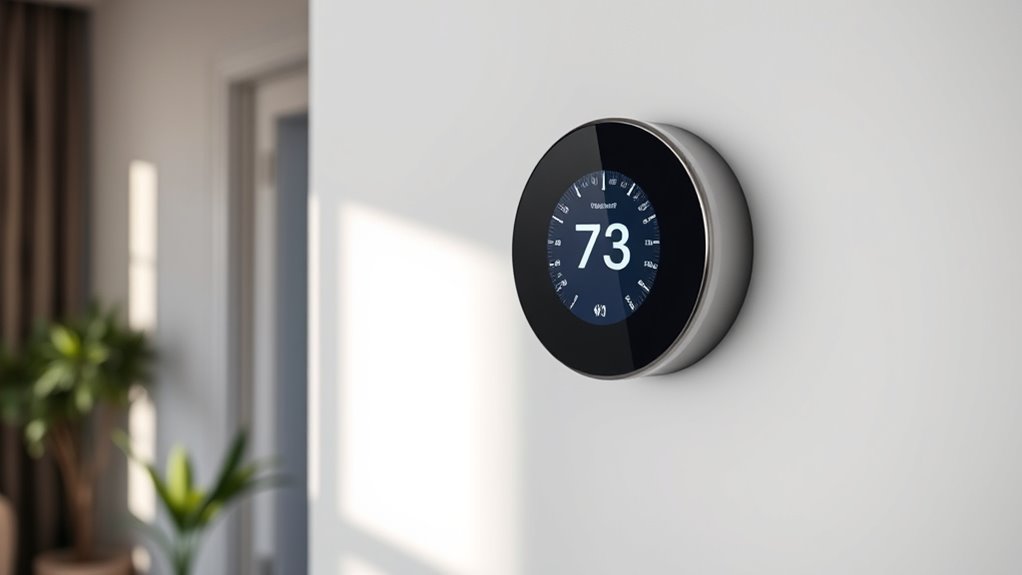
Have you ever wondered how to make your home more comfortable and energy-efficient at the same time? Smart thermostats are a great solution that can help you do just that. These devices allow you to control your home’s heating and cooling systems with ease, often through a remote control app on your phone or tablet. With a smart thermostat, you can set schedules, adjust temperatures on the go, and monitor your energy usage, all from anywhere. This flexibility maximizes energy efficiency because you’re not wasting heat or air conditioning when no one’s home or during hours when you don’t need it. Plus, the ability to control your thermostat remotely means you can fine-tune your environment without having to get up or be physically present.
When setting up a smart thermostat, the process is generally straightforward. Most models are compatible with common HVAC systems, and installation typically takes less than an hour. You’ll start by turning off your power to the heating and cooling system, removing your old thermostat, and wiring the smart device according to the instructions—usually just a few wires to connect. Once installed, you’ll turn your power back on and follow the setup prompts. These often involve connecting the thermostat to your Wi-Fi network, which is essential for remote control functionality. Once connected, you can download the corresponding app on your smartphone or tablet, giving you instant access to your thermostat’s features wherever you are.
Additionally, some smart thermostats can integrate with other home automation systems, creating a more seamless smart home experience. The real advantage of a smart thermostat lies in its ability to learn your habits over time. Many models analyze your routines and automatically adjust temperatures to optimize energy efficiency without sacrificing comfort. For example, if you typically turn down the heat at night or when you’re at work, the thermostat will remember and do this for you. Some models also offer geofencing features, which use your phone’s location to determine if you’re home or away. When you leave, the thermostat can automatically lower the temperature, saving energy; when you return, it can heat or cool your house to your preferred comfort level before you walk through the door.
Popular right now

Hisense 43-Inch E6SR Series Hi-QLED 4K UHD Smart Roku TV (2026 Model)

Hisense 55-Inch E6SR Series Hi-QLED 4K UHD Smart Roku TV (2026 Model)

Hisense 40-Inch Class QD4SR Series Hi-QLED FHD Smart Roku TV (2026 Model)
As an affiliate, we earn on qualifying purchases.
Frequently Asked Questions
Do Smart Thermostats Work With All HVAC Systems?
Not all smart thermostats work with every HVAC system. You need to check HVAC compatibility before purchasing. Some systems, like heat pumps or multi-stage units, may require specific models. Installation considerations are also important; you might need additional wiring or a C-wire for proper setup. Always verify your system’s compatibility and consult the thermostat’s guidelines to guarantee seamless integration and peak performance.
Can I Control My Thermostat Remotely From Any Device?
Yes, you can control your thermostat remotely from any device, and it’s usually straightforward. Some people worry about device compatibility, but most smart thermostats support remote access via smartphone apps or web browsers. As long as your device has internet access and is compatible with the app, you can easily adjust your thermostat from anywhere, giving you convenience and control over your home’s temperature at all times.
How Secure Is My Data With a Smart Thermostat?
Your data with a smart thermostat is generally secure, but privacy concerns do exist. Manufacturers use data encryption to protect your information from unauthorized access, ensuring your usage details stay private. However, it’s wise to stay updated on their security practices and change default passwords. Regularly reviewing privacy settings helps you control what data is shared, giving you peace of mind while enjoying remote control features.
Are There Rebates or Incentives for Installing a Smart Thermostat?
Yes, you can often find rebate programs and energy incentives when installing a smart thermostat. Local utility companies and government agencies frequently offer these programs to encourage energy efficiency. By taking advantage of rebates and incentives, you can reduce the upfront cost and save money long-term. Be sure to check your area’s specific programs and eligibility requirements, and follow the application process to maximize your savings.
What Is the Typical Lifespan of a Smart Thermostat?
Smart thermostats typically last around 10 to 15 years, depending on usage and maintenance. Their battery life varies; some models have rechargeable batteries, while others use replaceable ones, lasting about 1-2 years. Regular software updates help extend their lifespan by fixing bugs and improving performance. To maximize your thermostat’s longevity, keep it clean, update its software, and replace batteries when needed.
Conclusion
Smart thermostats make it easy for you to save energy and stay comfortable. With simple setup and smart features, you can control your home’s temperature from anywhere. Remember, “A penny saved is a penny earned,” so investing in a smart thermostat pays off in the long run. Take charge of your energy use today, and enjoy the savings and convenience it brings. After all, small changes can lead to big benefits.