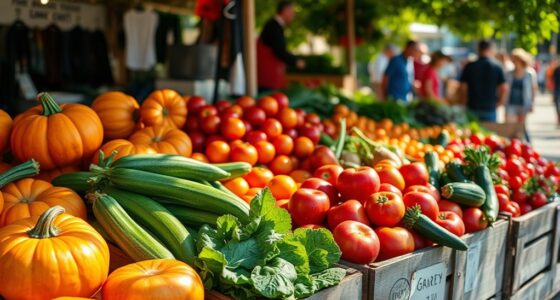

By planning your meals carefully, you can buy only what you need and use ingredients efficiently, which helps prevent waste. Incorporating leftovers into future dishes and designing meals around versatile ingredients keep food from spoiling. Creating a grocery list based on your plan reduces impulse purchases and unused items. Combining smart planning with composting scraps not only minimizes waste but also benefits the environment and your budget. Discover more ways to reduce waste through thoughtful meal strategies.

Get garden gear delivered free with Prime
- Fast, free delivery on millions of items
- Prime Video, Amazon Music and more included
- Member-only deals all year
Key Takeaways
- Meal planning helps control portion sizes and prevents excess leftovers that may spoil.
- Creating a grocery list based on planned meals reduces impulse buys and unnecessary purchases.
- Incorporating leftovers into future meals minimizes food waste and maximizes ingredient use.
- Designing meals around versatile ingredients reduces the amount of perishable items needed.
- Combining meal planning with composting of unavoidable scraps promotes sustainability and reduces landfill waste.
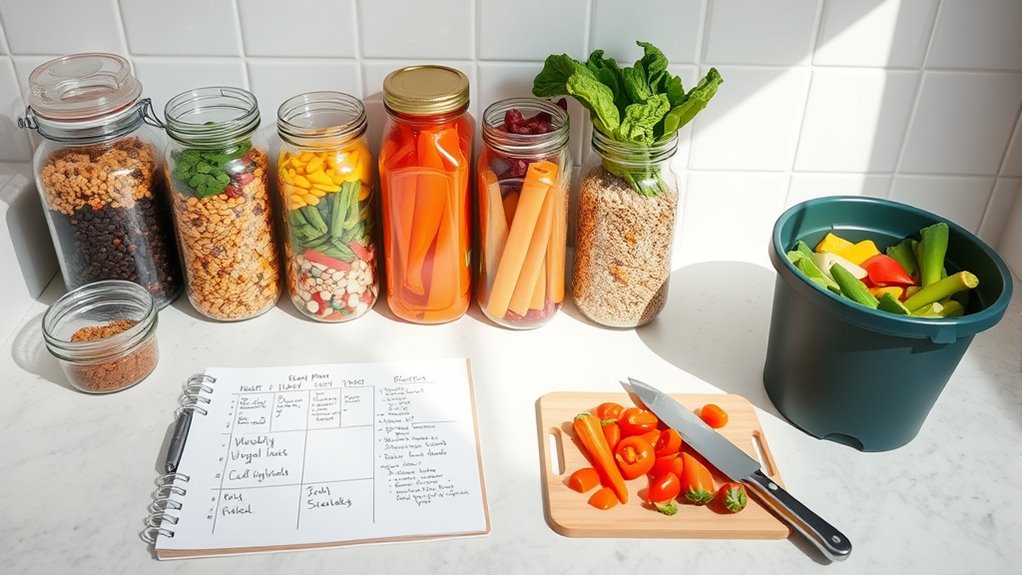
Have you ever wondered how much food ends up wasted each year? It’s a staggering amount, and much of it could be saved with simple changes like meal planning. When you plan your meals ahead of time, you gain better control over the portions you prepare, which directly reduces leftovers and prevents food from going bad before you get a chance to eat it. Portion control plays an essential role here; by serving just what you need, you avoid cooking or buying more than necessary. This not only minimizes waste but also helps you stick to your budget and maintain a healthier diet. When you plan your grocery list based on your weekly menu, you’re less likely to impulse buy or purchase items you won’t use, further cutting down on excess food that might otherwise be thrown out.
Meal planning also encourages you to think about how to use ingredients efficiently. For example, if you plan to cook chicken on Monday, you can incorporate leftovers into Tuesday’s meal, rather than letting them spoil. Additionally, by designing your meals around versatile ingredients, you reduce the variety of perishables that might otherwise go to waste. This approach means fewer trips to the store and less chance of buying items you won’t use before they expire. As you become more mindful about your shopping and cooking habits, you’ll naturally develop habits that support reducing food waste.
Use ingredients efficiently by planning meals around versatile items to minimize waste and reduce store trips.
Another important aspect of sustainable meal planning involves composting methods. When unavoidable food scraps or spoiled produce do occur, composting offers a responsible way to dispose of organic waste. You can set up a compost bin in your backyard or use community composting programs if available in your area. Composting not only diverts waste from landfills but also creates nutrient-rich soil that benefits your garden or community green spaces.
In fact, understanding proper disposal methods for waste, including toilet waste, can also contribute to reducing environmental impact by preventing plumbing issues caused by inappropriate items. By integrating composting methods into your routine, you turn what would have been waste into something valuable, closing the loop on food sustainability.
Incorporating portion control and composting methods into your meal planning creates a powerful duo for reducing food waste. Planning meals means you buy only what you need and cook appropriate portions, while composting ensures any unavoidable scraps are put to good use rather than ending up in the trash. Together, these strategies help you make a positive environmental impact while also saving money and supporting a more sustainable lifestyle. The more intentional you are about your food choices and waste management, the more you contribute to solving the global food waste problem—one meal at a time.
meal planning grocery list organizer
As an affiliate, we earn on qualifying purchases.
As an affiliate, we earn on qualifying purchases.
Frequently Asked Questions
How Can Meal Planning Save Money on Groceries?
Meal planning helps you save money on groceries by creating a focused shopping list that prevents impulse buys and unnecessary purchases. When you plan your meals, you stick to your grocery budget and avoid wasting money on ingredients you won’t use. Plus, you can buy in bulk for common items, reducing costs further. This organized approach makes grocery shopping more efficient and cost-effective, ensuring you get the most out of your budget.
What Are the Best Tools for Effective Meal Planning?
You’ll love using grocery apps and recipe organizers—they’re the best tools for effective meal planning. These apps help you keep track of ingredients, plan meals ahead, and create shopping lists effortlessly. With features like syncing across devices and meal reminders, you stay organized and avoid last-minute trips. Plus, they often include recipe suggestions, making it easy to discover new dishes and reduce waste. Give them a try and watch your meal prep become simpler!
How to Handle Unexpected Changes in Meal Plans?
When unexpected changes occur, stay flexible by adjusting your meal plan and prioritizing flexible scheduling. Keep emergency meals or quick recipes handy to adapt effortlessly. Don’t stress; instead, modify your plan by swapping ingredients or meal times. This approach helps you minimize waste, stay on track, and maintain control over your food budget while accommodating life’s surprises seamlessly.
Can Meal Planning Accommodate Dietary Restrictions?
You can definitely tailor meal planning to accommodate dietary restrictions. For instance, imagine you’re planning dinners for someone with gluten allergies; you select gluten-free grains and ingredients, guaranteeing dietary customization. By considering allergy considerations upfront, you avoid waste and ensure everyone’s needs are met. Meal planning becomes flexible, allowing you to incorporate specific dietary restrictions seamlessly, reducing waste and making mealtime enjoyable and safe for everyone involved.
How Does Meal Planning Influence Overall Food Waste Reduction?
Meal planning helps you reduce overall food waste by enabling better food preservation and smarter shopping strategies. When you plan meals, you buy only what you need, minimizing excess that often goes bad. Proper food preservation techniques keep ingredients fresh longer, while strategic shopping ensures you avoid impulse buys. This proactive approach helps you manage your supply efficiently, cut down on waste, and save money in the process.
Conclusion
By planning your meals, you take control like a captain steering a ship away from stormy seas. You’ll save money, help the planet, and enjoy fresher, tastier food. Every time you plan ahead, you’re chopping down waste just like trimming a garden hedge—making your world cleaner and more beautiful. So, start today and turn your kitchen into a waste-free zone. Remember, small steps can create big change, just like a single drop can fill an ocean.
Halloween Picks
halloween
As an affiliate, we earn on qualifying purchases.