To trellis your vines effectively, choose sturdy support structures suited to your vine type and space. Prepare your soil, set posts at proper intervals, and keep wires taut for stability. Train your vines by gentle pruning and secure them with soft ties, adjusting as they grow. Regularly inspect your system, remove dead foliage, and adjust supports as needed. For common challenges like pests or support issues, proactive maintenance is key—continue to explore these expert tips for healthier, more productive vines.
Prime for Young Adults — start your free trial
Fast free delivery, streaming and member deals for eligible 18–24 year olds.
As an affiliate, we earn on qualifying purchases.
Key Takeaways
- Prepare nutrient-rich, well-drained soil and select a support system matching your vine type and space.
- Ensure wires are taut and posts are securely anchored for a stable, durable trellis.
- Use gentle ties and regular pruning to train vines, promoting airflow and preventing damage.
- Inspect and adjust supports periodically, removing dead foliage and managing growth for optimal fruiting.
- Address stability, pests, or disease issues promptly to maintain healthy, vigorous vines.
As an affiliate, we earn on qualifying purchases.
Choosing the Right Support Structures
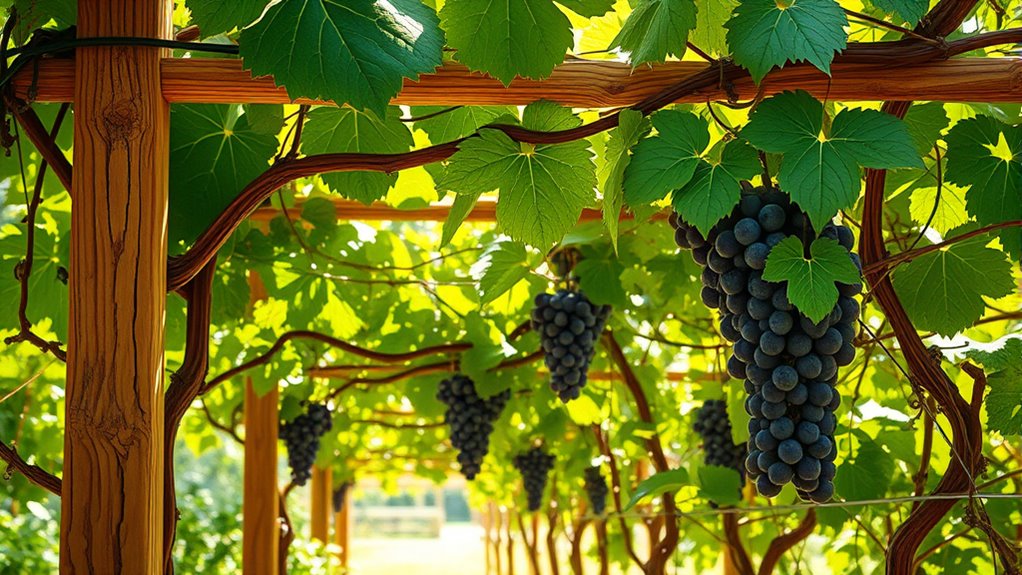
Choosing the right support structures is essential for healthy vine growth and easy harvests. Before selecting trellises, focus on soil preparation to guarantee your vines have a solid foundation. Well-prepared soil provides the nutrients and drainage needed for vigorous growth. Once your soil is ready, consider how your support system will influence vine pruning. A sturdy trellis makes pruning easier by giving you clear access to the plant’s structure. Proper support encourages good air circulation, reducing disease risk, and helps vines grow evenly. Whether you opt for simple stakes or complex trellis systems, the key is to match the structure to your vine type and space. This careful planning will promote healthy growth and simplify maintenance throughout the season. Incorporating artistic elements into your support structures can also enhance your garden’s aesthetic appeal.
Properly Installing Your Trellis System
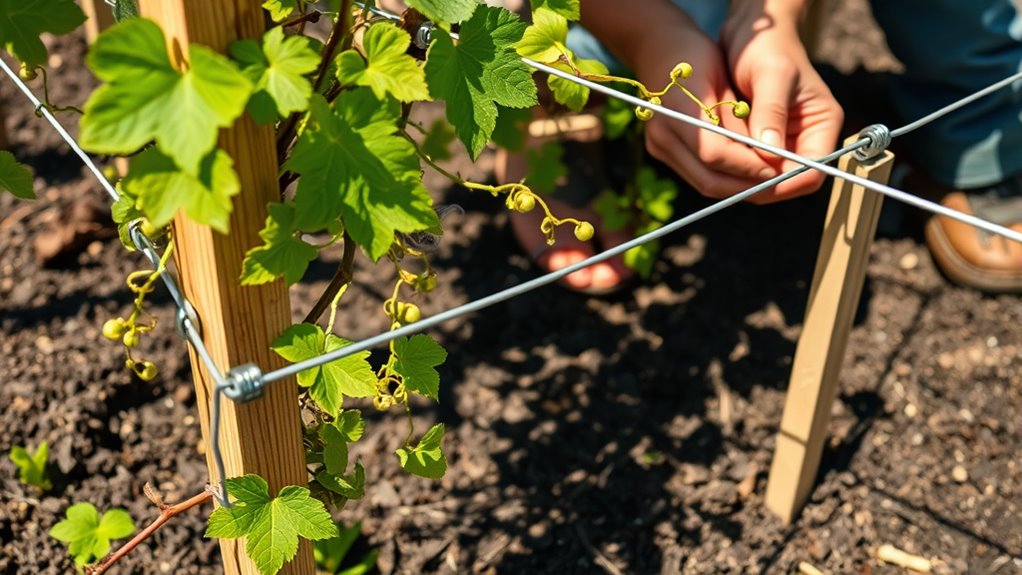
To guarantee your trellis system provides strong support for your vines, you need to install it carefully and correctly. First, prepare the soil by removing weeds, loosening it, and adding organic compost to ensure stability. Next, set your posts at appropriate intervals, considering vine pruning needs for optimal airflow and sunlight. When installing wires or supports, make sure they’re taut and securely anchored to withstand wind and vine weight. Properly securing the trellis involves attaching support elements firmly and checking stability regularly. Remember, well-installed supports reduce stress on the vines, promoting healthy growth. Incorporating support systems into your installation process helps ensure durability and effective vine management. Always incorporate soil preparation and structural integrity into your installation process, so your vines have the best foundation to grow strong and productive.
Techniques for Training and Securing Vines
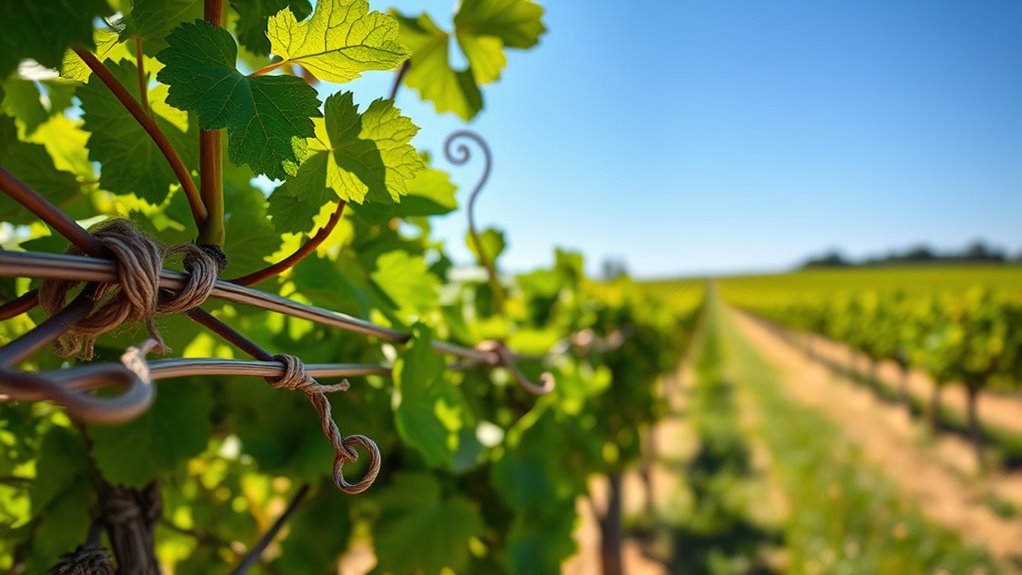
Once your trellis system is securely in place, the next step is to train and secure your vines properly. Use pruning techniques to guide growth and prevent overcrowding, which promotes airflow and reduces disease risk. As vines grow, gently tie them to the trellis using soft plant ties, ensuring they’re secured without damaging the stems. Proper training encourages even fruit or flower production and makes pest management easier by reducing hiding spots. Regularly inspect your vines for pests and remove any affected foliage to maintain healthy growth. Adjust ties as the vines grow, always supporting the weight without constricting. Maintaining proper plant support is crucial for healthy development. Here’s a quick guide:
| Technique | Purpose |
|---|---|
| Pruning techniques | Control growth, improve airflow |
| Securing vines | Prevent breakage, support steady growth |
| Pest management | Keep pests at bay, protect yields |
| Adjusting ties | Accommodate growth, avoid constriction |
Maintaining and Adjusting Your Trellis Throughout the Season
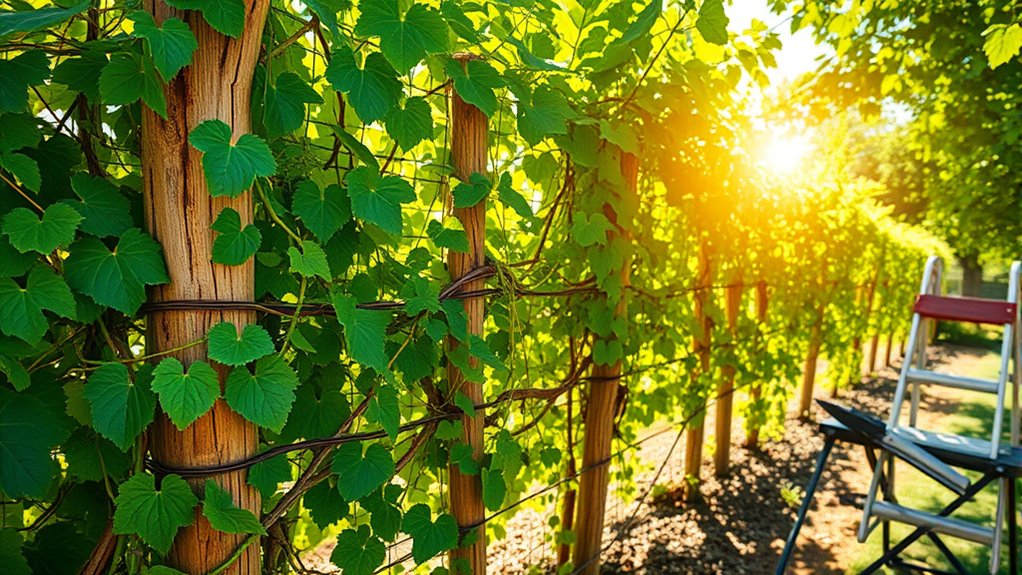
Maintaining and adjusting your trellis throughout the season is essential to support healthy vine growth and maximize your harvest. Regularly inspect your trellis and make adjustments to prevent overcrowding and ensure proper airflow. To keep vines healthy, consider these key steps:
- Use pruning methods like thinning and topping to control growth and improve light exposure.
- Tie new growth securely to the trellis, avoiding damage to stems or leaves.
- Remove any dead or diseased foliage to prevent pest problems and promote airflow.
- Check for signs of pest prevention issues, such as webbing or holes, and adjust trellis support if vines are becoming too heavy or uneven.
- Monitoring plant health regularly helps detect issues early and maintain optimal growth conditions.
Consistent maintenance helps your trellis function effectively and keeps your vines thriving all season long.
Troubleshooting Common Trellising Challenges
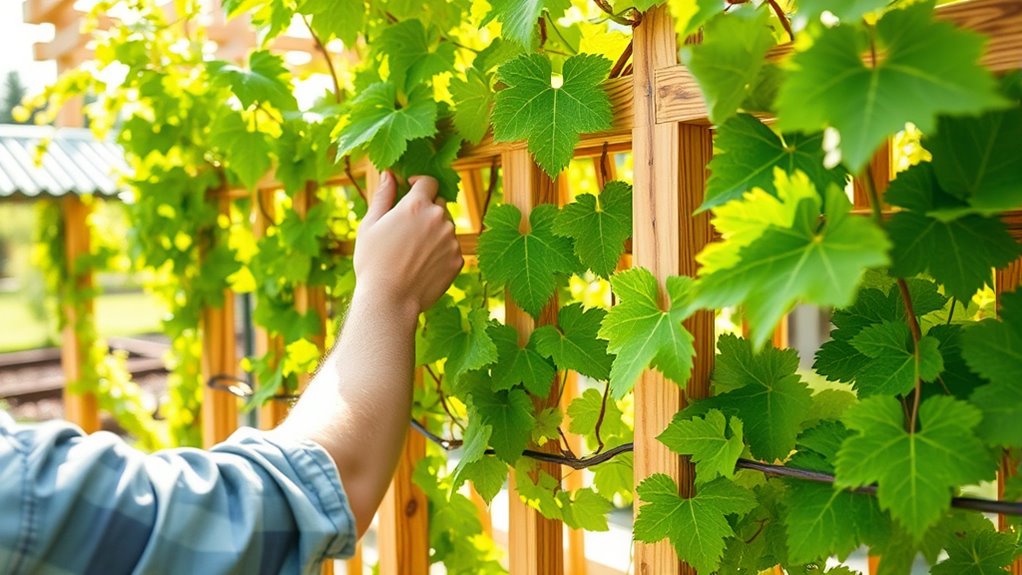
Are you noticing issues with your trellis setup that hinder vine growth or fruit production? Common challenges include poor support, pest problems, or soil issues. Start by inspecting your trellis for stability and adjust or reinforce as needed. For pest management, look for signs of insects or disease that may damage vines; using organic or chemical controls can help. Proper soil preparation is vital—ensure your soil is well-drained, rich in nutrients, and free of pests that can weaken roots. If vines are struggling to climb or fruiting is sparse, consider adding supports or adjusting existing ones. Regularly monitor your setup, address pest issues promptly, and maintain healthy soil to troubleshoot effectively and promote vigorous growth. Additionally, incorporating sound healing science principles, such as gentle vibrations, can create a calming environment that encourages healthy plant development.
Frequently Asked Questions
Which Vine Varieties Benefit Most From Trellising?
You’ll find that grapevines, clematis, and passionflowers benefit most from trellising. Proper vine training helps these plants grow upward and stay healthy. A well-designed trellis supports their growth and maximizes fruit or flower production. When choosing a trellis design, consider the plant’s size and growth habits to guarantee stability. Trellising encourages better air circulation, reduces disease risk, and makes harvesting or pruning easier, giving your vines the best chance to thrive.
How Often Should I Prune My Trellised Vines?
You should prune your trellised vines in late winter or early spring, ideally twice a year. About 90% of vine growers recommend a pruning schedule that balances vine growth and fruit production. Regular vine maintenance prevents overgrowth and promotes healthy fruiting. By pruning at these times, you keep your vines manageable and productive, ensuring a lush, healthy harvest. Consistent pruning also improves air circulation and sunlight exposure, essential for strong vine health.
What Materials Are Best for Durable Trellis Construction?
For durable trellis construction, you should choose materials like galvanized steel, pressure-treated wood, or vinyl-coated metal because they excel in durability considerations. These materials resist rot, rust, and pests, reducing maintenance needs. Wooden options like cedar require regular sealing to maintain strength, while metal options need occasional checks for rust. Overall, selecting sturdy, weather-resistant materials guarantees your trellis remains strong and reliable for years.
Can Trellising Increase Fruit Yield Significantly?
Trellising can considerably boost your fruit production by supporting vine growth and improving air circulation. When you provide sturdy trellises, your vines grow healthier, receive better sunlight, and produce more fruit. This support system reduces disease risks and encourages ideal fruit development. As a result, you’ll likely see a notable increase in yield, making trellising a valuable technique to maximize your garden’s productivity and enjoy more abundant harvests.
How Do I Prevent Pests From Climbing My Trellis?
Pests posing a problem? Protect your trellis by planting pest-resistant plants nearby and using natural deterrents like neem oil or garlic spray. You can also create physical barriers, such as fine mesh or sticky traps, to block pests from climbing. Regularly inspect and promptly remove pests to prevent infestations. With consistent care, you’ll keep pests at bay and ensure your vines thrive and flourish.
Conclusion
With your trellis in place, your vines will dance skyward like a symphony in full bloom. Keep an eye on their growth, gently guiding and adjusting, so they flourish without a hitch. Remember, your support system is the backbone of healthy, vibrant vines. With patience and care, you’ll cultivate a lush, flourishing paradise—an oasis of greenery that rewards your dedication and transforms your garden into a living masterpiece. Happy trellising!
NFL season / tailgating Picks
team gear
As an affiliate, we earn on qualifying purchases.