For most home gardeners, I’d start with the Hasumcol 70-Slot Seed Storage Organizer Kit, which stands out for keeping seed packets sorted in one place. The Garden Seed Storage Binder with 25 Double-Sided Pages is a better match for gardeners who want a browsable, portable collection, while the LOTMER 200-count envelopes suit anyone who needs a large supply of basic packets. The main tradeoff is between buying many lightweight envelopes and choosing a reusable organizer that takes more room but makes sorting easier. Packet size, labeling space, closure style, and how you store seeds between seasons all affect the right choice. Read on for the full breakdown and recommendations by gardening style.

Get garden gear delivered free with Prime
- Fast, free delivery on millions of items
- Prime Video, Amazon Music and more included
- Member-only deals all year
Complete the kit


Key Takeaways
- Organizers beat loose packets for quick sorting: The Hasumcol 70-slot kit, binder options, and 60-bottle organizer offer more structure than bulk envelope packs.
- Large counts favor frequent seed saving: LOTMER offers 200 envelopes, while Gamtrik, Nitelemn, and Joyberg provide other high-count choices with larger listed dimensions.
- Small envelopes are better for modest seed portions: The 2.7–3.5-inch options can help limit packet bulk, but leave less space for labels and larger seed lots.
- Clear windows trade privacy for visibility: Windowed packets make contents easier to identify at a glance, but do not replace a written crop name, variety, and harvest year.
- Storage formats solve different problems: A four-compartment metal organizer offers a simple container, while binders support browsing and bottles separate lots; none of these formats automatically provides ideal long-term storage conditions.
| Resealable Kraft Paper Seed Envelopes with Window, 100 Pack |  | Best for Visible, Reusable Storage | Quantity: 100 envelopes | Outside size: 2.7 × 3.7 inches | Usable size: 2.36 × 2.56 inches | VIEW LATEST PRICE | See Our Full Breakdown |
| LOTMER Seed Saving Envelopes, 200 Count, 3.2 x 4.8 Inch |  | Best Value for Large Seed Collections | Quantity: 200 envelopes | Listed size: 3.2 × 4.8 inches | Additional listed dimensions: 6.75 × 3.25 inches | VIEW LATEST PRICE | See Our Full Breakdown |
| Hasumcol 70-Slot Seed Storage Organizer Kit |  | Best Complete Kit for Sorting Small Seed Lots | Capacity: 70 compartments | Included containers: 70 screw-top containers | Other included items: 20 seed envelopes, 70 labels, funnel, tweezers, carrying case | VIEW LATEST PRICE | See Our Full Breakdown |
| Metal Seed Storage Organizer, 4 Compartments, Vintage Dark Green |  | Best for Storing Standard Seed Packets | Material: Steel | Dimensions: 13.2 × 7.3 × 5.2 inches | Compartments: 4 | VIEW LATEST PRICE | See Our Full Breakdown |
| Gamtrik 100-Pack Seed Envelopes, 4.72 × 3.15 Inches |  | Best for Detailed Planting Records | Quantity: 100 envelopes | Dimensions: 4.72 × 3.15 inches | Material: Kraft paper | VIEW LATEST PRICE | See Our Full Breakdown |
| Nitelemn Seed Saving Envelopes, 150 Count, 4.72 x 3.15 Inches |  | Best for High-Volume Paper Labeling | Quantity: 150 envelopes | Envelope size: 4.72 x 3.15 inches (12 x 8 cm) | Material: Kraft paper | VIEW LATEST PRICE | See Our Full Breakdown |
| Trahzia Seed Storage Organizer Binder with 20 Reusable Envelopes |  | Best for Portable Seed Libraries | Capacity: Up to 120 seed packets | Included storage: 30 four-pocket protector sheets and 20 paper seed envelopes | Pocket dimensions: 3.5 x 5.1 inches | VIEW LATEST PRICE | See Our Full Breakdown |
| 100 Resealable Mini Kraft Bags with Clear Window, 2.7 x 3.5 Inches |  | Best for Small, Visible Seed Portions | Quantity: 100 bags | Outer dimensions: 2.7 x 3.5 inches (7 x 9 cm) | Inner dimensions: 2.3 x 2.3 inches (6 x 6 cm) | VIEW LATEST PRICE | See Our Full Breakdown |
| Garden Seed Storage Binder with 25 Double-Sided Pages and 50 Envelopes |  | Best for Binder-Based Cataloging | Pages: 25 clear, double-sided pages | Page size: 5 inches | Envelopes: 50 self-sealing paper envelopes | VIEW LATEST PRICE | See Our Full Breakdown |
| 120 Resealable Kraft Paper Seed Envelopes with Windows, 3.54 × 5.5 Inches |  | Best for Protected, Labeled Seed Storage | Quantity: 120 envelopes | Dimensions: 3.54 x 5.5 inches | Material: Brown kraft paper with waterproof lining | VIEW LATEST PRICE | See Our Full Breakdown |
| 160 Resealable Seed Envelopes with Clear Window, 2.8 × 3.5 in |  | Best for Quick Identification | Quantity: 160 envelopes | Dimensions: 2.8 × 3.5 inches each | Material: Kraft paper | VIEW LATEST PRICE | See Our Full Breakdown |
| Douorgan Seed Storage Organizer with 60 Bottles |  | Best Complete Storage Kit | Bottle capacity: 60 bottles | Case material: EVA | Case dimensions: 13.2 × 8.3 × 3 inches | VIEW LATEST PRICE | See Our Full Breakdown |
| Joyberg Kraft Seed Envelopes, 156 Count, 3.15 x 4.72 in |  | Best for Handwritten Seed Records | Quantity: 156 envelopes | Dimensions: 3.15 × 4.72 inches | Material: Kraft paper | VIEW LATEST PRICE | See Our Full Breakdown |
| seed saving supplie | Material | Quantity | Closure | Dimensions |
|---|---|---|---|---|
| Resealable Kraft Paper Seed En | Kraft paper with grease-resistant plastic film lining | 100 envelopes | Resealable zipper; heat-sealable top | — |
| LOTMER Seed Saving Envelopes | Kraft paper | 200 envelopes | Self-seal | — |
| Hasumcol 70-Slot Seed Storage | Plastic | — | — | 12.2 × 8 × 2.8 inches |
| Metal Seed Storage Organizer | Steel | — | Spring latch with safety locks | 13.2 × 7.3 × 5.2 inches |
| Gamtrik 100-Pack Seed Envelope | Kraft paper | 100 envelopes | — | 4.72 × 3.15 inches |
| Nitelemn Seed Saving Envelopes | Kraft paper | 150 envelopes | Self-seal | — |
| Trahzia Seed Storage Organizer | — | — | — | 12.6 x 4.1 x 8.3 inches |
| 100 Resealable Mini Kraft Bags | — | 100 bags | Resealable zipper; heat-sealable above zipper | — |
| Garden Seed Storage Binder wit | — | — | — | — |
| 120 Resealable Kraft Paper See | Brown kraft paper with waterproof lining | 120 envelopes | Resealable zipper strip | 3.54 x 5.5 inches |
| 160 Resealable Seed Envelopes | Kraft paper | 160 envelopes | Resealable zip lock | 2.8 × 3.5 inches each |
| Douorgan Seed Storage Organize | — | — | — | — |
| Joyberg Kraft Seed Envelopes | Kraft paper | 156 envelopes | Self-sealing, water-activated adhesive | 3.15 × 4.72 inches |
More Details on Our Top Picks
Resealable Kraft Paper Seed Envelopes with Window, 100 Pack
The clear window and resealable zipper make these a stronger choice for gardeners who want to identify saved seeds without opening every packet. A preprinted collection template also gives each batch a place for its details, while the option to heat-seal above the zipper adds another way to close the packet. Compared with the LOTMER Seed Saving Envelopes, these provide a viewing window and a resealable closure, but the LOTMER pack includes twice as many envelopes. The main tradeoff is capacity: the usable area is only 2.36 × 2.56 inches, smaller than the outside dimensions suggest. I’d choose these for small, labeled batches where visibility and reuse matter more than holding larger seed lots.
Pros:- Transparent window helps identify contents without opening the envelope
- Preprinted template provides space for seed information
- Resealable zipper supports repeated access
- Can be heat-sealed above the zipper
Cons:- Usable interior measures just 2.36 × 2.56 inches
- A 100-pack provides fewer packets than the 200-count LOTMER option
Best for: Home seed savers keeping small batches that they want to identify at a glance and reopen for planting.
Not ideal for: Gardeners storing large seed quantities or bulky seed heads, since the usable interior is notably smaller than the envelope’s exterior.
- Quantity:100 envelopes
- Outside size:2.7 × 3.7 inches
- Usable size:2.36 × 2.56 inches
- Window size:2.36 × 1.18 inches
- Material:Kraft paper with grease-resistant plastic film lining
- Paper thickness:5.5 mil per side
- Closure:Resealable zipper; heat-sealable top
- Printed design:Seed collection information template
Our verdict“Choose these for small seed batches that benefit from a viewing window and reusable closure, not for maximum packet capacity.”
LOTMER Seed Saving Envelopes, 200 Count, 3.2 x 4.8 Inch
For gardeners saving many varieties, the 200-envelope count is the main advantage: it gives each batch its own packet without quickly exhausting the supply. The printed fields cover seed name, variety, collection date, and growing notes, making these more useful for recordkeeping than the Gamtrik 100-Pack Seed Envelopes, which offers additional planting-detail fields but half the stated quantity. LOTMER’s self-sealing kraft paper design keeps the setup simple, and the included double-sided tape offers an extra way to close packets. There is a meaningful uncertainty, though: the listing also shows a different size, 6.75 × 3.25 inches, alongside the stated 3.2 × 4.8 inches. I’d pick this bulk set when count matters more than a clear window or confirmed sizing.
Pros:- 200 envelopes support larger seed collections
- Printed fields cover variety, collection date, and growing notes
- Self-sealing closure is straightforward to use
- Includes a roll of double-sided tape for additional closure support
Cons:- Product information lists conflicting dimensions
- No transparent window is specified for checking contents
- Paper packets offer less moisture protection than lined, resealable designs
Best for: Seed libraries and active home gardeners who label and store many vegetable, fruit, or flower varieties.
Not ideal for: Buyers who need a confirmed packet size or want to inspect seeds through a window before opening the envelope.
- Quantity:200 envelopes
- Listed size:3.2 × 4.8 inches
- Additional listed dimensions:6.75 × 3.25 inches
- Material:Kraft paper
- Closure:Self-seal
- Printed fields:Seed name, variety, collection date, growing notes
- Included accessory:Roll of double-sided tape
- Color and shape:Kraft; rectangular
Our verdict“This bulk set suits gardeners organizing many varieties, provided the conflicting size information does not interfere with their storage plan.”
Hasumcol 70-Slot Seed Storage Organizer Kit
This kit stands out for giving each small seed lot its own screw-top container, then keeping the containers together in a zippered case. Its 70 compartments, labels, funnel, and tweezers make it a more ready-to-sort setup than the Metal Seed Storage Organizer, which is designed to hold standard seed packets upright rather than divide seeds into numerous small containers. The included 20 envelopes add flexibility for seeds that are better kept in packets. The tradeoff is protection: the case is not water resistant, and the supplied containers are plastic rather than a sealed, moisture-managed storage system. At 12.2 × 8 × 2.8 inches, it is compact for the number of compartments but still needs dedicated shelf or drawer space. Seeds are not included.
Pros:- 70 individual compartments separate small seed lots
- Includes 20 envelopes, 70 labels, a funnel, and tweezers
- Screw-top containers help keep contents contained during handling
- Zippered case keeps the kit’s parts together
Cons:- Carrying case is not water resistant
- Seeds are not included
- Transferring seeds into small containers takes more handling than storing them in packets
Best for: Gardeners sorting many small, distinct seed batches who want containers, labels, and basic handling tools in one kit.
Not ideal for: Seed savers who need waterproof transport or prefer to keep seeds in standard labeled packets rather than transfer them into containers.
- Capacity:70 compartments
- Included containers:70 screw-top containers
- Other included items:20 seed envelopes, 70 labels, funnel, tweezers, carrying case
- Dimensions:12.2 × 8 × 2.8 inches
- Material:Plastic
- Closures:Zippered case; screw-top containers
- Color:Black
- Seeds included:No
Our verdict“Choose this kit for compartment-by-compartment sorting and included tools, but not when waterproof storage is a priority.”
Metal Seed Storage Organizer, 4 Compartments, Vintage Dark Green
This steel organizer is the clearest choice here for gardeners who keep seeds in their original or other standard 3 × 5-inch packets. Four compartments let packets stand upright and stay grouped, while the spring latch and top and side handles make the box easier to carry than a collection of loose envelopes. Compared with the Hasumcol 70-Slot Seed Storage Organizer Kit, this is built for packet-level organization, not dividing seeds into dozens of small lots with dedicated containers and tools. It also includes 30 envelopes, 30 waterproof plant labels, and a marker. The tradeoff is its 13.2 × 7.3 × 5.2-inch steel body, which takes more space than a small envelope pack. It suits a fixed garden shelf or cabinet better than a tight storage area.
Pros:- Steel construction provides a sturdy housing for stored packets
- Four compartments keep standard seed packets grouped
- Includes 30 seed envelopes, 30 waterproof labels, and a marker
- Top and side handles and a spring latch support carrying and closure
Cons:- Takes more storage space than envelope-based options
- Four compartments provide less fine-grained sorting than the Hasumcol 70-slot kit
Best for: Gardeners who save or buy standard seed packets and want a sturdy, carryable box with basic labeling supplies.
Not ideal for: Gardeners with limited shelf space or those who sort individual seeds into many small, separate containers.
- Material:Steel
- Dimensions:13.2 × 7.3 × 5.2 inches
- Compartments:4
- Included supplies:30 seed envelopes, 30 waterproof plant labels, 1 marker
- Closure:Spring latch with safety locks
- Handles:Top and side handles
- Color:Vintage dark green
- Model:SSO
Our verdict“Pick this steel box if you store standard seed packets and have room for a dedicated organizer.”
Gamtrik 100-Pack Seed Envelopes, 4.72 × 3.15 Inches
Gamtrik’s strongest distinction is its wide set of printed record fields: alongside variety and collection date, each envelope provides space for plant instructions, planting depth, and soil pH. That makes it a better fit for gardeners who want growing notes attached to each seed lot than the LOTMER Seed Saving Envelopes, whose printed fields focus on identifying and recording collected seeds. The 4.72 × 3.15-inch format also offers a larger stated footprint than the compact resealable envelopes in this roundup. In exchange, the closure is a water-activated adhesive, so sealing takes an extra step, and the kraft paper may not protect contents from moisture. I’d use these for dry, organized storage where detailed planting notes matter more than frequent reopening or added moisture resistance.
Pros:- Printed fields include seed name, variety, and collection date
- Plant instruction, planting depth, and soil pH fields support detailed records
- 100 envelopes provide a dedicated packet for many seed batches
- Kraft paper is described as sturdy and tear-resistant
Cons:- Water-activated adhesive requires wetting and pressing the flap
- Paper envelopes may not protect seeds from moisture
- No resealable closure or viewing window is specified
Best for: Gardeners who want each seed packet to carry collection details and specific planting instructions in one place.
Not ideal for: People who frequently reopen packets or store seeds in areas where paper envelopes may be exposed to moisture.
- Quantity:100 envelopes
- Dimensions:4.72 × 3.15 inches
- Material:Kraft paper
- Seal type:Water-activated adhesive
- Printed fields:Seed name, variety, date collected, plant instruction, planting depth, soil pH
- Other stated uses:Coins, cash, and other small items
Our verdict“Choose Gamtrik for seed packets that double as planting records, and skip it if easy reopening or moisture resistance matters more.”
Nitelemn Seed Saving Envelopes, 150 Count, 4.72 x 3.15 Inches
The Nitelemn envelopes suit gardeners who want a large supply of labeled paper packets without adding a binder to their storage setup. Their printed fields for variety, collection date, and growing notes give each batch a place for useful records, while the 150-count pack offers more packets than the Garden Seed Storage Binder’s 50 included envelopes. A roll of double-sided tape adds a way to reinforce or adapt closures, though the envelopes are already self-sealing. At 4.72 x 3.15 inches, they work for modest seed portions but are not as roomy as larger packet formats. Kraft paper is light and easy to label, but it does not provide the moisture barrier of the Prudiut envelopes’ waterproof lining. Choose these for organized, dry storage—not damp sheds or humid conditions.
Pros:- 150 envelopes provide a substantial supply for separating varieties and harvests.
- Printed fields support consistent notes on seed type, collection date, and growing conditions.
- Self-sealing design and included 39-foot roll of double-sided tape offer closure options.
- Lightweight kraft paper is easy to write on and suitable for small seed portions.
Cons:- Paper construction does not offer the moisture protection of lined resealable options.
- The 4.72 x 3.15-inch format may be too small for bulky seeds or large harvests.
- The included tape may be unnecessary for users who rely on the self-seal closure.
Best for: Gardeners saving many varieties who want labeled, lightweight paper packets for a dry indoor storage area.
Not ideal for: Seed keepers storing packets in humid spaces or anyone needing a larger, moisture-resistant package.
- Quantity:150 envelopes
- Envelope size:4.72 x 3.15 inches (12 x 8 cm)
- Material:Kraft paper
- Closure:Self-seal
- Printed fields:Seed name, seed variety, date collected, and growing notes
- Included accessory:39-foot roll of double-sided tape
- Shape:Rectangular
Our verdict“Pick the Nitelemn set for a generous quantity of clearly labeled paper packets, provided you can store them somewhere dry.”
Trahzia Seed Storage Organizer Binder with 20 Reusable Envelopes
For gardeners who move seed packets between a home collection, greenhouse, and community garden, the Trahzia binder offers more than loose-envelope storage. Its 30 four-pocket sheets hold up to 120 seed packets, and the two-way zipper, transparent compartments, pen slots, handle, and shoulder strap help keep a working kit together. That makes it a more travel-ready option than the Garden Seed Storage Binder, which lists clear pages and envelopes but no carrying features or stated packet capacity. Trahzia’s tradeoff is bulk: at 12.6 x 4.1 x 8.3 inches and 0.81 kg, it needs dedicated shelf or bag space. The included 20 paper envelopes also offer less protection than the Prudiut’s waterproof-lined packets. Choose it for portable organization, not compact storage or moisture-proof seed keeping.
Pros:- Thirty four-pocket sheets provide organized space for up to 120 seed packets.
- Zippered and transparent compartments keep small gardening supplies visible and contained.
- Top handle and adjustable shoulder strap support carrying the collection.
- Pen slots and included paper envelopes make it useful as a mobile seed-sorting kit.
Cons:- Its listed dimensions and 0.81 kg weight make it bulkier than a stack of envelopes.
- The 20 included paper envelopes are not moisture-resistant.
- The organizer’s carrying features add cost and complexity for gardeners who store seeds in one place.
Best for: Gardeners, seed librarians, and community plot organizers who carry a sizable collection and note-taking supplies between locations.
Not ideal for: People with limited shelf space or anyone seeking compact, waterproof individual seed packets.
- Capacity:Up to 120 seed packets
- Included storage:30 four-pocket protector sheets and 20 paper seed envelopes
- Pocket dimensions:3.5 x 5.1 inches
- Dimensions:12.6 x 4.1 x 8.3 inches
- Weight:0.81 kg
- Material and closure:Polyester; two-way zipper
- Organization:40 compartments; 1.5-inch, 3-ring binder
- Carrying options:Top handle and adjustable shoulder strap
Our verdict“Choose Trahzia if you need to transport and sort a large seed collection, but skip it if a compact, moisture-resistant setup matters more.”
100 Resealable Mini Kraft Bags with Clear Window, 2.7 x 3.5 Inches
The Wteehn mini bags are a practical fit when visibility and a resealable closure matter more than dedicated seed labeling. Their clear window lets you identify contents without opening each bag, while a PE-lined interior and zipper provide more moisture resistance than the plain kraft Nitelemn envelopes. You can also heat-seal above the zipper for a more closed package, although that makes repeated access less convenient. The main limit is capacity: the listed interior measures just 2.3 x 2.3 inches, so these are better for small samples or a few seeds than sizable harvests. Unlike the Prudiut seed envelopes, they have no printed fields for variety or collection notes, so gardeners will need to add their own labels. Pick them for visible, small portions; skip them for detailed cataloging or larger seed lots.
Pros:- Clear front window makes contents identifiable without opening the bag.
- Resealable zipper supports repeated access to small seed portions.
- PE-lined interior and optional heat seal offer more protection than unlined paper envelopes.
- 100 bags can serve several types of small samples and garden-related items.
Cons:- The 2.3 x 2.3-inch listed interior sharply limits capacity.
- No printed seed-specific fields are provided, so labeling must be added separately.
- Heat sealing reduces convenience if the contents need to be accessed repeatedly.
Best for: Gardeners who divide seeds into small samples and want to see contents through the bag window.
Not ideal for: Seed savers handling larger harvests or those who want built-in fields for variety and collection records.
- Quantity:100 bags
- Outer dimensions:2.7 x 3.5 inches (7 x 9 cm)
- Inner dimensions:2.3 x 2.3 inches (6 x 6 cm)
- Materials:Kraft paper and PE
- Closure:Resealable zipper; heat-sealable above zipper
- Window:Clear front window
- Color:Dark yellow
- Model:XF01-X
Our verdict“Choose these bags for small, visible seed samples with a resealable closure, not for larger collections that need printed cataloging fields.”
Garden Seed Storage Binder with 25 Double-Sided Pages and 50 Envelopes
This binder kit makes sense for gardeners who prefer to file seed packets in pages rather than manage a stack of loose envelopes. It pairs 25 clear, double-sided pages with 50 self-sealing paper envelopes, giving you a way to view and sort saved seed packets while keeping individual portions separate. Compared with the Trahzia organizer, it is a simpler binder approach: Trahzia lists a 120-packet capacity, carrying strap, zippered compartments, and pen slots, while this product’s capacity and portability are not specified. That simpler setup may suit a home collection, but the available details do not name the binder’s material or dimensions, making fit and durability harder to judge. Its paper envelopes also lack the waterproof lining found in the Prudiut packets. Choose it for page-based organization, not travel or moisture protection.
Pros:- Double-sided clear pages allow storage and viewing on both sides.
- Includes 50 self-sealing envelopes for separating saved seed portions.
- Binder format supports page-based organization and cataloging.
- Two-hole configuration provides a defined page setup.
Cons:- No binder dimensions or material are provided, so shelf fit and construction are unclear.
- Capacity is not specified, making it difficult to compare with the Trahzia binder’s stated 120-packet capacity.
- Paper envelopes do not provide the moisture barrier offered by lined options.
Best for: Home gardeners who want to catalog seed packets in clear pages and use separate paper envelopes for saved seeds.
Not ideal for: Buyers who need a stated high-capacity portable organizer or moisture-resistant individual packets.
- Pages:25 clear, double-sided pages
- Page size:5 inches
- Envelopes:50 self-sealing paper envelopes
- Hole configuration:2-hole
- Purpose:Seed storage and cataloging
- Page format:Double-sided
Our verdict“Pick this kit if you want a straightforward page-based seed catalog, but choose Trahzia for a specified capacity and portable storage features.”
120 Resealable Kraft Paper Seed Envelopes with Windows, 3.54 × 5.5 Inches
The Prudiut envelopes bring together the features that matter most for a labeled seed archive: preprinted record fields, a viewing window, a resealable zipper, and a waterproof lining. At 3.54 x 5.5 inches, they offer more room than the Nitelemn paper envelopes, while their lining gives them a better fit for storage conditions where plain kraft packets may be vulnerable to moisture. The clear window makes quick identification easier, although it does not replace labeling when seed varieties look similar. The set includes 120 envelopes—fewer than Nitelemn’s 150—but the extra protection and larger listed dimensions make each packet more suited to a robust cataloging system. The product data does not identify specific drawbacks, so I would weigh the stated features against your needs: lined bags are less minimal than simple paper packets, and no exact moisture-resistance rating is provided.
Pros:- Waterproof lining and resealable zipper add protection beyond plain paper envelopes.
- Preprinted fields support records for seed type, variety, collection date, and growing notes.
- Clear window helps identify contents without opening each envelope.
- Larger 3.54 x 5.5-inch dimensions provide more space than the Nitelemn envelopes.
Cons:- The 120-count set includes fewer envelopes than Nitelemn’s 150-count pack.
- No specific moisture-resistance rating is supplied for the lining.
- Window visibility may not distinguish similar-looking seed varieties without clear labels.
Best for: Seed savers building a labeled collection who want roomier packets with a lining and resealable closure.
Not ideal for: Gardeners who prioritize the largest packet count or need a stated, tested level of moisture protection.
- Quantity:120 envelopes
- Dimensions:3.54 x 5.5 inches
- Material:Brown kraft paper with waterproof lining
- Window height:1.57 inches
- Window position:0.78 inches from the bottom
- Closure:Resealable zipper strip
- Label fields:Seed type, variety, date collected, and growing notes
- Model:G2941K-11-N
Our verdict“Choose Prudiut for a roomier, labeled seed packet with a lined interior, but favor Nitelemn if you need a higher envelope count and dry-storage use is sufficient.”
160 Resealable Seed Envelopes with Clear Window, 2.8 × 3.5 in
For gardeners who want to identify seed packets without opening them, these clear-window envelopes offer a useful alternative to the opaque Joyberg Kraft Seed Envelopes. The resealable zip-lock closure makes repeated access easier than Joyberg’s water-activated adhesive, while the window lets you check contents at a glance. A pack of 160 suits seed swaps or a collection with many small varieties, and the kraft paper adds a sturdier outer layer than a bare plastic bag. The tradeoff is capacity: at 2.8 × 3.5 inches, these are better suited to small seeds than bulky pods or large harvests. Choose them for visible, repeatable access, not for spacious storage or detailed printed record fields.
Pros:- Clear window makes contents identifiable without opening the envelope
- Resealable zip-lock closure supports repeated access
- 160 envelopes provide plenty of packets for swaps or small collections
- Kraft paper is described as tear-resistant
Cons:- Compact dimensions may not fit larger seeds or bulky pods
- No printed fields for variety names or collection dates
- The window provides visibility but does not replace written labeling
Best for: Seed savers who sort many small varieties and want to identify contents without opening packets.
Not ideal for: Gardeners storing large seeds, bulky pods, or lots of handwritten collection notes on each packet.
- Quantity:160 envelopes
- Dimensions:2.8 × 3.5 inches each
- Material:Kraft paper
- Closure:Resealable zip lock
- Window:Clear
- Color:Brown
- Brand:Volokitx
Our verdict“Choose these if you want a large supply of resealable, see-through packets for small seeds and easy sorting.”
Douorgan Seed Storage Organizer with 60 Bottles
The Douorgan kit is the most structured storage option in this group: its 60 foam-held bottles keep separate varieties organized in a portable case, unlike the loose packet format of the Joyberg Kraft Seed Envelopes. It also includes labels, a funnel, a sorting tray, and 20 envelopes, giving seed savers tools for filling and sorting rather than just storage. The EVA case is water-resistant and light-blocking on the exterior, while the foam slots help keep bottles secure during transport. That protection comes with a larger, heavier setup—13.2 × 8.3 × 3 inches and 0.88 kg—and the small bottles may be awkward for bulky seeds. Seeds are not included, so this suits gardeners building a reusable system, not someone seeking ready-filled storage.
Pros:- 60 separate bottles and foam slots keep varieties organized and secured
- Water-resistant EVA case with a light-blocking exterior
- Includes labels, funnel, sorting tray, mesh pocket, and 20 envelopes
- Removable insert allows the case to store other small items
Cons:- Seeds are not included, so the bottles need to be filled separately
- Small bottles may not suit larger seeds or bulky harvests
- Case is bulkier and heavier than storing flat envelopes
Best for: Seed collectors who want a portable, compartmentalized kit for organizing many small varieties and related supplies.
Not ideal for: Gardeners with limited storage space or seed collections dominated by large, bulky varieties.
- Bottle capacity:60 bottles
- Case material:EVA
- Case dimensions:13.2 × 8.3 × 3 inches
- Bottle dimensions:1 × 1.8 inches (diameter × height)
- Item weight:0.88 kg
- Included accessories:20 seed envelopes, labels, funnel, white sorting tray, mesh pocket
- Compartments:60
- Seeds included:No
Our verdict“Pick this kit if you want a protected, portable bottle-based system and have enough space for its larger case.”
Joyberg Kraft Seed Envelopes, 156 Count, 3.15 x 4.72 in
Joyberg’s main advantage is its printed record fields: spaces for seed type, variety, collection date, and notes make each packet a small record card. That gives it a clearer labeling role than the Volokitx envelopes, which prioritize a see-through window and zip-lock access instead. At 3.15 × 4.72 inches, these packets also offer more room than the smaller Volokitx option for writing and storing seed lots. The opaque kraft paper keeps contents out of view, so identification depends on the writing rather than a glance through a window. The main inconvenience is the water-activated adhesive, which must be moistened to seal and is less convenient for frequent reopening than a resealable closure. Choose these for labeled, flat packet storage rather than quick-access sorting.
Pros:- Printed fields support consistent records for variety, date, and notes
- Larger dimensions provide more writing and storage room than the Volokitx envelopes
- Opaque kraft paper keeps seed contents out of view
- 156 envelopes can organize a broad collection
Cons:- Water-activated adhesive must be moistened to seal
- Self-sealing closure is less suited to repeated opening than a zip lock
- Opaque paper means contents cannot be identified at a glance
Best for: Gardeners who track variety names, collection dates, and notes directly on each seed packet.
Not ideal for: Seed savers who frequently reopen packets or want to identify contents through a clear window.
- Quantity:156 envelopes
- Dimensions:3.15 × 4.72 inches
- Material:Kraft paper
- Closure:Self-sealing, water-activated adhesive
- Printed fields:Seed type, variety, date collected, notes
- Color:Brown
- Shape:Rectangular
- Brand:Joyberg
Our verdict“Choose Joyberg if written collection records matter more to you than a window or an easy-to-reopen closure.”
How We Picked
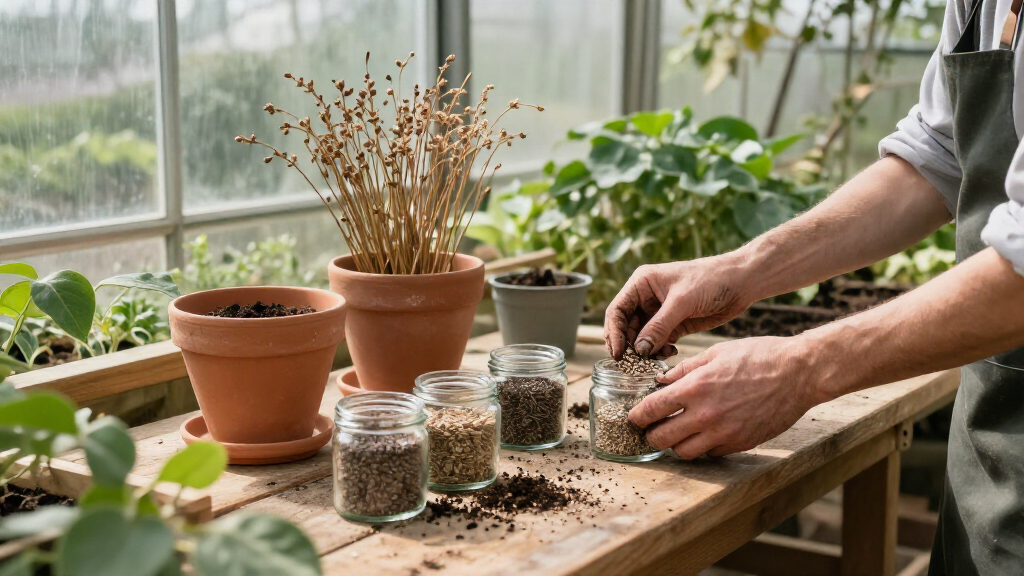
I ranked these supplies by how well they address the practical work of saving seeds: separating varieties, labeling harvests, keeping packets accessible, and choosing a format that fits the amount being stored. I compared listed capacity, envelope dimensions, closure and window details, and whether each product is a stand-alone container, binder, bottle system, or bulk packet supply. Those details matter because an attractive organizer can still be awkward if it cannot accommodate the gardener’s packet sizes or sorting habits.
The ranking favors flexible, usable storage systems first, followed by high-count envelopes that offer a straightforward way to divide seed lots. Products with similar formats are separated by capacity and intended use, not by assuming that a larger count or more elaborate container is automatically better. I also weighed tradeoffs: envelopes can be easy to label and expand, while organizers can make a collection easier to browse but take up more space and may require transferring seeds into their own containers. Product names and listed specifications guide this comparison; I do not infer unlisted materials, moisture protection, or durability.
| seed saving supplie | Material |
|---|---|
| Resealable Kraft Paper Seed En | Kraft paper with grease-resistant plastic film lining |
| LOTMER Seed Saving Envelopes | Kraft paper |
| Hasumcol 70-Slot Seed Storage | Plastic |
| Metal Seed Storage Organizer | Steel |
| Gamtrik 100-Pack Seed Envelope | Kraft paper |
| Nitelemn Seed Saving Envelopes | Kraft paper |
| Trahzia Seed Storage Organizer | — |
| 100 Resealable Mini Kraft Bags | — |
| Garden Seed Storage Binder wit | — |
| 120 Resealable Kraft Paper See | Brown kraft paper with waterproof lining |
| 160 Resealable Seed Envelopes | Kraft paper |
| Douorgan Seed Storage Organize | — |
| Joyberg Kraft Seed Envelopes | Kraft paper |
Factors to Consider When Choosing Best Seed Saving Supplies
The best setup depends less on the number of packets in the package than on how you collect, label, and revisit seeds. I’d choose a storage format around the size of each seed lot and the way I plan to find it next season.
Match the format to how you sort
Loose envelopes work well when you sort seeds by crop, variety, or harvest year in a box or drawer you already own. A binder makes sense if you prefer flipping through labeled collections, while bottles suit gardeners who want separate containers rather than flat packets. Think about whether you usually reach for seeds by plant type, planting date, or source; the most convenient system should support that habit. A common mistake is buying a visually tidy organizer before checking whether its compartments fit the packets you already use. If you save many varieties, a format that allows adding and rearranging entries can be more useful than a fixed layout. For a small collection, extra structure may add bulk without saving much time.
Choose envelope dimensions for your seed lots
Small packets can be a sensible choice for tiny seeds or modest harvests, since they avoid storing lots of empty space. Larger envelopes give more room for bulky seeds and written details, but they can make a collection harder to pack compactly. Check the listed dimensions against your seed quantity and the label information you want to keep, rather than choosing by count alone. Remember that an envelope’s outer size does not tell you how much seed it can hold comfortably. Oversized packets can encourage mixing multiple varieties in one container, while undersized ones may force you to split a lot. Keep one sample packet of your own seeds nearby when comparing dimensions.
Plan for clear, durable labeling
Seed identity depends on more than seeing the contents through a window. Record the crop, variety, collection date or year, and any notes that will help you decide what to plant later. A clear window can help with quick visual checks, but seed appearance alone is a poor substitute for a label, especially when varieties look alike. Before buying a large pack, consider whether the surface provides enough room for your handwriting or preferred label. Use a consistent naming method so abbreviated notes do not become confusing across seasons. If you share seeds, include any relevant growing or cross-pollination notes separately rather than relying on packet appearance.
Treat resealable closures as convenience, not preservation
A resealable envelope can make it easier to open and close packets while sorting or planting, but the product name alone does not establish a moisture-proof seal. Seeds keep best when stored according to their needs, away from heat, light, and damp conditions. Avoid putting packets away while seeds are still moist or mixing newly collected seeds with an older, clearly labeled lot. If your storage spot is humid, think about the conditions of the whole container and room rather than assuming a paper packet will protect the contents. For long-term collections, separating varieties and recording dates matters as much as the outer storage format. Keep the storage area stable and make a habit of checking labels before each planting season.
Balance bulk counts against actual use
High-count envelope packs can suit gardeners who save seeds from many plants, organize community seed swaps, or expect to replace packets regularly. For a smaller garden, a large supply may sit unused while a binder or organizer would solve the bigger problem of keeping existing seed lots findable. Compare the count with your likely number of varieties and the size of each harvest, not just the number of crops you grow. Many gardeners save several varieties of one crop, so crop count can underestimate packet needs. Buying a mixed approach—an organizer for current seeds and a smaller envelope supply for new harvests—can prevent both clutter and shortages. Leave room for future additions if your seed collection tends to grow each season.
Know when a premium storage system is worth it
Paying more for a structured organizer can make sense when you have enough seed lots that searching and relabeling take time. A binder or bottle system may also be useful if you move seeds between a work area and a garden, provided its size and layout suit that routine. A simple envelope pack is often the more practical choice when you already have a suitable box and mainly need containers. Do not treat a decorative metal organizer or a larger storage kit as proof of better seed longevity; storage conditions and accurate identification still matter. Check whether the system includes reusable containers or simply organizes packets you must supply separately. The value comes from making your own workflow easier, not from extra capacity you will not use.
Frequently Asked Questions
Should I choose a seed binder or individual envelopes?
Choose individual envelopes if you want flexible packets that can be stored in a box, drawer, or existing organizer. A binder is more useful when browsing and sorting are part of your routine, or when you want a collection that travels easily as a set. Check whether the binder’s included envelopes are replaceable and whether its pages can accommodate the seed lots you save. A binder also needs a consistent labeling system, since a neat page layout cannot identify unmarked varieties. If your collection is still small, starting with envelopes may let you learn your preferred sorting method before committing to a dedicated format.
Are clear-window seed envelopes better than plain packets?
Windows make it easier to see whether a packet contains seeds and can speed up sorting, especially when packets are stored together. They do not identify the crop or variety reliably, so written labels remain necessary. A window also does not indicate whether a packet is protected from humidity or other unsuitable storage conditions. Choose windowed packets for visibility and plain packets if you prefer fully covered contents or want a consistent writing surface. For either type, label each lot before putting it away rather than relying on memory or appearance.
How many seed envelopes do I need for a home garden?
Estimate by seed lots, not by the number of vegetables or flowers in your garden. If you save several varieties of a crop or keep separate harvest years, each may need its own packet. Think about how much you collect and whether you plan to share seeds, since those habits can use envelopes faster than planting alone. A pack of 100 or more can be convenient for a large collection, but a smaller setup may suit gardeners who save only a handful of varieties. Keep a simple inventory for one season before buying a bulk supply.
Can I store seeds directly in the bottles or organizer compartments?
That depends on the container design and whether it is intended to hold loose seeds or organize separate packets. The 60-bottle organizer is a different format from an envelope binder, so check the product’s included components and how you plan to label each container. Compartments can separate lots, but they do not remove the need to record variety and harvest details. Avoid combining seeds just because they fit together in one bottle or slot. If you are unsure whether a container seals adequately, store it in a suitable location and do not assume the organizer provides moisture protection.
Is a larger envelope always the safer choice for saved seeds?
No. A larger packet gives more room for bulky seeds and notes, but a smaller packet may fit a modest lot more neatly and reduce unused space. The right size depends on the seed type, quantity, and how much information you want on the label. Oversized packets can take up extra room across a collection, while undersized ones may be difficult to close or label clearly. Compare the listed dimensions with a typical harvest from your garden before choosing a count-heavy pack. If you save several kinds of seeds, using more than one packet size can be more practical than forcing every lot into the same envelope.
Conclusion
For a single recommendation, I’d choose the Hasumcol 70-Slot Seed Storage Organizer Kit as the best overall fit for gardeners who want a dedicated place to sort their collection. The LOTMER 200-count envelopes are my best value-style pick for gardeners who need a large supply of packets, while the Garden Seed Storage Binder is a stronger choice for browsing and organized portability. Beginners may find bulk envelopes easiest to start with because they can build a labeling routine without committing to a complex storage format. For specific needs, the Douorgan 60-bottle organizer suits those who want separate containers, and the Metal Seed Storage Organizer offers a compartment-based alternative. I’d base the final choice on how many seed lots you keep, how you label them, and where you can store them—not on capacity alone.