If you’re missing key steps like choosing proper containers with drainage and lightweight soil mixes, your seedlings might struggle. Timing your seed start indoors correctly guarantees healthy growth without transplant shock. Providing enough light, maintaining steady temperatures, and watering properly prevents diseases and promotes strong roots. Hardening off seedlings before transplanting minimizes stress and boosts resilience. Pay attention to these details, and you’ll set yourself up for a successful garden season—there’s more to learn for even better results.
Key Takeaways
- Use containers with proper drainage and lightweight, well-draining soil mixes for healthy seedlings.
- Start seeds 6-8 weeks before the last frost date to ensure optimal growth timing.
- Provide consistent light, temperature, and moisture through artificial grow lights and proper watering techniques.
- Gradually harden off seedlings outdoors to prevent transplant shock and build outdoor resilience.
- Follow comprehensive seed starting practices to promote vigorous, disease-resistant plants and successful garden yields.
seed starting containers with drainage holes
As an affiliate, we earn on qualifying purchases.
As an affiliate, we earn on qualifying purchases.
Choosing the Right Containers for Seed Starting
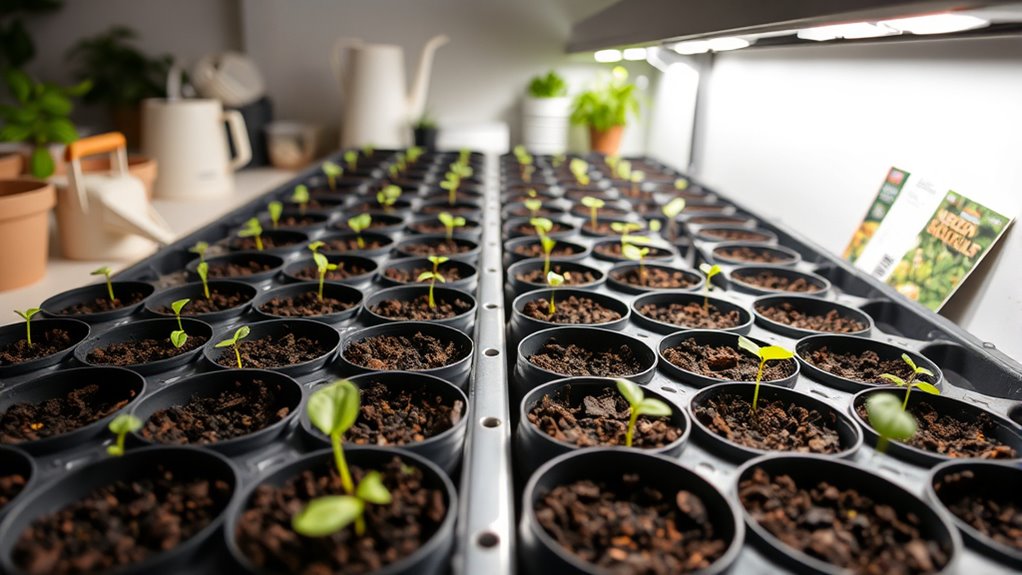
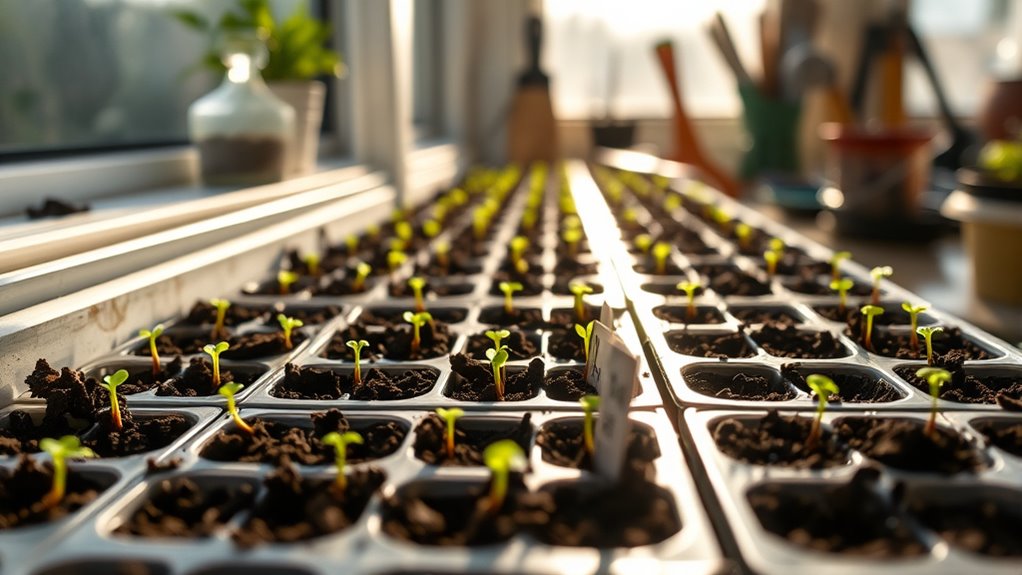
Choosing the right containers for seed starting is vital for healthy seedling development. Good container drainage prevents water from pooling, which can lead to root rot and weak growth. Look for containers with drainage holes or consider adding holes if they’re absent. Proper drainage ensures excess water escapes, keeping the soil just moist enough. Seedling labels are also essential—they help you keep track of different plant varieties and prevent mix-ups. Use waterproof labels or plant markers that won’t fade or wash away easily. Clear labels save you time and reduce confusion later on. Select containers that are the right size for your seedlings to grow strong before transplanting. Additionally, ensuring proper ventilation in containers can help prevent fungal diseases and promote robust root systems. With the right containers, you set a solid foundation for thriving indoor seedlings.
Selecting Optimal Soil Mixes for Healthy Seedlings
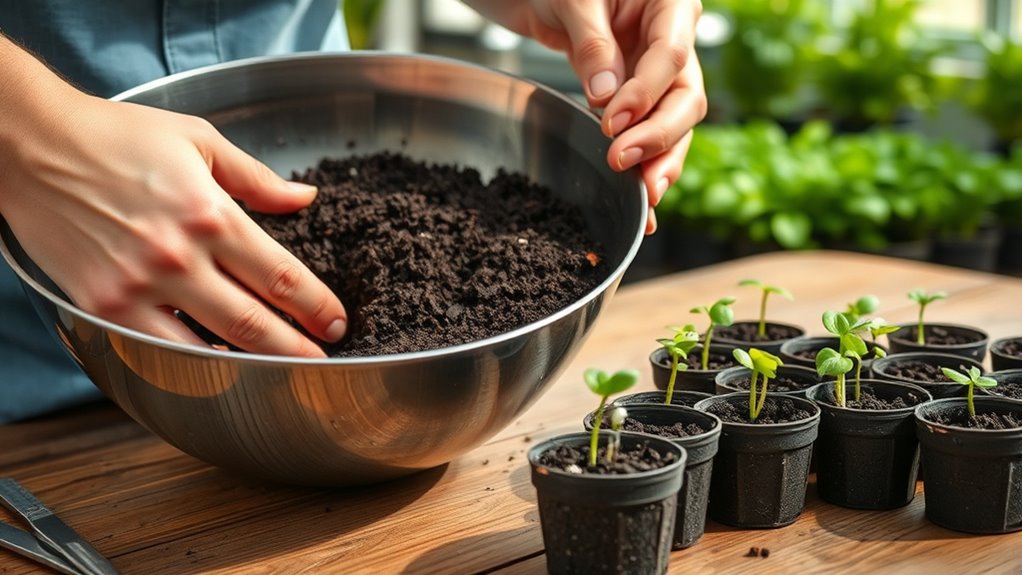
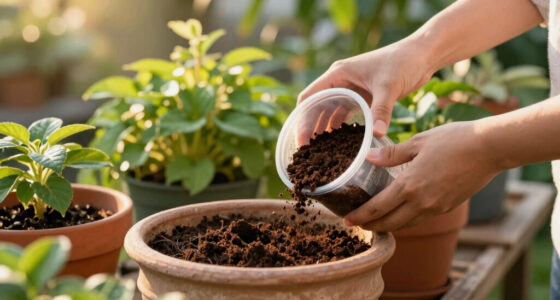
Selecting the right soil mix is essential for healthy seedling growth because it provides the necessary nutrients and proper drainage. To achieve this, focus on soil nutrient management by choosing mixes that balance nutrients for young plants. Organic soil amendments, like compost or worm castings, enrich the soil naturally and promote vigorous growth. Avoid heavy or compacted soils, which can hinder root development and water retention. Instead, opt for a lightweight, well-draining mix that retains moisture without becoming waterlogged. Incorporate organic amendments to boost nutrient levels and improve soil structure. Proper soil selection also involves understanding how to Mazda Tuning tailor soil properties to seedling needs, ensuring optimal conditions for development. This approach guarantees your seedlings receive consistent nourishment, leading to stronger, healthier plants. Proper soil selection sets the foundation for successful indoor seed starting and vigorous growth once transplanted outdoors.
Timing Your Indoor Seed Launch for Maximum Growth

Timing your seed start is vital for healthy growth, so you’ll want to plan your sowing schedule carefully. Knowing the right indoor and outdoor timings ensures your seedlings develop properly before transplanting. Getting this right helps you avoid early or late planting mistakes that can hinder your garden’s success. Additionally, understanding the best timing for seed germination can significantly improve your success rate.
Optimal Sowing Schedule
Starting your seeds at the right time guarantees healthy growth and a successful garden. To optimize your sowing schedule, consider these key points: 1. Know your last frost date and count backward based on each plant’s seedling nutrition needs. 2. Stagger planting times to ensure continuous harvests and manageable pest management. 3. Track indoor conditions like light and temperature to avoid premature or delayed germination. Additionally, incorporating cost‑of‑ownership math into your planning can help you choose the most efficient seed-starting methods and materials. Timing your seed launch correctly ensures seedlings are strong enough for transplanting, minimizing stress. Proper timing helps prevent issues like legginess or weak stems, which can invite pests. By aligning your sowing schedule with your local climate and plant requirements, you give your seedlings the best start, setting the stage for a thriving garden.
Indoor vs. Outdoor Timing
Understanding the ideal timing for indoor seed starting is essential to guarantee your seedlings develop properly before transplanting outdoors. Starting seeds too early can increase the risk of seedling diseases, which thrive in crowded, damp conditions. Conversely, starting too late may shorten your growing season. To optimize growth, time your seed starts so seedlings are strong but not root-bound when ready for transplanting tips. Check your local climate and frost dates to determine the best indoor timing, usually 6-8 weeks before outdoor planting. Proper timing ensures your plants are healthy and resilient, reducing transplant shock and promoting robust growth once outdoors. This approach helps you avoid common pitfalls and maximizes the success of your indoor seed starting efforts. Paying attention to seedling development stages can further improve your success rate.
Providing Proper Light and Temperature Conditions
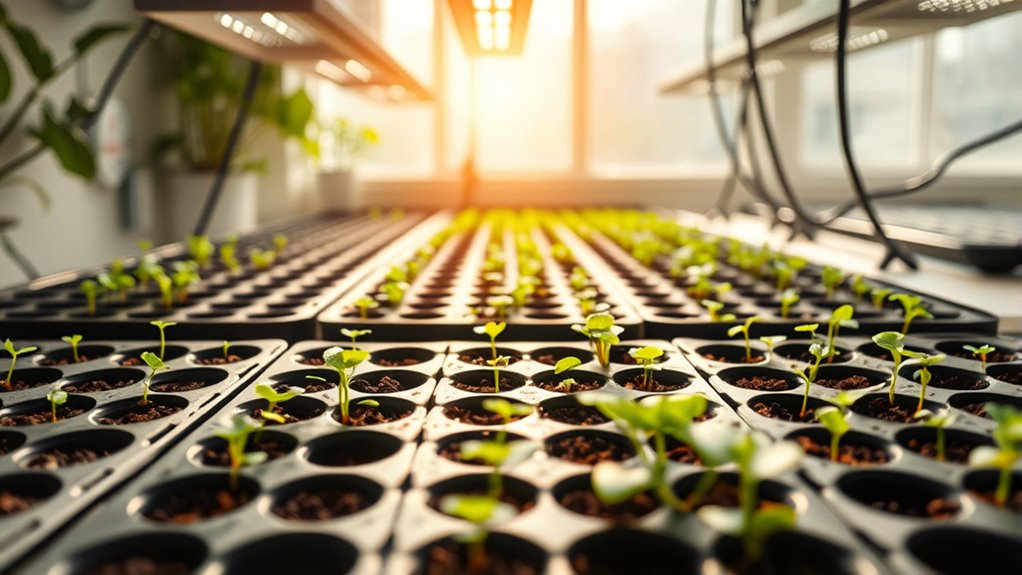
To guarantee your seedlings grow strong, you need to provide adequate light sources, like grow lights or bright windows. Keep the temperature steady, ideally between 65-75°F, to promote healthy development. Color temperature adjustments can help optimize the lighting conditions for different stages of seedling growth. Consistent light and temperature control are key to successful indoor seed starting.
Adequate Light Sources
Providing adequate light is essential for healthy seedling growth indoors, as it influences their development and vigor. To guarantee your seedlings thrive, explore different grow light options, such as LED, fluorescent, or HID lights, tailored to your space and budget. Remember, natural sunlight benefits seedlings by providing full-spectrum light, but it can be inconsistent. To optimize light sources:
- Use grow lights positioned 2-4 inches above seedlings, adjusting as they grow.
- Provide 12-16 hours of light daily to mimic natural sunlight.
- Supplement with natural sunlight when possible, especially in bright windows.
- Ensuring proper light and temperature conditions is vital for seedling health and growth.
Balancing artificial grow light options with natural sunlight benefits helps seedlings develop strong stems and healthy leaves, setting a solid foundation for transplanting outdoors.
Consistent Temperature Control
Maintaining a consistent temperature is crucial for seedling development, especially when growing indoors where environmental conditions can fluctuate. Stable temperatures promote healthy seedling nutrition, ensuring they grow strong and resilient. If temperatures are too cold or hot, seedlings can become stressed, making them more vulnerable to pests and diseases. Using a heat mat or adjusting your grow space’s thermostat helps keep conditions steady. Proper temperature control also supports uniform germination and growth. When seedlings develop correctly, they’re better equipped to handle pest management challenges. Avoid temperature swings that can weaken seedlings or slow their progress. Regularly monitor your indoor environment to provide the ideal conditions that foster healthy, vigorous seedlings from start to finish. Additionally, understanding the psychological factors behind stress responses can help in maintaining a calm, stable environment that benefits your plants.
Watering Techniques to Prevent Damping-Off and Promote Growth

Effective watering is essential for healthy seedling development, especially when starting seeds indoors. Proper watering techniques help prevent damping-off, a common issue caused by overwatering and fungal pathogens. To promote ideal growth and damping-off prevention, follow these tips:
- Water lightly and frequently, keeping the soil consistently moist but not soaked.
- Use a spray bottle or gentle watering can to deliver even moisture without disturbing delicate roots.
- Avoid watering from above; instead, water from the bottom to encourage healthy root development and reduce disease risk.
- Ensuring proper watering techniques can significantly improve seedling health and resilience against fungi.
Hardening Off Seedlings to Ensure Smooth Transition Outdoors
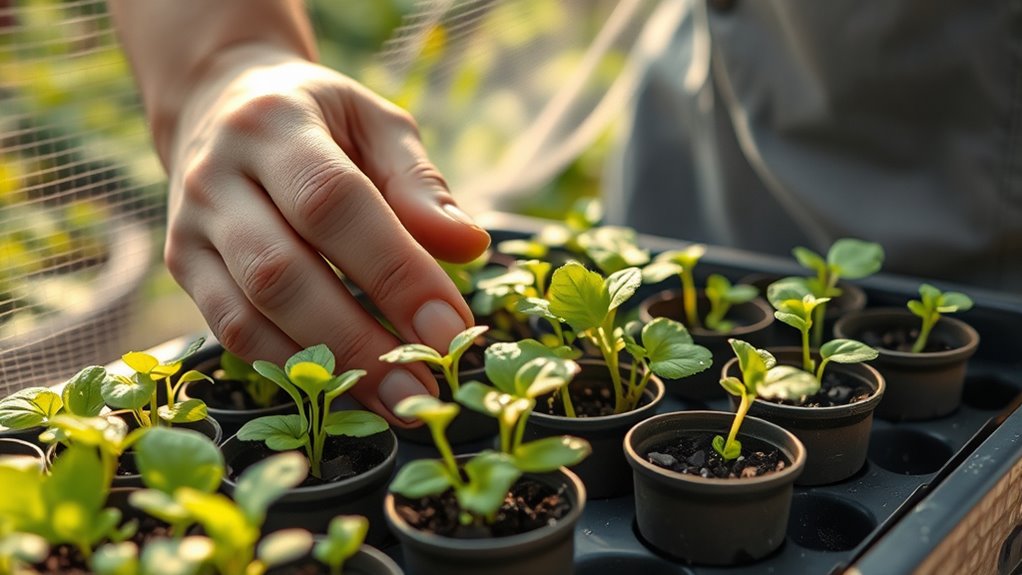
Before transplanting seedlings outdoors, it’s crucial to gradually acclimate them to the new environment through a process called hardening off. This step reduces transplant stress and helps your plants adjust to outdoor conditions. Start by placing your seedlings outside for a few hours each day, in a sheltered spot away from direct sun and wind. Gradually increase their outdoor exposure over a week, extending the time and introducing more sunlight. This outdoor acclimation allows seedlings to develop tougher leaves and stronger stems, making them less vulnerable to shock after transplanting. Consistent hardening off guarantees your plants are better prepared for the transition, leading to healthier growth and a more successful garden. Skipping this step can result in stunted growth or transplant failure.
Frequently Asked Questions
How Can I Prevent Fungal Diseases in Indoor Seed Starting?
To prevent fungal diseases in indoor seed starting, you should focus on fungal prevention by maintaining good air circulation and avoiding overwatering. Use a seed treatment with a fungicide or organic options like neem oil before planting to protect your seeds. Keep your growing area clean, remove any infected debris, and ensure containers drain well. These steps help create an environment less hospitable to fungi and promote healthy seed growth.
What Are Common Mistakes to Avoid During Seed Germination?
To nurture successful germination, avoid common pitfalls like neglecting seed dormancy and soil temperature. You might overlook that some seeds need a gentle wake-up call, so don’t skip pre-soaking or stratification. Keep soil consistently warm, as fluctuations can hinder growth. Overly cold or hot soil can delay germination or cause failure. Stay attentive to these subtle cues, ensuring your seeds feel welcomed and ready to sprout with ideal conditions.
How Do I Select the Best Seed Varieties for Indoor Starting?
To select the best seed varieties for indoor starting, focus on seed variety selection that suits your space and climate. Look for fast-growing, compact varieties ideal for containers, and choose those labeled for indoor gardening tips. Read seed packets for germination info and growth habits. Opt for disease-resistant options and prioritize heirloom or organic seeds if you prefer organic gardening. This approach helps guarantee healthy, productive indoor plants.
When Is the Ideal Time to Transplant Seedlings Outdoors?
You should transplant seedlings outdoors once they reach transplant readiness, typically when they have two to three sets of true leaves and are sturdy enough to handle the move. Timing considerations include waiting until the danger of frost has passed and outdoor conditions are suitable. Keep an eye on weather forecasts, and gradually harden off your seedlings to make sure they adapt well to their new environment.
What Tools Are Essential for Efficient Indoor Seed Starting?
You need a few essential tools to start seeds indoors efficiently. A watering can helps you gently hydrate your seedlings without overwatering, ensuring healthy growth. Seed trays are perfect for organizing your seeds and providing proper drainage and airflow. Additionally, consider using labels to keep track of varieties and a grow light to give your seedlings the light they need. These tools make indoor seed starting more manageable and successful.
Conclusion
Don’t overlook the power of starting seeds indoors—you’ll set yourself up for a thriving garden. Follow these expert tips on containers, soil, timing, light, watering, and hardening off, and watch your seedlings flourish. Remember, “A journey of a thousand miles begins with a single step.” Taking the time now to nurture your seeds indoors pays off later with healthy plants and bountiful harvests. Start strong, and let your garden grow!