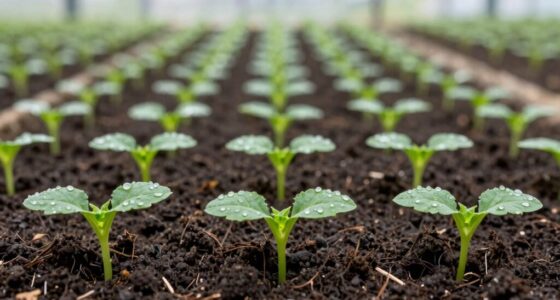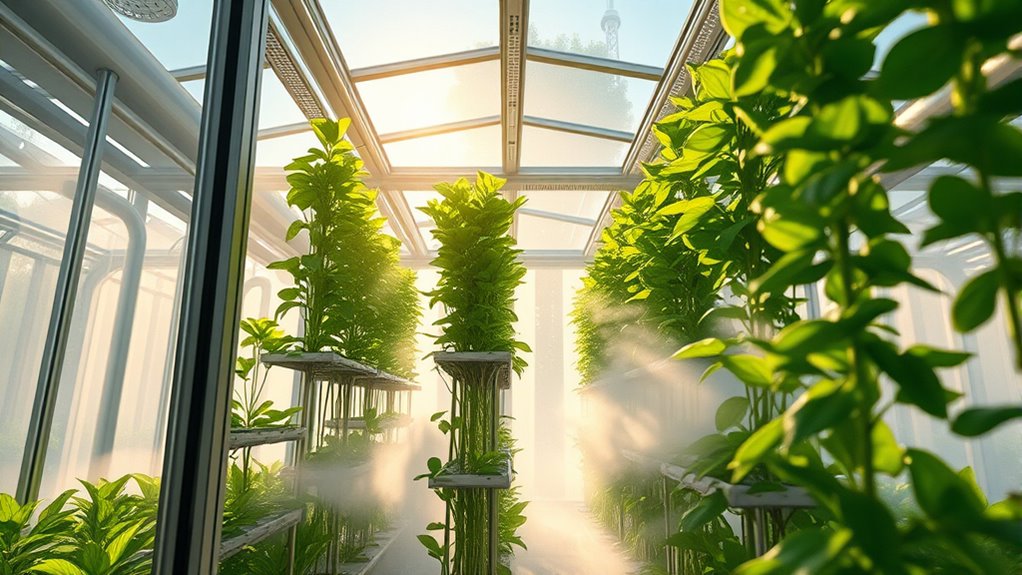
Aeroponics is transforming greenhouse growing by enabling faster, more efficient crop production with minimal resource use. It allows plants to grow without soil, using mist to deliver nutrients directly to roots, maximizing space and reducing water consumption. This method’s integration with vertical farming and automation promises sustainable, year-round food production in limited spaces. To discover how these innovations could shape the future of agriculture and greener cities, keep exploring the possibilities ahead.

Get garden gear delivered free — and shop member deals
- Fast, free delivery on millions of items
- Access to Prime Big Deal Days deals on October 6–7
- Prime Video, Amazon Music and more included
Key Takeaways
- Aeroponics enables soil-free, highly efficient crop growth within controlled greenhouse environments, maximizing space and resource use.
- Combining aeroponics with vertical farming enhances productivity, allowing year-round cultivation in compact, urban settings.
- Technological advancements in automation improve system scalability, crop management, and environmental control for future greenhouse operations.
- Integration of aeroponics reduces water and nutrient waste, promoting sustainable, eco-friendly greenhouse agriculture.
- Future trends include smart monitoring and security measures to ensure high yield, crop quality, and resilience in greenhouse farming systems.
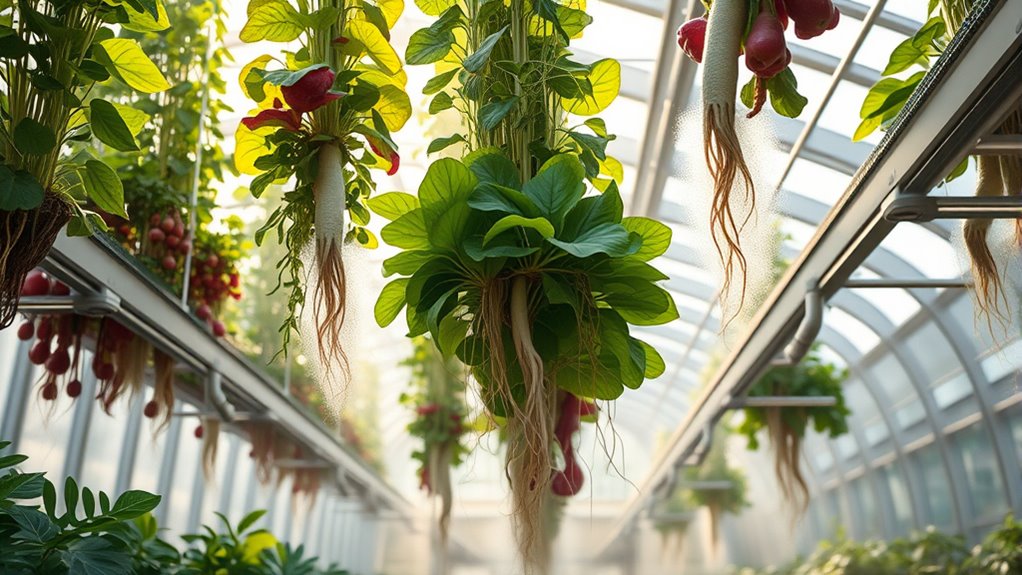
Aeroponics is revolutionizing agriculture by allowing plants to grow without soil, using a fine mist to deliver nutrients directly to their roots. This innovative approach offers numerous advantages over traditional farming methods, especially when integrated into modern systems like hydroponic systems and vertical farming. As you explore these cutting-edge techniques, you’ll discover how they can maximize space, reduce water usage, and increase crop yields—all within controlled environments that optimize growth conditions.
Hydroponic systems, which rely on nutrient-rich water solutions, form the backbone of many aeroponic setups. By combining aeroponics with hydroponics, you create a hybrid that enhances nutrient delivery efficiency and minimizes resource waste. This synergy allows you to grow a variety of crops faster and more reliably, regardless of external weather or soil quality. Plus, hydroponic systems are scalable, so whether you’re managing a small urban garden or a large commercial operation, you can tailor the setup to fit your needs. You’ll find that managing nutrient levels becomes more straightforward, and the chances of soil-borne diseases are drastically reduced, leading to healthier plants and higher yields.
Combining aeroponics with hydroponics boosts growth, reduces waste, and simplifies nutrient management for healthier, faster crops.
Vertical farming takes these concepts even further by stacking multiple layers of crops in a confined space, often inside climate-controlled facilities. When combined with aeroponics, vertical farms can produce a significant amount of food in a relatively small footprint. As you set up a vertical farm, you’ll appreciate how aeroponics allows roots to hang freely, maximizing access to the mist and ensuring rapid growth. This setup reduces the need for large amounts of land and water, making it ideal for urban environments where space is limited. You can also control factors like light, humidity, and temperature precisely, resulting in consistent crop quality year-round. The integration of aeroponics into vertical farming systems enables you to cultivate fresh produce closer to consumers, reducing transportation costs and carbon footprint. Additionally, advancements in automation technology are making these systems more efficient and easier to manage at scale.
Furthermore, understanding the importance of coastal zones and their unique environmental conditions can inspire innovative solutions for integrating aeroponic systems near water sources, promoting sustainable practices. As you venture into this future of greenhouse growing, you’ll see how aeroponics, combined with hydroponic systems and vertical farming, can revolutionize how we produce food. These technologies empower you to create sustainable, efficient, and highly productive agricultural environments. They also open doors to new opportunities for urban agriculture and food security, making fresh produce accessible even in densely populated areas. Additionally, implementing advanced fraud detection and security measures in your operations can protect your investments and ensure the integrity of your supply chain. By embracing these innovations, you’ll be part of a movement that redefines sustainable farming and helps meet the growing global demand for nutritious, locally-grown food.
aeroponics system for home gardening
As an affiliate, we earn on qualifying purchases.
As an affiliate, we earn on qualifying purchases.
Frequently Asked Questions
What Are the Initial Setup Costs for Aeroponics Systems?
When considering initial setup costs, you should do a thorough cost analysis to understand your investment. Expect to spend on technology investments like pumps, misters, and control systems, which can be significant. While the upfront costs may seem high, you’ll benefit from efficient resource use and faster crop cycles. Planning carefully helps you allocate funds wisely, ensuring your aeroponics system gets off to a strong start without unexpected expenses.
How Does Aeroponics Compare to Traditional Soil Farming Financially?
You should consider the cost analysis when comparing aeroponics to traditional soil farming. Aeroponics often requires higher initial investments, like specialized equipment and setup costs, which can pose significant investment risks. However, it can lead to lower ongoing expenses due to reduced water and fertilizer use. Over time, these savings might offset initial costs, making aeroponics a potentially more profitable choice, especially with careful financial planning.
Can Aeroponics Be Used for Large-Scale Commercial Agriculture?
You might wonder if aeroponics can handle large-scale commercial agriculture. While it’s promising, scalability challenges exist, such as high setup costs and complex system maintenance. Additionally, crop variety limitations could restrict its use for diverse crops. However, with advancements, you could see aeroponics expanding to bigger farms, offering faster growth and less water use. Still, overcoming these hurdles is essential for widespread commercial adoption.
What Are the Main Environmental Benefits of Aeroponics?
You’ll notice that aeroponics offers significant environmental benefits. It drastically reduces water consumption through efficient recycling, ensuring you use less water than traditional methods. Plus, since plants grow in a controlled environment, you can minimize or even eliminate pesticide use, leading to a healthier ecosystem. Overall, aeroponics helps you farm sustainably, conserving resources and reducing chemical runoff, making your agriculture more eco-friendly and resilient.
How Does Aeroponics Impact Crop Nutrient Density and Flavor?
Imagine revealing nature’s secret recipe with each harvest. Aeroponics boosts crop nutrient density through precise nutrient delivery, enhancing flavor and nutritional content. You’ll notice improved flavor enhancement as plants develop more concentrated sugars and aromatic compounds. Nutrient optimization guarantees your crops are richer in essential vitamins and minerals, making every bite more satisfying. This innovative method transforms ordinary produce into vibrant, flavorful, nutrient-packed delights, elevating your gardening or farming experience to new heights.
Conclusion
As you embrace aeroponics and explore new greenhouse innovations, you’re stepping into a future where farming is smarter, faster, and more sustainable—almost like having a secret recipe from a modern-day alchemist. These cutting-edge methods let you grow healthier plants with less water and fewer chemicals, all while feeling like you’re piloting a spaceship rather than tending a garden. So, get ready to revolutionize your green space and make farming history, one futuristic crop at a time.
Fall yard work Picks
leaf blowers
As an affiliate, we earn on qualifying purchases.