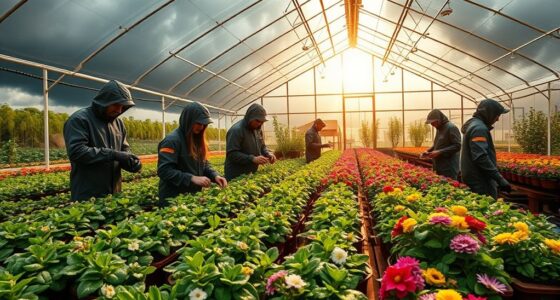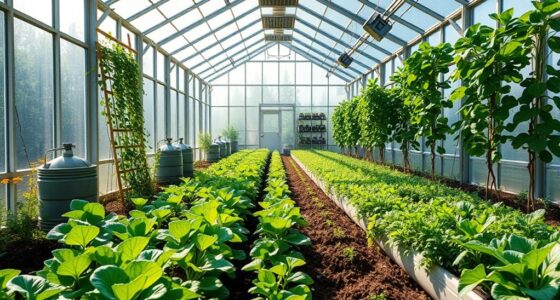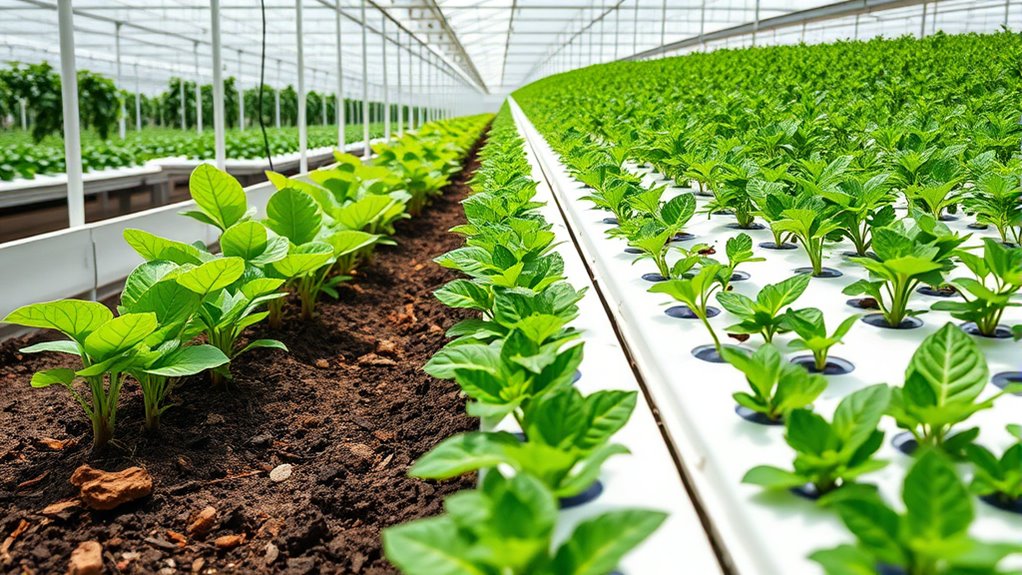

Choosing between soil and soilless mediums depends on your greenhouse needs. Soil offers natural nutrients, good water retention, and supports a self-sustaining environment, ideal for traditional gardening. Soilless media, like coconut coir or perlite, provide excellent drainage, are lightweight, and reduce pests and diseases, perfect for controlled setups or hydroponics. Understanding these differences helps you select the right medium for healthier plants. Keep exploring to find the best fit for your greenhouse success.

Get garden gear delivered free — and shop member deals
- Fast, free delivery on millions of items
- Access to Prime Big Deal Days deals on October 6–7
- Prime Video, Amazon Music and more included
Key Takeaways
- Soil offers natural nutrient retention and supports a self-sustaining environment, ideal for traditional greenhouse setups.
- Soilless mediums provide superior drainage and moisture control, reducing risks of root rot and waterlogging.
- Soil can harbor pests and diseases, requiring sterilization, whereas soilless media are sterile and lower disease risk.
- Soil needs less frequent fertilization due to gradual nutrient release, while soilless media require regular feeding.
- Soilless systems are lightweight, suitable for controlled environments, and offer greater predictability in plant growth.
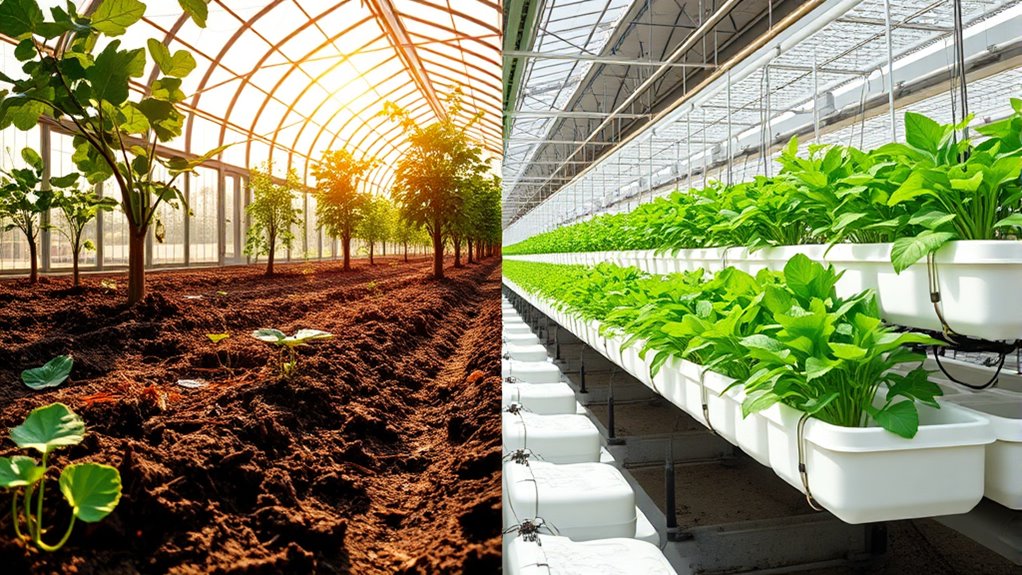
When choosing a growing medium for your plants, understanding the differences between soil and soilless options is essential. Your decision influences how well your plants absorb nutrients and manage water, which are critical for healthy growth. Soil, especially if it’s rich and organic, tends to have high nutrient retention. It naturally contains minerals and organic matter that slowly release nutrients over time, providing a steady supply for your plants. This makes soil a good choice if you want a more self-sustaining environment that requires less frequent feeding. However, soil’s nutrient retention can also be a double-edged sword; if it’s too dense or poorly drained, excess water can linger, leading to root rot or other problems. Proper soil management and amendments are necessary to optimize water drainage and prevent oversaturation. Additionally, soil can harbor pests and diseases if not properly sterilized or maintained, which can affect plant health. Regular testing and soil sterilization help maintain a healthy growing environment and prevent issues from pests and pathogens. Using organic matter like compost can further enhance soil fertility and structure, supporting healthier plant growth.
On the other hand, soilless growing mediums—such as coconut coir, perlite, or rockwool—offer very different benefits. These mediums generally have less inherent nutrient retention compared to soil, so you’ll need to provide nutrients through fertilizers. But because they’re designed for excellent water drainage, they help prevent water from pooling around roots. This makes soilless options ideal for hydroponic systems or situations where controlling moisture is a priority. Their superior drainage means you can avoid issues related to overwatering, which is common with traditional soil. Additionally, these mediums tend to be lightweight and sterile, reducing the risk of pests and diseases. Their consistency and predictability allow you to precisely control watering and feeding schedules, leading to faster, more predictable plant growth. Proper soil management plays a crucial role in optimizing plant growth and avoiding common issues. Furthermore, the chemical reactions within these mediums can be manipulated to enhance plant health and growth rates. The sterile nature of soilless media can also help in preventing the spread of soil-borne diseases, contributing to healthier plants overall.
As an affiliate, we earn on qualifying purchases.
Frequently Asked Questions
How Does Ph Stability Differ Between Soil and Soilless Mediums?
You’ll notice pH stability varies between soil and soilless mediums. Soil tends to buffer pH fluctuation, maintaining steady levels and supporting nutrient stability. In contrast, soilless mixes are more prone to pH swings, requiring regular monitoring and adjustments. This means your plants in soilless mediums might experience more nutrient deficiencies if pH isn’t carefully managed, while soil generally offers a more stable environment for consistent plant growth.
Which Medium Offers Better Insulation for Root Temperature Control?
You want to know which medium provides better insulation for root temperature control. Generally, soil offers superior insulation properties, helping maintain stable root temperature even in fluctuating outdoor conditions. Soilless mediums, like coco coir or perlite, tend to have less insulation, leading to more temperature fluctuations. If consistent root temperature is your priority, soil is the better choice due to its natural insulating qualities, ensuring healthier plant growth.
Are There Specific Pests Exclusive to Soil or Soilless Systems?
You might notice pest vulnerabilities differ between soil and soilless systems. Soil can harbor pests like nematodes and soil-borne fungi, making pest management more challenging. In contrast, soilless systems reduce some pest risks but can still attract issues like fungus gnats or aphids. No pests are exclusive to either medium, but understanding these vulnerabilities helps you develop effective pest management strategies tailored to your greenhouse setup.
How Does Water Retention Vary Between Soil and Soilless Growing Media?
Have you noticed how some sponges hold water longer than others? Water retention differences between soil and soilless media are significant. Soil typically retains more water, offering steady moisture and better nutrient availability, while soilless media drain faster, requiring frequent watering. Knowing these differences helps you manage irrigation efficiently, ensuring your plants get the right amount of water and nutrients for healthy growth. Which medium suits your greenhouse’s watering routine best?
What Are the Environmental Impacts of Each Growing Medium?
You should consider how each growing medium impacts the environment. Soil supports nutrient cycling and carbon sequestration, helping reduce greenhouse gases and improve soil health. In contrast, soilless media often have a smaller carbon footprint during production but may rely more on synthetic inputs, which can harm ecosystems. Your choice influences sustainability; soil tends to be more eco-friendly due to its natural processes, while soilless options require mindful management to lessen environmental impacts.
Conclusion
So, whether you stick with traditional soil or venture into soilless options, remember that the “perfect” medium isn’t so perfect after all. Ironically, the choice might just come down to your patience for messes or your desire for control—both of which are easier said than done. So go ahead, pick your poison, and enjoy the unpredictable journey of gardening. After all, whether soil or soilless, your plants will still find a way to surprise you.
Fall Picks
fall essentials
As an affiliate, we earn on qualifying purchases.