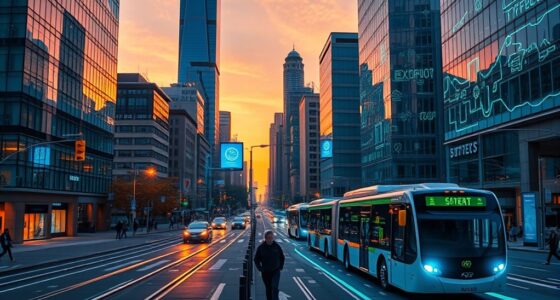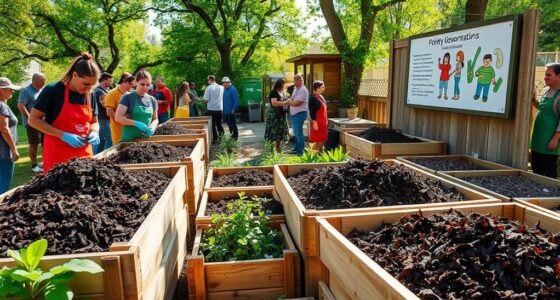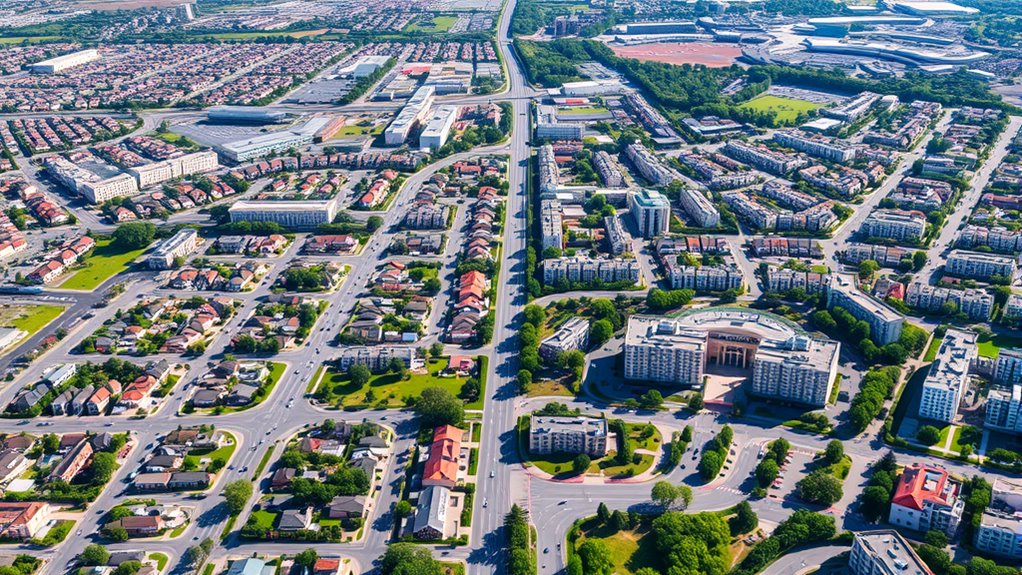

Urban sprawl often leads to scattered neighborhoods, heavy reliance on cars, and higher infrastructure costs, harming both the environment and community wellbeing. In contrast, smart growth promotes compact, walkable neighborhoods with efficient transit, green spaces, and sustainable land use. By managing growth thoughtfully, you can reduce pollution, preserve natural areas, and foster stronger communities. Exploring these strategies further will show you how cities can grow responsibly and sustainably for the future.
Key Takeaways
- Smart growth promotes compact, walkable neighborhoods, reducing reliance on cars and lowering emissions compared to sprawling development.
- Managing urban sprawl involves controlling land use and infrastructure costs, often leading to increased congestion and environmental degradation.
- Technology and advanced planning tools support sustainable city expansion by optimizing land use and encouraging eco-friendly development.
- Smart growth emphasizes preserving green spaces and natural corridors, enhancing biodiversity and community well-being.
- Urban sprawl tends to fragment communities and increase infrastructure expenses, while smart growth fosters connected, resilient urban environments.
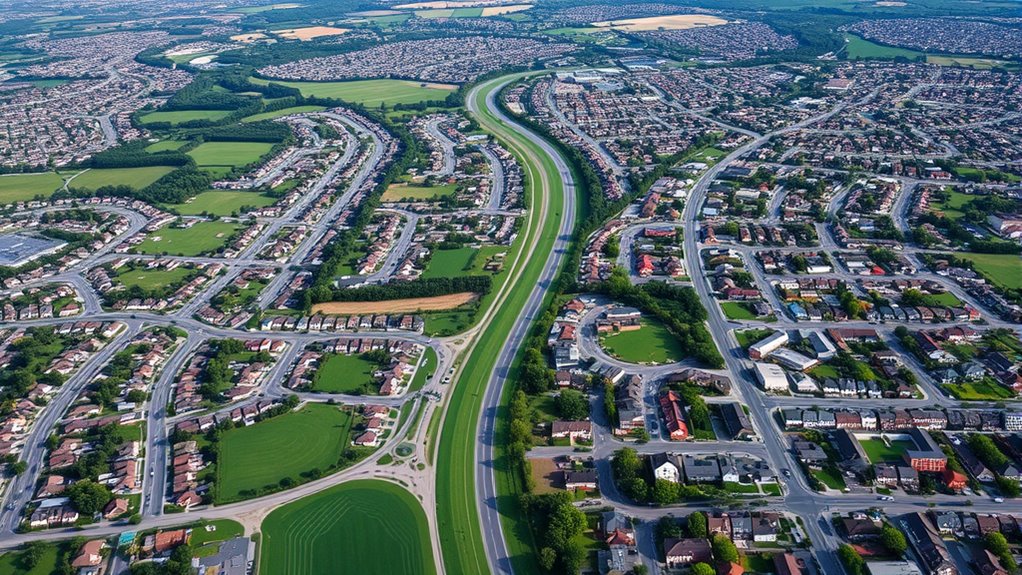
Urban sprawl and smart growth represent two contrasting approaches to city development, each with its own implications for communities and the environment. When you consider how your city expands, you might notice that urban sprawl often leads to scattered neighborhoods, increased reliance on cars, and diminished access to public transit and green spaces. This unchecked growth spreads development over large areas, making it harder to invest in efficient public transit systems. Without convenient public transit options, residents are forced to depend on personal vehicles, which contributes to traffic congestion, air pollution, and higher transportation costs. Green spaces tend to be sacrificed in sprawling developments, replaced by roads and buildings, reducing opportunities for recreation, mental well-being, and ecological health. As a result, communities experience a loss of natural beauty and an increase in urban heat islands, which intensify summer temperatures. Studies also show that the spread of development over large areas can lead to increased infrastructure costs and greater environmental impacts. Additionally, the fragmentation of land can hinder connectivity and community cohesion, impacting overall quality of life. Moreover, investment in technology can help cities better manage growth patterns and optimize land use planning to support sustainable development. Incorporating advanced planning tools can further enhance the effectiveness of growth management strategies.
In contrast, smart growth promotes a more sustainable and community-focused approach to expansion. You’re encouraged to think about compact, walkable neighborhoods that prioritize access to public transit. By designing cities with efficient transit networks, you reduce the need for extensive car travel, cutting down on emissions and easing traffic congestion. Smart growth also emphasizes the importance of green spaces within urban areas. Parks, community gardens, and natural corridors are integrated into development plans, ensuring residents have easy access to outdoor recreation and nature. These green spaces not only improve air quality and support biodiversity but also serve as communal gathering spots that strengthen neighborhood ties. When cities adopt smart growth principles, you’ll likely find that new developments are designed with sustainability in mind—featuring mixed-use buildings, pedestrian-friendly streets, and preserved natural areas that balance growth with environmental stewardship. Additionally, access to personalized work environments can be enhanced through thoughtful urban planning that supports local amenities and community engagement. Incorporating innovative urban design strategies can further optimize land use and foster resilient, adaptable communities. Emphasizing integrated land use ensures that development aligns with environmental and social goals, creating more livable cities for all residents.

Axiom Transit Cycle Rack, Black
Hand-welded 10.2mm tubular 6061 T6 alloy construction
As an affiliate, we earn on qualifying purchases.
As an affiliate, we earn on qualifying purchases.
Frequently Asked Questions
How Does Public Transportation Influence Urban Growth Strategies?
Public transportation plays a key role in shaping urban growth strategies. It promotes transit-oriented development, encouraging higher density, mixed-use neighborhoods around transit hubs. You’ll find pedestrian-friendly design enhances walkability, reducing reliance on cars. By investing in efficient transit systems, you help create sustainable cities where growth is well-managed, less sprawling, and more accessible. This approach not only improves mobility but also supports environmental goals and vibrant community life.
What Role Do Local Governments Play in Sustainable Urban Planning?
You play a crucial role in sustainable urban planning by shaping zoning regulations and land use policies. Your decisions influence how cities grow, encouraging compact development and protecting green spaces. By prioritizing mixed-use areas and transit-friendly designs, you help reduce urban sprawl and promote smart growth. Your proactive approach ensures city expansion is environmentally responsible, economically beneficial, and enhances residents’ quality of life.
How Can Community Involvement Shape Smart Growth Initiatives?
Community involvement is essential in shaping smart growth initiatives. When you participate in neighborhood engagement and community participation, you help guarantee development reflects local needs and values. Your input can influence decisions on zoning, public spaces, and transportation, making growth sustainable and inclusive. By actively engaging, you empower residents to create a balanced, livable city that minimizes sprawl, promotes efficient land use, and fosters a strong sense of community.
What Are the Economic Impacts of Urban Sprawl Versus Smart Growth?
You should consider how urban sprawl and smart growth impact the economy. Conducting a cost-benefit analysis reveals that sprawl often leads to higher infrastructure costs and reduced economic resilience due to disconnected communities. In contrast, smart growth promotes efficient land use, saving money and strengthening local economies. By understanding these impacts, you can better support sustainable development strategies that foster economic stability and growth within your community.
How Do Zoning Laws Affect Sustainable City Development?
Ever wondered how zoning laws shape our cities? You see, zoning regulations control land use, dictating where buildings, parks, and roads go. They directly influence sustainable city development by promoting compact growth, reducing urban sprawl, and preserving green spaces. By setting clear land use policies, you can create walkable neighborhoods, improve infrastructure, and support environmental goals. Without thoughtful zoning, sustainable growth becomes much harder to achieve, impacting your community’s future.

SORANGEUN Metal Herb Garden Planter Set with Tray, 3-Pack Green Zinc-Coated Windowsill Plant Pots with Drainage Holes & Handles for Indoor Outdoor Kitchen Garden
Versatile Indoor & Outdoor Herb Garden Planter – Perfect for growing basil, mint, rosemary, and more in your…
As an affiliate, we earn on qualifying purchases.
As an affiliate, we earn on qualifying purchases.
Conclusion
As you consider urban sprawl and smart growth, remember they’re like night and day. Sprawl spreads your city wide, often sacrificing nature and community. Smart growth, on the other hand, brings density, sustainability, and connected neighborhoods. While sprawl may offer space, it can cost you in traffic and environment. Choosing smart growth means building a city that’s alive, efficient, and friendly—making your urban experience better. It’s all about shaping a future where you thrive, not just expand.

New York City 3D Skyline Map – Framed Miniature Manhattan Model | NYC Desk Decor & Gift | Architectural Cityscape (7" x 5")
Detailed New York City map with raised 3D structures and accurate street layout recreating Manhattan in miniature form
As an affiliate, we earn on qualifying purchases.
As an affiliate, we earn on qualifying purchases.
Green Cities: Designing Sustainable Urban Spaces for the Future: A Comprehensive Guide to Eco-Friendly Architecture and Urban Planning (Future Urban Design Series)
As an affiliate, we earn on qualifying purchases.
As an affiliate, we earn on qualifying purchases.