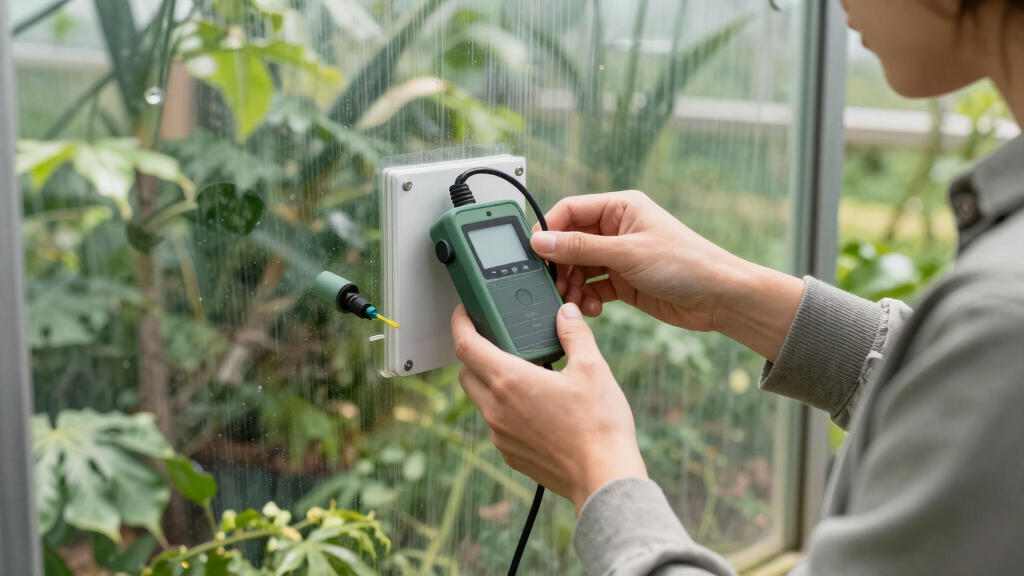

Finding the best greenhouse data logger for remote monitoring involves balancing connectivity options, accuracy, ease of setup, and budget. The Elitech RCW-360Pro stands out as the overall top choice for its reliable Wi-Fi and cellular capabilities, ensuring continuous data access. The Temp Stick offers a straightforward Wi-Fi solution perfect for small-scale setups, while the HOBO MX1101 provides high precision for detailed data. Many options face tradeoffs between cost and features, especially regarding cellular coverage and ease of installation. Continue reading for a detailed breakdown of each product to find the best fit for your greenhouse needs.

Get garden gear delivered free — and shop member deals
- Fast, free delivery on millions of items
- Access to Prime Big Deal Days deals on October 6–7
- Prime Video, Amazon Music and more included
Complete the kit


Key Takeaways
- The top picks balance connectivity—Wi-Fi, cellular, or both—to ensure reliable remote access in various greenhouse environments.
- Accuracy and sensor durability are key, with some models offering professional-grade precision while others prioritize ease of use.
- Price varies widely, with premium options offering advanced features and basic models providing essential data logging at a lower cost.
- Ease of installation and maintenance can significantly impact long-term usability, especially for users without technical expertise.
- Tradeoffs often involve choosing between cellular coverage and Wi-Fi-only models, depending on greenhouse location and internet availability.
| MarCELL Cellular Temperature, Humidity & Power Monitor (Verizon) |  | Best Overall for Remote Greenhouse Monitoring with Cellular Connectivity | Subscription Plans: as low as $8.25/month | Network: Cellular (Verizon) | Monitoring: 24/7 | VIEW LATEST PRICE | See Our Full Breakdown |
| HOBO by Onset MX1101 – Temperature and Humidity Data Logger |  | Best for Wireless Monitoring with Extended Data Storage | Temperature Range: -20°C to 70°C | Temperature Accuracy: ±0.21°C | Relative Humidity Range: 1% to 90% | VIEW LATEST PRICE | See Our Full Breakdown |
| YoLink Smart X3 Outdoor Temperature Data Logger with Probe |  | Best for Long-Range Outdoor Monitoring with Offline Logging | Range: 1/4 mile | Battery Life: 5+ years | Connectivity: Requires YoLink Hub | VIEW LATEST PRICE | See Our Full Breakdown |
| Temp Stick Remote WiFi Temperature & Humidity Sensor, Data Logger, No Subscription |  | Best for Cost-Effective WiFi Monitoring with No Fees | Battery: 2x AA Batteries | Upper Temperature Range: 140 °F | Temperature Accuracy: 0.15 °F | VIEW LATEST PRICE | See Our Full Breakdown |
| GoveeLife Wi-Fi Gateway Thermo-Hygrometer 3-Pack (Indoor & Outdoor) |  | Best for Long-Range Indoor & Outdoor Monitoring with Multiple Sensors | Connectivity: LoRa and WiFi (not 5G) | Range: up to 1,312 feet | Accuracy: Temperature ±0.54°F, Humidity ±3% RH | VIEW LATEST PRICE | See Our Full Breakdown |
| Elitech RCW-360Pro Wi-Fi & Cellular Temperature & Humidity Data Logger |  | Best for Remote, Real-Time Monitoring with Cloud Connectivity | Connectivity: Cellular LTE 4G, Wi-Fi | Offline Storage: 100,000 data points | Probes: Interchangeable types (sold separately) | VIEW LATEST PRICE | See Our Full Breakdown |
| greenhouse data logger for remote monitoring | Connectivity |
|---|---|
| MarCELL Cellular Temperature | — |
| HOBO by Onset MX1101 | Bluetooth Low Energy |
| YoLink Smart X3 Outdoor Temper | Requires YoLink Hub |
| Temp Stick Remote WiFi Tempera | — |
| GoveeLife Wi-Fi Gateway Thermo | LoRa and WiFi (not 5G) |
| Elitech RCW-360Pro Wi-Fi & Cel | Cellular LTE 4G, Wi-Fi |
More Details on Our Top Picks
MarCELL Cellular Temperature, Humidity & Power Monitor (Verizon)
The MarCELL Cellular Monitor stands out as the best choice for those needing reliable remote monitoring in areas with spotty WiFi, thanks to its cellular network operation. Unlike WiFi-based options like Temp Stick, it offers constant connectivity regardless of local internet conditions, making it ideal for greenhouses in rural locations. The main tradeoff is the subscription fee, which adds ongoing costs, and its dependence on Verizon’s signal strength. This model excels in providing real-time alerts and historic data review, making it suitable for users who prioritize uninterrupted monitoring. Compared with WiFi-only sensors, it ensures continuous updates even during power outages or internet disruptions, but at the cost of monthly fees and potential signal issues.
Pros:- Operates on cellular networks, ensuring connectivity even during power outages
- Real-time updates and instant alerts for critical conditions
- Accessible remotely via an intuitive app with historic data review
Cons:- Requires a subscription plan for cellular service
- Dependent on cellular signal strength for accurate monitoring
Best for: Greenhouse operators in rural or remote areas needing cellular coverage for continuous environmental oversight
Not ideal for: Urban growers with reliable WiFi and minimal need for cellular backup, due to added costs and reliance on cellular signal
- Subscription Plans:as low as $8.25/month
- Network:Cellular (Verizon)
- Monitoring:24/7
- Alert Methods:Text, call, email
- Refresh Rate:15 minutes
Our verdict“This is the best choice for remote greenhouse owners who need dependable, always-on monitoring regardless of WiFi availability.”
HOBO by Onset MX1101 – Temperature and Humidity Data Logger
The HOBO MX1101 offers a wireless, Bluetooth-based solution that’s perfect for users who prefer mobile device integration over cellular or WiFi. Its built-in LCD provides immediate readings, while its large memory allows for extensive data logging—more than enough for seasonal greenhouse monitoring. Compared to the Temp Stick, it’s less dependent on WiFi but is limited to Bluetooth range, which makes it better suited for smaller or controlled environments. Its main tradeoff is the Bluetooth range, which restricts remote access, and it requires a mobile device for data retrieval. This logger is ideal for users who want a standalone device with local access but don’t need constant internet connectivity.
Pros:- Wireless data transmission via Bluetooth to mobile devices
- Large storage capacity for extended monitoring periods
- Built-in LCD displays current readings and status
Cons:- Limited to Bluetooth range of 100 feet
- Requires a mobile device for data access
- Temperature range may be slow to react outside LCD limits
Best for: Growers who need detailed environmental data within a small area, with local access via Bluetooth
Not ideal for: Large-scale or outdoor growers requiring long-range or cellular monitoring, due to Bluetooth limitations
- Temperature Range:-20°C to 70°C
- Temperature Accuracy:±0.21°C
- Relative Humidity Range:1% to 90%
- Memory:128 KB (up to 84,650 measurements)
- Battery Life:1 year
- Connectivity:Bluetooth Low Energy
Our verdict“This data logger is ideal for small-scale growers seeking a wireless, portable device with local data access, but not suited for large or outdoor areas.”
YoLink Smart X3 Outdoor Temperature Data Logger with Probe
The YoLink Smart X3 excels in outdoor environments where long-range connectivity and offline data logging are priorities. Its 5-year battery life and ability to operate independently make it ideal for monitoring water or HVAC systems in protected outdoor spots. Unlike WiFi or cellular options, it relies on a LoRa-based network, supporting a range of up to 1/4 mile. Its requirement for a YoLink Hub is a minor tradeoff, but it’s essential for operation and adds an initial setup step. This device is best suited for users who need reliable outdoor readings in sheltered locations and are comfortable with a hub-centric system, rather than those seeking instant cellular alerts or waterproofing.
Pros:- Long-lasting 5-year battery life
- Offline data logging capabilities
- Extended outdoor range up to 1/4 mile
Cons:- Requires a YoLink Hub (not included)
- Not waterproof—designed for protected outdoor use
- Installation in sheltered locations needed
Best for: Outdoor greenhouse environments requiring long-range, battery-powered monitoring with offline data capabilities
Not ideal for: Unprotected outdoor locations exposed to moisture or extreme weather, since the device is not waterproof
- Range:1/4 mile
- Battery Life:5+ years
- Connectivity:Requires YoLink Hub
Our verdict“This logger is perfect for long-term outdoor use in sheltered spots, especially where cellular or WiFi signals are weak or unavailable.”
Temp Stick Remote WiFi Temperature & Humidity Sensor, Data Logger, No Subscription
The Temp Stick provides a straightforward WiFi-based solution that appeals to users avoiding ongoing costs. Its no subscription fee model makes it more affordable for small or casual growers. Compared with the GoveeLife sensors, it offers unlimited alerts via email and texts, along with smart home integrations like Alexa and IFTTT. The main limitation is its reliance on WiFi, which makes it unsuitable for areas with poor or unstable internet, and it only works on 2.4 GHz networks. Its use of disposable batteries also means ongoing replacement costs, unlike rechargeable models. This device makes the most sense for growers who want reliable WiFi monitoring without extra expenses and don’t mind limited range or network constraints.
Pros:- No subscription fees for monitoring and alerts
- Unlimited text and email notifications
- Supports smart home integration
Cons:- Limited to 2.4 GHz WiFi networks
- Requires WiFi connection—not suitable for public or guest networks
- Uses disposable AA batteries
Best for: Home or small-scale greenhouse operators seeking a low-cost, no-subscription WiFi sensor with smart features
Not ideal for: Large or outdoor setups with WiFi instability or requiring cellular backup, due to WiFi dependency and battery replacement needs
- Battery:2x AA Batteries
- Upper Temperature Range:140 °F
- Temperature Accuracy:0.15 °F
- Item Dimensions:3.5″W x 1.25″H
- Color:Black
- Made in:USA
Our verdict“This sensor offers reliable WiFi monitoring at a low cost, ideal for small-scale or home growers with stable internet access.”
GoveeLife Wi-Fi Gateway Thermo-Hygrometer 3-Pack (Indoor & Outdoor)
The GoveeLife Wi-Fi Gateway Kit caters to users needing extensive coverage, with a long-range of over 1,300 feet and support for up to 30 sensors. Its professional-grade accuracy and waterproof sensors make it suitable for both indoor and outdoor environments, a step above basic WiFi-only sensors. Compared to Temp Stick, its multi-sensor capability allows comprehensive environmental monitoring across larger greenhouse spaces or multiple locations. The main limitation is its dependency on a compatible gateway, and it doesn’t support 5G WiFi, which could be a constraint in future-proofing. This system is ideal for users who want a scalable, long-range monitoring network with minimal maintenance.
Pros:- Long-range connectivity up to 1,312 feet
- High accuracy for temperature and humidity
- Waterproof sensors for outdoor use
- Supports up to 30 sensors for comprehensive coverage
Cons:- Requires a compatible gateway to operate
- Does not support 5G WiFi
- Additional hardware setup needed
Best for: Growers managing large or multiple greenhouses requiring precise, long-range sensor deployment with centralized control
Not ideal for: Small indoor growers or those without a compatible Wi-Fi gateway, due to setup complexity and extra hardware requirements
- Connectivity:LoRa and WiFi (not 5G)
- Range:up to 1,312 feet
- Accuracy:Temperature ±0.54°F, Humidity ±3% RH
- Batteries:2 AAA batteries (lasts 1 year)
- Waterproof Rating:IP65
- Sensor Count:3 sensors included
Our verdict“This system is best suited for large-scale or multi-location growers seeking reliable, long-range monitoring with scalable sensor support.”
Elitech RCW-360Pro Wi-Fi & Cellular Temperature & Humidity Data Logger
The Elitech RCW-360Pro stands out for its combination of cellular LTE and Wi-Fi connectivity, making it ideal for remote greenhouse environments where constant data access is essential. Unlike the Temp Stick, which offers Wi-Fi-only and simpler setup, this model provides real-time alerts via app, email, and SMS, ensuring you’re immediately notified of critical conditions. Its large offline storage of 100,000 data points offers security if connectivity drops, but this feature might be overkill for smaller setups. The ability to interchange probes adds versatility for monitoring various environmental parameters, yet this requires separate purchase—adding to the overall cost. While the setup can be complex, the comprehensive cloud access and alarms make this a top choice for professionals needing reliable, remote oversight. The price and subscription details are less transparent, which could be a concern for budget-conscious buyers.
Pros:- Real-time monitoring with cloud alerts via app, email, and SMS
- Large offline storage capacity for data security
- Interchangeable probes for flexible environmental monitoring
- Cellular LTE and Wi-Fi connectivity for maximum coverage
Cons:- Requires separate purchase of probes, increasing total cost
- Setup process can be complex for less tech-savvy users
- Price and subscription details are not clearly specified upfront
Best for: Large-scale greenhouse operators or cold chain managers needing continuous, reliable remote monitoring with immediate alerts.
Not ideal for: Small hobbyists or budget-conscious growers who prefer plug-and-play solutions without ongoing subscription costs.
- Connectivity:Cellular LTE 4G, Wi-Fi
- Offline Storage:100,000 data points
- Probes:Interchangeable types (sold separately)
- Display:Large LCD showing current, max, min, time, date
- Power:Lithium Ion batteries
- Dimensions:6.7 x 4.9 x 2.6 inches
- Weight:14.1 ounces
- Subscription:2-year included
Our verdict“This logger makes the most sense for growers needing dependable, real-time remote data access and alerts, willing to handle a more involved setup and higher investment.”
How We Picked
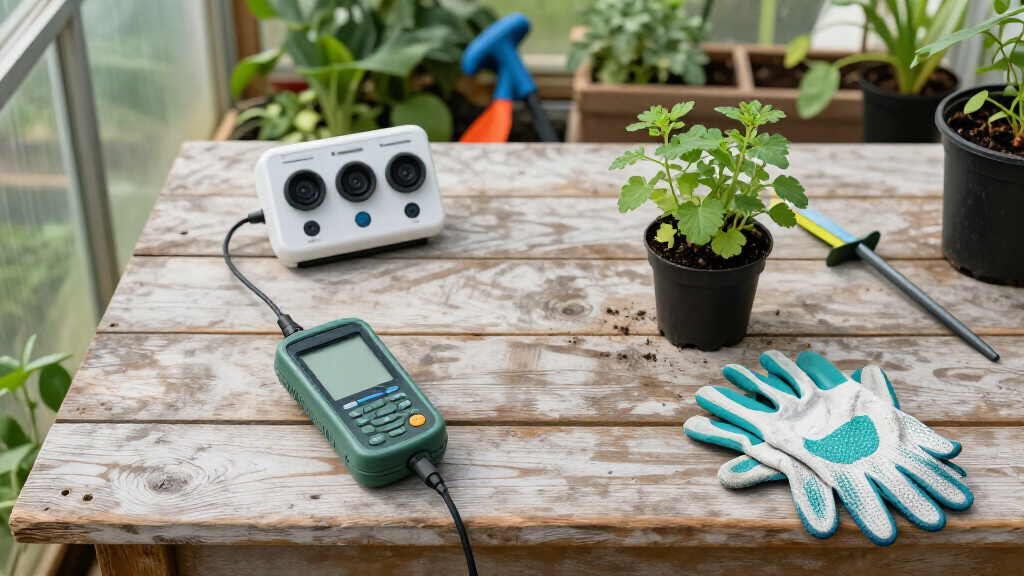
Products were selected based on their ability to provide reliable remote data access in greenhouse settings. Key criteria included connectivity options (Wi-Fi, cellular, or both), measurement accuracy, durability of sensors, ease of installation, and overall value. We prioritized models that offer consistent performance with minimal maintenance, especially in challenging environments where signal strength may vary. The ranking reflects a balance of affordability, feature set, and user-friendliness, ensuring options for beginners to advanced users. Our goal was to highlight devices that truly serve the needs of remote greenhouse monitoring without unnecessary complexity or cost.| greenhouse data logger for remote monitoring | Connectivity |
|---|---|
| MarCELL Cellular Temperature | — |
| HOBO by Onset MX1101 | Bluetooth Low Energy |
| YoLink Smart X3 Outdoor Temper | Requires YoLink Hub |
| Temp Stick Remote WiFi Tempera | — |
| GoveeLife Wi-Fi Gateway Thermo | LoRa and WiFi (not 5G) |
| Elitech RCW-360Pro Wi-Fi & Cel | Cellular LTE 4G, Wi-Fi |
Factors to Consider When Choosing Best Greenhouse Data Logger For Remote Monitoring
Choosing the best greenhouse data logger for remote monitoring requires careful consideration of several factors. Understanding your specific needs—such as location, internet infrastructure, and budget—can help narrow down options. Beyond basic features, look for durability, ease of use, and the ability to access data remotely without frequent maintenance. Being aware of common pitfalls, like choosing a model with limited connectivity or poor sensor life, can save frustration and money.Connectivity Options
The core of remote monitoring is how you access your data. Wi-Fi-only loggers are suitable for greenhouses with stable internet, but cellular options provide greater flexibility, especially in remote locations. Some models combine both, offering redundancy. Evaluate your internet infrastructure to choose a device that ensures continuous data flow, preventing gaps that could affect your monitoring or decision-making.
Measurement Accuracy and Sensor Durability
Accurate data is essential for effective greenhouse management. Look for loggers with high-quality sensors capable of measuring temperature and humidity precisely. Durability matters too; sensors should withstand environmental factors like humidity, dust, and temperature fluctuations. Cheaper sensors may save money upfront but can lead to unreliable data over time, making higher-quality sensors a worthwhile investment in critical applications.
Ease of Installation and Maintenance
A device that’s complicated to set up or requires frequent maintenance can become a hassle. Opt for models with straightforward installation procedures, clear instructions, and minimal upkeep. Wireless sensors with long-lasting batteries or those that support easy power sources will save time and effort, especially if the greenhouse is hard to access regularly.
Data Access and User Interface
Remote monitoring is only effective if you can access your data conveniently. Check whether the logger offers a user-friendly app or web portal, and if it supports real-time alerts or automatic data uploads. Some devices also integrate with existing smart systems or cloud platforms, providing broader control and analysis options. Avoid models with clunky interfaces or limited data history, which can hinder long-term management.
Cost and Scalability
Budget considerations are key, but so is future-proofing your setup. Cheaper models may suffice for small-scale or temporary monitoring, but expanding your system later might require a more flexible or feature-rich device. Consider total costs, including subscriptions, data plans, and maintenance, to ensure your investment remains viable over time. Prioritize devices that can grow with your greenhouse’s needs without necessitating complete replacements.
Frequently Asked Questions
Can I use a Wi-Fi-only data logger in a remote greenhouse?
Yes, a Wi-Fi-only data logger can work well if your greenhouse is within range of a stable internet connection. However, in more remote locations where Wi-Fi may be unreliable or unavailable, cellular-enabled loggers offer a more dependable solution. It’s important to assess your internet infrastructure beforehand to avoid data gaps, which can compromise your monitoring accuracy and responsiveness.
How often should I check or replace the sensors in my data logger?
Most sensors are designed to operate reliably for several years, but their accuracy can degrade over time, especially in humid or dusty environments. Regular calibration, as recommended by the manufacturer, helps maintain data integrity. For critical applications, inspecting sensors annually and replacing them every 3-5 years ensures consistent performance, reducing the risk of inaccurate readings that could affect your decisions.
Is cellular connectivity necessary for all greenhouse setups?
Cellular connectivity isn’t mandatory for every greenhouse but is highly beneficial in remote or rural areas where Wi-Fi access might be limited or unstable. For urban or well-connected locations, Wi-Fi-based loggers often suffice, providing a simpler setup and lower ongoing costs. The choice hinges on your specific site conditions and the importance of uninterrupted data access.
What features should I prioritize for a beginner setting up remote monitoring?
Beginners should look for a device that offers plug-and-play installation, clear user interfaces, and reliable data access via Wi-Fi or cellular. Devices with mobile apps that provide real-time alerts and easy data visualization can reduce the learning curve. Long battery life and minimal maintenance are also crucial, allowing new users to focus on managing their greenhouse without technical headaches.
How do I ensure my data logger’s signal remains strong in a large or shielded greenhouse?
Maximizing signal strength involves placing sensors in open, central locations away from metal structures or thick walls that can block signals. Using models with both Wi-Fi and cellular capabilities provides redundancy, ensuring continuous data flow. External antennas or signal boosters can also improve connectivity, particularly in larger or more shielded environments, maintaining reliable remote monitoring.
Conclusion
For those seeking a versatile, reliable solution, the Elitech RCW-360Pro offers the best overall performance with dual connectivity options. Budget-conscious growers or small operations will appreciate the simplicity and affordability of the Temp Stick. Growers in remote areas or with larger greenhouses might prioritize cellular options like the MarCELL Cellular Monitor. Beginners will find models with straightforward setup most suitable, while advanced users may prefer higher-precision options like the HOBO MX1101. Ultimately, your choice depends on your specific greenhouse size, location, and monitoring needs.Fall yard work Picks
leaf blowers
As an affiliate, we earn on qualifying purchases.