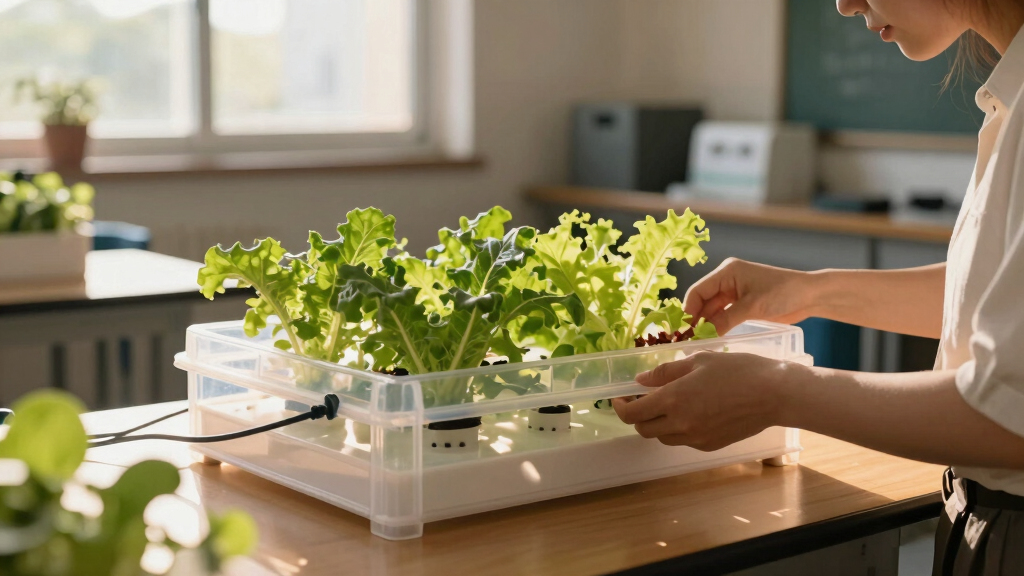

Finding the best hydroponic channel system for classrooms involves balancing ease of use, scalability, and educational value. The TTS Hydroponic Smart Garden 7-Compartment stands out as the top choice for its user-friendly interface and compact design, perfect for beginner setups. Meanwhile, systems like the Growell 81 Pods Kit offer larger capacity for more ambitious projects but require more maintenance and space. The main tradeoffs involve choosing between simplicity and scale, as more advanced systems tend to be more complex and costly. Continue reading for a detailed breakdown of each option to find the best fit for your classroom needs.

Get garden gear delivered free with Prime
- Fast, free delivery on millions of items
- Prime Video, Amazon Music and more included
- Member-only deals all year
Complete the kit


Key Takeaways
- The top-ranked systems balance ease of setup with educational engagement, making them ideal for classroom environments.
- Larger systems like the 148-pod towers offer scalability but introduce complexity and higher costs, making them better suited for advanced programs.
- Smart features such as app control and WiFi connectivity are increasingly common and add value for tech-savvy educators.
- Maintenance and cleaning are often overlooked but critical factors, especially for systems with many pods or complex water systems.
- Budget constraints often influence whether a classroom opts for a smaller, simpler system or a larger, more feature-rich setup.
| TTS Hydroponic Smart Garden 7-Compartment Classroom System |  | Best Overall for Classroom Engagement and Sustainability | Number of Compartments: 7 | Plant Types: Herbs, salad greens, microgreens, edible flowers | Growth Medium: Soil-free nutrient water | VIEW LATEST PRICE | See Our Full Breakdown |
| TTS Hydroponic Smart Garden 7-Compartment Classroom System |  | Best for Small-Group Classroom Settings and Visual Learning | Number of Compartments: 7 | Growth Medium: Water (hydroponics) | Water Usage: 90% less than soil farming | VIEW LATEST PRICE | See Our Full Breakdown |
| Growell 81 Pods Hydroponics Growing System Kit with Independent Water Pump |  | Best for Year-Round Indoor Growing and Versatility | Pods: 81 | Water Tank Capacity: 14L | Grow Light Power: 26W | VIEW LATEST PRICE | See Our Full Breakdown |
| JESLED 15 Tiers Hydroponics Growing System Kits with 4 LED Grow Lights |  | Best for Compact Space and High-Capacity Indoor Growth | Number of Tiers: 15 | Lighting: 4 LED grow lights, 5000K full-spectrum | Water Tank Capacity: 2-3 weeks of operation | VIEW LATEST PRICE | See Our Full Breakdown |
| LETPOT LPH-Max 21-Pod Hydroponic Indoor Garden System with App & WiFi Control |  | Best for Tech-Integrated, Automated Indoor Gardening | Power: 36W | Water Tank Capacity: 7.5L | Maximum Height: 30 inches | VIEW LATEST PRICE | See Our Full Breakdown |
| Ahopegarden Indoor Garden Hydroponics Growing System Kit: 66 Pods Plant Herb Garden with LED Grow Light, 30L Large Capacity |  | Best for Versatile Indoor Cultivation | Pod Capacity: 66 pods | Water Capacity: 30L | Grow Light Power: 53W | VIEW LATEST PRICE | See Our Full Breakdown |
| Large Hydroponics Growing System, 148 Pod Vertical Indoor Garden Tower |  | Best for Large-Scale Indoor Education and Commercial Use | Pod Count: 148 | Tiers: 5 | Grow Area: 150 sq ft | VIEW LATEST PRICE | See Our Full Breakdown |
| Large Hydroponics Growing System, 148-Pod Vertical Hydroponic Tower Garden |  | Best for Space-Efficient, Automated Indoor Farming | Pod Count: 148 | Number of Tiers: 5 | Lighting: 100W full-spectrum LED | VIEW LATEST PRICE | See Our Full Breakdown |
| hydroponic channel system for classroom | Lighting |
|---|---|
| TTS Hydroponic Smart Garden 7- | — |
| TTS Hydroponic Smart Garden 7- | — |
| Growell 81 Pods Hydroponics Gr | — |
| JESLED 15 Tiers Hydroponics Gr | 4 LED grow lights, 5000K full-spectrum |
| LETPOT LPH-Max 21-Pod Hydropon | Full Spectrum LED |
| Ahopegarden Indoor Garden Hydr | — |
| Large Hydroponics Growing Syst | 100W full-spectrum LEDs |
| Large Hydroponics Growing Syst | 100W full-spectrum LED |
More Details on Our Top Picks
TTS Hydroponic Smart Garden 7-Compartment Classroom System
This compact system excels at providing students with a clear view of plant growth stages, making it ideal for STEM lessons aligned with NGSS standards. Compared to the Growell 81 Pods system, it offers a smaller footprint and easier setup, though it doesn’t support large-scale planting. Its 7 compartments allow for diverse plant types, fostering hands-on experiments in microgreens, herbs, or edible flowers. While it supports water conservation and quick growth cycles, it requires access to water and electricity, limiting outdoor use. Its compact design and visual roots support active learning but demand regular maintenance to keep nutrient levels optimal.
Pros:- Supports visual observation of germination and growth stages
- Encourages sustainability education through water conservation
- Accelerates plant growth cycles for quick classroom results
- Compact size fits easily on tables or desks
Cons:- Requires consistent access to water and electricity
- Limited to indoor use, not suitable for outdoor gardening
- Needs regular nutrient water maintenance
Best for: Classrooms seeking an engaging, space-efficient system to teach sustainability and plant biology to K-12 students
Not ideal for: Outdoor gardens or programs requiring larger-scale planting, as it is designed strictly for indoor classroom environments
- Number of Compartments:7
- Plant Types:Herbs, salad greens, microgreens, edible flowers
- Growth Medium:Soil-free nutrient water
- Water Usage:Up to 90% less than soil farming
- Intended Use:Classroom, STEM education, science experiments
Our verdict“This system is perfect for educators who want a compact, engaging way to demonstrate plant growth and sustainability within indoor classrooms.”
TTS Hydroponic Smart Garden 7-Compartment Classroom System
This version of the TTS system emphasizes simplicity and vivid observation, making it ideal for small groups or individual student experiments. Compared with the B0CH3PFCPX model, it offers similar compartments but is often more portable and easier to manage in tight classroom spaces. It supports the NGSS standards by allowing students to see the entire germination to harvest process, reinforcing lessons on sustainability and plant biology. Its water management requires careful oversight, and it’s limited to indoor use, but it’s straightforward to set up for quick educational demonstrations.
Pros:- Enables full visibility of plant development stages
- Supports water conservation and sustainability lessons
- Fits easily on standard classroom tables
- Simple to set up and manage for small groups
Cons:- Needs careful water management to prevent overflows
- Limited to small-scale, indoor use
- Additional equipment may be needed for best results
Best for: Elementary or middle school classrooms focused on active participation and visual learning of plant life cycles
Not ideal for: Large-scale educational programs or outdoor garden projects, as it’s designed for small, indoor use
- Number of Compartments:7
- Growth Medium:Water (hydroponics)
- Water Usage:90% less than soil farming
- Educational Standards:Supports NGSS K-12 standards
- Intended Use:Classroom, small-group science stations
Our verdict“This model suits educators who prioritize hands-on, visual learning of plant growth in small indoor classroom settings.”
Growell 81 Pods Hydroponics Growing System Kit with Independent Water Pump
The Growell system stands out with its high pod count and sleek vertical design, making it suitable for detailed student projects or small-scale food production. Unlike the simpler 7-compartment models, it offers 81 pods, supporting diverse plant varieties and continuous harvests. Its 26W full-spectrum grow light and independent water circulation promote faster, more efficient growth, ideal for advanced classroom settings or after-school programs. However, the system’s water tank requires frequent refilling, and it doesn’t include seeds, adding initial setup complexity. Its style and functionality make it more suited to dedicated plant labs rather than quick science experiments.
Pros:- High capacity with 81 pods for diverse plant projects
- Full-spectrum LED grow light accelerates growth
- Quiet operation and modern aesthetic fit well in classroom decor
- Supports continuous, year-round gardening
Cons:- Requires regular refilling of water tanks
- Seeds are not included, adding to initial costs
- Limited to small- to medium-sized plants
Best for: Middle or high school classrooms aiming to teach year-round indoor gardening with high plant diversity
Not ideal for: Elementary classrooms or quick demonstration setups, due to its size and maintenance needs
- Pods:81
- Water Tank Capacity:14L
- Grow Light Power:26W
- Operation Noise:<20dB
- Water Cycle:Every 30 minutes
Our verdict“This kit suits educators who want a versatile, high-capacity indoor garden for ongoing student projects and food cultivation.”
JESLED 15 Tiers Hydroponics Growing System Kits with 4 LED Grow Lights
The JESLED tower offers a vertical, space-efficient solution with 15 tiers, ideal for classrooms with limited space but high planting capacity. Its four full-spectrum LED lights accelerate plant growth up to five times faster than traditional methods, making it excellent for quick student results. The multiple tiers support growing vegetables, herbs, and flowers simultaneously. However, the electrical setup is more complex, requiring careful installation, and the small water tank needs frequent refilling, which could disrupt ongoing projects. Its quiet operation and space-saving design make it a practical choice for small classrooms but less suitable for large-scale or outdoor applications.
Pros:- Vertical, space-saving design maximizes small classroom areas
- Four LED grow lights boost growth rate significantly
- Supports multiple plant types simultaneously
- Low-noise pump and operation
Cons:- Installation requires electrical expertise due to complex wiring
- Limited water capacity necessitates frequent refills
- Indoor-only use limits outdoor versatility
Best for: Small classrooms or STEM labs seeking high-density planting within limited space, especially for quick-turnaround projects
Not ideal for: Large outdoor gardens or classrooms needing extensive plant varieties, due to its size and indoor focus
- Number of Tiers:15
- Lighting:4 LED grow lights, 5000K full-spectrum
- Water Tank Capacity:2-3 weeks of operation
- Pump Noise Level:below 30 dB
Our verdict“This tower is ideal for educators needing high-capacity indoor cultivation in tight spaces with quick results.”
LETPOT LPH-Max 21-Pod Hydroponic Indoor Garden System with App & WiFi Control
The LETPOT LPH-Max emphasizes automation and modern control, making it suitable for tech-savvy classrooms aiming to incorporate smart learning tools. Its app-controlled watering, nutrient delivery, and adjustable LED lighting simplify maintenance and enable remote management. Compared to the Growell 81 Pods, it offers a smaller footprint but integrates digital features for more precise control. The initial setup can be complex for beginners, and WiFi dependence limits use in areas with poor connectivity. This system is ideal for classrooms that want to teach both plant science and digital literacy in one package.
Pros:- Automatic watering and nutrients reduce manual work
- Full-spectrum LED promotes fast and healthy plant growth
- Smart app offers scheduling, remote updates, and monitoring
- Supports plants up to 30 inches tall
Cons:- Requires stable WiFi for full functionality
- Setup and configuration may challenge beginners
- Indoor use only, limiting outdoor application
Best for: Middle and high school classes interested in integrating IoT and automation into STEM lessons
Not ideal for: Younger students or classrooms with limited WiFi access, due to setup complexity and connectivity dependency
- Power:36W
- Water Tank Capacity:7.5L
- Maximum Height:30 inches
- Lighting:Full Spectrum LED
- App Compatibility:iOS and Android
- Included Accessories:21 cups, sponges, baskets, nutrients
Our verdict“This system aligns with classrooms seeking automation and digital integration for an advanced indoor gardening experience.”
Ahopegarden Indoor Garden Hydroponics Growing System Kit: 66 Pods Plant Herb Garden with LED Grow Light, 30L Large Capacity
This system stands out for its large capacity and zone planting flexibility, making it ideal for schools that want to grow a variety of herbs, vegetables, and fruits simultaneously. Compared with the smaller TTS 7-compartment system, this unit offers more space and independent zones, though it requires a more involved setup process. The dual LED grow lights and adjustable height provide tailored light conditions, supporting healthy plant development. However, this setup depends on electricity and might challenge beginners with its multiple components. It’s a strong choice for classrooms aiming for diverse crop production in limited indoor space, especially when flexibility and capacity are priorities.
Pros:- Supports a wide variety of crops with zone-specific planting
- Large 30L capacity enables multiple plant types simultaneously
- Adjustable LED grow lights for optimal plant growth
Cons:- Requires electrical power for lights and pumps, increasing running costs
- Complex assembly process may be overwhelming for beginners
Best for: Schools or educators seeking a spacious, customizable indoor garden that supports multiple crop types and active student participation.
Not ideal for: Classrooms with limited electrical access or teachers unfamiliar with assembling complex systems, as setup and maintenance can be challenging.
- Pod Capacity:66 pods
- Water Capacity:30L
- Grow Light Power:53W
- Frame Dimensions:26×14.5×17.3 inches
- Adjustable Light Height:14.68 inches
- Indoor Use:Yes
Our verdict“This model best suits educational settings that value capacity and crop diversity but are prepared for a more involved setup.”
Large Hydroponics Growing System, 148 Pod Vertical Indoor Garden Tower
This system excels in high-capacity, automated cultivation, making it ideal for advanced educational programs or small commercial projects. Compared to the smaller WooRoot Max tower, this unit offers a significantly larger number of pods (148) and a dedicated 150 sq ft growing area, with full automation for lighting, irrigation, and misting. Its 100W full-spectrum LEDs support all growth stages, enabling year-round harvests without constant oversight. However, its size and complexity demand prior hydroponic experience and a higher investment, which could be a barrier for less experienced teachers or small classrooms. This system makes the most sense when scale and automation are the main goals, especially for programs aiming to teach advanced hydroponic techniques.
Pros:- High capacity with 148 pods across 5 tiers for extensive growing
- Automated lighting, irrigation, and misting reduce ongoing maintenance
- Full-spectrum LED supports all plant growth phases
- Supports year-round cultivation for continuous learning or yield
Cons:- Requires technical knowledge for setup and operation
- Higher upfront cost limits accessibility for smaller schools
Best for: Educational institutions or small commercial operations with space, budget, and hydroponic experience looking for a large, automated indoor garden.
Not ideal for: Beginners or classrooms with limited space and no prior hydroponic setup experience, due to its complexity and size.
- Pod Count:148
- Tiers:5
- Grow Area:150 sq ft
- Lighting:100W full-spectrum LEDs
- Nutrient Reservoir:34L
- Misting Tank:9.5L
- Self-Managed Duration:30 days
Our verdict“Best suited for experienced educators or commercial ventures seeking large-scale, automated hydroponic systems with long-term harvest potential.”
Large Hydroponics Growing System, 148-Pod Vertical Hydroponic Tower Garden
This tower offers a compact, space-efficient design with 148 pods, ideal for classrooms with limited room but high production goals. Compared to the larger, more manual systems, its automated watering, lighting, and misting make it suitable for busy teachers or students new to hydroponics. The 100W full-spectrum LED and adjustable lighting hours support all growth stages, providing flexibility for varied crops. The system’s low-maintenance, automated features reduce ongoing effort but require familiarity with electrical systems and regular upkeep. It’s a particularly good choice for schools seeking a balance of capacity, automation, and space conservation, especially when ongoing low-maintenance operation is valued.
Pros:- Space-efficient design with 148 pods on a 5-tier tower
- Automated watering, lighting, and misting for minimal hands-on effort
- Full-spectrum LED supports all growth stages
- Flexible light schedule from 0–24 hours
Cons:- Requires electricity and regular maintenance
- Initial cost may be prohibitive for some schools
Best for: Educational settings or small-scale commercial classrooms that want a large, automated system without taking up much space.
Not ideal for: Beginners or schools without prior hydroponic experience, as setup and troubleshooting can be complex.
- Pod Count:148
- Number of Tiers:5
- Lighting:100W full-spectrum LED
- Lighting Schedule:0–24 hours adjustable
- Nutrient Reservoir Capacity:34L
- Misting Tank Capacity:9.5L
- Growth Cycle Duration:Up to 30 days
Our verdict“This tower is ideal for educators wanting a large, automated hydroponic system that conserves space and minimizes daily effort.”
How We Picked
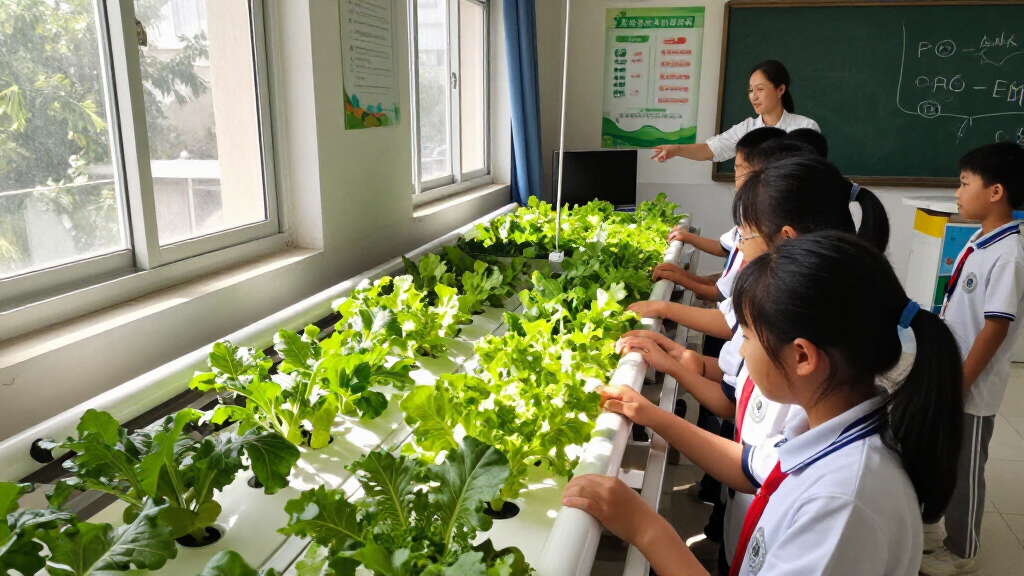
Our evaluation focused on performance, usability, durability, and educational suitability. We prioritized systems that are easy to set up and operate, especially for educators without technical backgrounds. Systems with scalable capacity and smart features scored higher, as they support diverse classroom sizes and foster interactive learning. We also considered maintenance requirements and overall build quality, ensuring each product offers good value. The rankings reflect a balance between affordability and features, aiming to recommend options suitable for different classroom sizes and budgets.
Factors to Consider When Choosing Best Hydroponic Channel System For Classrooms
Choosing the right hydroponic channel system for a classroom depends on several key factors. Understanding these will help you select a setup that fits your educational goals, space constraints, and budget. Considering ease of use and maintenance is vital for smooth implementation, while scalability ensures the system can grow with your program. Smart features can enhance engagement but may come at a higher cost. This guide highlights the key considerations to keep in mind beyond just the product features, helping you make a well-informed decision.
Ease of Use and Setup
For classrooms, simplicity in setup and operation is essential. Systems that come pre-assembled or require minimal technical knowledge reduce the learning curve and save time. Look for models with clear instructions and user-friendly interfaces, especially if students will be involved in maintenance. Overly complex systems might offer more features but can divert focus from educational goals and require additional training. Prioritizing ease of use ensures a smoother integration into daily classroom activities.
Scalability and Capacity
Classroom needs vary greatly, from small groups to large classes. Systems with adjustable or larger pod counts provide flexibility as your program grows. Smaller setups are easier to manage but may limit educational opportunities or student involvement. Larger systems like the 148-pod towers support more plants and experiments but demand more space and maintenance. Consider your current and future needs to choose a system that can scale without overwhelming your resources.
Smart Features and Connectivity
Features such as app control, WiFi connectivity, and automated watering can significantly enhance classroom interactivity and ease of management. These features allow teachers and students to monitor plant health remotely and automate routine tasks, freeing up time for learning. However, they also add to the initial cost and require some technical know-how. Decide whether these smart features align with your educational goals and technical comfort level.
Maintenance and Durability
Classroom systems need to withstand frequent use and occasional mishandling by students. Durable materials and straightforward cleaning routines contribute to long-term success. Systems with many small components or complex water systems may require more upkeep, potentially disrupting class schedules. Opting for models with easy-to-clean parts and reliable water management features can save time and reduce frustration.
Budget and Overall Value
Budget constraints often dictate the choice of hydroponic systems in classrooms. While cheaper models may seem appealing, they often lack durability or smart features, leading to higher long-term costs. Conversely, investing in a more robust system can provide better educational value and longevity. Weigh the initial investment against potential benefits like scalability, ease of use, and maintenance to find the best balance for your classroom.
Frequently Asked Questions
Can I set up a hydroponic system in a small classroom?
Yes, small classrooms can comfortably accommodate compact hydroponic systems like the TTS Hydroponic Smart Garden 7-Compartment. These smaller units are designed to fit limited spaces and are easier to manage, making them ideal for introductory lessons or limited budgets. They still provide meaningful educational experiences without overwhelming the available space or requiring extensive maintenance.
Are smart features necessary for an educational hydroponic system?
Smart features are not strictly necessary but can enhance the learning experience by providing remote monitoring and automation. They are especially useful for tech-focused curricula or when multiple classes share a system, allowing teachers to check plant status without direct contact. However, systems without these features tend to be simpler, more affordable, and easier to troubleshoot, which can be preferable for beginner setups or less tech-oriented environments.
How often do I need to clean or maintain a classroom hydroponic system?
Maintenance frequency depends on the system’s complexity and size. Generally, cleaning the water reservoir and replacing nutrients every few weeks is recommended, along with checking for algae or blockages weekly. Larger or more intricate systems may require more frequent attention to prevent clogs or water quality issues. Choosing a model with easily accessible parts and clear maintenance instructions can simplify this process and keep the system running smoothly throughout the school year.
Is a larger system always better for a classroom?
Not necessarily. Larger systems like the 148-pod towers offer more growing space and educational opportunities for bigger classes or more complex projects but come with higher costs and maintenance demands. Smaller systems are more manageable, especially for introductory lessons or limited spaces, and can still provide valuable learning experiences. The best choice depends on your class size, available space, and how much effort you’re willing to invest in upkeep.
Should I prioritize smart features or simplicity when choosing a system?
It depends on your educational goals and technical comfort level. Smart features can add interactivity and reduce manual oversight, making the system more engaging for students. However, they also increase complexity and cost. If your focus is on straightforward gardening lessons or you’re new to hydroponics, a simpler, manual system might serve your needs better. For tech-savvy classrooms aiming for an integrated digital experience, investing in smart features can be worthwhile.
Conclusion
For educators seeking the best overall experience, the TTS Hydroponic Smart Garden 7-Compartment offers a user-friendly setup with reliable performance. Those prioritizing value should consider the Growell 81 Pods Kit, which balances capacity and affordability. For classrooms with advanced needs or larger groups, the Large Hydroponics Tower (148 pods) delivers impressive scalability, albeit at a higher cost. Beginners or smaller classes will benefit from compact, easy-to-maintain systems, while more experienced programs can explore feature-rich, larger options to maximize engagement and experimentation.
Fall Picks
fall essentials
As an affiliate, we earn on qualifying purchases.