
Choosing the best ERV system for humid climates requires balancing moisture control, energy efficiency, and reliable ventilation. The Panasonic Intelli-Balance Elite Plus ERV stands out as the best overall for its exceptional moisture management and energy recovery capabilities. Broan B210E75RS AI Series offers a high airflow option suited for larger spaces, while the Panasonic WhisperComfort 60 ERV provides a more compact, budget-friendly choice for smaller homes. The main challenge in humid environments is preventing excess moisture buildup without sacrificing fresh air intake. Continue reading for a detailed comparison to help you find the perfect fit for your climate and home size.
Complete the kit


Key Takeaways
- Top-performing models excel at moisture removal while maintaining energy efficiency in humid climates.
- Higher CFMs and larger units are better suited for bigger homes or spaces with persistent humidity issues.
- Compact and ductless options are ideal for small or retrofit projects but often trade off in airflow capacity.
- Wi-Fi-enabled systems provide remote control and monitoring, valuable for tech-savvy homeowners.
- Price varies widely, with premium models offering advanced features and better durability for humid conditions.
| Panasonic Intelli-Balance Elite Plus ERV, 120 CFM |  | Best Overall for Humid Climates | Power Source: AC/DC | Room Type: Bathroom | Special Features: Manual | VIEW LATEST PRICE | See Our Full Breakdown |
| Broan B210E75RS AI Series 210 CFM Energy Recovery Ventilator with Side Ports |  | Best for Large Homes and High Airflow Needs | Model: B210E75RS | Airflow: 210 CFM | Sensible recovery efficiency at 32°F: 81% | VIEW LATEST PRICE | See Our Full Breakdown |
| Panasonic WhisperComfort 60 ERV, 60 CFM | 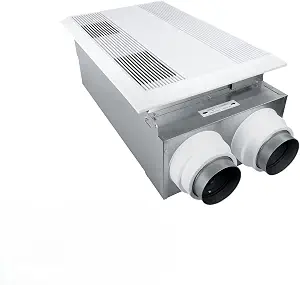 | Best for Small Spaces and Quiet Operation | Power Source: Corded Electric | Room Type: Bathroom, Garage, Laundry Rooms, Living Room | Special Features: Manual, Selectable CFM | VIEW LATEST PRICE | See Our Full Breakdown |
| Aprilaire V22BEC ERV, 120 CFM for Homes up to 6,000 Sq. Ft. |  | Best for Balanced Ventilation and Cost Savings | CFM: 120 | Suitable for Homes up to: 6,000 sq. ft. | Mounting Options: Wall, ceiling, or floor | VIEW LATEST PRICE | See Our Full Breakdown |
| Awoco 6” Vent Energy Recovery Ventilator (ERV) System with Control Panel, Various Speeds, 100 CFM |  | Best for Attic Installation and Quiet, Adjustable Ventilation | Power Source: AC | Room Type: Attic | Special Features: Energy Recovery, Control Panel, Variable Speeds | VIEW LATEST PRICE | See Our Full Breakdown |
| Panasonic FV-11ES1 Intelli-Balance Elite ERV, 110 CFM |  | Best Overall for Balanced Indoor Air Quality and Energy Efficiency | Air Flow Capacity: 110 CFM | Motor Type: Brushless, SmartFlow ECM | Filters: MERV 13 | VIEW LATEST PRICE | See Our Full Breakdown |
| Wi-Fi-Enabled Pioneer 50 Single-Room Wall-Mounted Energy Recovery Ventilator |  | Best for Quiet, Wi-Fi-Controlled Ventilation in Small Spaces | Airflow (Max): 35.3 CFM | Noise Level: Maximum 32.7 dB(A) | Control Methods: Smartphone app, onboard interface | VIEW LATEST PRICE | See Our Full Breakdown |
| Pioneer ECOasis 150 Ductless Wall-Mounted Single-Room Wi-Fi Energy Recovery Ventilator |  | Best for Large Rooms and Advanced Filtration with Smart Monitoring | Coverage Area: Up to 500 sq. ft. | Filtration System: HEPA & Activated Charcoal | Energy Efficiency: 82% heat exchanger | VIEW LATEST PRICE | See Our Full Breakdown |
| erv system for humid climate | Noise Level |
|---|---|
| Panasonic Intelli-Balance Elit | — |
| Broan B210E75RS AI Series 210 | — |
| Panasonic WhisperComfort 60 ER | 2.5 sones |
| Aprilaire V22BEC ERV | — |
| Awoco 6” Vent Energy Recovery | 50 dB |
| Panasonic FV-11ES1 Intelli-Bal | 45 dB |
| Wi-Fi-Enabled Pioneer 50 Singl | Maximum 32.7 dB(A) |
| Pioneer ECOasis 150 Ductless W | 23 to 37.9 dB(A) |
More Details on Our Top Picks
Panasonic Intelli-Balance Elite Plus ERV, 120 CFM
The Panasonic Intelli-Balance Elite Plus ERV stands out for its combination of high efficiency and flexible installation, making it ideal for humid climates where controlling moisture and air quality is critical. Compared with the Aprilaire V22BEC, it offers more customizable airflow and a quieter operation thanks to its energy-efficient ECM motors. However, its complex installation process may require professional help, which could increase initial costs. The high-quality MERV 13 filters provide excellent air cleaning, essential in humid environments prone to mold and allergens. While it comes at a premium price, its performance in balancing humidity and air quality makes it a strong all-rounder. Best for homeowners seeking a quiet, customizable, and efficient ventilation system that addresses humidity concerns.
Pros:- Energy-efficient ECM motors enable quiet operation and adjustable speeds
- High-quality MERV 13 filters improve indoor air quality significantly
- Flexible mounting options for various installation needs
- Customizable airflow settings for tailored ventilation
Cons:- Installation can be complicated, often requiring professional assistance
- Higher price point compared to simpler models
- Limited information on maintenance or filter replacement schedules
Best for: Homeowners in humid climates who need a quiet, energy-efficient system with customizable airflow and high-quality filtration
Not ideal for: DIY enthusiasts with limited ventilation experience or budget constraints, due to complex installation and higher cost
- Power Source:AC/DC
- Room Type:Bathroom
- Special Features:Manual
- Air Flow Capacity:120 cfm
- Indoor Outdoor Usage:Indoor
- Control Method:Touch
Our verdict“This system is best suited for homeowners who prioritize customizable, quiet, and efficient ventilation in humid environments.”
Broan B210E75RS AI Series 210 CFM Energy Recovery Ventilator with Side Ports
The Broan B210E75RS ERV offers robust performance for larger homes, with 210 CFM of airflow that effectively exchanges indoor and outdoor air, helping to manage humidity levels in humid climates. Compared to the Panasonic Intelli-Balance, its higher capacity makes it better suited for bigger spaces, but it lacks ENERGY STAR certification, which might impact long-term energy savings. Its VIRTUO™ technology simplifies installation, and the LCD display allows for real-time monitoring, a plus for those who want straightforward control. However, the side port configuration limits flexibility in some installations. Its durable galvanized construction and 10-year core warranty add reliability for continuous operation. This pick makes the most sense for larger households or spaces requiring high ventilation rates with easy installation.
Pros:- High airflow capacity of 210 CFM effectively manages humidity in large spaces
- Easy installation with VIRTUO™ technology and LCD display
- Durable galvanized construction with a long 10-year core warranty
- Effective air filtration with reusable MERV 8 filter
Cons:- Not ENERGY STAR certified, potentially increasing energy costs
- Limited to side port configuration, reducing installation flexibility
- No automatic shutoff or timer features included
Best for: Owners of large homes or spaces needing high airflow, who value durability and straightforward operation
Not ideal for: Small residences or those seeking ENERGY STAR certified systems for maximum energy savings
- Model:B210E75RS
- Airflow:210 CFM
- Sensible recovery efficiency at 32°F:81%
- Core warranty:10 Years
- Material:Galvanized
- Ports:Side Ports, 6 inches
Our verdict“This system is ideal for large homes needing high ventilation performance and straightforward installation, despite lacking certification for energy efficiency.”
Panasonic WhisperComfort 60 ERV, 60 CFM
The Panasonic WhisperComfort 60 ERV is tailored for smaller indoor spaces like bathrooms, garages, or laundry rooms where quiet operation and moisture control are priorities. Its 60 CFM airflow and multi-speed options allow for tailored ventilation, helping to regulate humidity and prevent mold growth. Compared with the higher-capacity Broan ERV, it’s less suitable for large spaces but excels in quiet, localized applications. Its easy ceiling mount and adjustable airflow make it user-friendly for DIY installation. The unit’s noise level of 2.5 sones makes it suitable for quiet environments, but its relatively limited airflow may not suffice for larger or more humid areas. This pick makes the most sense for homeowners needing effective, low-noise ventilation in small or moderate spaces.
Pros:- Energy-efficient heat recovery maintains comfortable indoor moisture levels
- Easy to install with verification ports for airflow adjustments
- Multi-speed options for customized ventilation
- HVI certified for energy recovery and sound performance
Cons:- Limited to indoor use, unsuitable for outdoor applications
- Maximum airflow of 60 CFM might be inadequate for large or very humid spaces
- Noise level of 2.5 sones may still be noticeable in very quiet settings
Best for: Individuals seeking a quiet, efficient solution for small rooms or localized humid areas
Not ideal for: Large or high-humidity spaces where higher airflow capacity is necessary
- Power Source:Corded Electric
- Room Type:Bathroom, Garage, Laundry Rooms, Living Room
- Special Features:Manual, Selectable CFM
- Air Flow Capacity:60 cfm
- Control Method:Push Button
- Noise Level:2.5 sones
Our verdict“This system is best for small spaces needing quiet, customizable ventilation without the complexity of larger units.”
Aprilaire V22BEC ERV, 120 CFM for Homes up to 6,000 Sq. Ft.
The Aprilaire V22BEC ERV excels in providing balanced ventilation for larger homes, exchanging stale indoor air with fresh outdoor air while helping to control humidity and moisture. Its energy recovery core reduces heating and cooling costs, which is especially beneficial in humid climates where maintaining optimal indoor humidity can lower mold risks. Compared with the Panasonic Intelli-Balance, it offers simple push-button controls and flexible mounting options but lacks detailed noise performance data. Its compatibility with various smart thermostats adds convenience, though installation might require professional help for best results. The 120 CFM airflow capacity makes it suitable for homes up to 6,000 sq. ft., ensuring comprehensive air exchange. This model is perfect for larger homes seeking balanced, cost-effective ventilation with straightforward controls.
Pros:- Balances indoor air quality effectively by exchanging stale and fresh air
- Energy recovery core helps reduce heating/cooling costs in humid climates
- Flexible installation options for varied home layouts
- Simple push-button controls for ease of use
Cons:- Installation may need professional setup for optimal performance
- Noise levels are not specified, which could be a concern in quiet environments
- Limited smart home integration features
Best for: Owners of large residences up to 6,000 sq. ft. who prioritize balanced, energy-efficient ventilation
Not ideal for: Smaller homes or those seeking smart home integration beyond basic thermostat compatibility
- CFM:120
- Suitable for Homes up to:6,000 sq. ft.
- Mounting Options:Wall, ceiling, or floor
- Control Type:Push-button
- Compatibility:AprilAire Thermostats
Our verdict“This system is well-suited for large homes needing balanced ventilation and cost savings, despite some installation considerations.”
Awoco 6” Vent Energy Recovery Ventilator (ERV) System with Control Panel, Various Speeds, 100 CFM
The Awoco 6” ERV System is tailored for attic installation, offering 100 CFM of airflow with adjustable speeds and a user-friendly touch screen control panel. Its washable filters and dampers for defrost and recirculation cater to humid climates by controlling moisture and heat retention efficiently. Compared with smaller units like the Panasonic WhisperComfort, it provides higher airflow capacity suitable for attics and similar spaces, with quiet operation at 50 dB. However, its installation is limited to attic spaces, and ducting and mounting brackets are sold separately, adding to setup complexity. Its energy-efficient design and adjustable features make it a good choice for maintaining indoor humidity levels without excessive noise. This pick makes sense for attic spaces needing controlled ventilation with user-friendly operation.
Pros:- Adjustable speeds and washable filters enhance usability and maintenance
- Quiet operation at 50 dB suits living environments
- Includes a touch screen control panel for easy adjustments
- Energy-efficient design reduces power consumption
Cons:- Limited to attic installation, restricting placement options
- Ducting and mounting brackets are sold separately, increasing overall cost
- Maximum airflow of 100 CFM may be insufficient for very humid or large spaces
Best for: Homeowners with attic spaces who want quiet, adjustable ventilation to manage humidity and heat
Not ideal for: Living spaces or larger rooms where higher airflow is needed, or those without attic access
- Power Source:AC
- Room Type:Attic
- Special Features:Energy Recovery, Control Panel, Variable Speeds
- Wattage:60 watts
- CFM:100
- Noise Level:50 dB
Our verdict“This system is ideal for attic-based ventilation where quiet, adjustable operation is desired, though it’s not suitable for main living areas.”
Panasonic FV-11ES1 Intelli-Balance Elite ERV, 110 CFM
The Panasonic FV-11ES1 stands out for its combination of energy-efficient operation and effective filtration, making it a strong choice for humid climates where moisture and air quality are concerns. Its SmartFlow ECM motors adjust speed to optimize airflow quietly, an advantage over less adaptable systems like the Pioneer ECOasis 150, which, while quiet, offers a lower airflow capacity. The high-quality MERV 13 filters ensure pollutants are captured, but installation can be complex and may require professional help, especially compared to plug-and-play options. This model’s focus on indoor bathroom use makes it ideal for targeted ventilation but less suitable for larger or multi-room applications.
Pros:- Energy-efficient operation with adjustable airflow
- Includes high-quality MERV 13 filters for effective air filtration
- Flexible installation options for various indoor settings
Cons:- Installation may be complex and require professional assistance
- Limited to indoor bathroom use, not suitable for larger spaces
Best for: Homeowners seeking a reliable, energy-efficient ERV for bathroom or small indoor spaces with moderate humidity levels
Not ideal for: Large open-plan areas or spaces requiring high airflow, as its 110 CFM capacity limits coverage
- Air Flow Capacity:110 CFM
- Motor Type:Brushless, SmartFlow ECM
- Filters:MERV 13
- Noise Level:45 dB
- Installation Type:Wall Mount
- Control Method:Push Button, Remote, Touch
Our verdict“This ERV is a well-rounded choice for those prioritizing energy savings and filtration in small, humid indoor environments.”
Wi-Fi-Enabled Pioneer 50 Single-Room Wall-Mounted Energy Recovery Ventilator
The Pioneer ERV-50 offers impressive energy recovery with a maximum airflow of 35.3 CFM, making it ideal for small rooms where silent operation and remote control are priorities. Compared to the Panasonic FV-11ES1, which provides higher airflow, the Pioneer excels in ultra-quiet performance—maxing at just 32.7 dB(A)—and smart features like Wi-Fi control. However, its lower airflow capacity makes it less suitable for larger or more humid spaces, and installation may require wall modifications. This system is best suited for individuals who want seamless integration with smart home setups, but those needing higher ventilation rates should consider larger models.
Pros:- High energy efficiency with 97% heat recovery
- Wi-Fi control for convenient operation via smartphone
- Extremely quiet operation at just 32.7 dB(A)
Cons:- Limited airflow capacity restricts use to small rooms
- Requires wall installation which may be challenging in some spaces
Best for: Owners of small, humid rooms such as bedrooms or home offices who want quiet, remote-controlled operation
Not ideal for: Larger living areas or spaces with high humidity levels that demand greater airflow
- Airflow (Max):35.3 CFM
- Noise Level:Maximum 32.7 dB(A)
- Control Methods:Smartphone app, onboard interface
- Power Supply:110-240 VAC
- Duct Diameter:6-1/4 inches
- Water-Resistance Rating:IPX4
Our verdict“This pick is perfect for those seeking a quiet, smart-controlled ERV for small, humid indoor areas.”
Pioneer ECOasis 150 Ductless Wall-Mounted Single-Room Wi-Fi Energy Recovery Ventilator
The Pioneer ECOasis 150 is designed for rooms up to 500 sq. ft., offering a balance of high purification and energy efficiency. Its 4-stage filtration system, combined with a PM2.5 sensor, surpasses the filtration capabilities of the Pioneer ERV-50, making it a better choice for humid climates where airborne pollutants and moisture are concerns. Its 82% heat exchanger efficiency ensures good energy savings, but its higher price and need for wall mounting might limit options for some users. Compared to the Panasonic FV-11ES1, it excels in air purification and smart control, though it’s less suited for small or multi-room setups.
Pros:- High purification efficiency with 99% filtration
- Smart Wi-Fi control for remote monitoring and scheduling
- Energy-efficient heat recovery system
Cons:- Limited to rooms up to 500 sq. ft., less versatile for larger homes
- Requires wall mounting which may not fit all spaces
Best for: Homeowners with medium to large rooms up to 500 sq. ft. who want high purification and remote control features
Not ideal for: Smaller spaces or those seeking budget-friendly, plug-and-play solutions
- Coverage Area:Up to 500 sq. ft.
- Filtration System:HEPA & Activated Charcoal
- Energy Efficiency:82% heat exchanger
- Noise Level:23 to 37.9 dB(A)
- Control:Wi-Fi app, remote
- Power Consumption:35W
Our verdict“This ERV is ideal for users wanting advanced air purification and smart features in medium-sized rooms, despite a higher price point.”

How We Picked
This selection process focused on performance metrics such as moisture removal efficiency, airflow capacity, and energy recovery effectiveness. Usability factors like installation ease, control options, and maintenance requirements were also considered. We prioritized models specifically designed or proven effective in humid environments, where moisture management is critical. Our rankings balance value against features, ensuring that each pick offers a meaningful advantage for different types of homeowners facing humid climate challenges.Factors to Consider When Choosing Best Erv System For Humid Climates
When selecting an ERV system for humid climates, it’s essential to consider several factors that influence long-term comfort and system performance. Proper sizing is critical to avoid over- or under-ventilating, which can worsen humidity issues or lead to energy waste. Airflow capacity must match your home’s size and humidity levels, ensuring effective moisture removal without excessive energy use. Controls and connectivity features add convenience but may come at a higher cost. Maintenance needs and build quality are also vital to ensure durability in moist conditions. Finally, understanding the tradeoff between initial cost and ongoing operating expenses helps in making a smart investment.Humidity Management and Moisture Removal
In humid climates, the primary goal of an ERV is to mitigate excess moisture while providing fresh air. Look for models with high moisture removal ratings and proven effectiveness in humid conditions. Avoid systems that primarily focus on air exchange without adequate dehumidification, as this can worsen indoor humidity. Some units include features like adjustable humidity settings or integrated dehumidifiers, which can be especially beneficial in very damp environments.
Sizing and Airflow Capacity
Proper sizing ensures the ERV can handle your home’s specific needs. An undersized system won’t effectively reduce humidity, while an oversized one might waste energy and cause drafts. Calculate your home’s square footage, and consider local humidity levels to select a unit with appropriate CFM ratings. Larger homes or those with persistent moisture issues often require higher airflow capacities, but always balance this against energy consumption.
Energy Efficiency and Operating Costs
Energy recovery features are vital for reducing operational costs, especially in humid climates where systems run more frequently. Look for units with high heat recovery efficiency and low energy consumption ratings. Some models offer adjustable settings to optimize performance based on seasonal humidity levels, which can save money over time. Keep in mind that higher efficiency systems tend to have a higher upfront cost but can offer significant savings in the long run.
Control Features and Connectivity
Smart controls, Wi-Fi connectivity, and remote operation options enhance usability and allow for better humidity management. These features are especially helpful in humid climates, where adjusting ventilation according to weather patterns can improve comfort and reduce energy waste. However, systems with advanced controls are often more expensive and may require ongoing software updates or troubleshooting.
Maintenance and Durability
In moist environments, durability is key. Look for units with corrosion-resistant components and filters that are easy to access and replace. Regular maintenance, including filter changes and system checks, extends the lifespan and preserves performance. Cheaper models may save money initially but could incur higher maintenance costs or fail sooner due to moisture-related wear and tear.
Frequently Asked Questions
How do I choose the right size ERV for my home in a humid climate?
To select the proper size, start by calculating your home’s square footage and considering the level of humidity. Larger or more humid homes typically need higher CFM ratings to effectively manage moisture, but oversizing can lead to unnecessary energy use. Consult manufacturer guidelines or a professional for precise sizing, especially if your home has unique features such as high ceilings or multiple zones. Proper sizing ensures balanced ventilation, moisture control, and energy efficiency.
Are ductless ERV systems effective in very humid environments?
Yes, ductless ERV systems can be effective in humid climates, especially for single rooms or retrofit projects, because they provide targeted ventilation without the need for extensive ductwork. However, their capacity is limited compared to whole-home systems, so they are best suited for smaller spaces or supplemental ventilation. For larger areas, a ducted system with higher airflow capacity typically offers better moisture control and more consistent performance.
What features should I look for in an ERV system for a humid climate?
Key features include high moisture removal efficiency, adjustable humidity controls, and corrosion-resistant components. Connectivity options like Wi-Fi or smart controls add convenience for managing humidity levels remotely. Additional features like integrated dehumidifiers or advanced filters can further improve moisture control. Prioritize models that specifically highlight performance in humid conditions, as these are designed to handle the additional moisture load.
How much should I expect to spend on a quality ERV system for humid environments?
Prices can vary widely, with basic models starting around $1,000 and premium units surpassing $3,000. Investing in a higher-quality system with better moisture removal and energy recovery features can result in lower operating costs and longer lifespan. Consider your home’s size and humidity levels when budgeting, and remember that spending more upfront on a durable, efficient system often pays off through reduced maintenance and energy bills over time.
Is it worth installing a Wi-Fi-enabled ERV system in a humid climate?
Wi-Fi-enabled systems add a layer of convenience, allowing remote monitoring and adjustments to humidity and ventilation levels. In humid climates, the ability to respond quickly to changing weather conditions can significantly improve indoor comfort and moisture control. While these systems tend to cost more initially, the added control and potential energy savings make them a worthwhile investment for homeowners seeking precise environmental management.