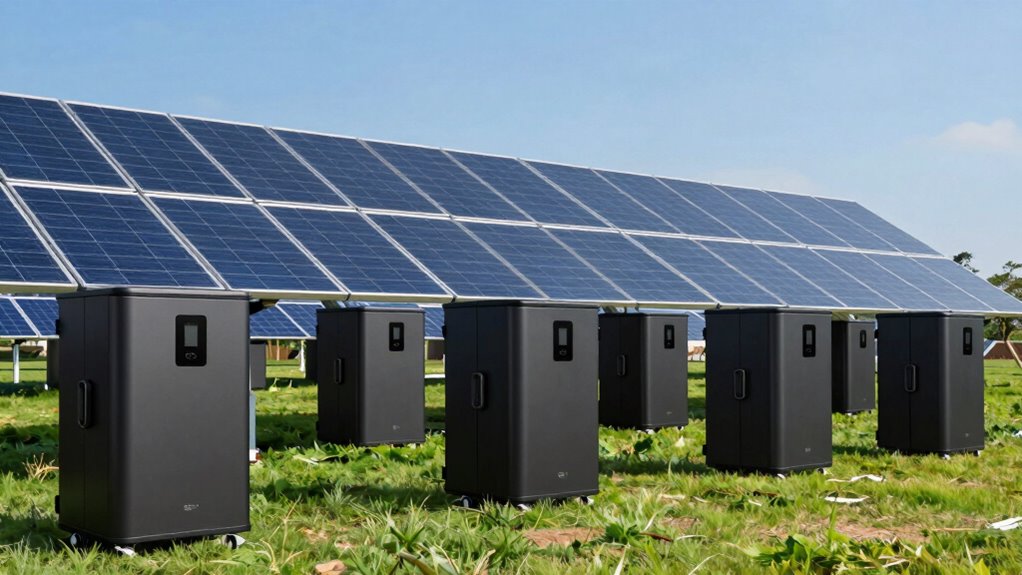

When searching for a solar generator for whole home essential loads, the goal is to find a reliable, high-capacity system that can keep your critical appliances running during outages or off-grid living. The EF ECOFLOW DELTA 3 Plus stands out as the best overall choice, offering a balance of capacity and portability. The PECRON F3000LFP provides impressive power for larger loads, while the Jackery PowerStation 3600 Plus is a solid option for those seeking simplicity and ease of use. The main challenge lies in balancing capacity, cost, and system expandability—higher capacity units often come with higher costs and complexity. Keep reading for a detailed breakdown of these options to help you make an informed decision.
Listen free for 30 days with Audible
Thousands of audiobooks and originals — cancel anytime.
Start your free trialAs an affiliate, we earn on qualifying purchases.
Complete the kit


Key Takeaways
- Capacity and inverter size are the primary factors determining a generator’s ability to power whole-home essentials.
- Higher capacity units tend to be more expensive but offer better long-term value for large loads.
- Portability varies significantly; larger systems provide more power but are less mobile.
- Battery chemistry impacts lifespan, maintenance, and safety—LiFePO4 batteries are generally more durable.
- Expandable systems with additional solar input options offer more flexibility for future power needs.
| Jackery Solar Generator 300 with 40W Solar Panel – 292Wh Portable Power Station, 300W AC Pure Sine Wave Inverter |  | Best for Portable Off-Grid Power with Long Battery Life | Capacity: 292Wh | Rated Output: 300W | Peak Surge Output: 600W | VIEW ON AMAZON | See Our Full Breakdown |
| Portable Solar Generator 300W with 60W Solar Panel |  | Best for Outdoor Adventures and Emergency Light Power | Wattage: 300W | Fuel Type: Electric | Power Source: Battery/Solar/AC | VIEW ON AMAZON | See Our Full Breakdown |
| EF ECOFLOW Solar Generator DELTA 3 Plus with 220W Bifacial Solar Panel, 1024Wh Portable Power Station |  | Best for Fast Charging and Multiple Device Support | Capacity: 1024Wh | AC Output: 1800W | Starting Wattage: 2400W | VIEW ON AMAZON | See Our Full Breakdown |
| PECRON F3000LFP Solar Generator with 300W Solar Panel, 3072Wh Portable Power Station, 3600W LiFePO4 Battery |  | Best for Heavy-Duty Whole-Home Backup with Fast Recharge | Capacity: 3072Wh | Output Wattage: 3600W | Battery Type: LiFePO4 | VIEW ON AMAZON | See Our Full Breakdown |
| OSCAL PowerMax 6000 Solar Generator with 3×400W Solar Panels |  | Best for Commercial-Grade Power and Long-Term Resilience | Capacity: 3600Wh | AC Output: 6000W | Surge Power: 9000W | VIEW ON AMAZON | See Our Full Breakdown |
| Jackery HomePower 3600 Plus Portable Power Station with 2x 200W Solar Panels |  | Best for High-Capacity, Long-Term Whole-Home Backup | Capacity: 3584Wh (expandable to 21kWh with multiple units) | AC Output: 3600W (7200W in parallel) | Voltage: 120V (240V in parallel) | VIEW ON AMAZON | See Our Full Breakdown |
| solar generator for whole home essential load | Capacity | AC Output | Battery Type |
|---|---|---|---|
| Jackery Solar Generator 300 wi | 292Wh | — | — |
| Portable Solar Generator 300W | — | — | — |
| EF ECOFLOW Solar Generator DEL | 1024Wh | 1800W | LiFePO4 |
| PECRON F3000LFP Solar Generato | 3072Wh | — | LiFePO4 |
| OSCAL PowerMax 6000 Solar Gene | 3600Wh | 6000W | LiFePO4 |
| Jackery HomePower 3600 Plus Po | 3584Wh (expandable to 21kWh with multiple units) | 3600W (7200W in parallel) | — |
More Details on Our Top Picks
Jackery Solar Generator 300 with 40W Solar Panel – 292Wh Portable Power Station, 300W AC Pure Sine Wave Inverter
The Jackery Explorer 300 excels in portability, weighing just 12.9 pounds, making it ideal for camping, RV trips, and emergency backup where mobility is key. Its LiFePO4 battery offers an impressive 4,000+ charge cycles, promising over a decade of reliable service—something the EcoFlow DELTA 3 Plus can’t match in longevity. However, its 292Wh capacity and 300W rated output limit its ability to power larger appliances or multiple devices simultaneously, especially compared with the PECRON F3000LFP that offers over 3000Wh and 3600W. The included 40W solar panel is a plus for off-grid charging but charges slowly, taking about 7.5 hours to reach 80%. This makes it best suited for light, portable needs rather than whole-home essential loads.
Pros:- Extremely lightweight at 7.5 lbs with an ergonomic handle for easy carrying
- Long battery lifespan with over 4,000 charge cycles (~11 years)
- Versatile outputs supporting up to 6 devices simultaneously
Cons:- Slow solar charging with the included 40W panel, requiring over 7 hours to reach 80%
- Limited capacity and power output restrict use to small devices and short-term backup
Best for: Individuals needing lightweight, reliable backup for small appliances during outdoor trips or short-term outages
Not ideal for: Homeowners seeking to run multiple essential appliances during extended power outages, due to limited capacity and output
- Capacity:292Wh
- Rated Output:300W
- Peak Surge Output:600W
- Outlets:2 AC, 1 USB-C PD, 2 USB-A, 1 car port
- Battery Chemistry:LiFePO4
- Battery Lifespan:4000+ cycles (~11 years)
Our verdict“This pick is best for portability-focused users who need reliable, long-lasting power for small devices on the go.”
Portable Solar Generator 300W with 60W Solar Panel
This 300W generator with a 60W foldable solar panel is a solid choice for outdoor enthusiasts who prioritize lightweight, quick setup, and multiple charging options. Its compact design and multiple safety features make it reliable for camping, travel, and emergency use, but it cannot handle devices over 300W, which limits its capacity for larger appliances. Unlike the EcoFlow DELTA 3 Plus, it doesn’t support as many devices simultaneously or offer fast charging, but it compensates with ease of use and portability. The junction box isn’t waterproof, so it requires careful storage during bad weather, and performance can decline if not regularly maintained. It’s well-suited for users who need quick, on-the-move backup rather than entire home loads.
Pros:- Compact, foldable design ideal for outdoor use and travel
- Multiple charging options, including solar, AC, and car power sources
- Built-in safety protections enhance reliability
Cons:- Limited to 300W output, unsuitable for high-wattage appliances
- Junction box is not waterproof, requiring careful storage and handling
Best for: Outdoor lovers or emergency preppers seeking a lightweight, multi-sourced power supply for small to medium devices
Not ideal for: Homeowners wanting to run heavy-duty appliances or whole-house essential loads, due to limited capacity and output
- Wattage:300W
- Fuel Type:Electric
- Power Source:Battery/Solar/AC
- Recommended Uses:Camping, travel, emergency
- Voltage:110V
- Additional Features:Overload & short circuit protection
Our verdict“This generator suits outdoor adventurers and emergency users needing portable, reliable power for small devices, not whole-home loads.”
EF ECOFLOW Solar Generator DELTA 3 Plus with 220W Bifacial Solar Panel, 1024Wh Portable Power Station
The EcoFlow DELTA 3 Plus stands out for its rapid charging capabilities, reaching 80% in just 40 minutes via AC, and its ability to power 13 devices simultaneously thanks to its 1024Wh capacity and 1800W AC output. Its bifacial 220W solar panel offers high efficiency, capturing more energy from sunlight, which benefits users who want quick off-grid recharging. Compared to the PECRON F3000LFP, it’s lighter (62 lbs vs. over 63 lbs) and easier to handle, but it offers less total capacity. Its fast recharge and multiple outlets make it ideal for home backup and RV use, but it might fall short for extended outages requiring larger capacity or longer runtimes under continuous load.
Pros:- Fast recharge — 80% in 40 minutes via AC power
- Supports powering 13 devices simultaneously with X-Boost
- High-efficiency bifacial solar panel with adjustable tilt
Cons:- Heavy at 62 pounds, which impacts portability
- Power station and solar panel ship separately, adding to setup complexity
Best for: Homeowners and RV users who need quick, reliable power for multiple devices during short-term outages or outdoor trips
Not ideal for: People seeking prolonged backup for entire homes or running high-wattage appliances over extended periods, due to limited capacity
- Capacity:1024Wh
- AC Output:1800W
- Starting Wattage:2400W
- USB-C Output:140W
- Solar Panel:220W bifacial
- Battery Type:LiFePO4
Our verdict“This model is perfect for users needing fast, versatile power support for multiple devices during short-term outages or outdoor activities.”
PECRON F3000LFP Solar Generator with 300W Solar Panel, 3072Wh Portable Power Station, 3600W LiFePO4 Battery
The PECRON F3000LFP offers a substantial 3072Wh capacity with a 3600W pure sine wave output, making it suitable for running essential home appliances like refrigerators, air conditioners, and power tools. Its rapid recharge in about 2 hours via 1800W AC input is a significant advantage over smaller units, and its 13 outlet ports support many devices simultaneously. The LiFePO4 battery ensures long-term durability with over 3000 cycles, and its UPS feature guarantees seamless power transfer during outages. Compared with smaller, portable options like the Jackery Explorer 300, it prioritizes capacity and power over portability, making it ideal for backup power rather than outdoor recreation.
Pros:- Massive 3072Wh capacity supports extended outages
- Fast 2-hour recharge from AC power
- Supports multiple heavy-duty appliances simultaneously with 3600W output
Cons:- Heavy at over 63 pounds, limiting mobility
- Solar panel and power station ship separately, adding setup steps
Best for: Homeowners or small business operators seeking reliable, high-capacity backup power for essential appliances during outages
Not ideal for: Individuals needing ultra-lightweight, portable solutions for outdoor activities, due to its weight and size
- Capacity:3072Wh
- Output Wattage:3600W
- Battery Type:LiFePO4
- Recharge Time:2 hours (AC)
- Ports:6 AC, USB-C, USB-A, DC
- UPS Mode:8-20ms
Our verdict“This system is best for those needing substantial, reliable backup power for essential home or small business loads, accepting the tradeoff of portability.”
OSCAL PowerMax 6000 Solar Generator with 3×400W Solar Panels
The OSCAL PowerMax 6000 delivers extraordinary power with a 6000W continuous AC output and a 3600Wh LiFePO4 battery, capable of handling heavy-duty appliances and whole-home essential loads. Its ability to recharge fully in under 2 hours via 2200W AC input and 2400W solar input makes it ideal for critical backup scenarios, especially with five to eight milliseconds UPS switchover time. The included three 400W panels provide a high-efficiency, rapid solar recharge, suitable for sustained off-grid operations. Compared with the PECRON F3000LFP, it offers a split-phase 120V/240V output, supporting larger household circuits. However, it weighs around 100 pounds, and its high-end features might be overkill for small homes or occasional use.
Pros:- Massive 6000W continuous power with 9000W surge capacity
- Fast 2-hour recharge with 3×400W solar panels and 2200W AC input
- Split-phase 120V/240V support for whole-home circuits
Cons:- Extremely heavy at over 100 pounds, limiting mobility
- High cost and complexity may be more than needed for basic backup needs
Best for: Large households, small businesses, or critical load operators needing high power, fast recharge, and reliable UPS during outages
Not ideal for: Users seeking portable backup solutions or small-scale outdoor power, due to its weight and size
- Capacity:3600Wh
- AC Output:6000W
- Surge Power:9000W
- Battery Type:LiFePO4
- Full Recharge Time:1.44-1.96 hours
- Panels Included:3×400W
Our verdict“This system is designed for users who require robust, fast, high-capacity backup for entire homes, accepting its substantial size and cost as tradeoffs.”
Jackery HomePower 3600 Plus Portable Power Station with 2x 200W Solar Panels
The Jackery HomePower 3600 Plus stands out for its combination of high capacity, fast recharge, and portability, making it ideal for whole-home essential loads where long-term backup is needed. Unlike the EF ECOFLOW Delta 3 Plus, which offers a smaller 1024Wh capacity, this model’s expandable system can reach up to 21kWh with multiple units, providing peace of mind for extended outages. Its LiFePO4 battery chemistry ensures a 6,000-cycle lifespan and a full 10-year service life, translating into reliable, long-term operation. The rapid recharge time of just 2 hours from zero to full is a key advantage over competitors like the PECRON F3000LFP, which takes longer to recharge. However, at 77.2 lbs, it’s still quite heavy, and the separate shipment of panels and station can complicate setup. This pick makes the most sense for those needing serious capacity and durability in a portable package, willing to invest upfront for long-term reliability.
Pros:- High capacity expandable to 21kWh for extensive backup needs
- Fast recharge in just 2 hours via hybrid AC+DC charging
- Durable LiFePO4 battery with 6,000 cycles and 10-year lifespan
- Luggage-style portability with wheels and telescopic handle
Cons:- Heavy at 77.2 lbs, which may hinder portability for some users
- Separate shipment of panels and unit can delay complete setup
- High upfront cost compared to smaller or less expandable options
Best for: Homeowners seeking a scalable, long-term backup solution for essential loads, especially in areas prone to extended outages
Not ideal for: Small households or those with limited storage space who need a lightweight, compact system
- Capacity:3584Wh (expandable to 21kWh with multiple units)
- AC Output:3600W (7200W in parallel)
- Voltage:120V (240V in parallel)
- Battery Chemistry:LFP (LiFePO4)
- Battery Lifespan:6,000 cycles, 10-year lifespan
- Recharge Time:2 hours (hybrid AC+DC)
- Included Solar Panels:2x 200W
- Number of Outlets:4
- Weight:77.2 lbs
Our verdict“This model is best suited for users who prioritize long-term, scalable whole-home backup with high durability and are prepared for the weight and investment involved.”
How We Picked
These products were evaluated based on their total capacity, inverter wattage, battery chemistry, portability, and ease of integration into a home setup. We prioritized systems that can reliably power essential household loads, such as refrigerators, lights, and small appliances. Cost-effectiveness and scalability were also key factors, as well as build quality and user feedback. The ranking reflects a mix of performance, value, and suitability for different types of users—whether they need a compact backup or a robust, whole-home solution.Factors to Consider When Choosing Solar Generator For Whole Home Essential Loads
Choosing the right solar generator for whole home essential loads involves understanding several key factors that influence performance, longevity, and usability. Beyond just capacity, consider how the system integrates with your existing solar setup, its scalability, and the type of batteries used. Making the right choice requires balancing initial costs against long-term reliability and expansion potential. Here are the main factors to keep in mind:Capacity and Power Output
Capacity, measured in watt-hours (Wh), determines how long your generator can run essential devices. For whole-home loads, a capacity of at least 1,000Wh is often necessary, but larger systems exceeding 3,000Wh provide more peace of mind. The inverter wattage must also match your critical appliances’ startup and running demands; a 3000W inverter can handle most household essentials. Overestimating capacity can lead to unnecessary costs, while underestimating risks frequent outages or system overloads.
Battery Chemistry and Longevity
Battery chemistry impacts durability, safety, and maintenance. Lithium Iron Phosphate (LiFePO4) batteries are preferred for whole-home systems due to their longer cycle life and thermal stability. Cheaper options like lithium-ion may degrade faster over time, leading to higher replacement costs. Investing in a system with proven battery longevity can save money and reduce hassle over the years, especially if you plan to rely on it during prolonged outages.
Scalability and Expandability
Many systems allow for adding extra solar panels or batteries later. This flexibility becomes valuable as your power needs grow or if you want to optimize solar input. However, not all units support expansion, so it’s important to verify compatibility before purchase. Systems designed with modular components tend to offer better long-term adaptability, making them suitable for evolving energy requirements.
Portability and Size
The size and weight of a generator influence how easily it can be moved or installed. Larger, high-capacity units often require more space and are less portable. If you need a system that can be relocated or stored easily, look for compact, lightweight options that still meet your capacity needs. Conversely, permanently installed or stationary systems can maximize capacity without concern for mobility.
Cost and Value
High-capacity, premium systems typically come with higher upfront costs but may offer better durability and more features. Cheaper models might suffice for short-term backup needs but could require replacement sooner. It’s wise to evaluate the total cost of ownership, including potential maintenance and expansion, to determine which system offers the best value for your budget and long-term goals.
Frequently Asked Questions
Can a solar generator power my entire home during an outage?
Powering an entire home depends on the generator’s capacity and your household’s essential load. Most portable systems are designed for backup of critical appliances and won’t sustain full home power needs. Larger, grid-connected or dedicated off-grid systems with high capacity and multiple batteries are more capable of supporting essential loads for extended periods. Careful calculation of your critical appliances’ wattage and runtime needs is essential to determine if a particular generator can handle your entire home during outages.
How many solar panels do I need for a whole-home solar generator system?
The number of panels depends on your system’s capacity and your available sunlight. Larger systems require more solar input to recharge quickly and maintain power. For example, a 3000Wh system with 300W panels might need around 4-6 panels rated at 300W each for optimal recharging in a day. Keep in mind that panel efficiency, shading, and weather conditions affect overall output. It’s best to match your solar array size to your energy consumption and storage requirements for reliable performance.
Are lithium-ion batteries safe for whole-home use?
While lithium-ion batteries are common and generally safe when used properly, they have a shorter lifespan compared to LiFePO4 batteries and are more sensitive to overheating and thermal runaway. For whole-home applications, LiFePO4 batteries are often preferred because they are more stable, have longer cycle lives, and are less prone to safety issues. Proper system design and adherence to safety guidelines are essential no matter which chemistry is used, but investing in proven, quality batteries significantly reduces risks.
What maintenance is required for a solar generator system?
Most modern solar generators require minimal maintenance, primarily periodic cleaning of solar panels and checking connections. Battery health should be monitored, especially in systems with lithium-ion or LiFePO4 chemistry, to ensure longevity. It’s also wise to keep the system in a location protected from extreme weather. Regularly updating firmware and inspecting for any physical damage help maintain optimal operation, but overall, these systems are designed for low upkeep once installed properly.
Is it worth investing in a large, high-capacity system if I only experience occasional outages?
If outages are rare and short, a smaller, portable system may suffice, offering a better cost-to-performance ratio. Larger systems provide security for prolonged outages or if you plan to move towards off-grid living, but they come with higher initial costs and installation complexity. Evaluate your typical power needs, how often outages occur, and whether you may expand your energy use in the future. For many, a mid-sized system offers a good compromise between capacity and affordability.
Conclusion
For those seeking a reliable, high-capacity solution to power essential appliances during outages, the EF ECOFLOW DELTA 3 Plus makes a compelling choice for its balance of capacity, portability, and expandability. If you prioritize long-term durability and larger loads, the PECRON F3000LFP offers impressive power and battery life, ideal for more demanding setups. Beginners or those with limited budgets might opt for the Jackery PowerStation 3600 Plus for its simplicity and ease of use.
Ultimately, your choice should align with your specific needs—whether it’s a compact backup, a scalable system, or a full-home solution. Carefully weigh capacity, cost, and future expansion to select the best solar generator for your essential loads in 2026.
Evergreen bestsellers Picks
bestsellers
As an affiliate, we earn on qualifying purchases.